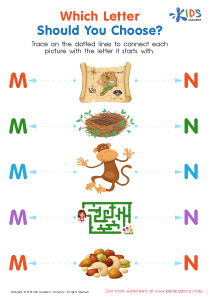
Alphabet sequencing Lowercase/Small Letters Worksheets for Ages 6-7
3 filtered results
-
From - To
Our Alphabet Sequencing Lowercase/Small Letters Worksheets are perfect for children ages 6-7 who are mastering their alphabet skills. These engaging worksheets help young learners practice the alphabetical order of lowercase letters, enhancing their letter recognition and sequencing abilities. With vibrant, kid-friendly designs and educational exercises, these worksheets make learning fun and effective. Ideal for both classroom settings and at-home practice, they support early literacy development and boost confidence in reading and writing. Visit our website to explore our full range of educational resources and help your child excel in their early learning journey.
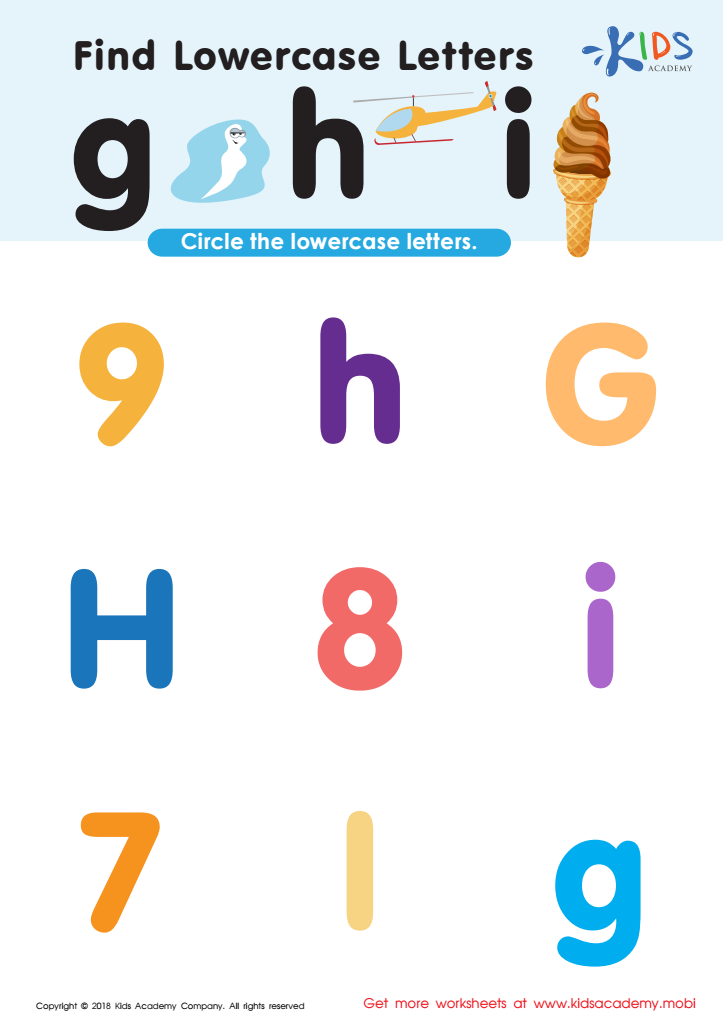
Find Lowercase Letters g h i Worksheet
 Assign to My Students
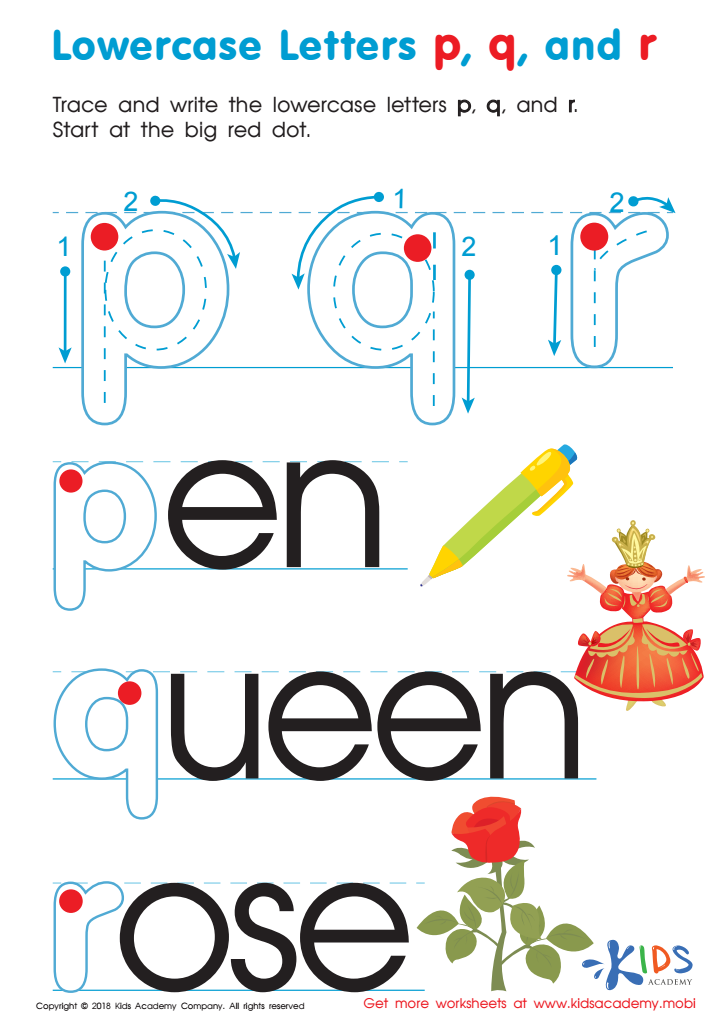
Lowercase Letters p q r Worksheet
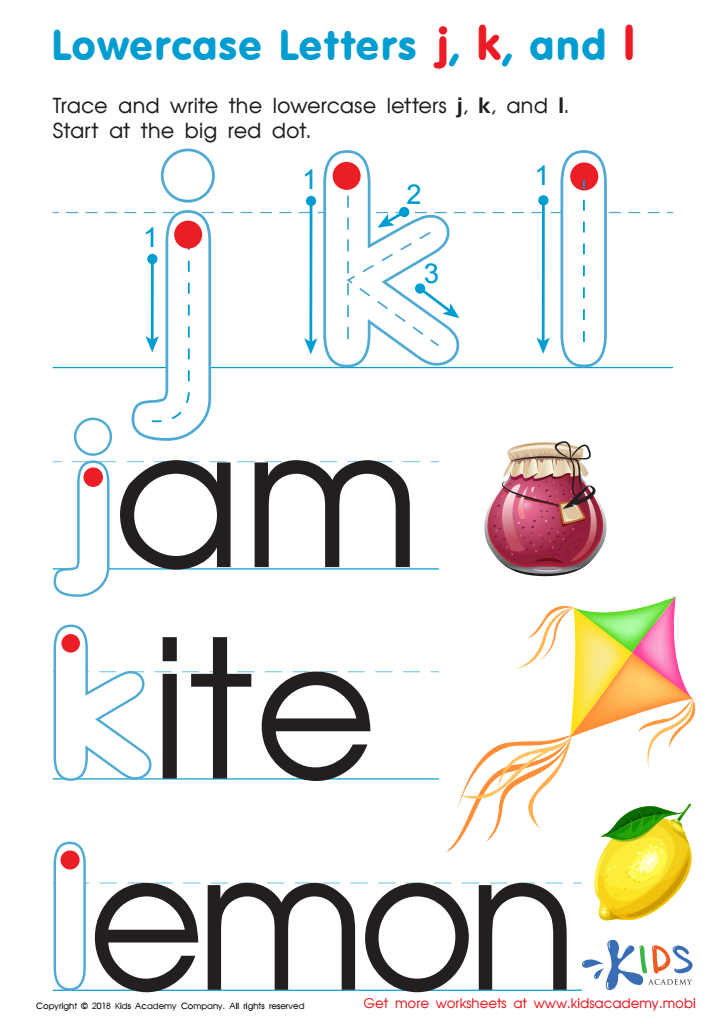
Lowercase Letters j k l Worksheet


Alphabet sequencing in lowercase letters is a crucial skill for young learners aged 6-7, laying a foundation for vital literacy development. Familiarity with the sequence of the alphabet enhances children's ability to identify, recall, and write letters accurately. This skill underpins their ability to read and write fluently, as recognizing and sequencing letters aids in quicker word decoding and pattern recognition.
Firstly, knowing lowercase alphabet sequencing supports handwriting practice. Children often find lowercase letters easier to write, aligning with fine motor skill development. Mastering the sequence ensures they not only memorize but also understand the structure of the alphabet, fostering alphabetic principle—recognizing that letters represent sounds in spoken language.
Secondly, alphabet sequencing improves cognitive skills, such as memory and problem-solving. Children learn to think logically and follow a systematic pattern, which is essential in all learning areas. These foundational literacy skills are directly linked to academic success in later years.
Moreover, enriched with a sense of order and organization, alphabet sequencing boosts children’s confidence and independence in their learning journey. Parents and teachers play a pivotal role in supporting and encouraging these early literacy skills, ensuring a smooth transition to more advanced reading and writing tasks. Investing effort in learning alphabet sequencing yields lifelong benefits, bolstering a child's enthusiasm and proficiency in literacy.