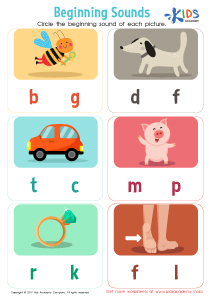
Rhyming skills Rhyming Worksheets for Ages 6-7
3 filtered results
-
From - To
Enhance your child's reading and phonemic awareness with our engaging Rhyming Worksheets designed specifically for ages 6-7. These worksheets provide fun, interactive activities that teach children the fundamentals of rhyming, helping to strengthen their vocabulary and literacy skills. With a variety of exercises, including matching rhyming words, completing sentences, and identifying patterns, kids will develop critical thinking and language abilities in a delightful way. Our user-friendly format makes learning enjoyable and effective, ensuring that young learners can explore the wonderful world of sounds and rhythms. Discover the joy of rhyming and unlock your child's potential today!
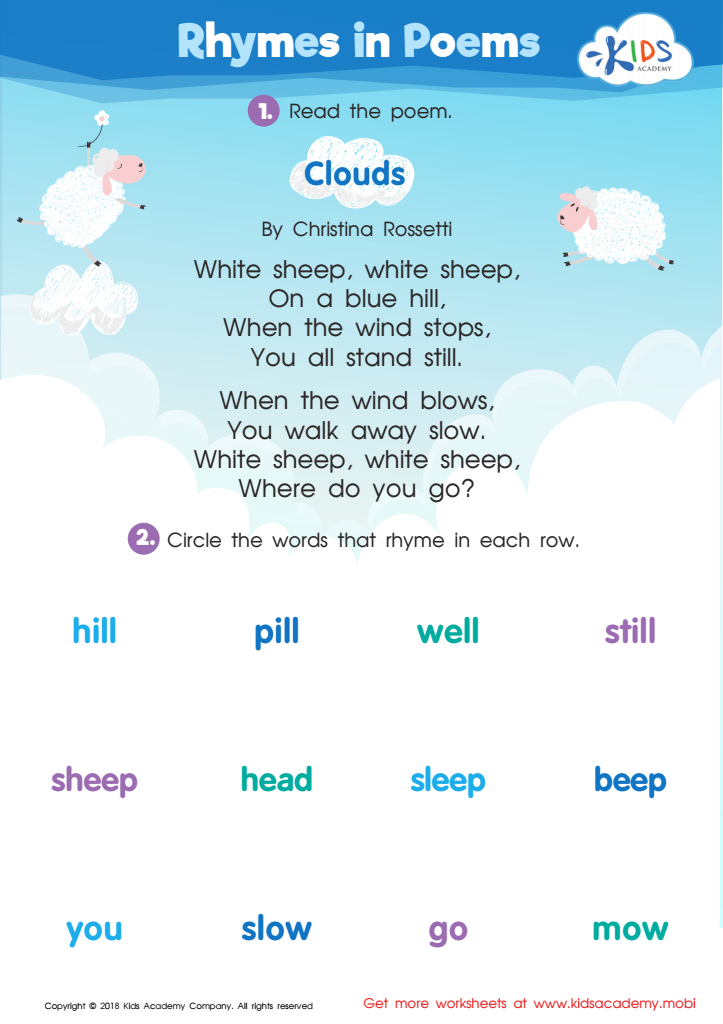
Rhymes in Poems Worksheet
 Assign to My Students
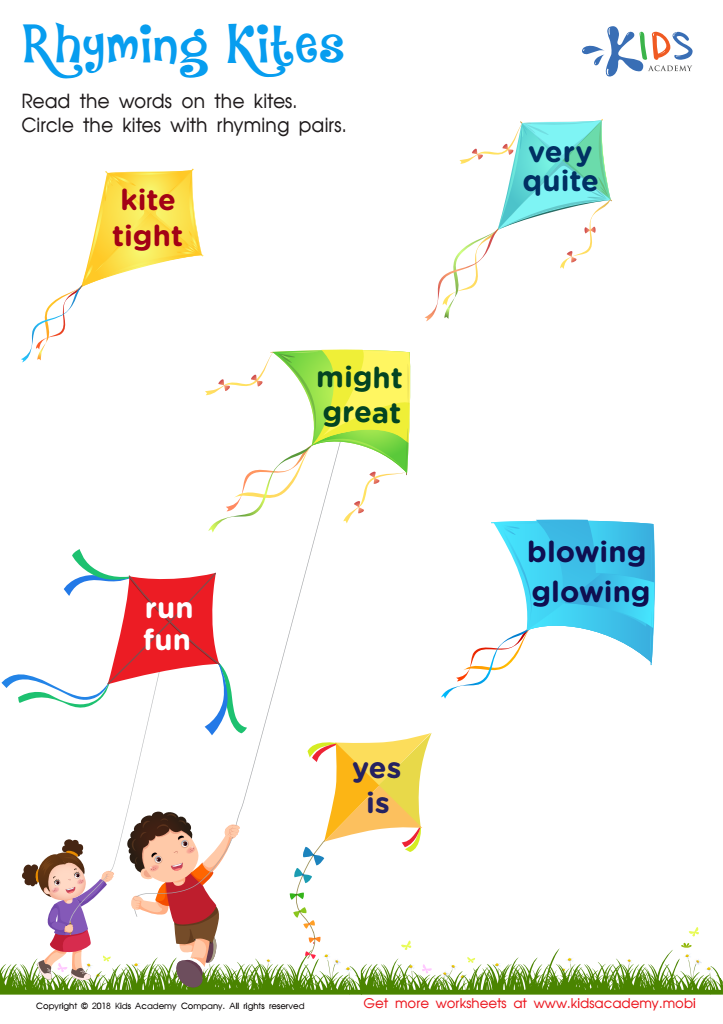
Rhyming Kites Worksheet
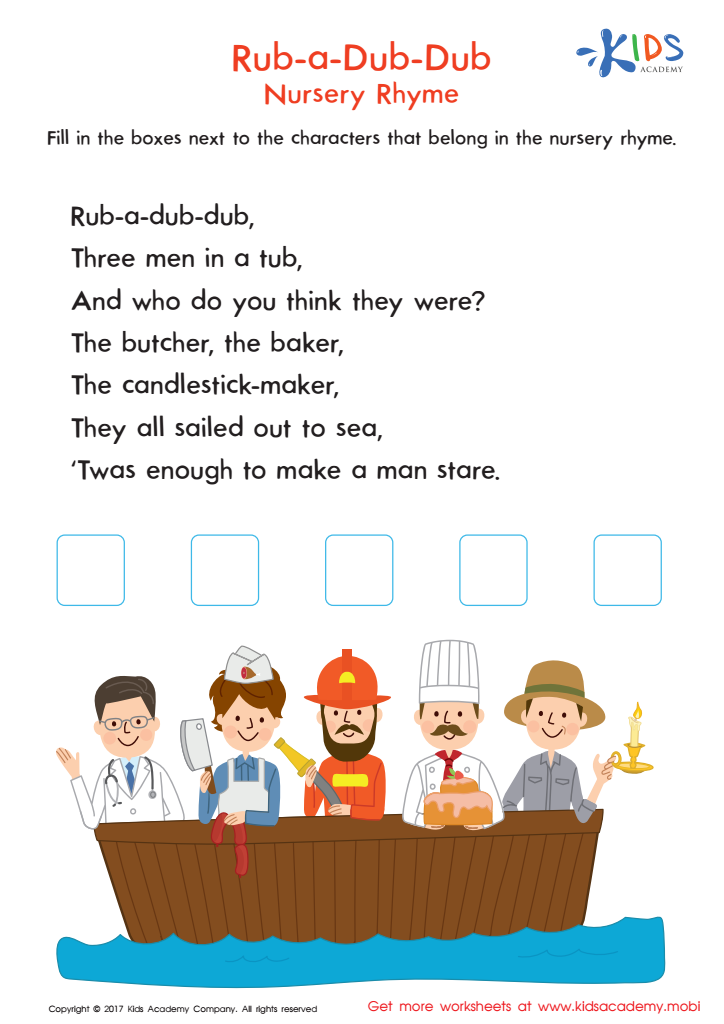
Rub a Dub Dub Printable







Rhyming skills are crucial for early literacy development in children aged 6-7. For parents and teachers, fostering this ability can significantly enhance a child's reading and writing proficiency. Rhyming helps children recognize phonemes, which are the individual sounds in words. This phonemic awareness is foundational for decoding words, an essential skill for reading fluency. As children identify and produce rhyming words, they become more attuned to the sounds within language, making it easier for them to navigate complex vocabulary.
Furthermore, engaging with rhymes and poetry can ignite a child’s interest in language. The playful nature of rhyming can make learning fun, encouraging more enthusiastic participation in literacy activities. As children recognize patterns in sounds, they develop stronger memory and recall skills, allowing them to better understand narrative structures and storytelling.
Additionally, rhyming promotes social-emotional development; sharing rhyming games or songs fosters bonding between parents, teachers, and children. It cultivates an environment where language is viewed as enjoyable, encouraging lifelong literacy. In summary, supporting the development of rhyming skills is essential, as it lays the groundwork for efficient reading, enhances linguistic and cognitive skills, and cultivates a love for words that benefits children throughout their educational journey.