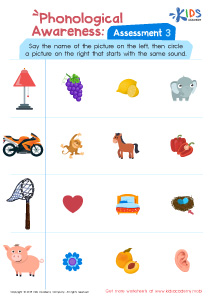
Vocabulary expansion Two Letter Phonics Worksheets for Ages 6-7
5 filtered results
-
From - To
Enhance your child's reading skills with our Vocabulary Expansion Two Letter Phonics Worksheets, perfect for ages 6-7. These engaging worksheets are designed to help young learners recognize and pronounce common two-letter sounds, nurturing early literacy skills. Each exercise focuses on building a strong phonetic foundation by blending essential consonants and vowels, preparing children for more complex words. Colorful illustrations and fun activities ensure that learning remains enjoyable and effective. Boost your child's confidence in reading and spelling while expanding their vocabulary with these expertly crafted educational resources. Ideal for at-home practice or classroom use.
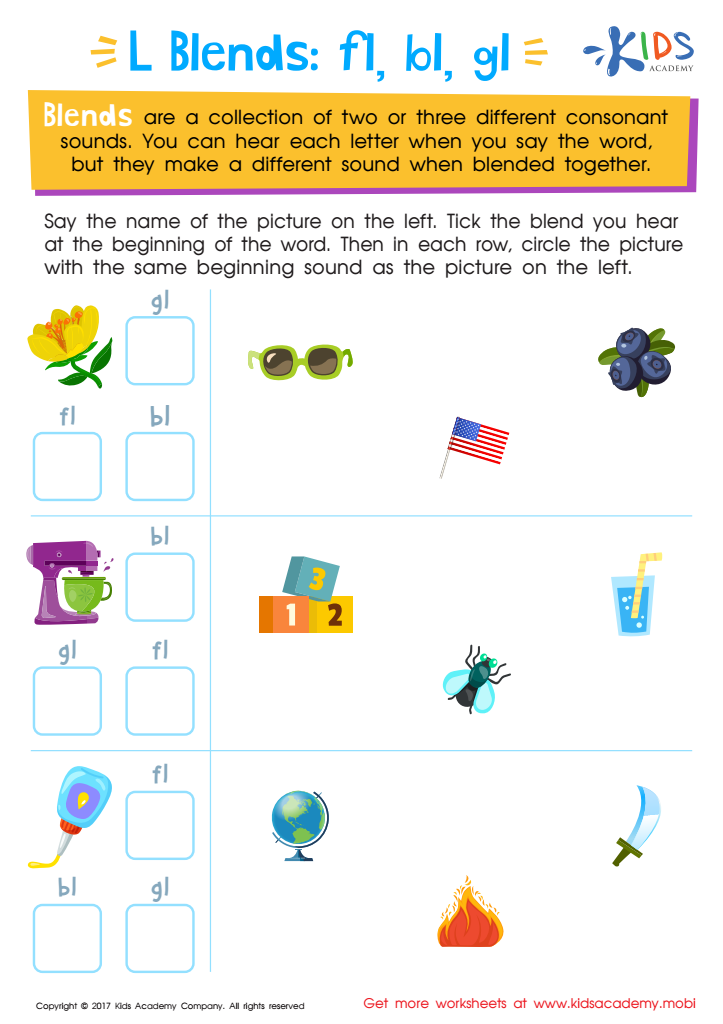
Blending Consonants: "Fl", "Bl" and "Gl" Printable
 Assign to My Students
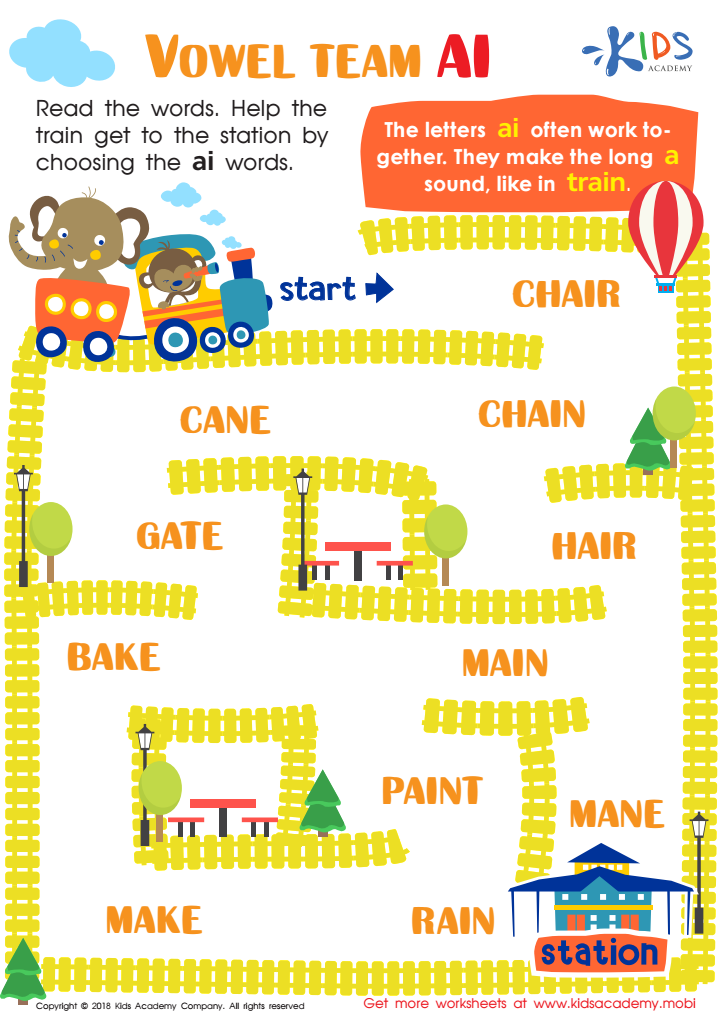
Vowel team ai Worksheet
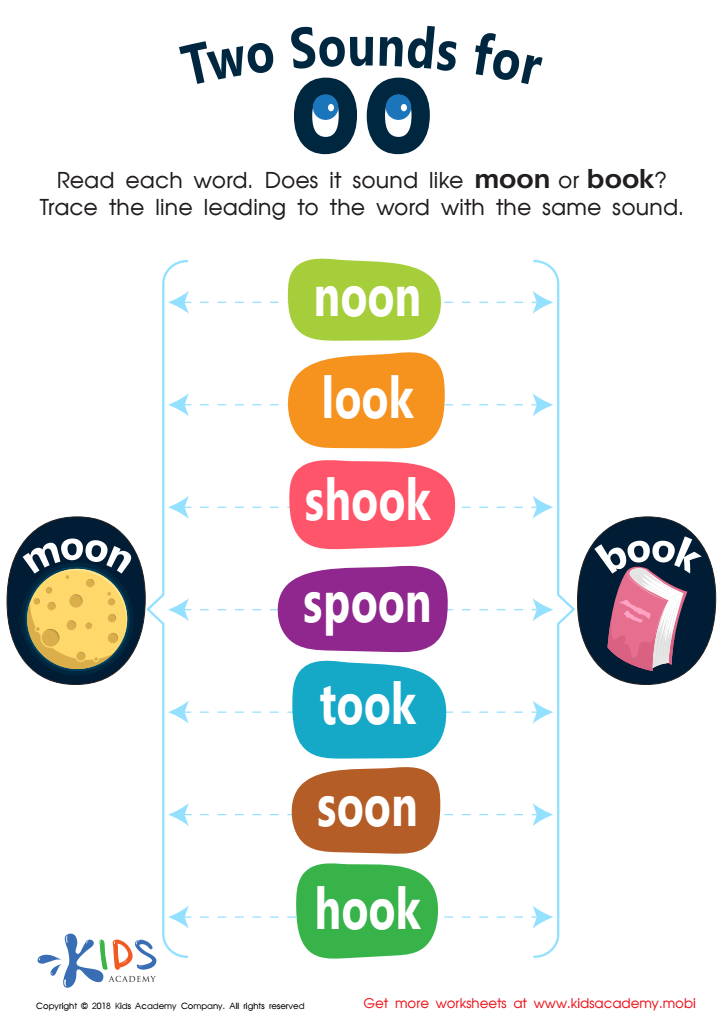
Two Sounds for OO Worksheet
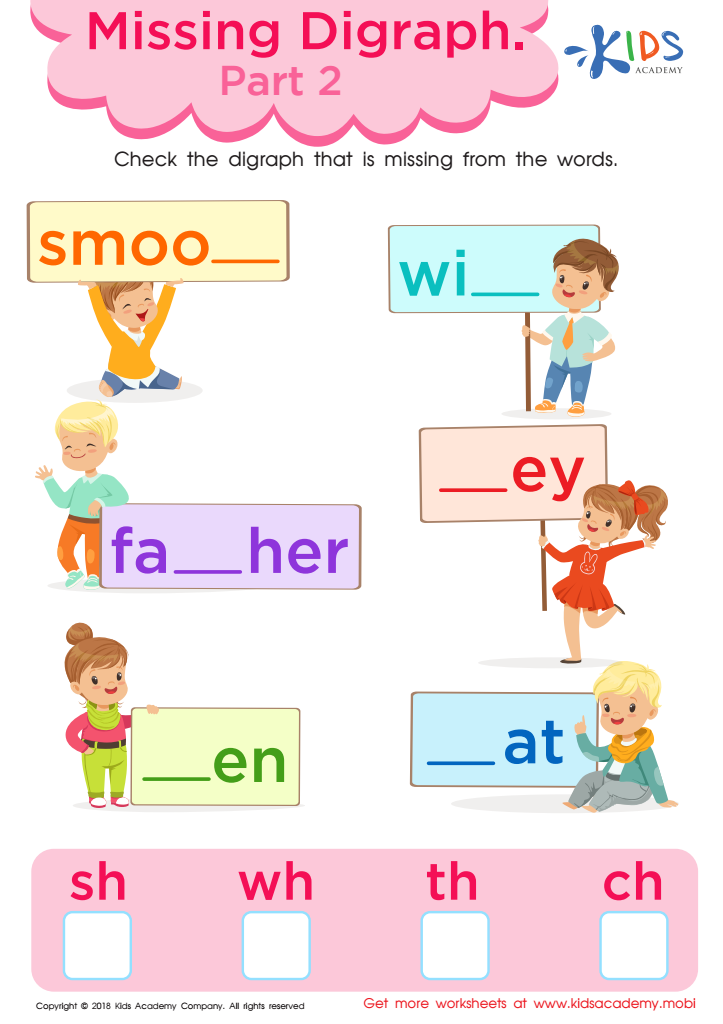
Missing Digraph: Part 2 Worksheet
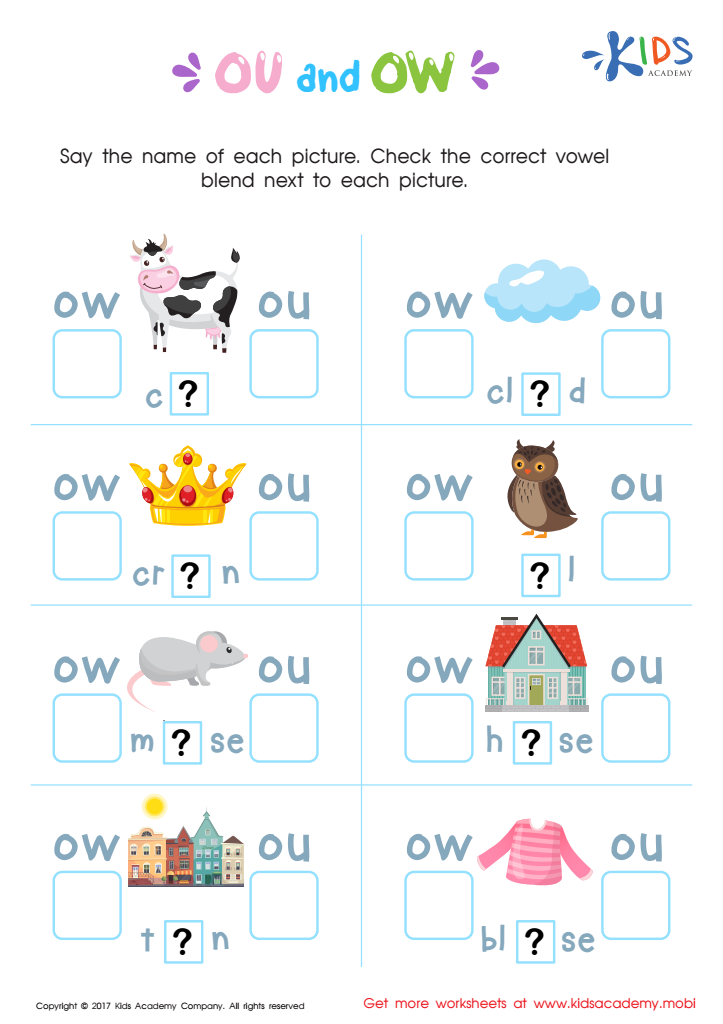
OU and OW Words Worksheet



Vocabulary expansion through two-letter phonics for children ages 6-7 is crucial for several foundational reasons. Firstly, phonics is the basic building block of reading. Understanding two-letter phonics, such as blends (e.g., 'bl', 'tr') and digraphs (e.g., 'ch', 'sh'), helps young learners decode words more efficiently, fostering fluent reading skills. This age group is at a pivotal developmental stage where they transition from recognizing individual sounds to blending them into coherent words, crucial for reading fluency and comprehension.
Secondly, a robust vocabulary enhances communication skills. Knowing and using a wide range of words allows children to express their thoughts more clearly and confidently. This articulation enriches their social interactions and enables more effective participation in classroom discussions and activities.
Moreover, vocabulary acquisition is closely linked to overall academic success. A rich vocabulary enables children to grasp more complex concepts across various subjects, including math and science. Exposure to diverse vocabulary at an early age also stimulates cognitive growth, enhancing memory, problem-solving, and critical thinking.
Finally, fostering vocabulary growth through two-letter phonics at ages 6-7 sets the stage for a lifelong love of reading and learning. When children feel competent and confident in their reading skills, they are more likely to engage enthusiastically with books and continue to expand their language abilities naturally over time.