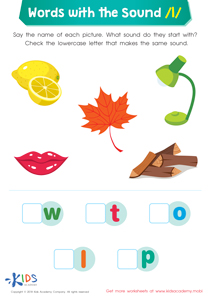
Alphabet familiarity Uppercase Letters Worksheets for Ages 6-7
4 filtered results
-
From - To
Enhance your child’s alphabet mastery with our Uppercase Letters Worksheets designed for ages 6-7. These engaging printables from Kids Academy focus on building alphabet familiarity, ensuring children recognize and confidently write uppercase letters. With a variety of fun, educational activities, students can strengthen their letter identification, improve handwriting skills, and develop a solid foundation for reading and writing. Perfect for classroom use or at-home practice, these worksheets are crafted to foster a love for learning and boost your child's literacy journey. Make learning the alphabet an enjoyable adventure with Kids Academy’s expertly designed resources.
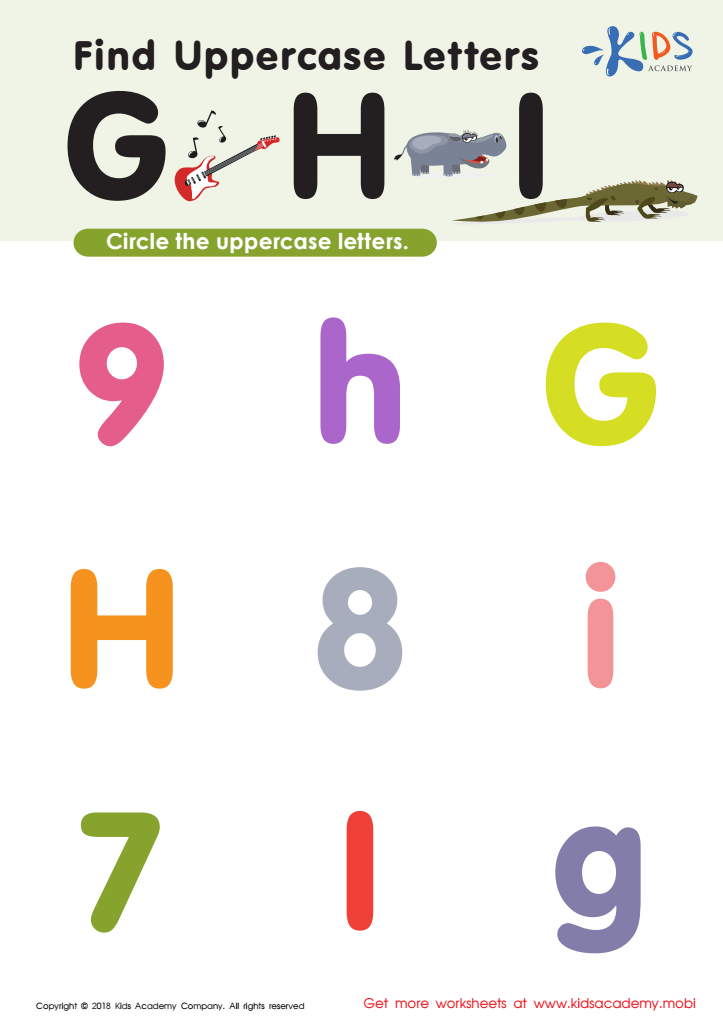
Find Uppercase Letters G, H, and I Worksheet
 Assign to My Students
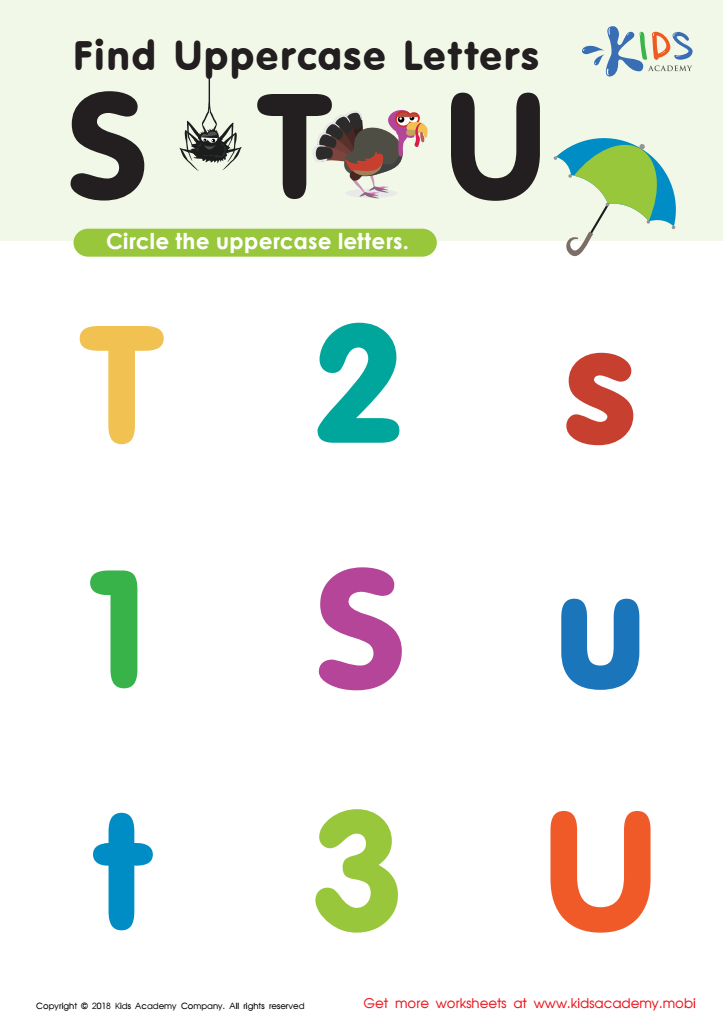
Find Uppercase Letters Worksheet
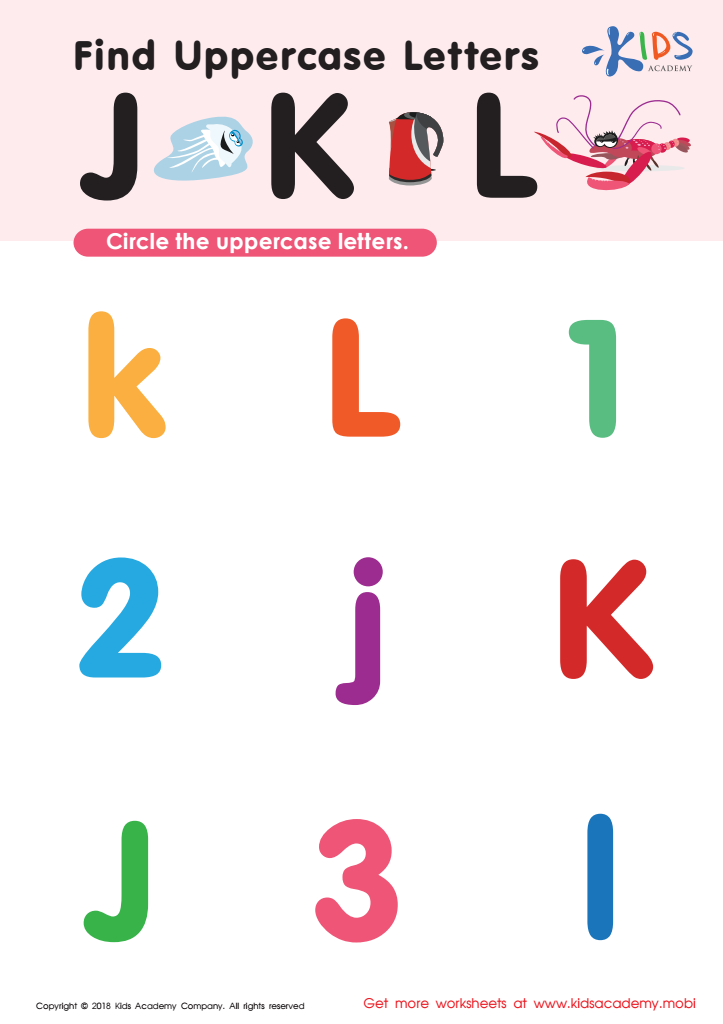
Find Uppercase Letters J, K, and L Worksheet
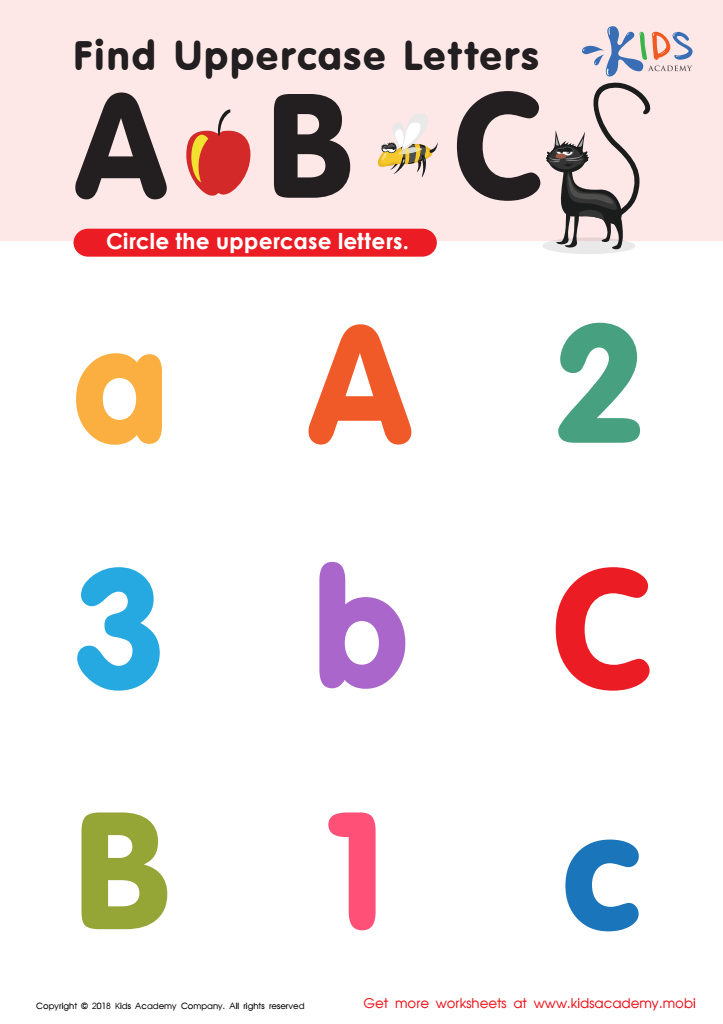
Find Uppercase Letters A, B, and C Worksheet








Ensuring alphabet familiarity, particularly with uppercase letters, is crucial for children aged 6-7 as it forms the foundation for future literacy skills. At this developmental stage, recognizing and being able to write uppercase letters helps children develop essential reading and writing competencies. Familiarity with the alphabet boosts a child's confidence and interest in reading, encouraging a love for books and learning.
Uppercase letters are generally easier for children to recognize and distinguish due to their distinct and simple shapes. This early recognition aids in phonemic awareness, enabling children to understand the relationship between letters and their sounds, which is a fundamental step for decoding words during reading.
Moreover, in early elementary grades, many instructional materials, labels, and classroom instructions employ uppercase letters, making it vital for children to comprehend these letters to follow along effectively. This familiarity not only supports academic success but also strengthens cognitive development, memory, and hand-eye coordination through writing practice.
In summary, parents and teachers should prioritize alphabet familiarity with uppercase letters for 6-7 year-olds, as it lays the groundwork for lifelong literacy, boosts self-esteem, and aids in the overall cognitive and educational development of children.