
Long vowel recognition Vowels and Consonants Worksheets for Ages 6-7
3 filtered results
Difficulty Level
Grade
Age
-
From - To
Subject
Activity
Standards
Discover our engaging Long Vowel Recognition worksheets designed specifically for ages 6-7. These activities will enhance your child's understanding of vowels and consonants through fun and interactive exercises. Kids will explore, identify, and practice long vowel sounds, helping them improve their reading and phonics skills. Our worksheets are visually appealing and easy to follow, making learning enjoyable for young learners. Boost your child's confidence in language arts while laying a solid foundation for their literacy journey. Explore a variety of practice materials that cater to different learning styles, ensuring effective and enjoyable education. Join us in making learning fun and productive!
Favorites
With answer key
Interactive
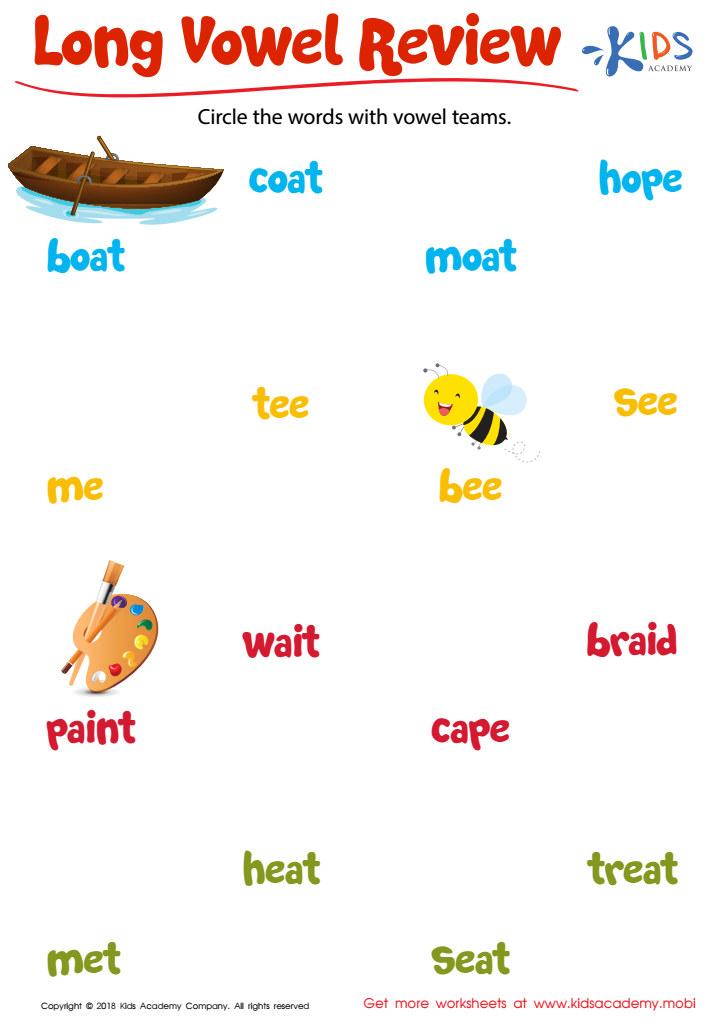
Long Vowel Review Worksheet
Vowel teams like "ea" and "ai" help us make words, and understanding these patterns aids emerging readers in becoming more fluent. This review worksheet has students finding words with vowel teams that make the long vowel sound, and helps them recognize high-frequency words.
 Assign to My Students
Long Vowel Review Worksheet
Worksheet
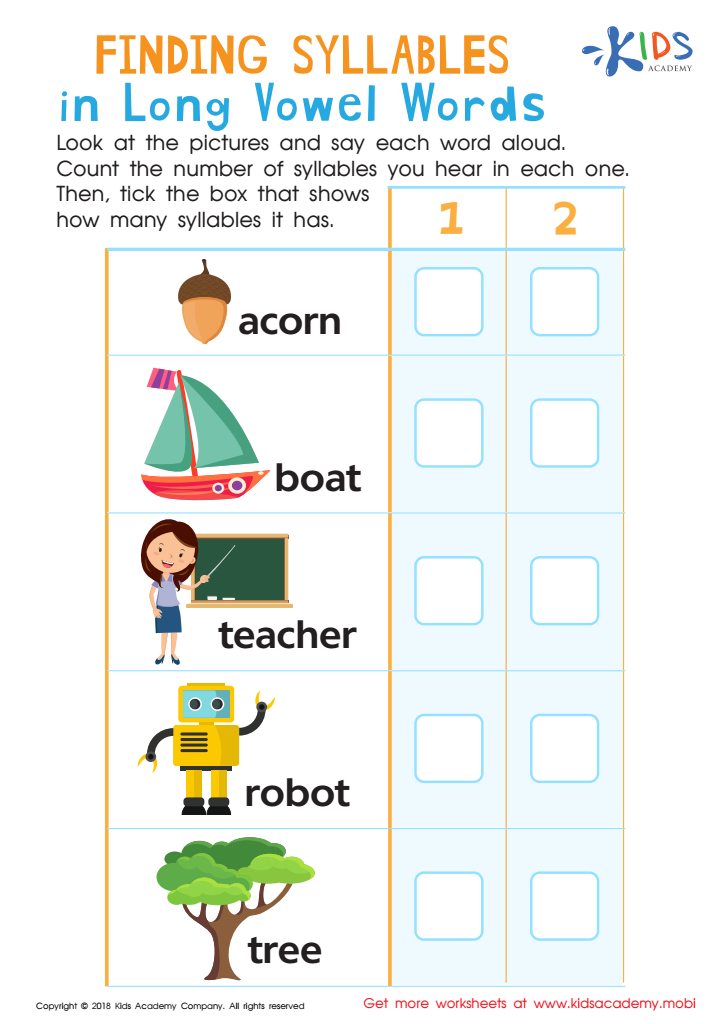
Finding Syllables in Long Vowel Words Worksheet
Help your kids identify objects and better count syllables in words. Look at the printout images with them and have them say each word out loud. Ask them to count syllables and tick the box with the correct number. With this worksheet, your kids will become more skilled.
Finding Syllables in Long Vowel Words Worksheet
Worksheet
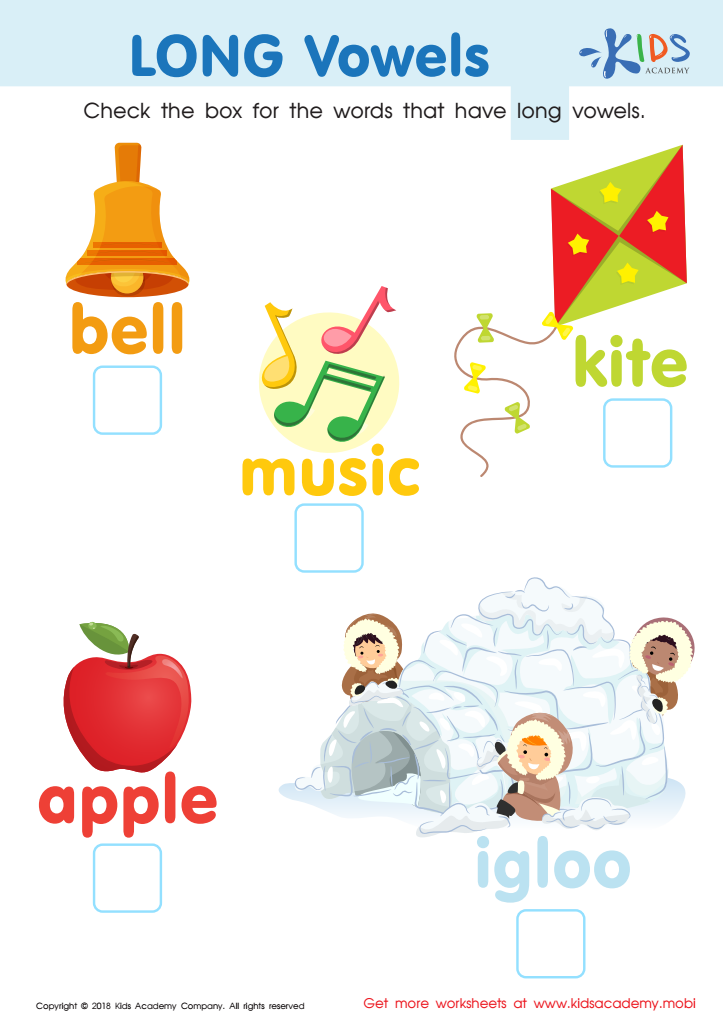
long vowels Worksheet
Have your early learner identify long vowels with this quick review. Ask them to name each picture aloud and listen out for the long vowel sounds to separate them from the shorter ones. Circle the ones that are long! Watch out for words with two vowels - they can be tricky!
long vowels Worksheet
Worksheet
Join Kids Academy for Free
Who is primarily going to use this learning content?



Long vowel recognition is a crucial component in early literacy development for children aged 6-7. Understanding the difference between long and short vowels helps children with reading fluency, comprehension, and spelling, which are foundational skills for lifelong learning. When students grasp this concept, they become more adept at decoding unfamiliar words during reading, which boosts their confidence and engagement.
For parents and teachers, fostering recognition of long vowels can enhance phonemic awareness—an essential skill that allows children to hear, identify, and manipulate sounds in spoken language. This skill is closely linked to successful reading abilities. Additionally, understanding vowels and consonants lays the groundwork for phonics instruction, enabling children to decode words effectively and predict spelling patterns.
By emphasizing long vowel recognition, adults can also cultivate a love for reading. As children master vowel sounds, they are likely to enjoy the stories they read, leading to better comprehension and retention of information. Ultimately, investing time in teaching long vowels not only supports academic success but also empowers children to become independent learners. Therefore, it's vital for parents and educators to prioritize this aspect of literacy in their teaching strategies.







