Number Recognition Flora and Fauna Worksheets for Ages 6-7
5 filtered results
Difficulty Level
Grade
Age
-
From - To
Subject
Activity
Standards
Enhance your child's number recognition skills with our engaging "Number Recognition Flora and Fauna Worksheets" designed for ages 6-7. These printable worksheets combine the beauty of nature with essential early math practice. Children will enjoy identifying numbers within captivating images of plants and animals, making learning both fun and educational. Our carefully crafted activities help young learners develop counting skills, attention to detail, and a love for nature. Perfect for classroom use or at-home practice, these worksheets offer an interactive, enjoyable way to reinforce key math concepts. Download now to make number learning a delightful adventure!
Favorites
With answer key
Interactive
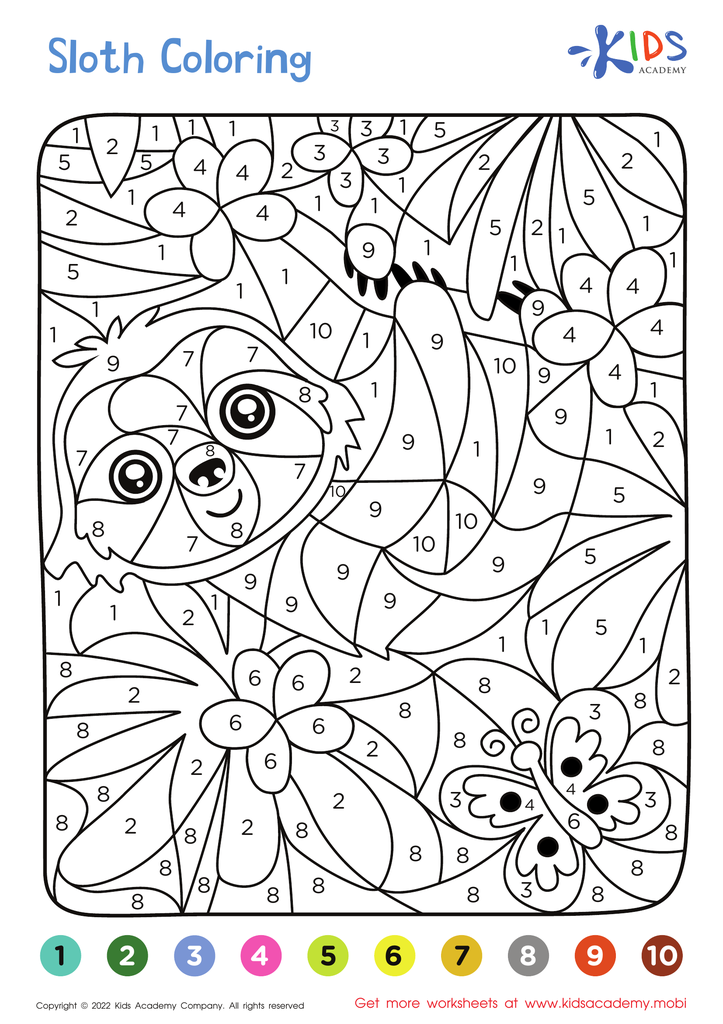
Sloth – Coloring by Numbers
Download our free coloring by numbers PDF page featuring a sloth! This fun activity is for all ages; just match the numbers to the colors and create a masterpiece. Get the entire family involved and see who can create the best sloth.
Sloth – Coloring by Numbers
Worksheet
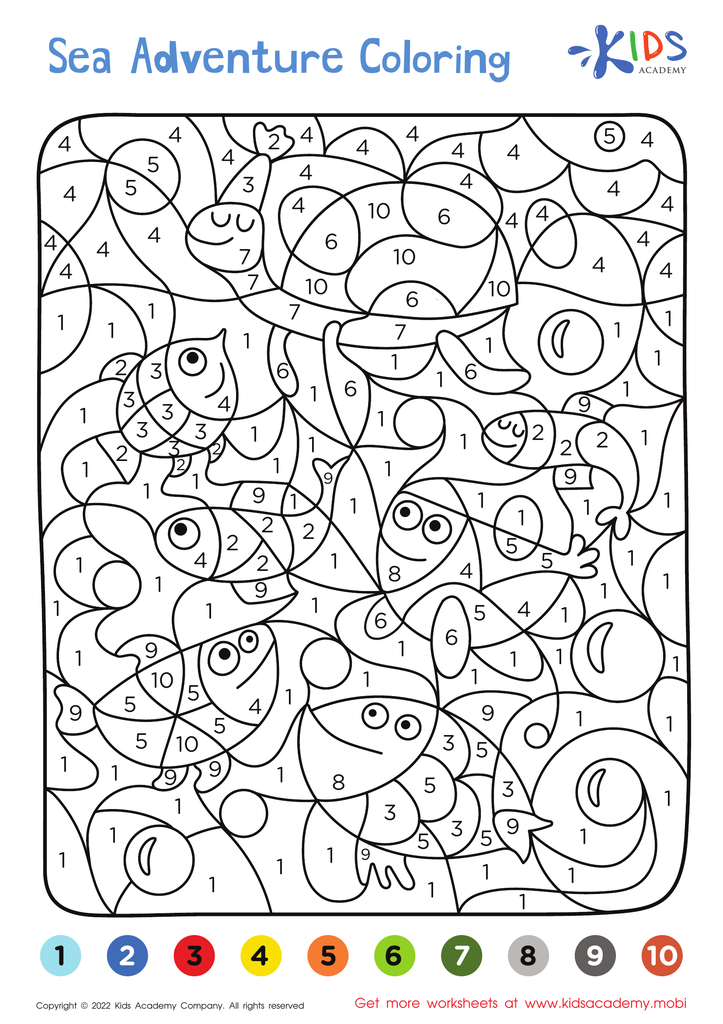
Sea Adventure – Coloring by Numbers
Unlock a sea adventure with a free coloring by numbers PDF page! Download now to get creative and fill the page with vibrant colors.
Sea Adventure – Coloring by Numbers
Worksheet
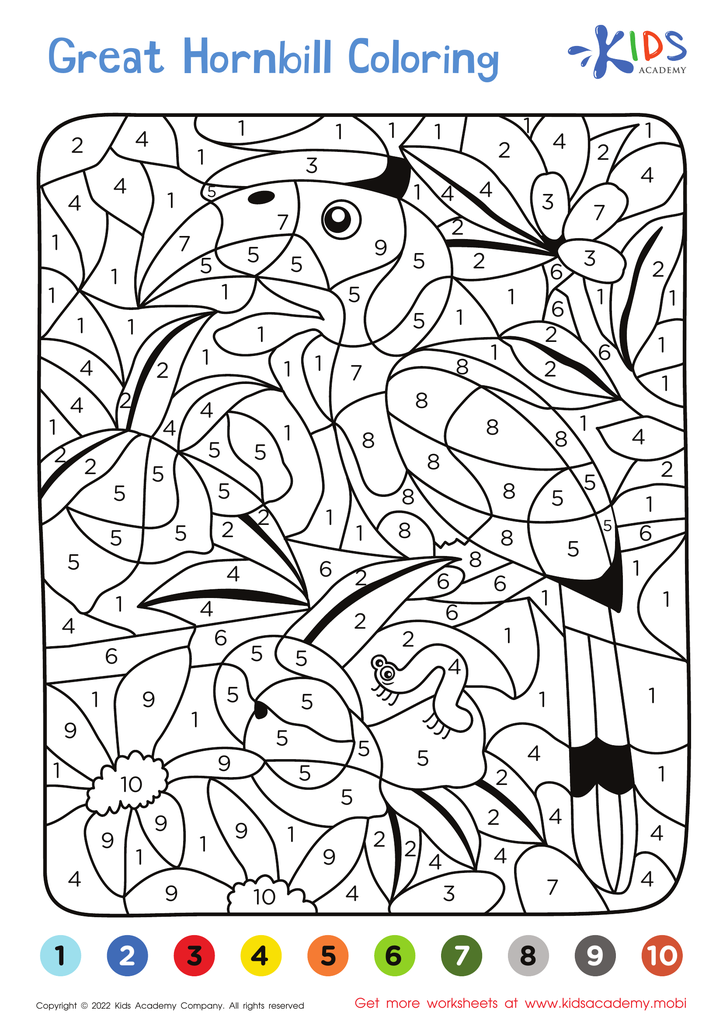
Great Hornbill – Coloring by Numbers
Download our free PDF page, featuring a hornbill for you to color in! Numbers are provided so you can follow along, making the picture come to life. Fun for all ages!
Download our free PDF page and have fun coloring a hornbill according to the numbers! You'll bring the picture to life with every stroke of your creativity. Perfect for all ages!
Great Hornbill – Coloring by Numbers
Worksheet
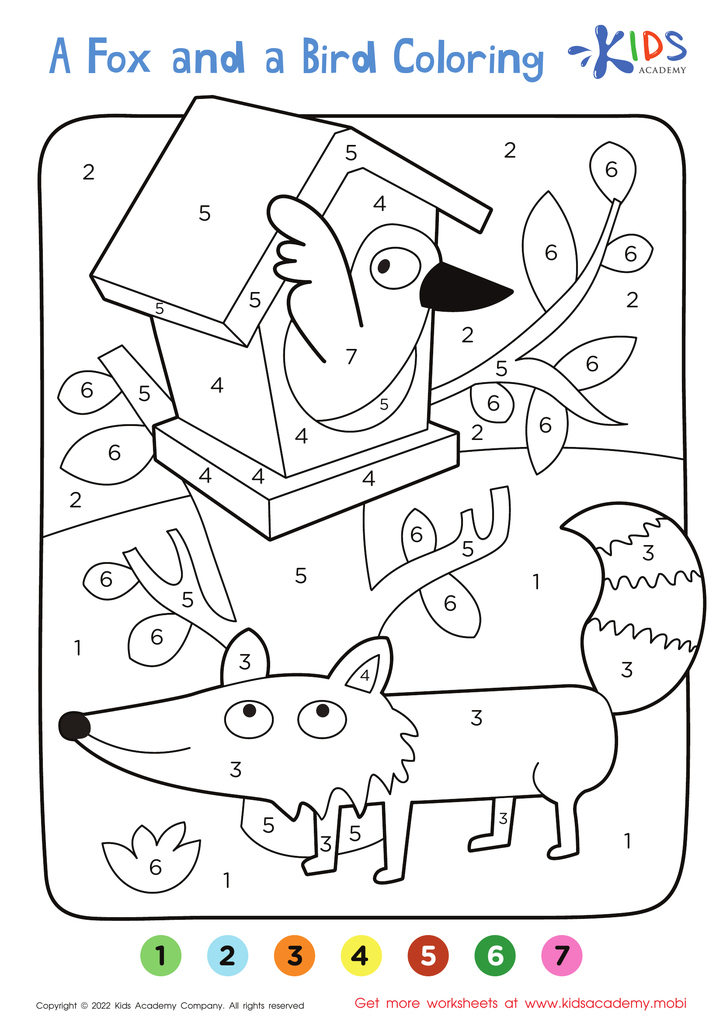
A Fox and a Bird – Coloring by Numbers
Download this free PDF page and color the fox and bird using numbers. Fun and easy way to be creative with the whole family! Spend quality time together and create something unique.
A Fox and a Bird – Coloring by Numbers
Worksheet
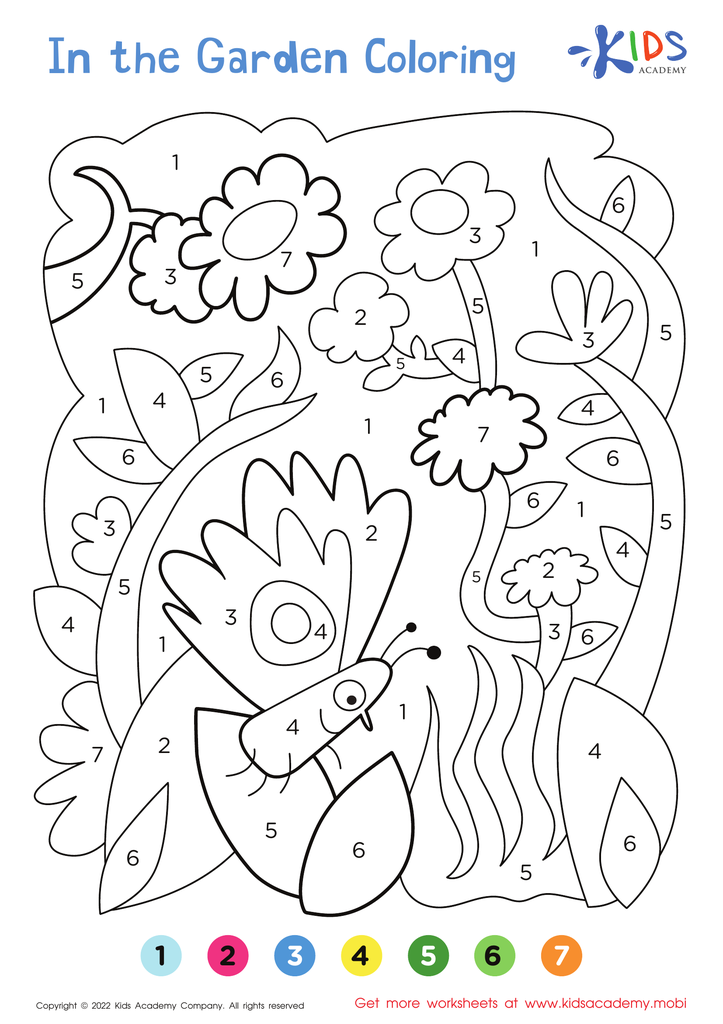
In the Garden – Coloring by Numbers
Download a free PDF page with a beautiful garden scene, perfect for coloring by numbers. Enjoy hours of creative fun and relaxation with this vibrant page.
In the Garden – Coloring by Numbers
Worksheet
Join Kids Academy for Free
Who is primarily going to use this learning content?


Number recognition and an understanding of flora and fauna are both crucial aspects of early childhood education for children aged 6-7. Firstly, number recognition forms the foundation of mathematical learning. At this age, children are developing basic arithmetic skills that require them to identify, understand, and differentiate numbers. Proficiency in number recognition enhances their ability to perform essential math operations, solve problems, and progress smoothly to more complex mathematical concepts.
Secondly, learning about flora and fauna stimulates curiosity and fosters a connection with the natural world. Knowledge of different plants and animals encourages environmental awareness and responsibility. This understanding can improve observational skills and promote critical thinking as children compare, classify, and learn about the diverse species.
Combining both elements can create enriching, hands-on learning experiences. For example, counting activities using leaves, flowers, or animal figures can integrate mathematical skills with nature education seamlessly. Engaging with nature has additional benefits including improved focus, reduced stress, and increased physical activity.
Thus, emphasizing number recognition alongside knowledge of flora and fauna prepares children academically while nurturing a respectful and informed connection to the environment. Investing in these areas enriches their overall development and sets a robust foundation for lifelong learning.