
Alphabet sequencing Worksheets for Ages 6-7
9 filtered results
Difficulty Level
Grade
Age
-
From - To
Subject
Activity
Standards
Discover our engaging alphabet sequencing worksheets designed specifically for children ages 6-7! These resources promote essential literacy skills by helping young learners recognize, arrange, and differentiate letters in the correct order. Our worksheets utilize fun illustrations and interactive activities that make learning enjoyable and effective. As kids practice alphabet sequencing, they enhance their phonetic awareness and prepare for future reading challenges. Perfect for classroom use or at-home practice, these worksheets align with early education standards, ensuring that your child builds a strong foundational skill set. Explore our collection today and empower your child on their learning journey!
Favorites
With answer key
Interactive
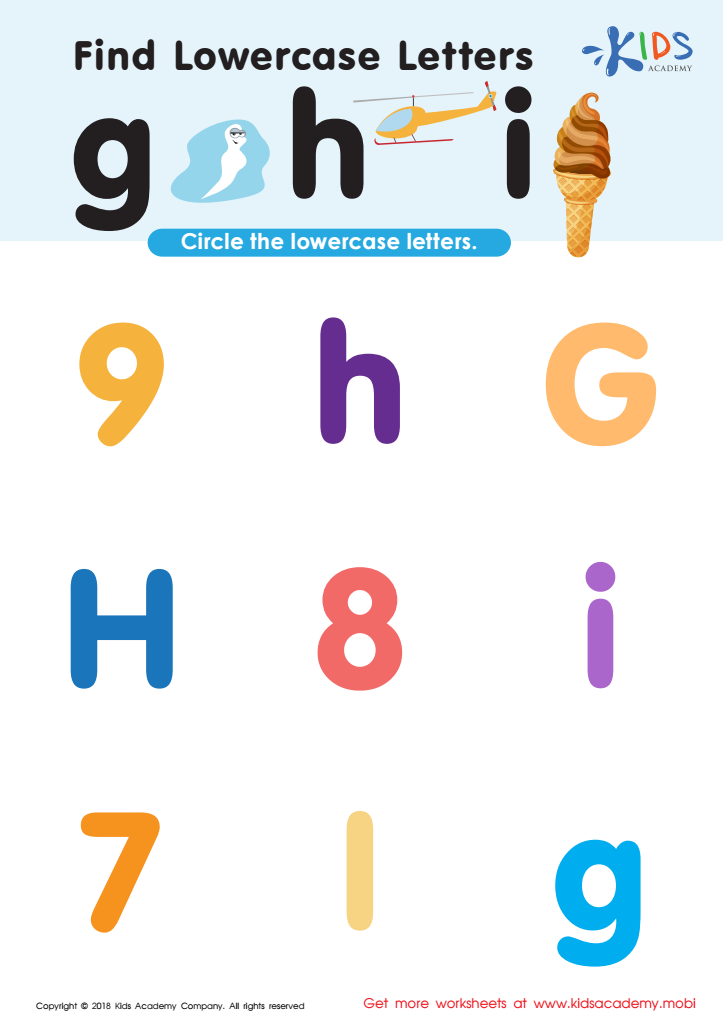
Find Lowercase Letters g h i Worksheet
Turn learning into a fun journey with your child! Use this free worksheet to find and circle the lowercase letters hidden amongst uppercase letters and numbers. Your child will understand what you're teaching them as they enjoy the search.
Find Lowercase Letters g h i Worksheet
Worksheet
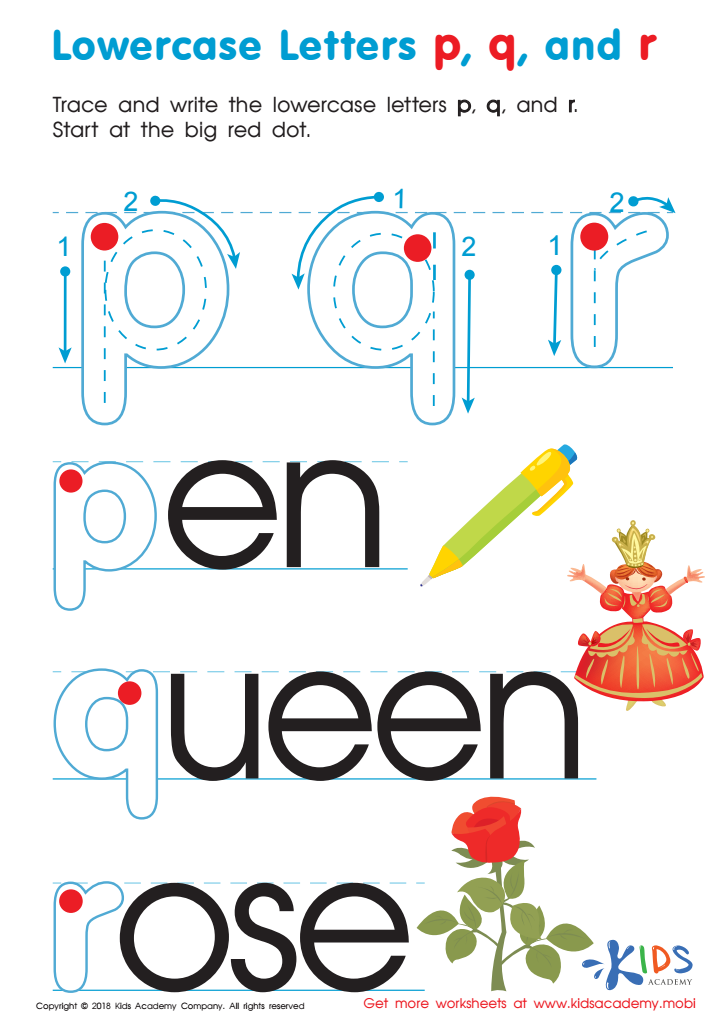
Lowercase Letters p q r Worksheet
Trace and write lowercase letters p, q and r with this fun worksheet. Each letter has a large red dot to mark the start, and dotted lines to follow with a pencil. Colorful images and text make it an enjoyable way to learn.
Lowercase Letters p q r Worksheet
Worksheet
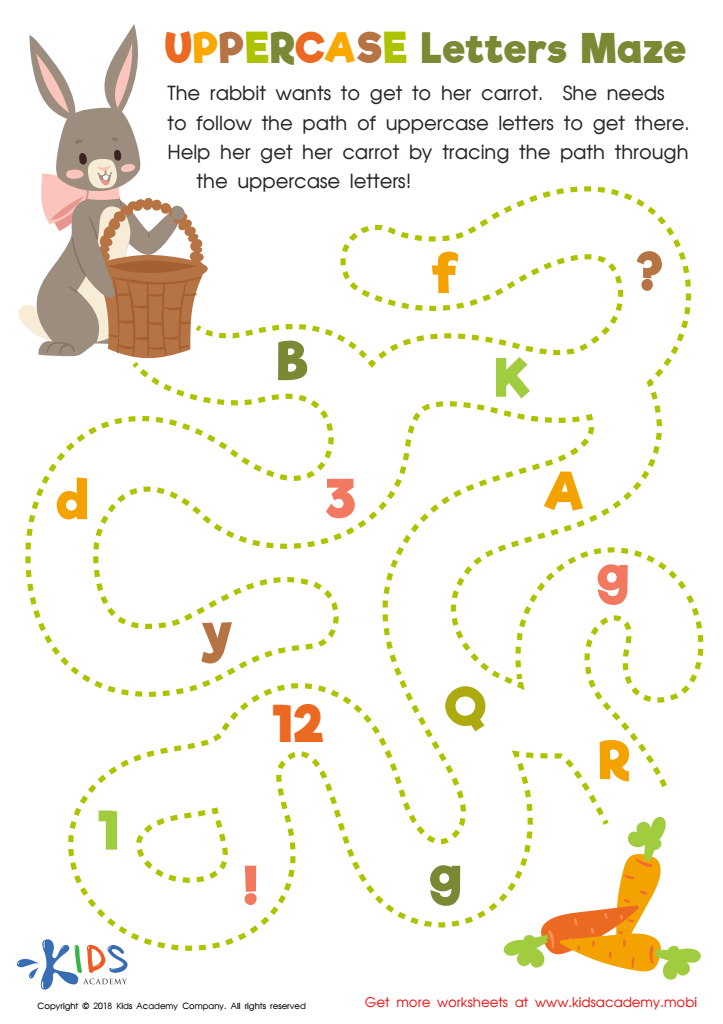
Uppercase Letters Maze Worksheet
Kids can have fun helping a rabbit find her carrot by picking the path with uppercase letters. This worksheet teaches letter differentiation while building confidence. Kids will have a great time while getting an essential skill!
Uppercase Letters Maze Worksheet
Worksheet
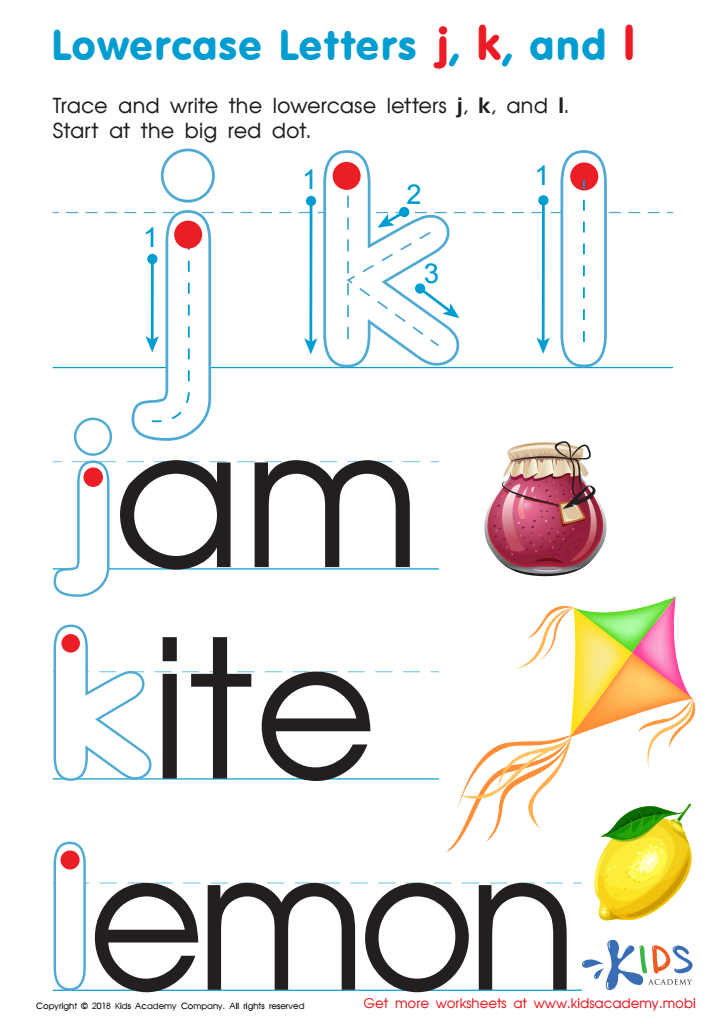
Lowercase Letters j k l Worksheet
Teach your child the difference between uppercase and lowercase letters. Have them trace and write the lowercase letters j, k, and l, starting at the red dot. Guide your child's hand to form the letters correctly.
Lowercase Letters j k l Worksheet
Worksheet
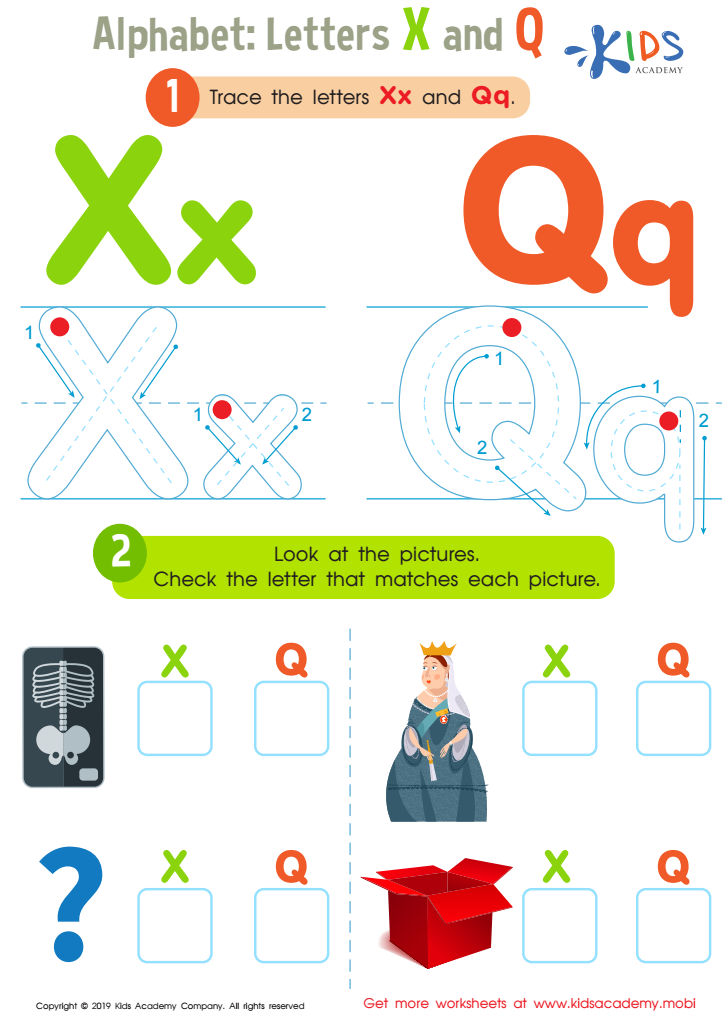
Letters X and Q Tracing Worksheet
Do you want your students to improve writing and letter recognition? This worksheet is a great place to start! Kids can trace the letters «X» and «Q» and identify pictures that match each letter. With a little encouragement, they'll do a great job!
Letters X and Q Tracing Worksheet
Worksheet
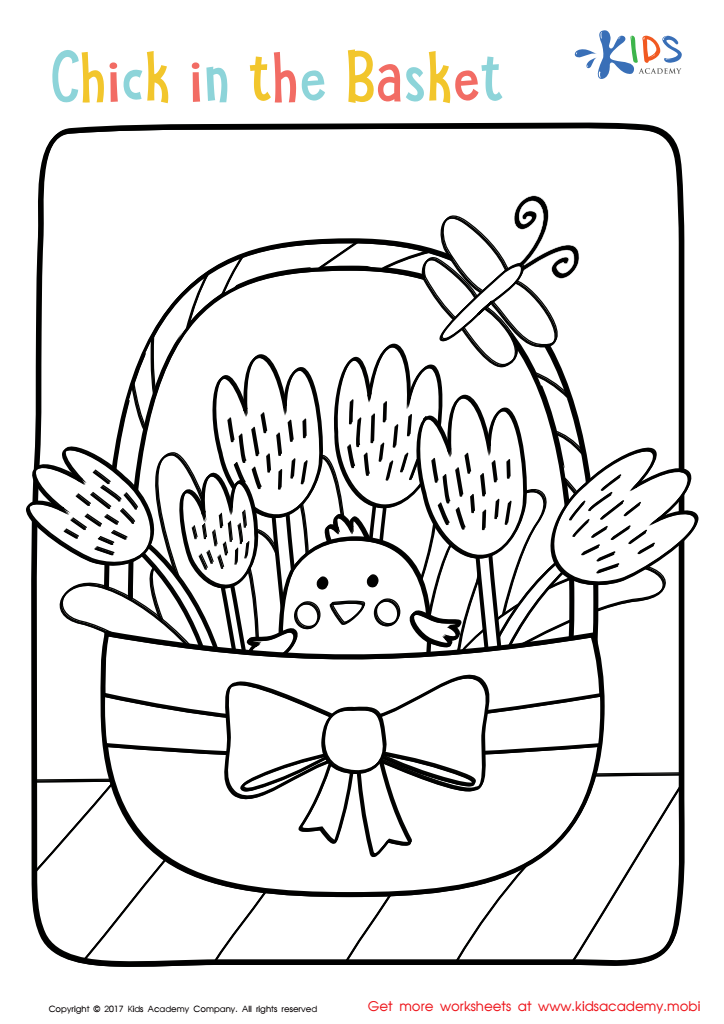
Easter: Chick in the Basket Worksheet
Kids love Easter morning when they wake up to a basket full of goodies! Let them get creative and learn something new with this Easter chick coloring page! It's perfect to use while they wait for the Easter bunny, and talk about the symbolism of chicks and baskets. They'll have fun learning and creating a wonderful image to decorate!
Download (PDF)
 Assign to My Students
Assign to My Students
Easter: Chick in the Basket Worksheet
Worksheet
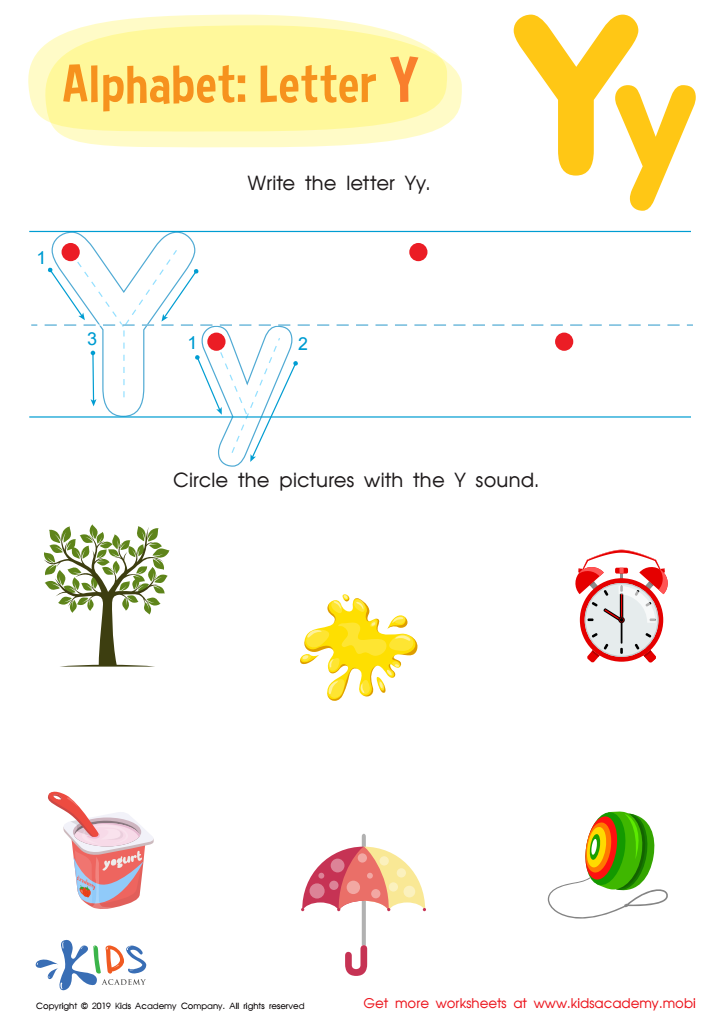
Letter Y Tracing Worksheet
Does your child need help with learning the final letters of the alphabet? This PDF worksheet is perfect then! Kids can practice tracing the letter «Y» and circle pictures that start with the same sound. Options include «yellow» and «yogurt». It's a great way of honing their letter-learning skills.
Letter Y Tracing Worksheet
Worksheet
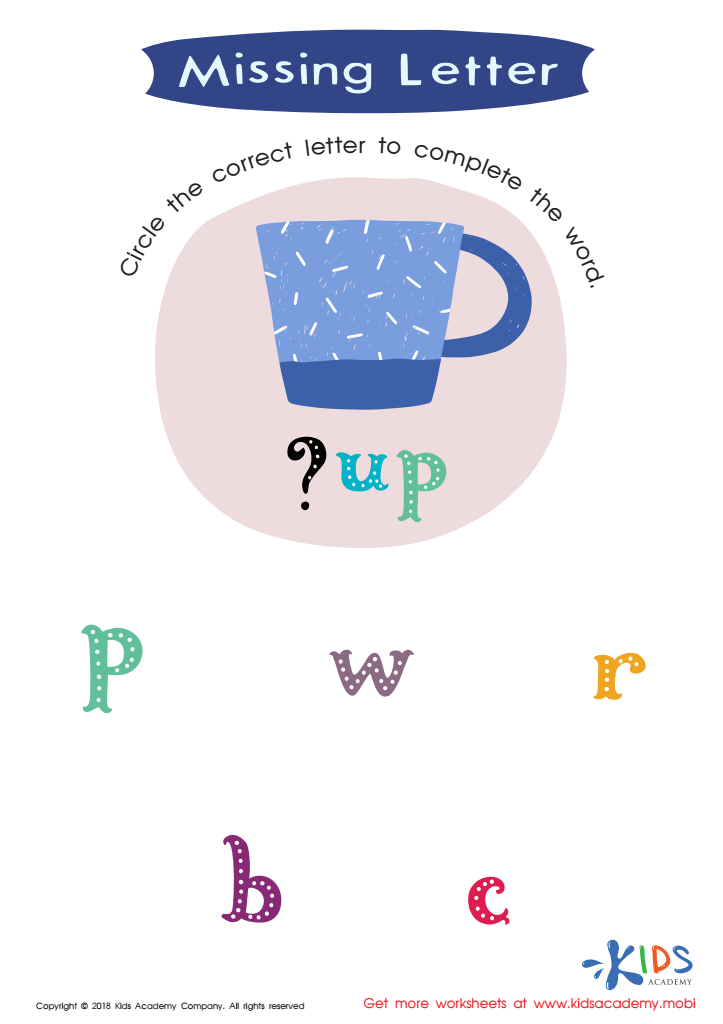
Missing Letter Worksheet
Congrats! If your kids can spell some small words, pat yourself on the back. Struggling with the alphabet? Help them learn with this simple worksheet. They'll have to find the missing letter to complete the word. Print this worksheet and help your little one find and circle the right letter.
Missing Letter Worksheet
Worksheet
Join Kids Academy for Free
Who is primarily going to use this learning content?








Alphabet sequencing is vital for children aged 6-7 as it lays the foundation for essential reading and writing skills. At this developmental stage, children are developing their phonemic awareness and literacy skills. Understanding the sequence of the alphabet not only helps kids recognize letters but also fosters their ability to decode words, forming connections between sounds and symbols. This early mastery is crucial as it leads to successful word recognition and fluency in reading.
Additionally, learning the alphabet in sequence aids in organizing thoughts and improving handwriting skills. Children learn to create words and sentences more efficiently, enabling clearer communication. Furthermore, understanding the alphabetical order is instrumental in fostering skills like sorting and categorizing, which enhances critical thinking and organizational habits.
For teachers and parents, nurturing this foundational skill promotes an overall love for reading and writing, creating lifelong learners. Engaging children with fun activities like songs, games, and interactive reading aids enhances both their motivation and retention. Ultimately, recognizing the significance of alphabet sequencing empowers educators and caregivers to be proactive in supporting children's literacy development, setting them on a path for academic success.








