Animal Classification Worksheets for Ages 6-7
6 filtered results
-
From - To
Discover our engaging Animal Classification Worksheets designed specifically for children aged 6-7! These worksheets provide a fun and interactive way for young learners to explore the diverse world of animals. Through colorful visuals and simple activities, kids will learn to categorize animals into different groups, such as mammals, birds, reptiles, and more. Each printable worksheet encourages critical thinking and enhances observational skills, while fostering a love for nature. Perfect for classrooms or home study, our worksheets promote essential early science skills and literacy development. Help your child grasp the fundamentals of animal classification in an enjoyable and educational way!
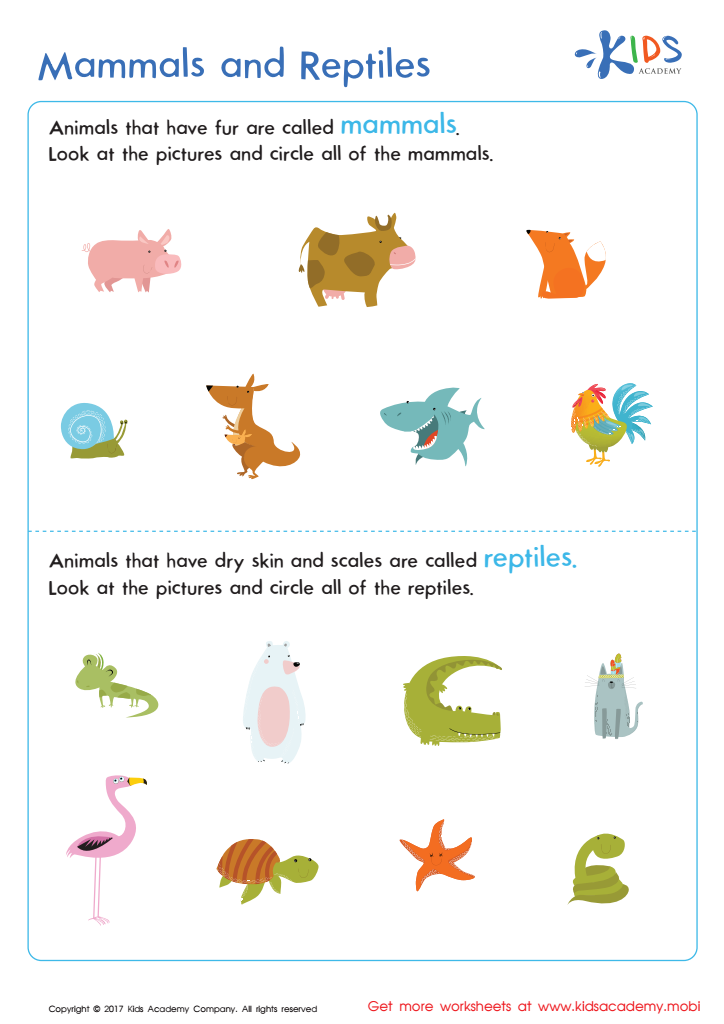
Mammals and Reptiles Worksheet
 Assign to My Students
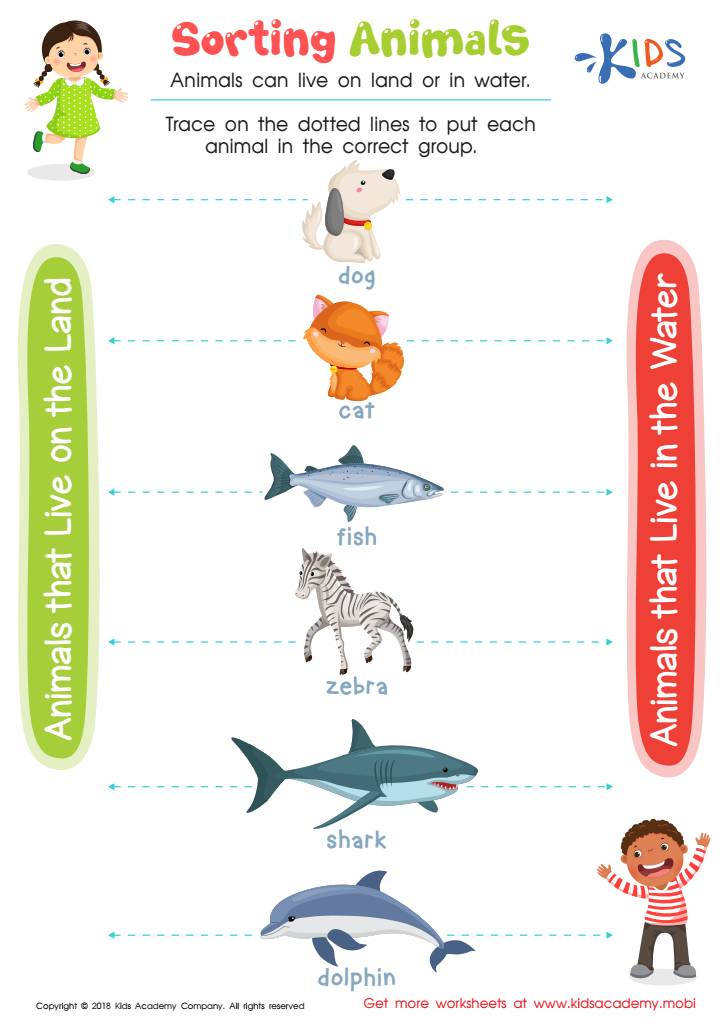
Sorting Animals Worksheet
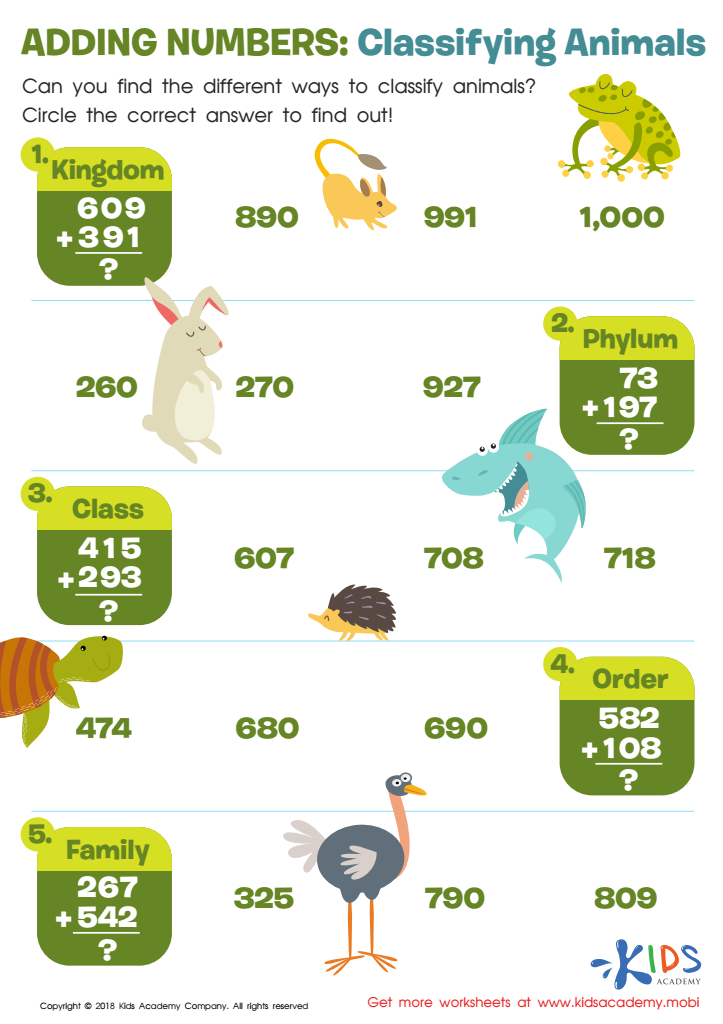
Adding Numbers: Classifying Animals Worksheet
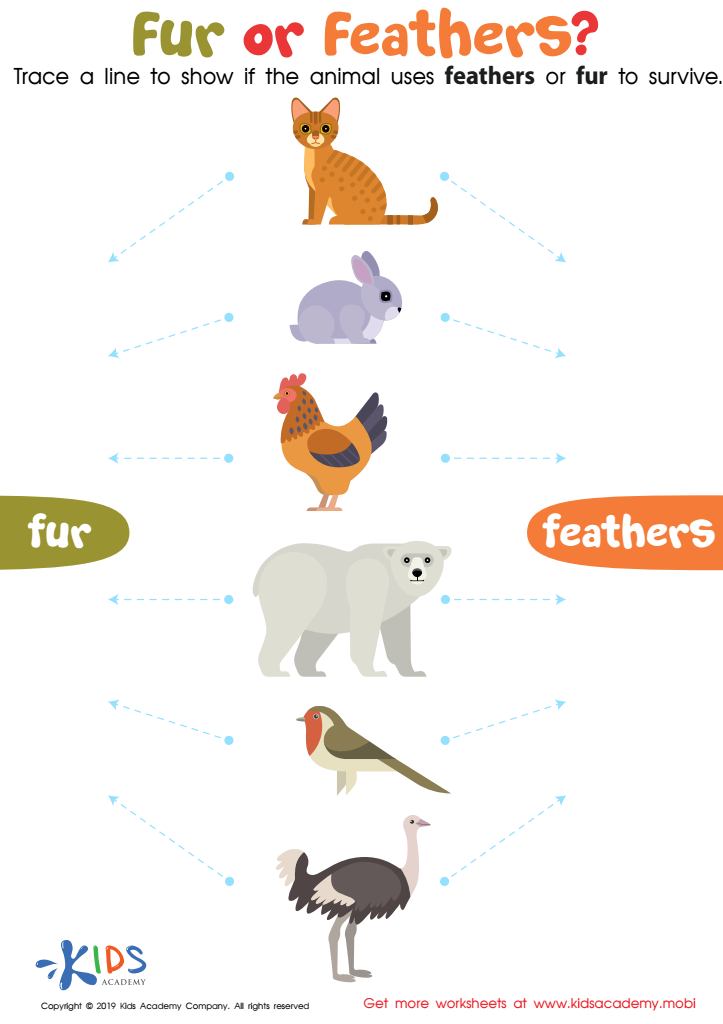
Fur or Feathers? Worksheet
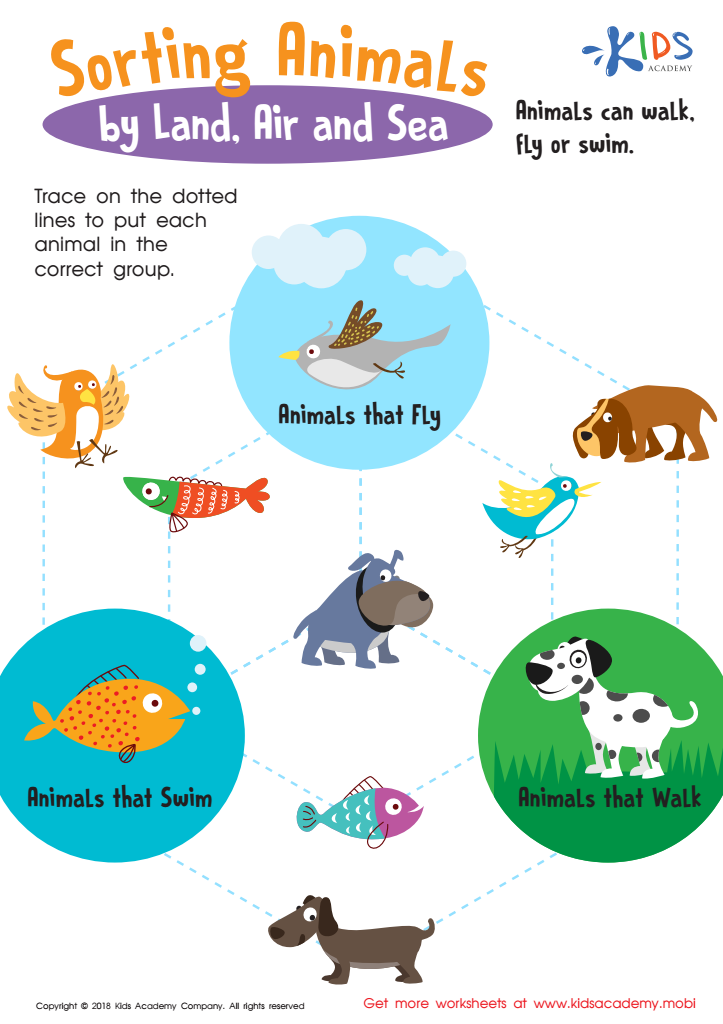
Sorting Animals by Land, Air and Sea Worksheet
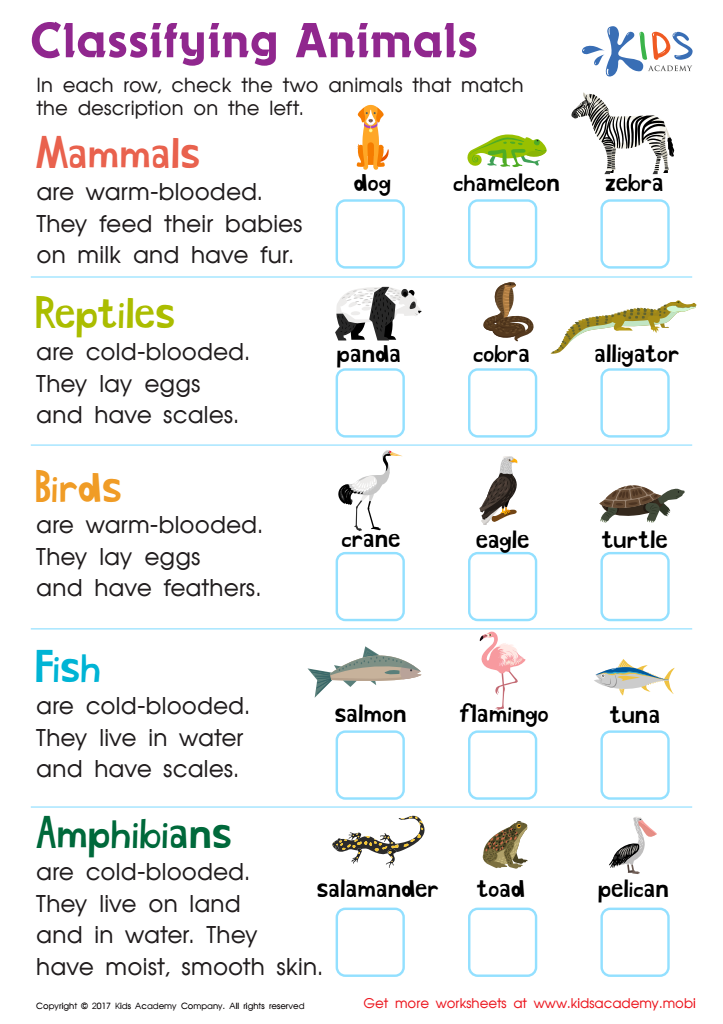
Classifying Animals Worksheet






Animal classification is an essential topic for kids aged 6-7 and warrants the attention of both parents and teachers. Firstly, understanding how animals are categorized fosters scientific thinking and curiosity. When children learn about different groups, such as mammals, reptiles, birds, and fish, they begin to appreciate the diversity of life and the unique characteristics of each animal. This knowledge lays the groundwork for a lifelong interest in nature, biology, and the environment.
Additionally, studying animal classification enhances critical thinking and problem-solving skills. Children engage in activities such as sorting and identifying animals based on shared traits, which strengthens their analytical abilities. It also encourages teamwork in classroom projects where children can discover animal-related information collaboratively.
Furthermore, acknowledging the ecosystem’s balance and the important roles various animals play is crucial for nurturing empathy and responsibility toward nature. As children learn about animal habitats and behaviors, they begin to understand the impact of human actions on wildlife, promoting environmental stewardship from a young age.
In conclusion, animal classification is not just an academic subject; it inspires curiosity, builds critical skills, and fosters a sense of environmental responsibility, making it an essential component of early education.








