
Basic Math knowledge Worksheets for Ages 6-7
3 filtered results
Difficulty Level
Grade
Age
-
From - To
Subject
Activity
Standards
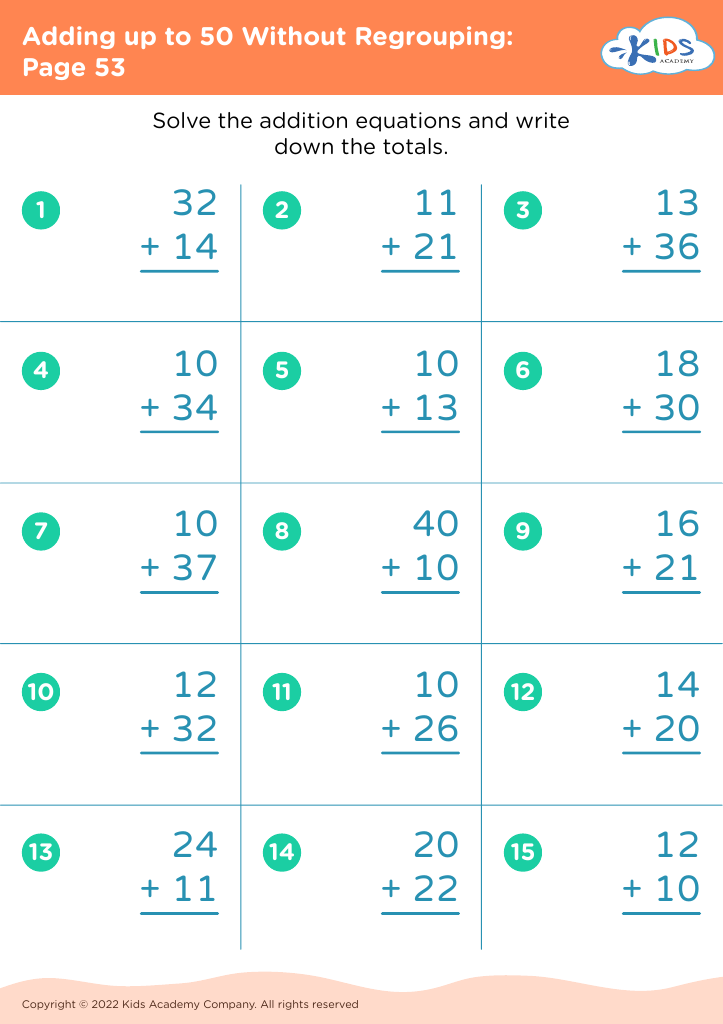
Explore our engaging "Basic Math Knowledge Worksheets" designed for children ages 6-7. These worksheets help young learners build essential math skills through fun and interactive activities. Covering topics such as addition, subtraction, number recognition, and early problem-solving, our resources cater to various learning styles. Each worksheet is crafted to reinforce foundational concepts while promoting critical thinking and confidence. With colorful designs and stimulating tasks, children will enjoy honing their math abilities at home or in the classroom. Perfect for educators and parents seeking to supplement their child’s education, our worksheets provide valuable practice to inspire mathematical success!
Favorites
With answer key
Interactive
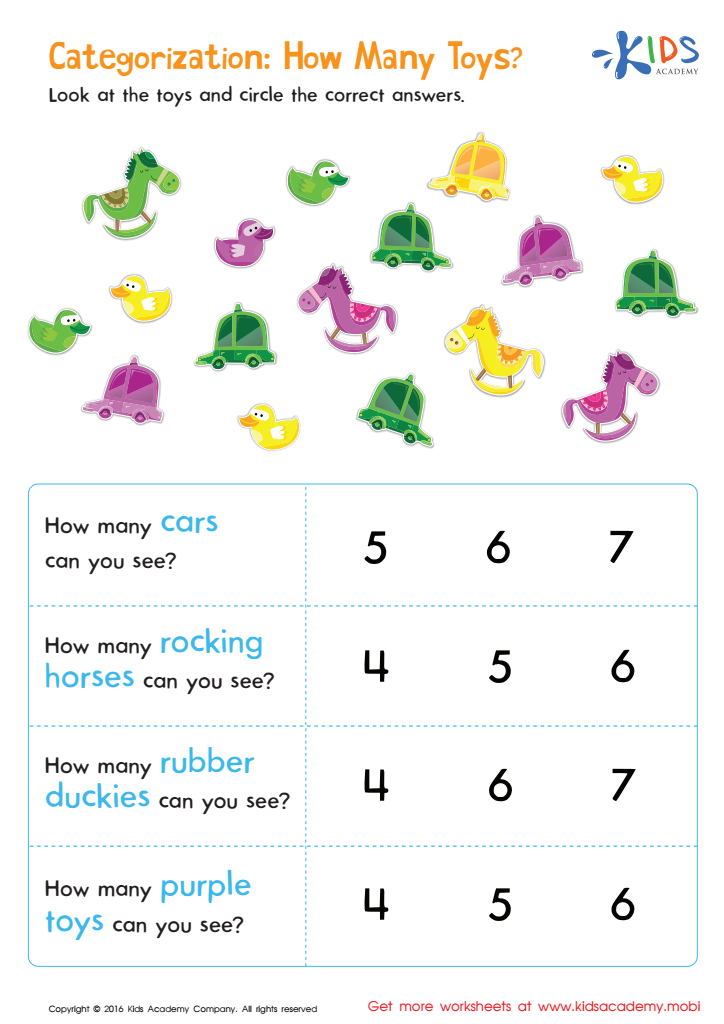
Classifying Toys by Type and Color Sorting Worksheet
Kids Academy offers free math worksheets to help practice counting, categorization & recognition skills. Kids will enjoy counting by color & type while strengthening problem-solving & literacy skills.
 Assign to My Students
Classifying Toys by Type and Color Sorting Worksheet
Worksheet
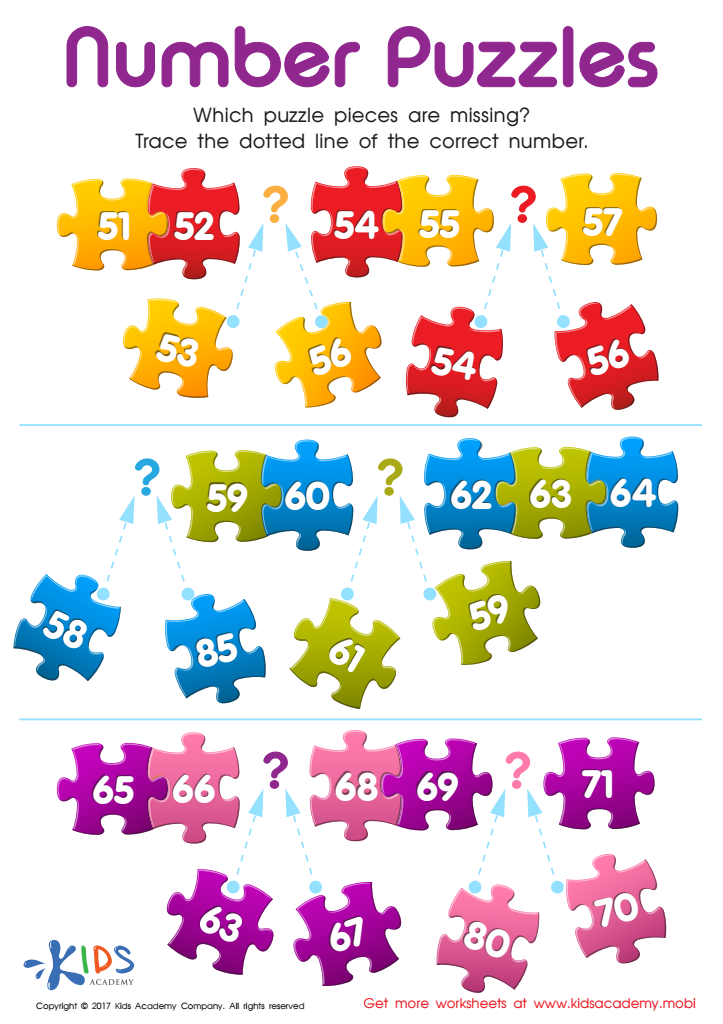
Number Puzzles Worksheet
In this tracing paper, your child must identify the missing numbers in the puzzle. Guide them as they trace the line for the correct number to complete the worksheet. This activity will help boost their problem-solving skills.
Number Puzzles Worksheet
Worksheet
Join Kids Academy for Free
Who is primarily going to use this learning content?







.jpg)
Basic math knowledge for ages 6 to 7 is foundational for children's academic success and everyday life skills. During this crucial developmental stage, children begin to form a strong arithmetic base, learning concepts like addition, subtraction, and the understanding of numbers. Grasping these foundational skills not only aids in future mathematical learning but also enhances critical thinking and problem-solving abilities.
Parents and teachers should care about basic math knowledge because it fosters confidence in children, encouraging them to tackle more challenging math concepts as they progress through school. Moreover, math skills are integrally linked to various life skills. For instance, children apply basic math when managing money, measuring ingredients while cooking, or understanding time, all of which are essential for independent living.
Moreover, early math education is linked to overall cognitive development. Engaging children with fun math activities promotes excellent reasoning skills and can enhance their academic performance in other subjects, such as science and technology. By supporting children's early math education, parents and teachers lay the groundwork for lifelong learning and problem-solving, equipping them with skills beneficial not just academically, but also socially and personally.








