Fractions understanding Worksheets for Ages 6-7
3 filtered results
-
From - To
Discover our engaging "Fractions Understanding Worksheets" designed specifically for children aged 6-7. These interactive resources help young learners grasp the concept of fractions in a fun and approachable way. Each worksheet features colorful visuals and relatable scenarios, enabling students to identify, compare, and play with fractions confidently. Our carefully crafted exercises promote critical thinking and enhance problem-solving skills, ensuring a solid foundation in mathematics. Suitable for both classroom and home use, these worksheets can adapt to various learning styles, making fractions an exciting topic for every child. Download now and watch your little ones thrive in their mathematical journey!
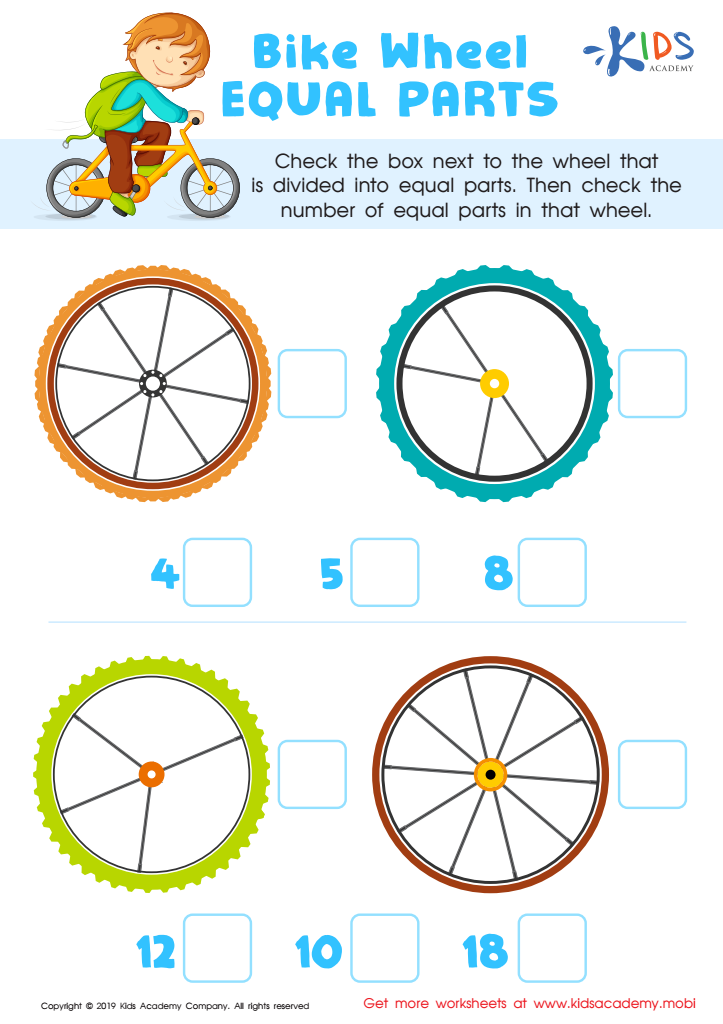
Bike Wheel Equal Parts Worksheet
 Assign to My Students
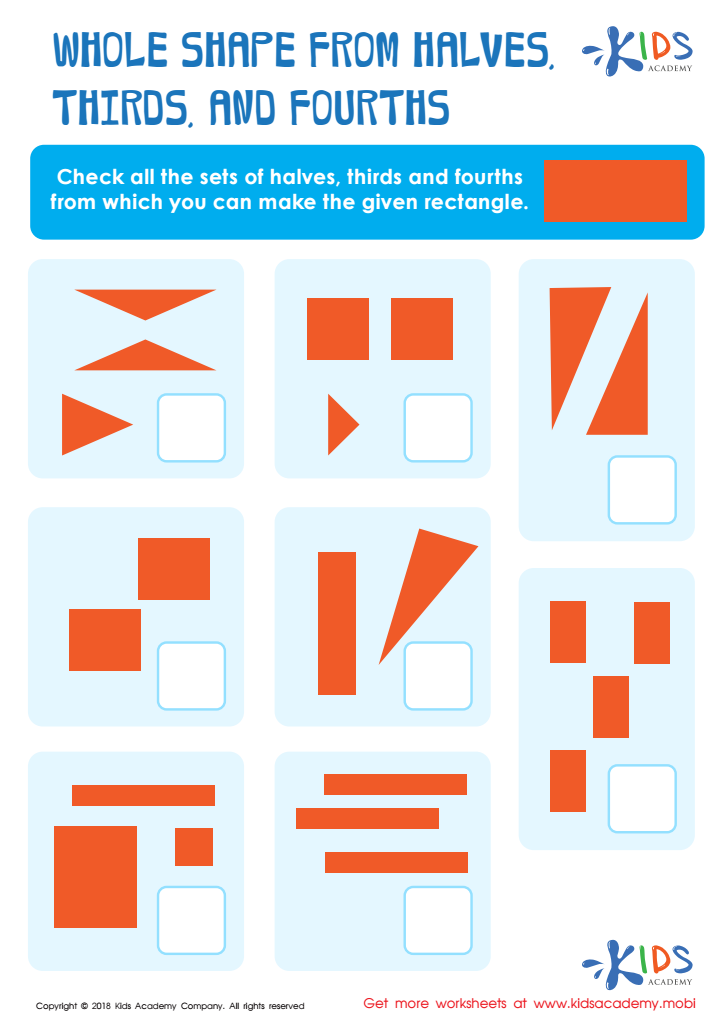
Whole Shape from Halves, Thirds and Fourths Worksheet







Understanding fractions at ages 6-7 is crucial for several reasons. First, early proficiency in fractions lays a strong foundation for future math concepts. This age group begins to make connections between the whole and its parts, learning to see numbers not only as distinct units but also as components of a greater whole, which is essential for advanced mathematics.
Moreover, mastering fractions enhances critical thinking and problem-solving skills. Children begin to understand division and sharing, concepts they encounter in everyday life, such as splitting a pizza or sharing candy. This can make math more relatable and less intimidating, fostering a positive attitude toward the subject.
Additionally, understanding fractions promotes the development of rational number sense. This is critical, as fractions appear in various real-world contexts, from cooking to budgeting. By grasping fractions early, children develop essential life skills that they will employ throughout their lives.
Lastly, when parents and teachers emphasize fractions, they encourage a collaborative learning environment. This involvement not only supports academic growth but also strengthens the bond between caregiver and child, fostering a lifelong appreciation for learning. Therefore, a focus on fractions at this age is vital for effective educational development.








