
Improve counting Worksheets for Ages 6-7
3 filtered results
Difficulty Level
Grade
Age
-
From - To
Subject
Activity
Standards
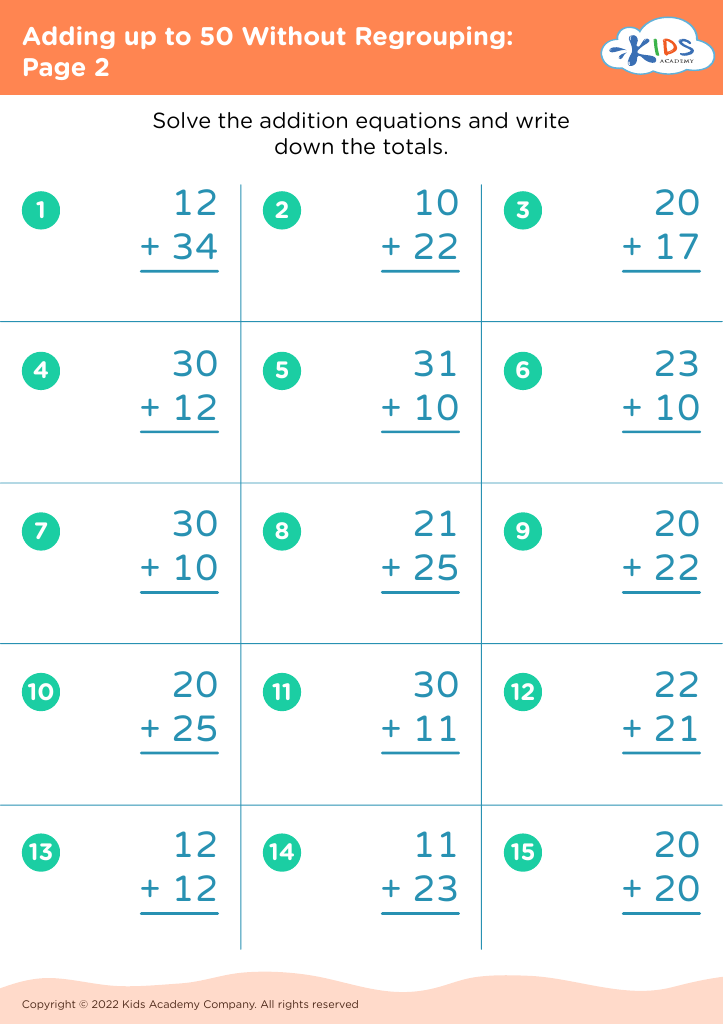
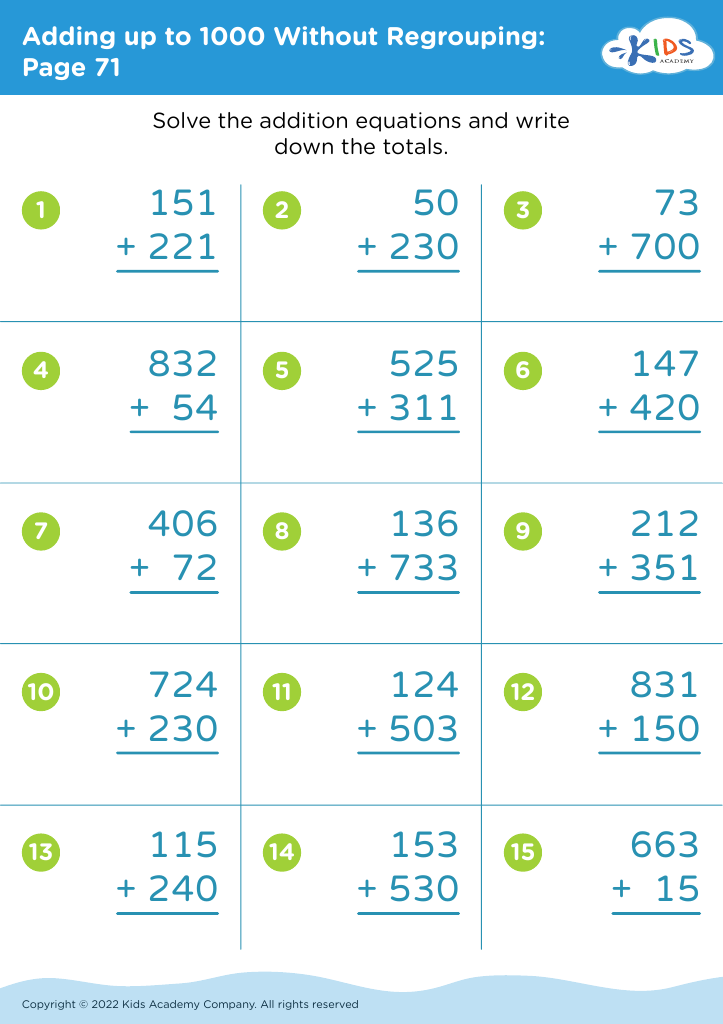
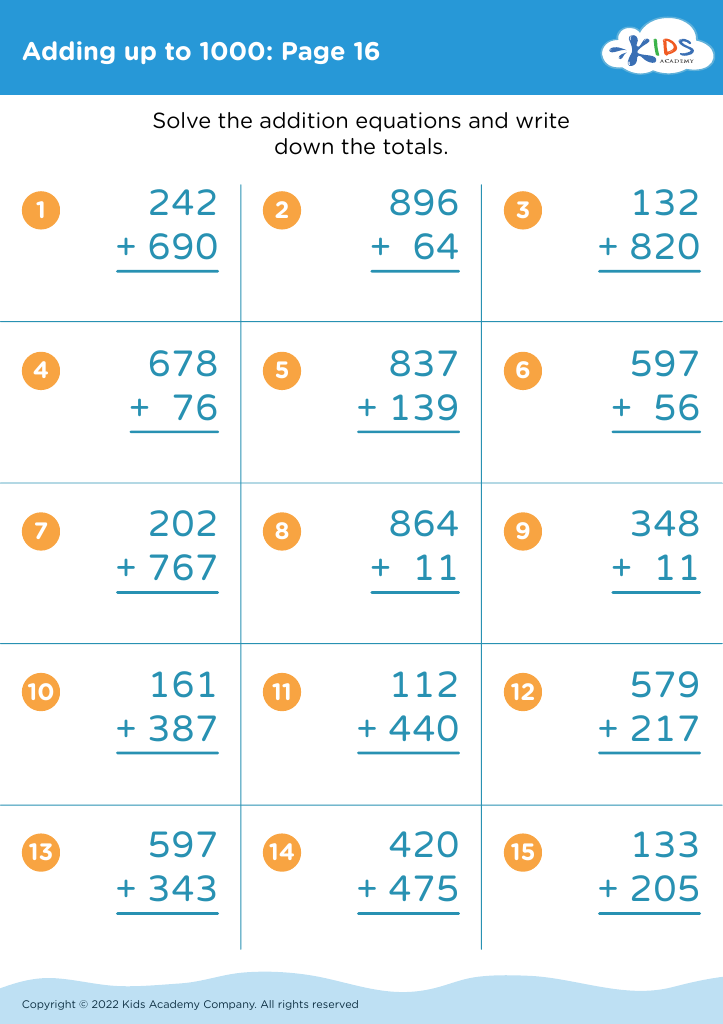
Enhance your child's counting skills with our engaging Improve Counting Worksheets designed for ages 6-7! These worksheets focus on building a strong numerical foundation through fun activities that make learning enjoyable. Children will practice counting objects, recognizing numbers, and understanding addition and subtraction in a colorful, interactive format. Our user-friendly resources help reinforce classroom lessons, ensuring your child gains confidence in their math abilities. Perfect for homeschooling or supplemental practice, each worksheet is tailored to meet developmental goals, ensuring a comprehensive learning experience. Download now to give your child the tools they need to excel in counting!
Favorites
With answer key
Interactive
Join Kids Academy for Free
Who is primarily going to use this learning content?





.jpg)


Counting is foundational for early math skills and supports cognitive development in children aged 6-7. At this age, children transition from simple counting to understanding the relationships between numbers and their values, which is crucial for tackling more complex mathematical concepts later on. When parents and teachers emphasize improving counting skills, they help foster a child’s confidence and competence in math, setting the stage for academic success.
Additionally, counting goes beyond numbers; it enhances a child’s problem-solving abilities and analytical thinking. For instance, engaging in counting activities aids in developing attention to detail and memory skills, as children learn to track and recall sequences. This can greatly benefit areas such as reading and comprehension, where order and sequence are important.
Moreover, reinforcing counting skills adds to a child’s daily life experiences—whether through measuring ingredients in cooking or counting items while shopping—linking math to real-world contexts. By prioritizing counting improvement, parents and teachers nurture not only foundational math skills but also a positive attitude towards learning and exploration, creating a lasting impact on a child’s educational journey. Thus, investing time in counting is an investment in a child’s overall academic and cognitive growth.








