
Improve handwriting Worksheets for Ages 6-7
3 filtered results
Difficulty Level
Grade
Age
-
From - To
Subject
Activity
Standards
Boost your child's handwriting skills with our engaging "Improve Handwriting Worksheets" specially designed for ages 6-7. These printable worksheets offer a variety of fun exercises that enhance letter formation, spacing, and overall neatness. Tailored to support fine motor skills, each activity encourages children to practice writing uppercase and lowercase letters while enjoying interactive themes. Our worksheets provide step-by-step guidance, making handwriting practice enjoyable and effective. Ideal for at-home learning or classroom use, these resources empower young learners to gain confidence in their writing abilities. Help your child develop a strong foundation in handwriting today! Explore our collection and watch their skills flourish.
Favorites
With answer key
Interactive
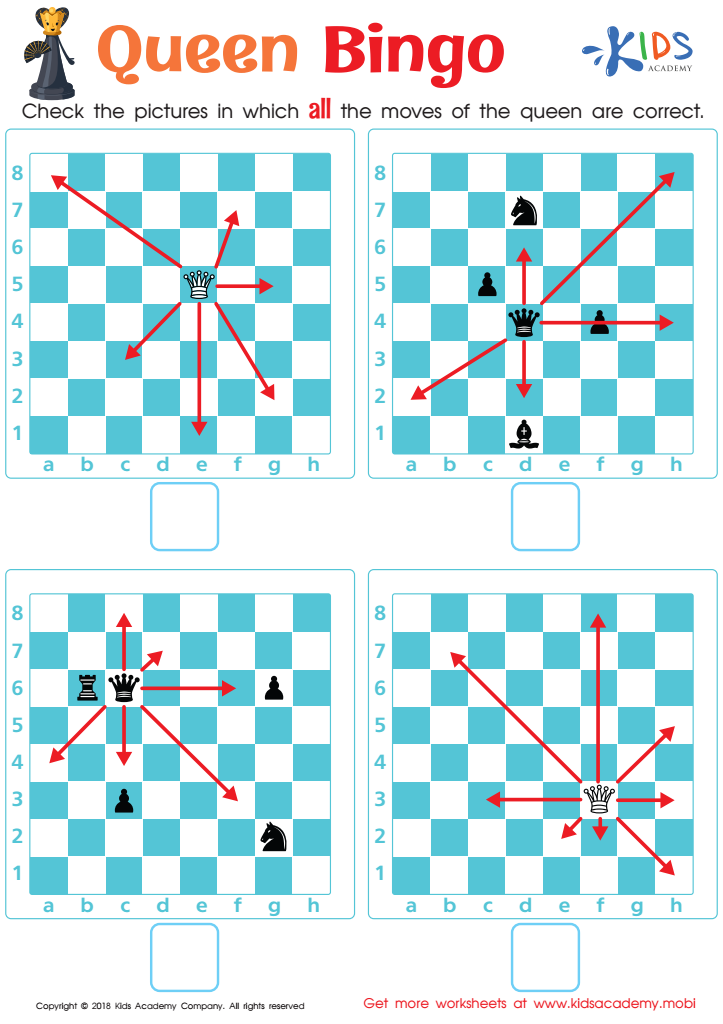
Queen Bingo Worksheet
Test your child's knowledge of chess rules and moves with this free worksheet! Kids look at four pictures and must decide if the queen moves are correct. This exercise helps hone your little one's chess skills!
Queen Bingo Worksheet
Worksheet
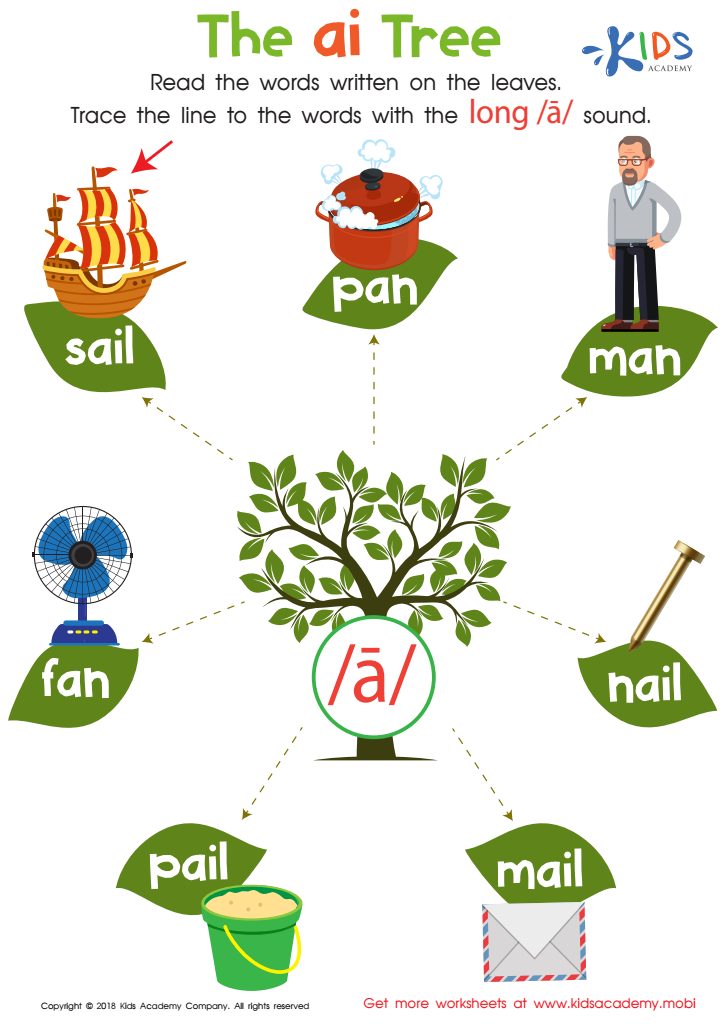
The AI Tree Worksheet
Help your kids learn to read better with this worksheet! Introduce the vowel pair 'ai' and give them familiar examples. Ask them to give you some in return. Then, have them read the words on the leaves and help them trace the ones with the long /a/ sound.
 Assign to My Students
The AI Tree Worksheet
Worksheet
Join Kids Academy for Free
Who is primarily going to use this learning content?








Improving handwriting for children aged 6-7 is crucial for several reasons. At this developmental stage, children are transitioning from learning basic letter formation to developing fluid writing skills. Good handwriting enhances their ability to communicate effectively and fosters a sense of accomplishment, positively impacting their self-esteem and confidence.
Children are often assessed through written work, and legible handwriting becomes essential for ensuring that their ideas are clearly expressed. If a child struggles with handwriting, they may become frustrated and disengaged, which can hinder their overall learning experience. Moreover, integrating fine motor skills with writing activities promotes cognitive development and aids in focus, discipline, and perseverance.
Teachers and parents play vital roles in guiding children through this learning phase. They can provide the necessary support and encouragement, using playful tools and methods to make handwriting practice enjoyable. Creating a positive writing environment helps children internalize the skills they need to succeed.
Furthermore, good handwriting contributes to academic performance, allowing children to excel as they progress in their education. Investing time and effort into improving handwriting during these formative years lays a strong foundation for lifelong writing skills, ultimately helping children communicate their thoughts and creativity effectively throughout their lives.








