Learn addition Worksheets for Ages 6-7
3 filtered results
-
From - To
Discover engaging "Learn Addition Worksheets for Ages 6-7" designed to enhance your child's math skills! Our thoughtfully crafted worksheets offer a fun and interactive way to practice addition through colorful illustrations and relatable scenarios. Perfect for young learners, these materials help build a strong foundation in basic arithmetic while encouraging independent learning. Each worksheet emphasizes essential concepts like single and double-digit addition, making practice enjoyable and effective. Help your child gain confidence in their math abilities and foster a love for learning. Explore our collection today to support your child's educational journey with easy-to-use, printable resources tailored specifically for ages 6-7!
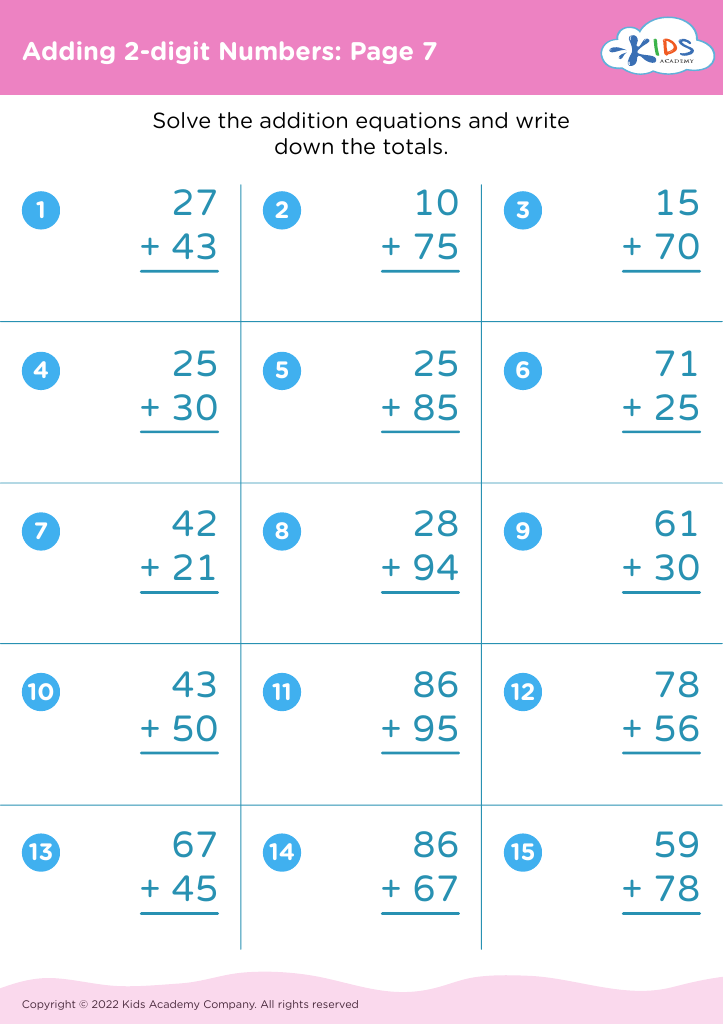
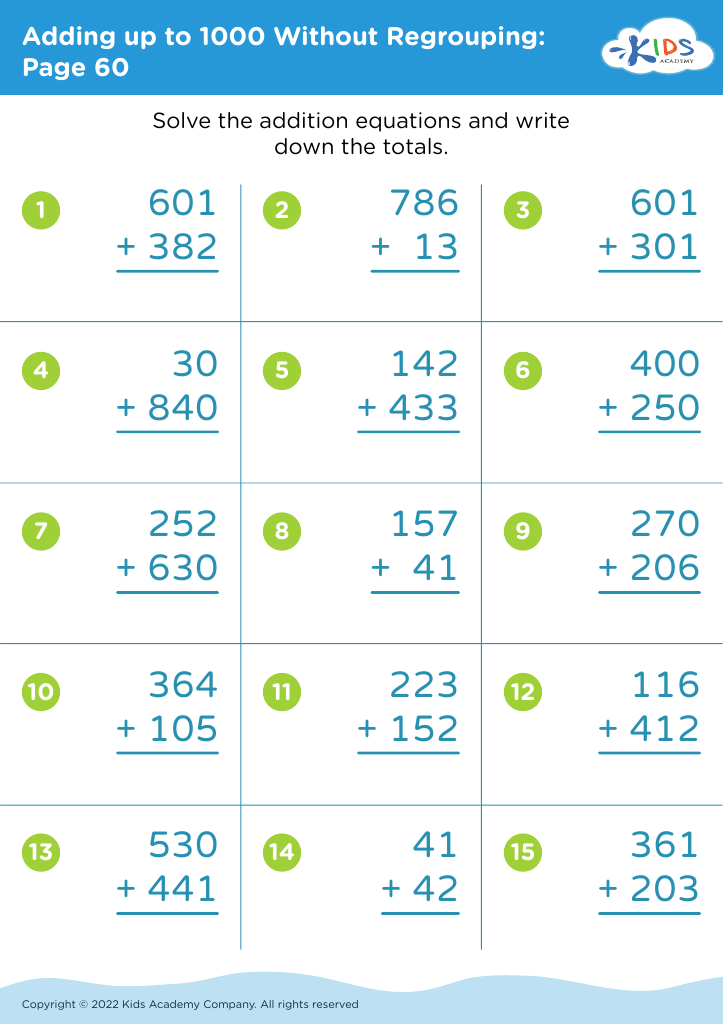
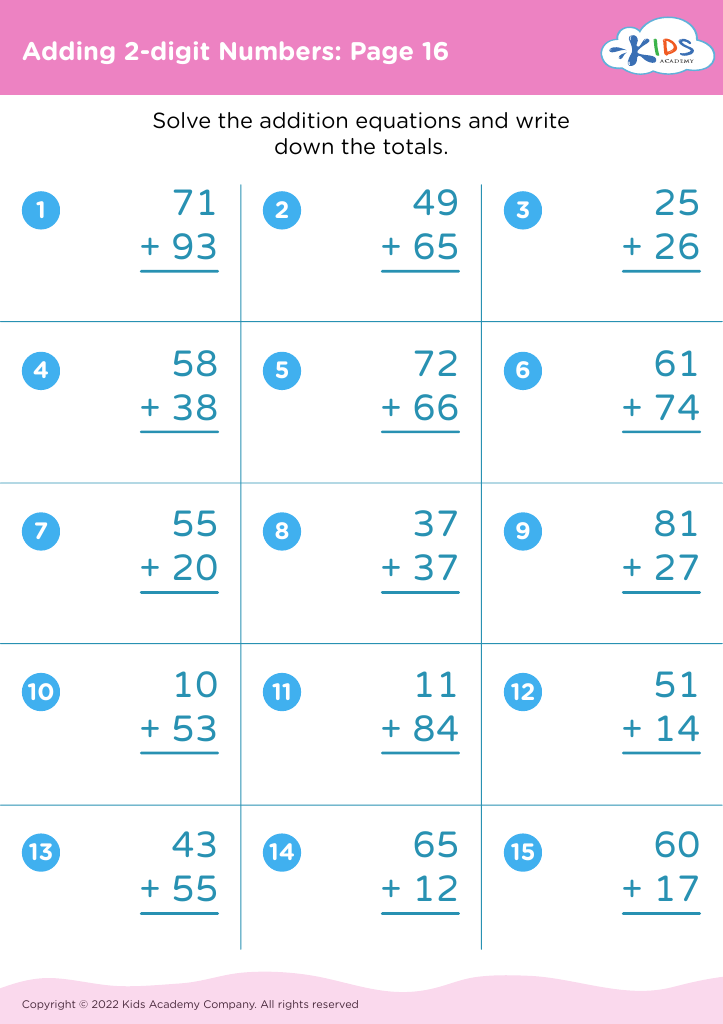








Parents and teachers should prioritize teaching addition to children ages 6-7 because this foundational math skill holds significant importance for their cognitive and academic development. At this age, children are increasingly moving from concrete to abstract thinking. Mastering addition helps them build confidence in their numeric abilities and prepares them for more complex mathematics.
Furthermore, addition is a basic life skill that children will use everyday, from handling money to problem-solving in various real-life contexts. Early competence in addition also lays the groundwork for understanding related concepts like subtraction, multiplication, and even eventually, fractions.
Engaging children in fun and interactive addition activities can foster their love for learning while sharpening their critical thinking skills. When parents and teachers work together to reinforce these concepts at home and school, it creates a collaborative and supportive learning environment.
Additionally, demonstrating the relevance of addition through games, storytelling, and practical applications helps maintain children’s engagement and promotes better retention of information. Ultimately, nurturing their ability to add effectively empowers children for success in higher-level math as they grow, making it a valuable investment in their future educational journeys.








