Number sequence learning Worksheets for Ages 6-7
3 filtered results
-
From - To
Enhance your child's mathematical skills with our engaging Number Sequence Learning Worksheets for ages 6-7. Designed to make learning fun, these worksheets help young learners grasp the concept of number sequences through interactive activities and colorful visuals. As children follow and complete each sequence, they improve their counting skills, number recognition, and problem-solving abilities. Perfect for reinforcing classroom learning or providing extra practice at home, our worksheets support early numeracy development in a playful and enjoyable way. Download and incorporate these helpful resources into your child's learning routine today, and watch them gain confidence in their number skills!
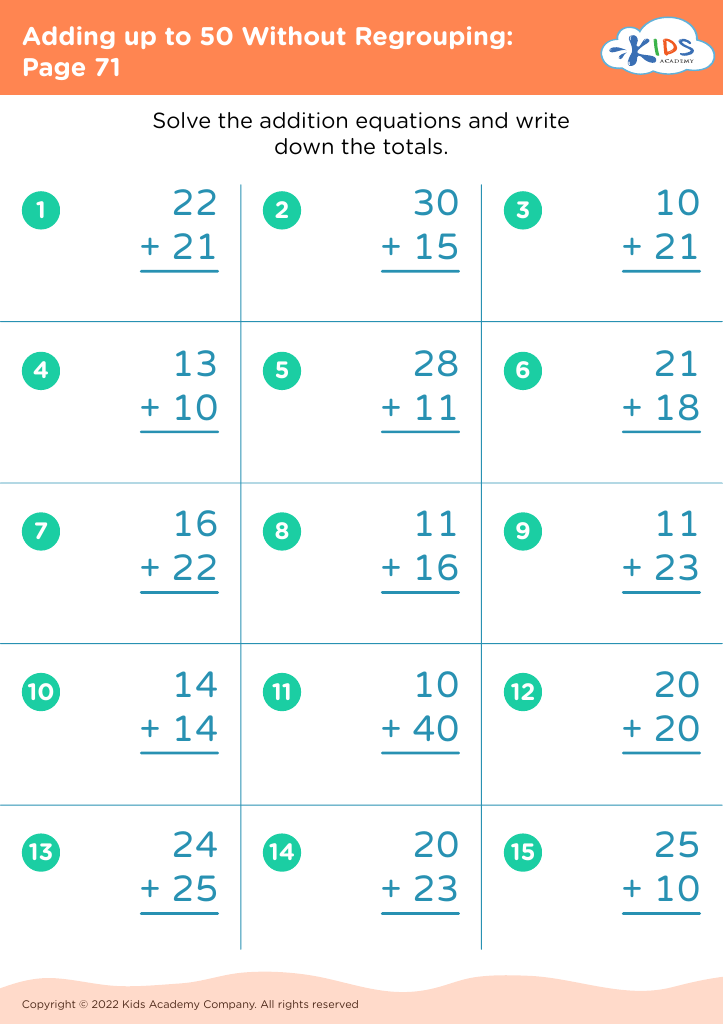
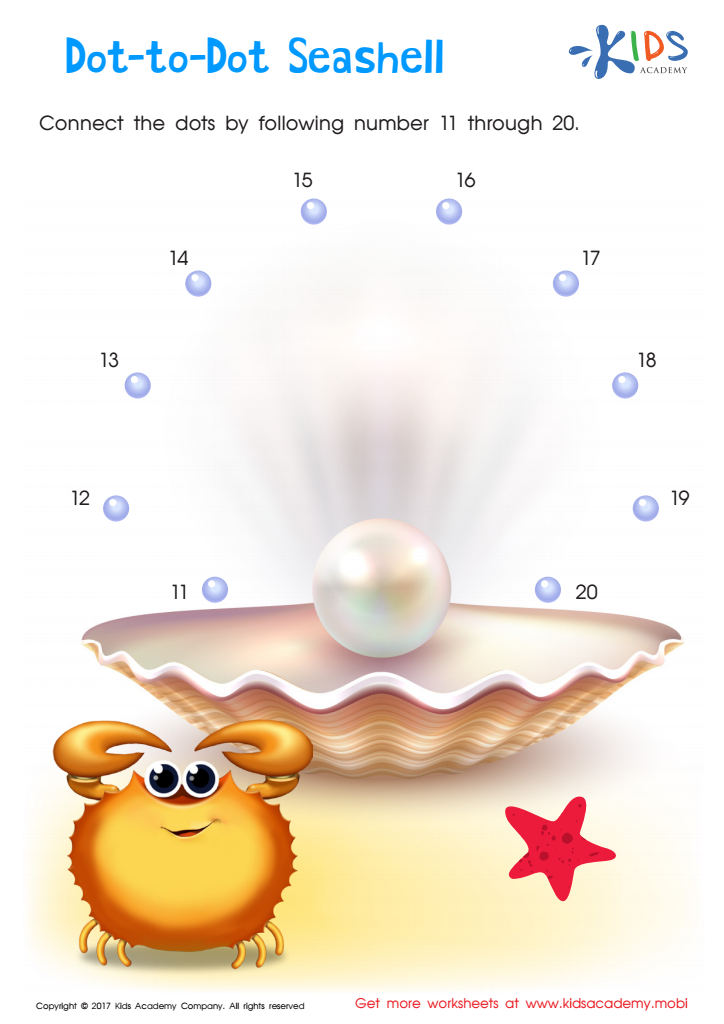
Ordering 11–20: Dot–to–dot Seashell Printable
 Assign to My Students
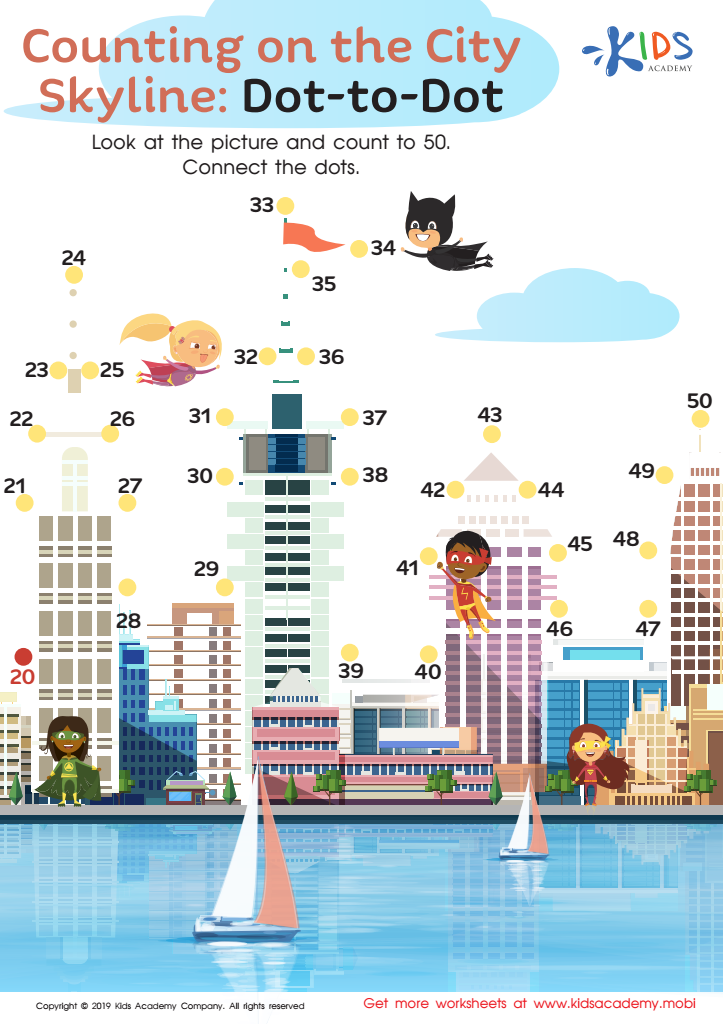
Counting on the City Skyline: Dot-to-Dot Worksheet






.jpg)
Parents and teachers should care about number sequence learning for ages 6-7 because it forms the foundation for essential mathematical concepts. At this developmental stage, children begin to grasp the relationships between numbers, understand patterns, and develop problem-solving skills. Mastery of number sequences helps young learners recognize counting patterns, which is crucial when dealing with addition, subtraction, and more complex operations later on.
Furthermore, number sequences enhance cognitive skills, promoting logical thinking and critical reasoning. This cognitive development not only aids in mathematics but stretches into other subjects, fostering an overall academic growth. Additionally, recognizing and creating number patterns can improve a child's ability to handle real-life situations, such as dealing with time (like telling time) or making financial decisions (like counting change).
Engagement in this type of learning also encourages perseverance and memory retention, valuable skills for lifelong learning. Activities incorporating number sequences can be fun and interactive, making them an excellent opportunity for bonding and collaborative learning between parents and children or students and teachers. In essence, developing strong number sequence skills lays a crucial groundwork for all future learning, making it a priority for both parents and educators alike.








