Recognizing number patterns Worksheets for Ages 6-7
5 filtered results
-
From - To
Discover an exciting range of "Recognizing Number Patterns Worksheets for Ages 6-7" at Kids Academy. Perfectly designed for young learners, these engaging worksheets help children grasp fundamental math concepts through fun and interactive pattern recognition activities. Each worksheet aims to enhance their critical thinking and problem-solving skills while making learning enjoyable. With colorful and thoughtfully crafted exercises, including sequences and shape patterns, our worksheets are the perfect tool to boost your child’s confidence in math. Keep your child ahead of the curve and ignite their passion for learning with Kids Academy’s expertly created resources.
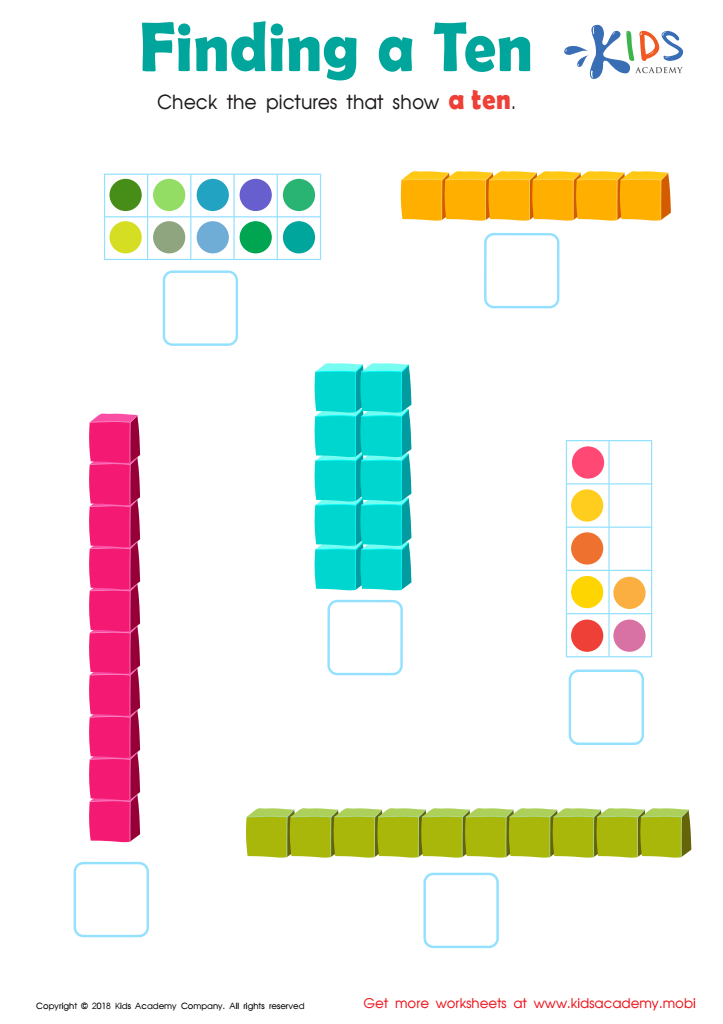
Finding a Ten Worksheet
 Assign to My Students
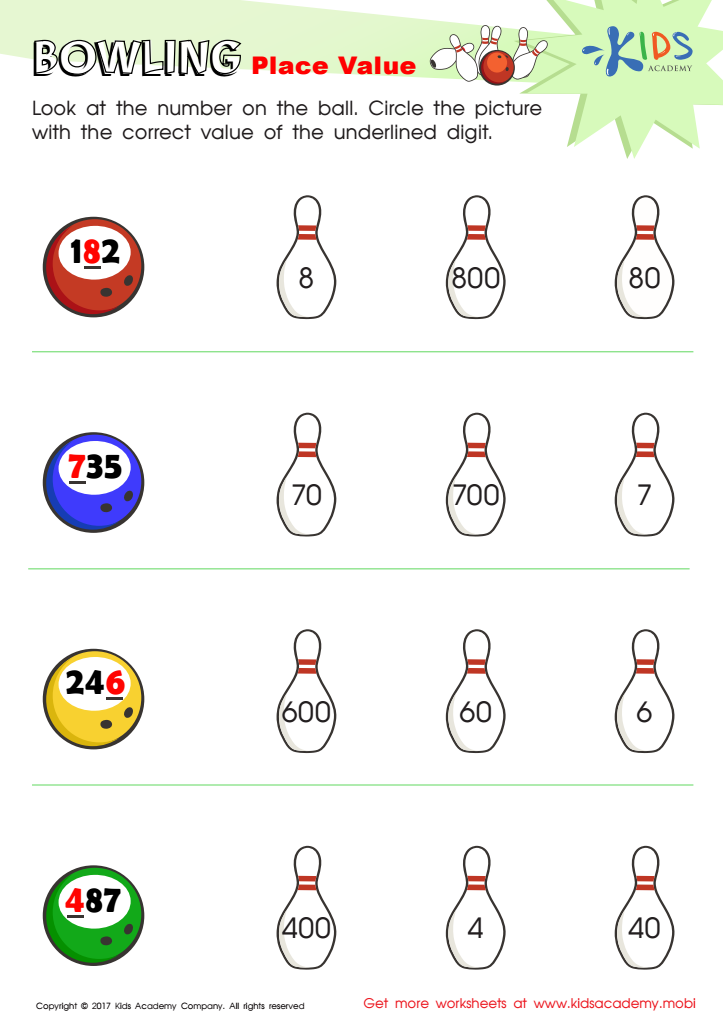
Place Value Worksheet
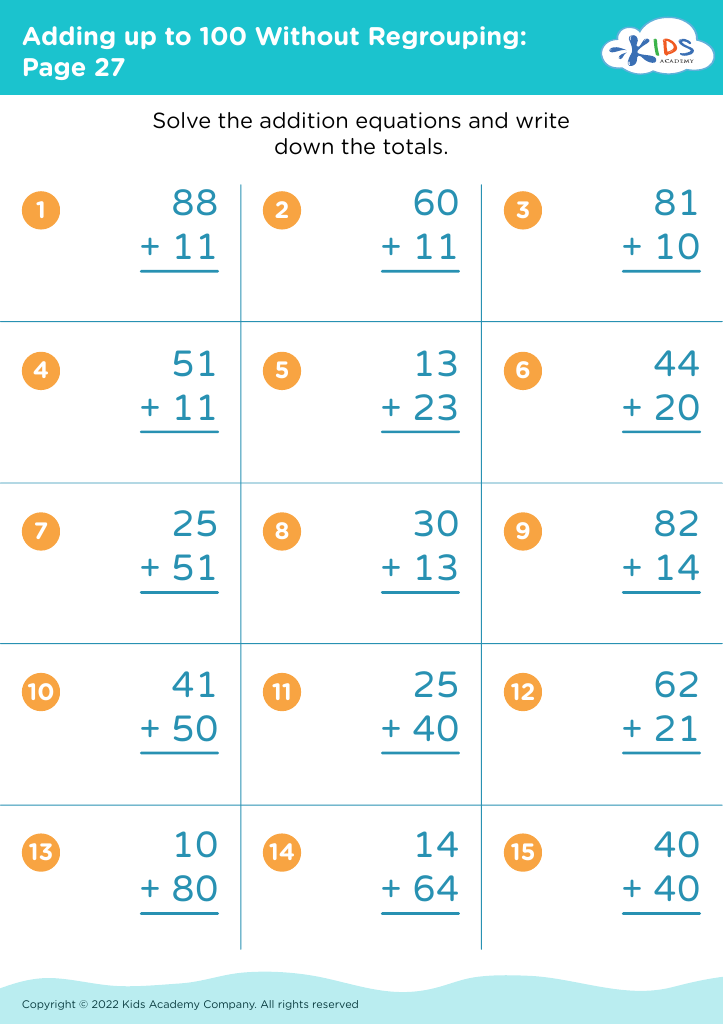
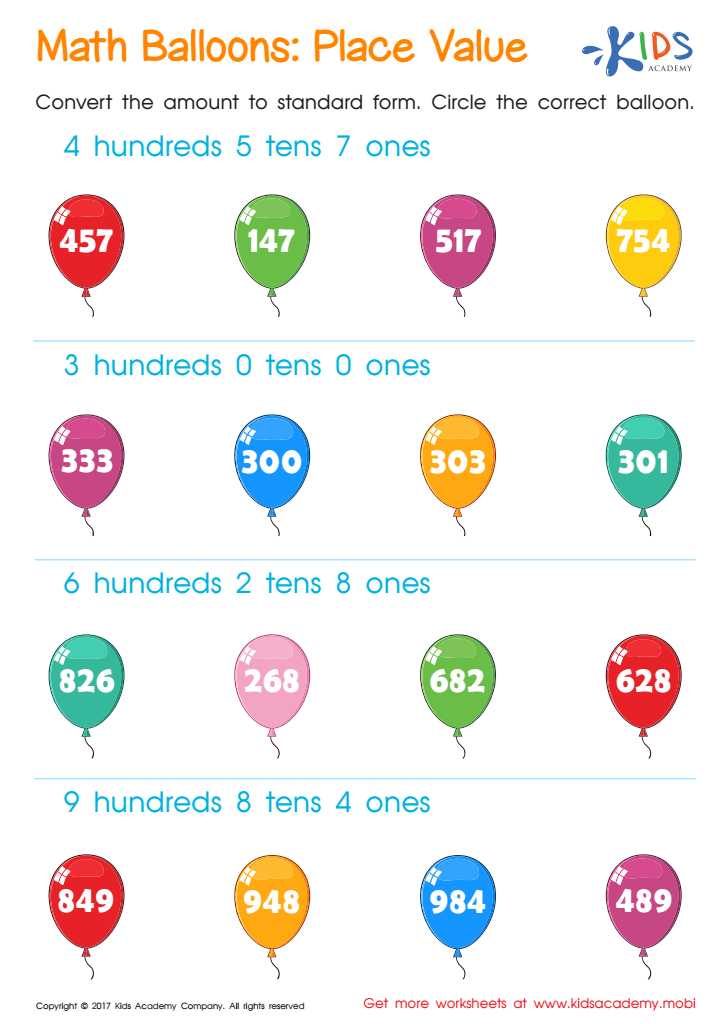
Place Value Printable Worksheet
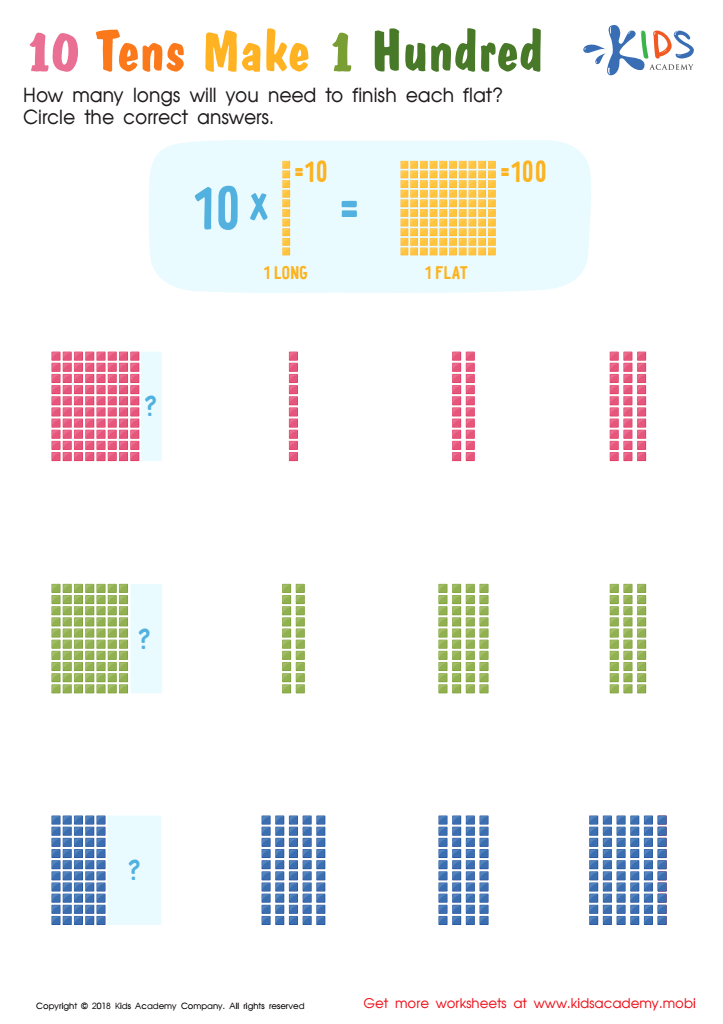
10 Tens Make 1 Hundred Worksheet







Recognizing number patterns is essential for the cognitive and mathematical development of children ages 6-7. At this stage, children transition from concrete to more abstract thinking, which forms a critical foundation for future academic success. By identifying number patterns, kids enhance their problem-solving and critical thinking skills. They learn to predict and understand mathematical relationships, making them better prepared for complex arithmetic and algebra concepts later on.
For parents, fostering these skills can contribute significantly to their child's overall intellectual development. Engaging in activities that highlight number patterns supports brain growth and improves logical reasoning, agility in number manipulation, and mathematical confidence. Such early exposure ingrains a positive attitude towards mathematics, reducing potential anxiety about the subject in later years.
Teachers also benefit as their students who are adept at recognizing number patterns typically show greater enthusiasm and proficiency in math. Recognizing patterns helps children grasp sequencing, addition, and subtraction more intuitively, leading to improved classroom performance. Teaching these fundamental skills encourages a collaborative learning environment, where peers can enjoy math-related activities together, reinforcing concepts through peer interaction and discussion.
Thus, prioritizing recognition of number patterns in early education is vital. It empowers children with the foundational tools they need for future academic and everyday problem-solving scenarios.








