Sentence completion Worksheets for Ages 6-7
5 filtered results
-
From - To
Enhance your child's literacy skills with our Sentence Completion Worksheets tailored for ages 6-7! Specifically designed to develop reading comprehension and vocabulary, these engaging worksheets encourage young learners to think critically, promoting better understanding and sentence construction. Each activity provides context-rich exercises that challenge children to deduce the correct word, boosting their confidence and proficiency in language arts. Ideal for classroom use or at-home practice, these printables are perfect for building a strong foundation in early literacy. Explore our collection today to support your child's educational journey in a fun and interactive way!
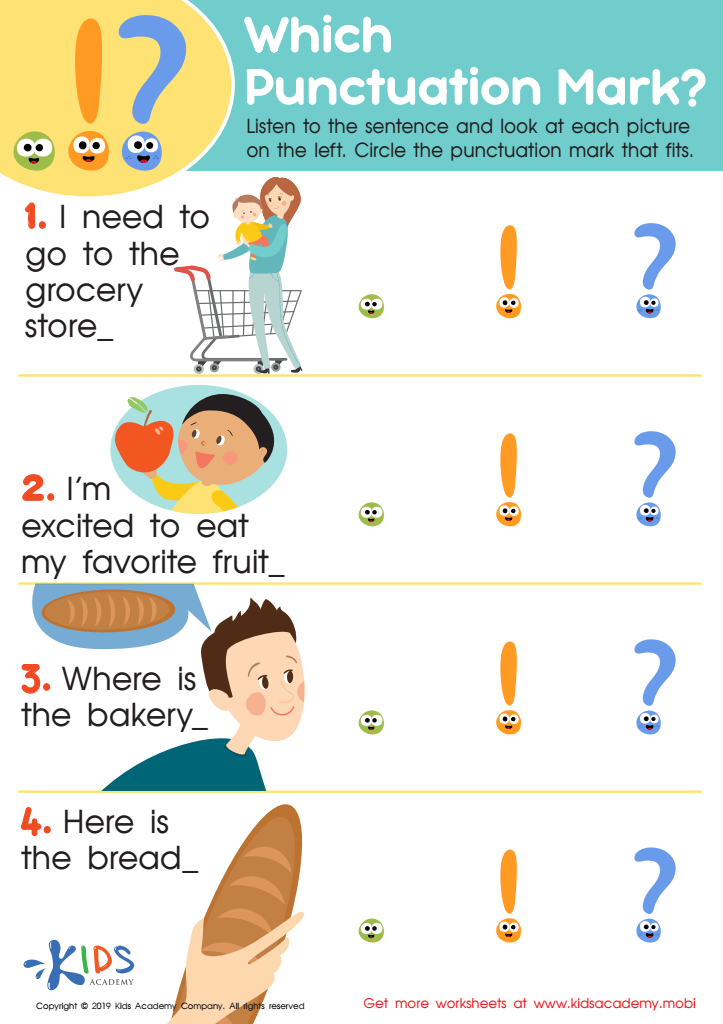
Which Punctuation Mark Worksheet
 Assign to My Students
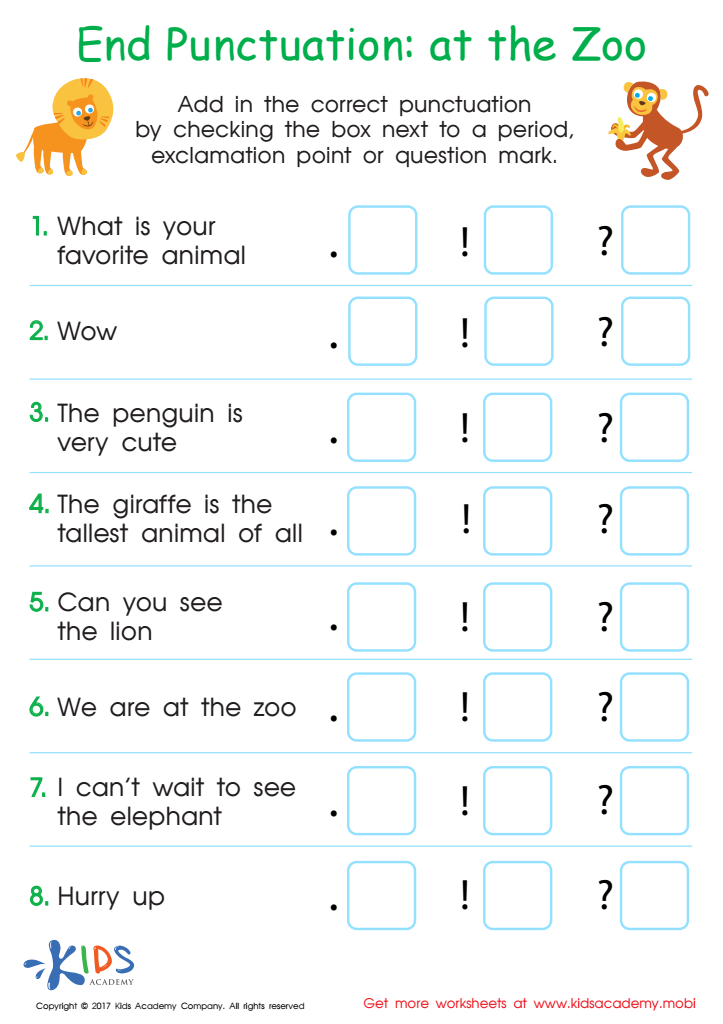
End Punctuation: At the Zoo Worksheet
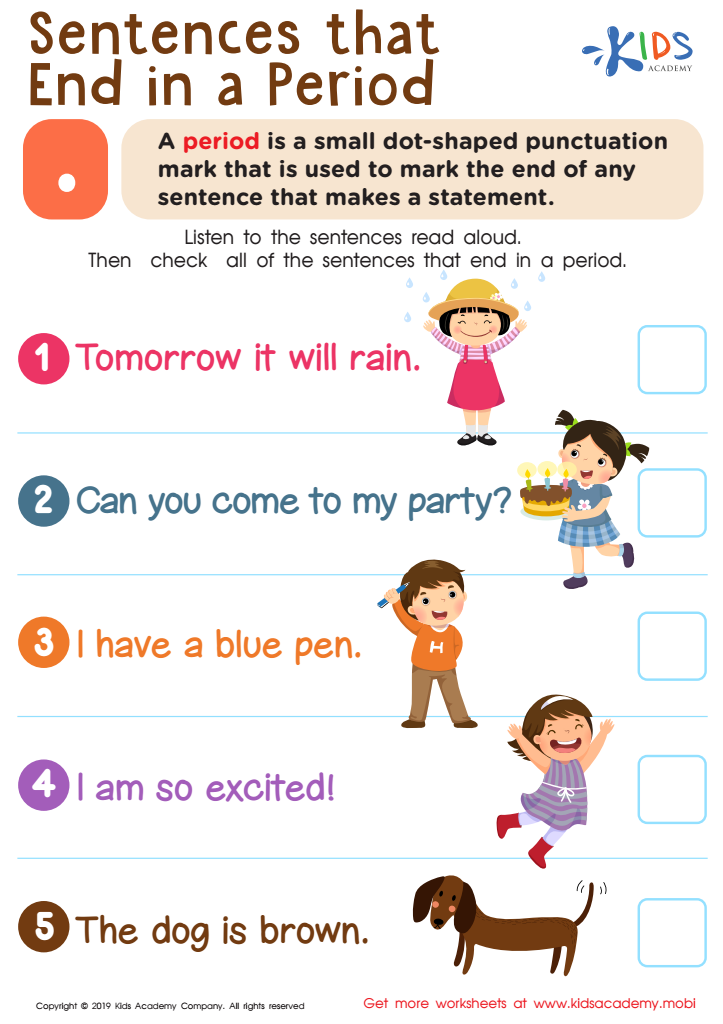
Sentences That End in a Period Worksheet
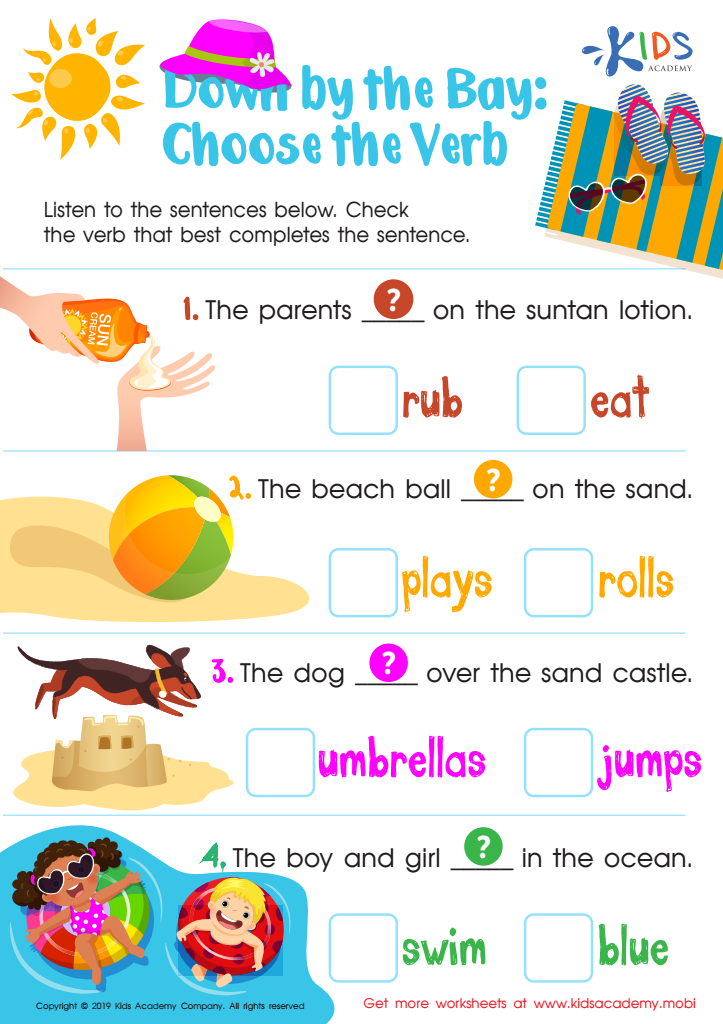
Down by the Bay: Choose the Verb Worksheet
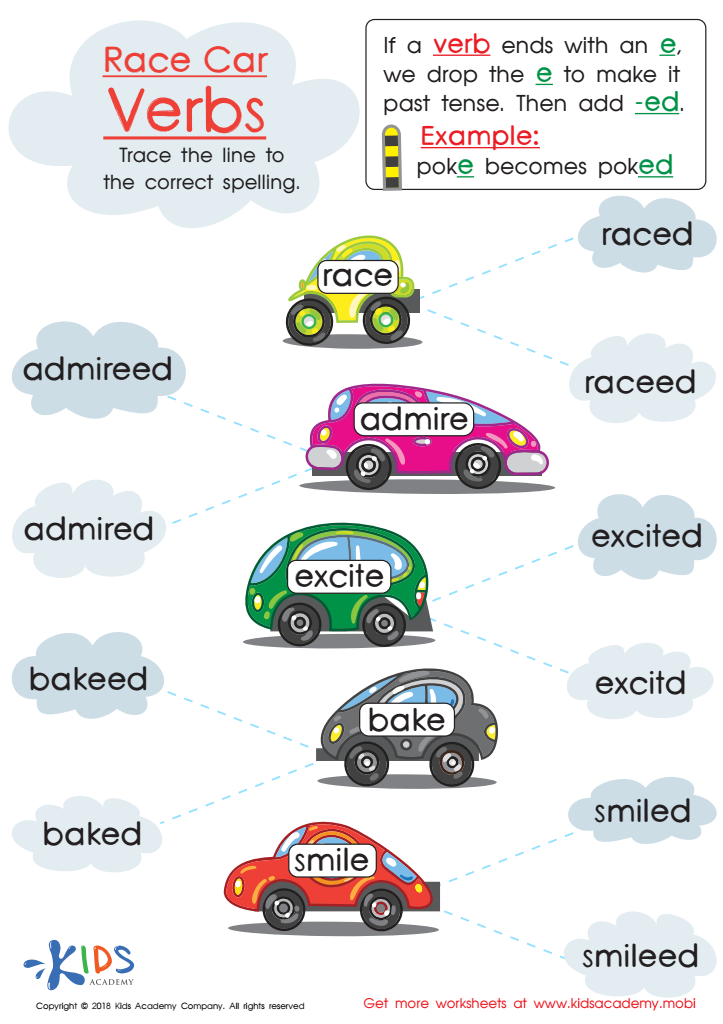
Race Car Verbs Worksheet








Sentence completion activities are crucial tools for both parents and teachers when working with children aged 6-7. At this developmental stage, kids are expanding their vocabularies, learning sentence structure, and starting to create more complex thoughts. Providing them with fill-in-the-blank exercises encourages not only grammatical accuracy but also creativity and critical thinking.
Firstly, sentence completion helps children understand context and meaning in sentences. It teaches them how different words can fit into various texts, deepening their comprehension skills. For example, completing a sentence like "The cat is ____ the tree" helps children think about prepositions that make sense and enhances their mental flexibility.
Secondly, these activities reinforce parts of speech. Young learners naturally pick up on patterns when repeatedly exposed to sentence completion tasks. They start understanding roles of nouns, verbs, adjectives, and adverbs more instinctively, which is fundamental for advanced language use later.
Additionally, sentence completion exercises cater to spelling and phonics practice, reinforcing their reading and writing fluency. It's also a great way for them to express their understanding of concepts in their own words, promoting confidence and a strong sense of achievement.
Overall, encouraging these exercises builds foundational language skills essential for academic success and effective communication, making them invaluable for early education.








