
Syllable identification Worksheets for Ages 6-7
3 filtered results
Difficulty Level
Grade
Age
-
From - To
Subject
Activity
Standards
Boost your child's reading skills with our engaging syllable identification worksheets tailored for ages 6-7. These expertly designed printables help young learners grasp the concept of breaking down words into syllables, enhancing both phonemic awareness and reading fluency. Our fun and interactive worksheets feature a variety of activities, from clapping out syllables to sorting and matching games, ensuring a comprehensive learning experience. With colorful illustrations and kid-friendly themes, these worksheets make language learning exciting and effective. Perfect for classroom use or at-home practice, help your child master syllables and improve their early language development today!
Favorites
With answer key
Interactive
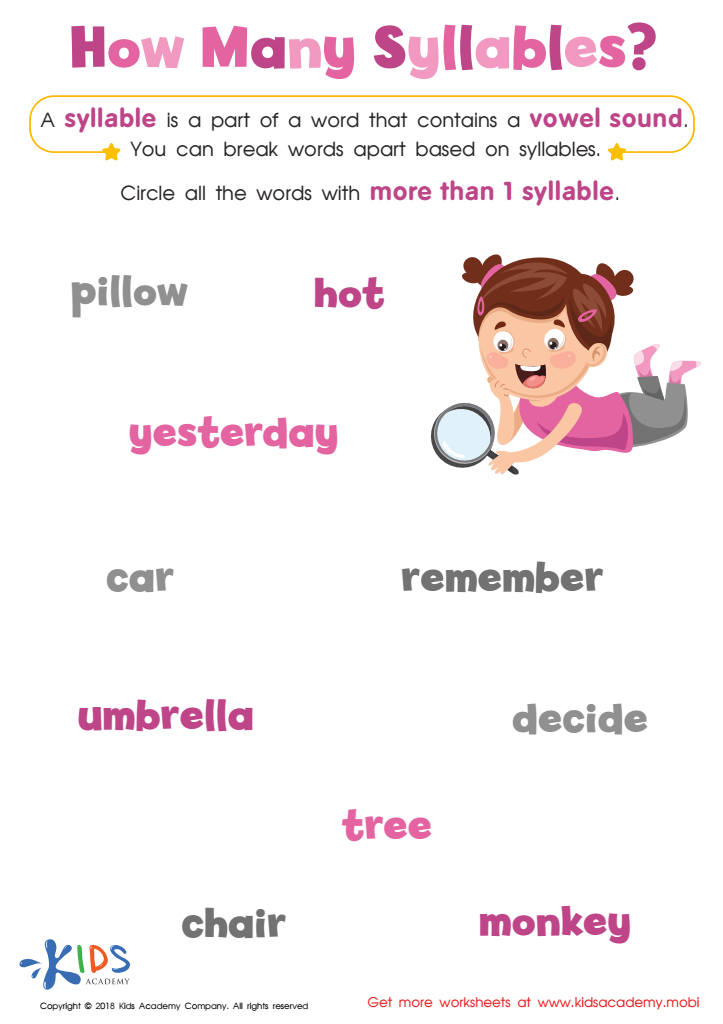
Reading: How Many Syllables Worksheet
This worksheet helps students practice counting syllables. They read each word, count the syllables, and circle single-syllable words. Mastering this skill helps with fluency and comprehension, so it's worth the effort! Use this printout to clear up any confusion.
 Assign to My Students
Reading: How Many Syllables Worksheet
Worksheet
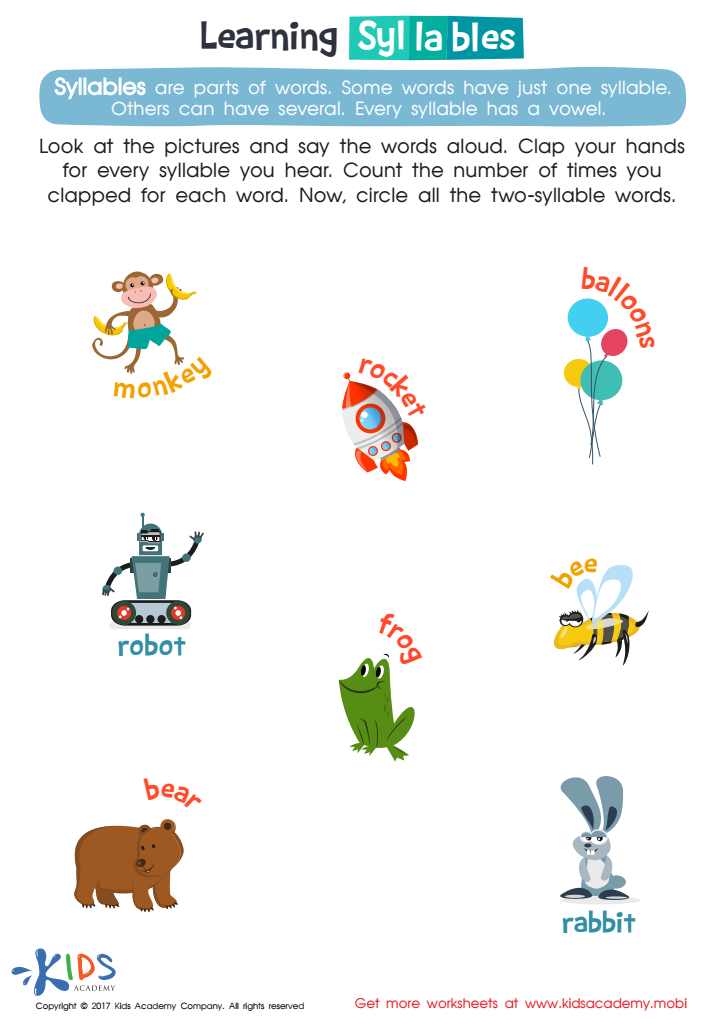
Learning Syllables Word Structure Worksheet
Teach kids to read and spell with our fun Learning Syllables worksheet. Kids will have a blast clapping and saying familiar words while counting syllables. Colorful and catchy, it's a great way to make learning enjoyable!
Learning Syllables Word Structure Worksheet
Worksheet
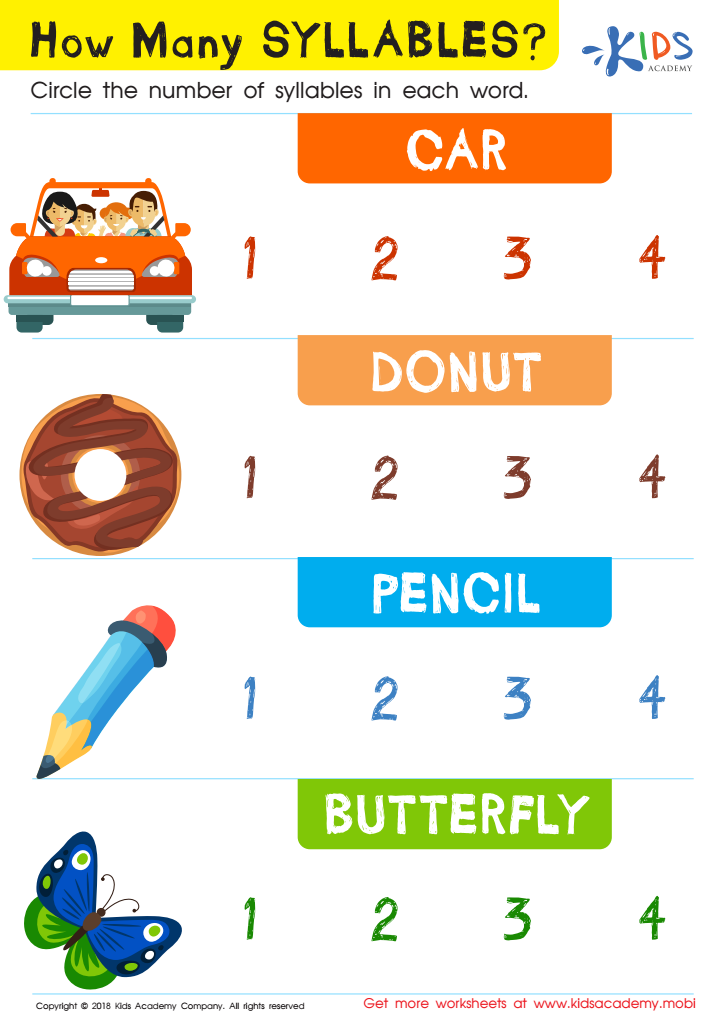
How Many Syllables? Worksheet
Syllabication or 'chunking' helps students decode words more quickly and increase fluency. This traceable worksheet is great for emerging readers, combining fun and fine motor practice with chunking words and counting syllables.
How Many Syllables? Worksheet
Worksheet
Join Kids Academy for Free
Who is primarily going to use this learning content?







At ages 6-7, children are in a critical phase of their reading and language development, making syllable identification vital. Syllables are the building blocks of words, so recognizing them helps children decode complex words. When a child can break down a word into syllables, reading becomes less daunting and more manageable. For example, splitting 'elephant' into 'el-e-phant' makes it easier to spell and read. This skill directly aids in reading fluency, which is essential for comprehension. Without fluent reading skills, children may struggle to understand and engage with the content of the text, affecting their overall learning.
Moreover, syllable identification also plays an essential role in spelling. When children understand the structure of words, they are better equipped to spell them correctly, contributing to writing proficiency.
Emphasizing syllable identification at this age also nurtures phonological awareness, which is the ability to recognize and understand the sound structure of language. Strong phonological awareness is foundational for all aspects of language, affecting speaking and listening skills, not just reading and writing.
Parents and teachers caring about syllable identification can provide the supportive environment children need to thrive, helping them build a strong literacy foundation that paves the way for academic success.








