Telling time Worksheets for Ages 6-7
4 filtered results
-
From - To
Our "Telling Time Worksheets for Ages 6-7" are crafted to make learning to tell time fun and engaging for young students. Designed by education professionals, these worksheets feature colorful and interactive activities that help children grasp the concepts of hours, half-hours, and minutes. Perfect for both classroom and home use, each sheet encourages practice through playful exercises, fostering a solid understanding of time-reading skills. Create a structured learning path for your child with these printable resources, and watch them gain confidence and mastery over telling time in no time! Suitable for ages 6-7.
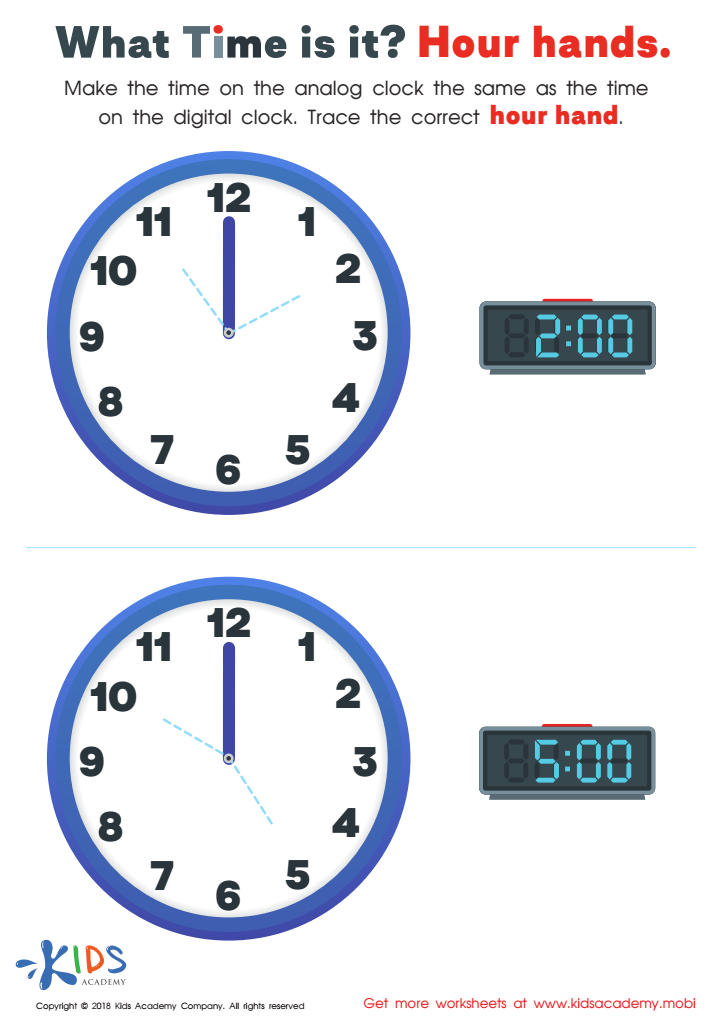
What Time Is it? Hour Hands Worksheet
 Assign to My Students







Teaching children how to tell time at ages 6-7 is crucial for several important reasons. At this developmental stage, kids are becoming more aware of their daily schedules and routines, such as school, meals, and playtime. Learning to tell time helps them understand the sequence of events, enhances their ability to manage time effectively, and builds a sense of responsibility and independence.
Additionally, telling time is a fundamental math skill closely linked to their overall cognitive development. It involves concepts like numbers, sequencing, and the passage of time, which reinforce learning in other subjects. By recognizing the positions of the hour and minute hands, children also improve their visual-spatial reasoning, an essential component of problem-solving skills.
Furthermore, the ability to tell time fosters a sense of achievement and confidence. When children can independently tell time, they feel more in control of their world, which boosts self-esteem. This empowerment is crucial for their emotional and social development.
Lastly, time-telling is a practical life skill. As children grow, being able to manage their time effectively is vital for academic success, extracurricular activities, and personal hobbies. By focusing on this skill early, parents and teachers can help set a foundation for well-rounded, punctual, and time-aware individuals.








