Understanding division Worksheets for Ages 6-7
8 filtered results
-
From - To
Explore our engaging "Understanding Division Worksheets" tailored for children ages 6-7! These worksheets are designed to introduce young learners to the concept of division through fun and interactive exercises. By using colorful illustrations and relatable scenarios, kids can grasp basic division concepts such as sharing equally and grouping objects. Reinforcing these fundamental skills helps build a strong mathematical foundation while boosting confidence in problem-solving abilities. Our worksheets cater to various learning styles, making math enjoyable and accessible. Perfect for home or school use, these resources promote understanding and encourage a love for learning. Dive into the world of division today!
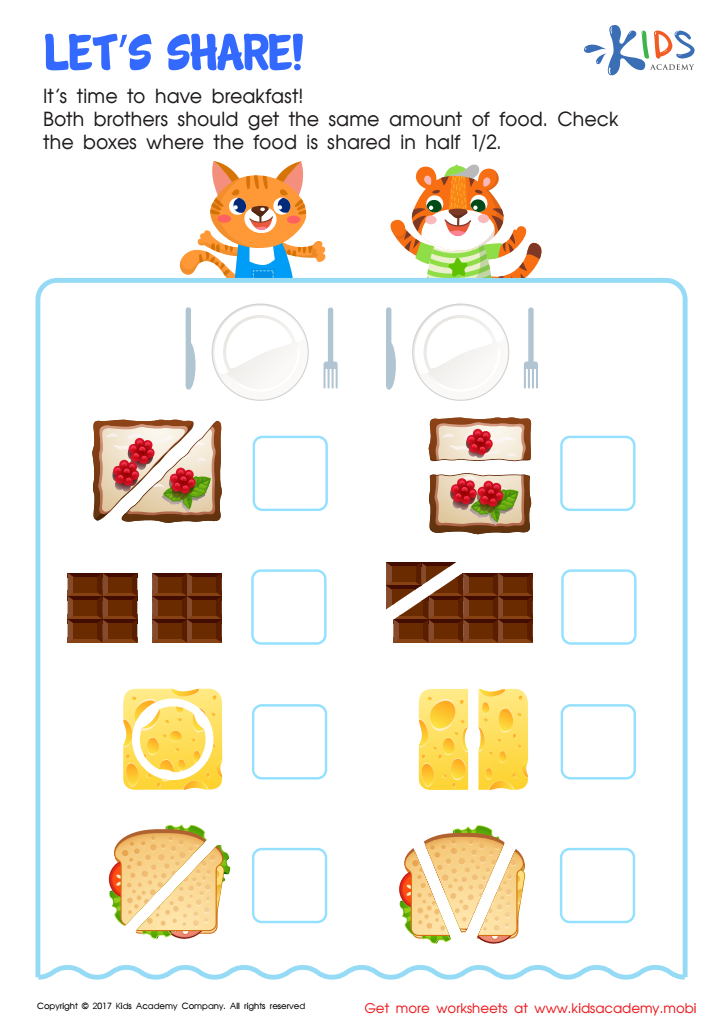
Let's Share Worksheet
 Assign to My Students
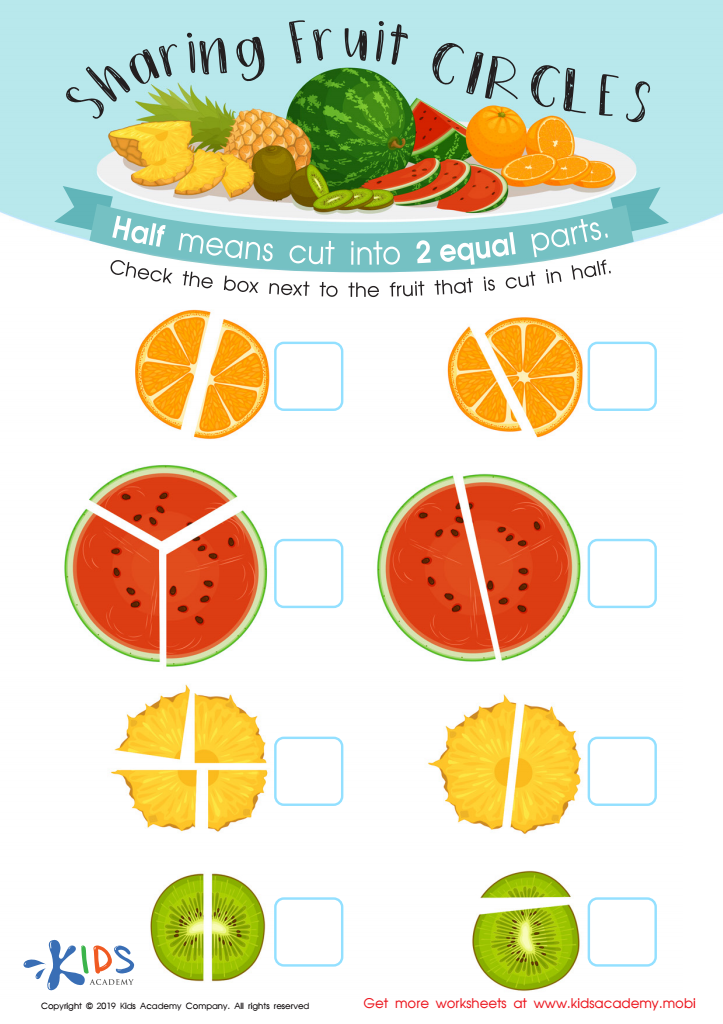
Sharing Fruit Circles Worksheet







Understanding division is crucial for children aged 6-7 as it lays the foundation for their mathematical literacy. At this stage, children begin to grasp the concept of sharing and grouping, core ideas behind division. This understanding fosters critical thinking skills, helping them to recognize patterns and develop problem-solving abilities that extend beyond mathematics.
Additionally, mastering division supports the development of number sense, essential for more advanced mathematical concepts they will encounter in later grades. When parents and teachers emphasize division early, they not only help children comprehend how to divide but also instill confidence in their mathematical capabilities. This confidence can lead to a positive attitude toward learning and a willingness to tackle challenges.
Moreover, division is frequently used in everyday situations, such as sharing snacks or dividing toys, making it relatable and practical for children. Engaging in real-life applications can enhance their interest and ensure a deeper understanding of the concept. Therefore, fostering division skills during these formative years is essential; it equips children with the foundational tools they need, supports their academic journey, and nurtures a lifelong appreciation for mathematics. Parents and teachers play pivotal roles in guiding children through this critical developmental phase.








