
Understanding laws Worksheets for Ages 6-7
3 filtered results
Difficulty Level
Grade
Age
-
From - To
Subject
Activity
Standards
Explore our "Understanding Laws Worksheets for Ages 6-7," designed to introduce young learners to the concepts of rules and laws in a fun and engaging way! These worksheets feature age-appropriate activities that encourage critical thinking and comprehension. Children will discover the importance of laws in everyday life, learn about fairness and justice, and enhance their reasoning skills through interactive exercises. Our colorful and captivating materials are perfect for homeschoolers, educators, or anyone looking to enrich their child's knowledge. Inspire a sense of responsibility and moral understanding in your little ones with our thoughtfully crafted worksheets today!
Favorites
With answer key
Interactive
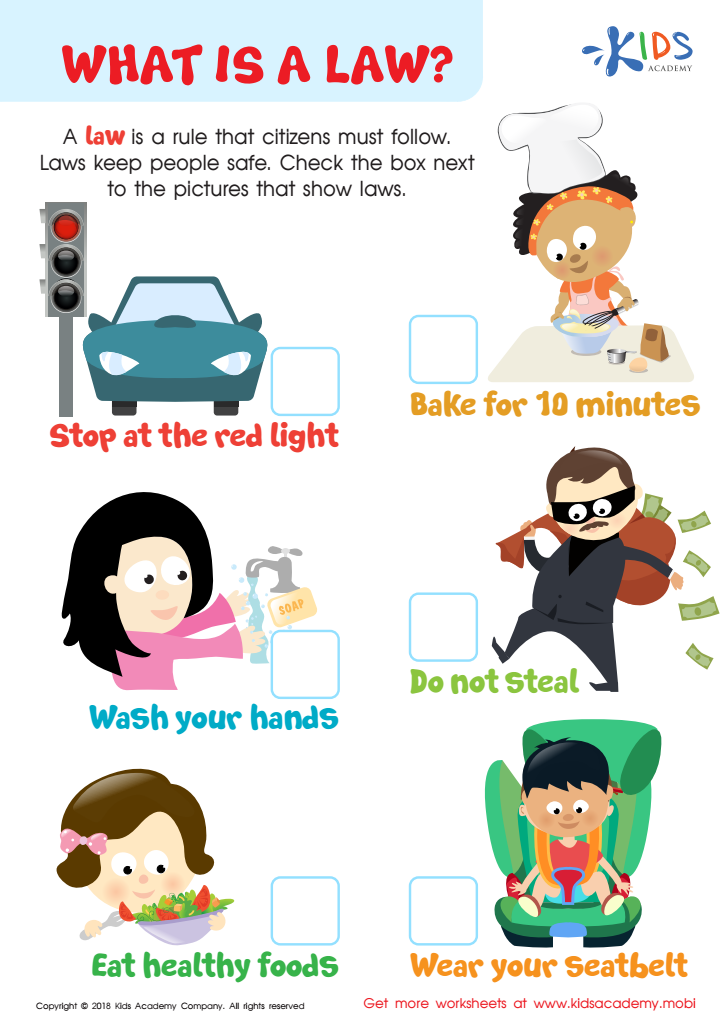
What is a Law? Worksheet
Encourage your students to think about the laws they abide by - at home, school, and the playground. Explain the importance of laws in keeping us safe, then ask them to check the box next to the pictures depicting different laws in a worksheet.
 Assign to My Students
What is a Law? Worksheet
Worksheet
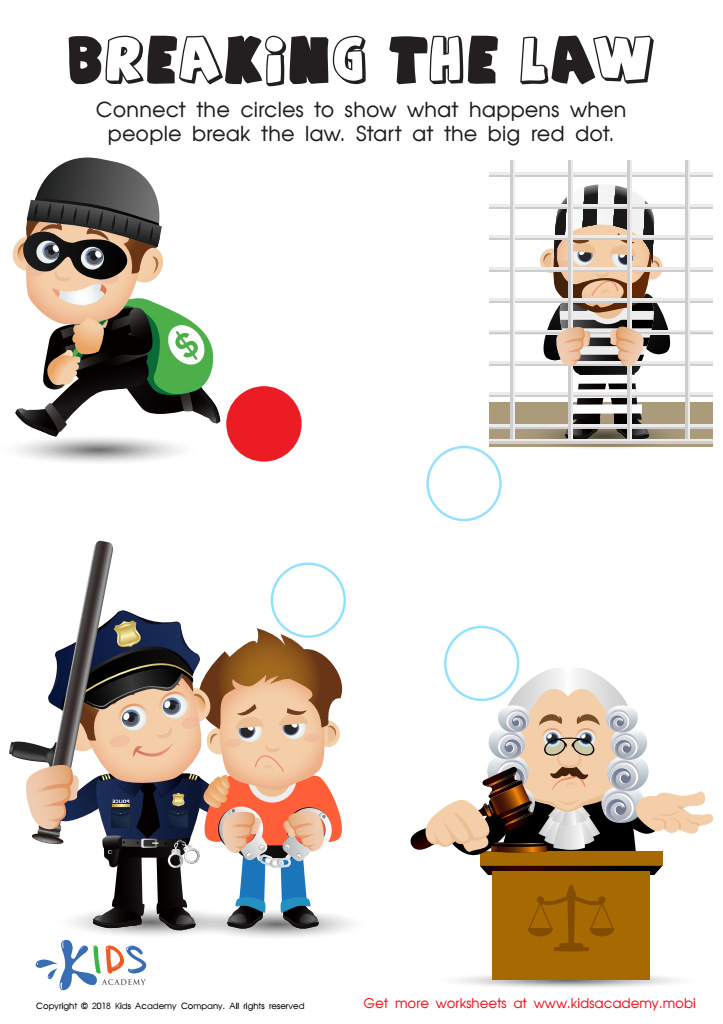
Breaking the Law Worksheet
Explain to your child why people go to jail. Show them this worksheet; it illustrates the stages a criminal goes through from breaking the law to receiving their punishment. Guide them in connecting the circles from the big red dot. Finish with a discussion on why it's important to follow the law.
Breaking the Law Worksheet
Worksheet
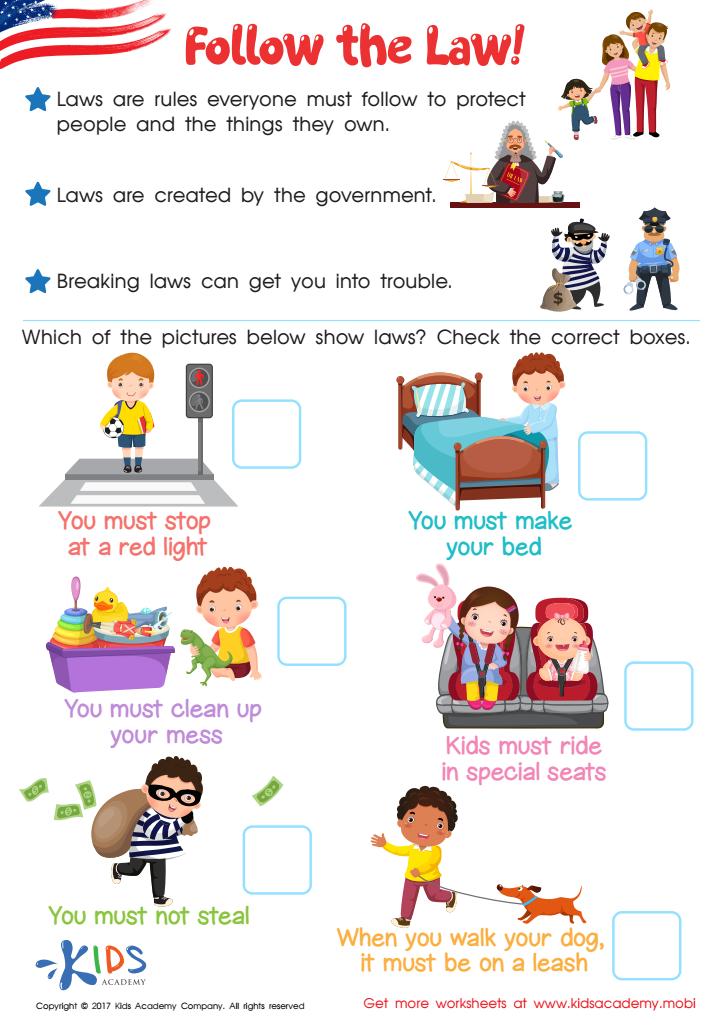
Follow the Law Worksheet
Kids should understand the difference between laws and household rules. Worksheets for 2nd grade review these differences, teaching kids more about life in their community. Breaking the law can lead to harsh consequences, so understanding the rules of home and public spaces is essential.
Follow the Law Worksheet
Worksheet
Join Kids Academy for Free
Who is primarily going to use this learning content?








Understanding laws is crucial for parents and teachers of children aged 6-7, as this age is fundamental for developing social norms and responsibilities. At this early stage, children begin to comprehend the concept of rules and the reasons behind them, influencing their behavior and civic awareness. Teaching kids about laws nurtures respect for authority while cultivating empathy and respect for the rights of others.
Engaging with legal concepts, even at a basic level, equips children with critical thinking skills. They learn to navigate complex societal structures and understand the importance of justice and fairness. This understanding can also significantly impact their interactions with peers, guiding them toward resolving conflicts constructively.
Moreover, parents and teachers are role models, and discussing laws reinforces the values of honesty, integrity, and accountability. This dialogue can help prevent negative behaviors, such as bullying or cheating, by laying a foundation of ethical decision-making.
Finally, as children grow, the knowledge of laws can empower them to become informed citizens. It fosters an appreciation for community involvement and advocacy, enabling them to engage positively as active participants in society. By fostering this understanding early on, we prepare our children to navigate the complexities of life with confidence and respect.








