Understanding number relationships Worksheets for Ages 6-7
6 filtered results
-
From - To
Unlock your child's mathematical potential with our "Understanding Number Relationships Worksheets for Ages 6-7". These engaging and thoughtfully designed printable worksheets help young learners grasp fundamental math concepts effortlessly and with joy. Our activities are tailored to enhance their number sense, including recognizing patterns, comparing numbers, and mastering basic arithmetic. Each worksheet offers a balance of fun and education, stimulating the children's interest while building a solid foundation in early math skills. Perfect for both classroom and at-home practice, our worksheets set your child on the path to math success. Inspire confidence and proficiency in math today!
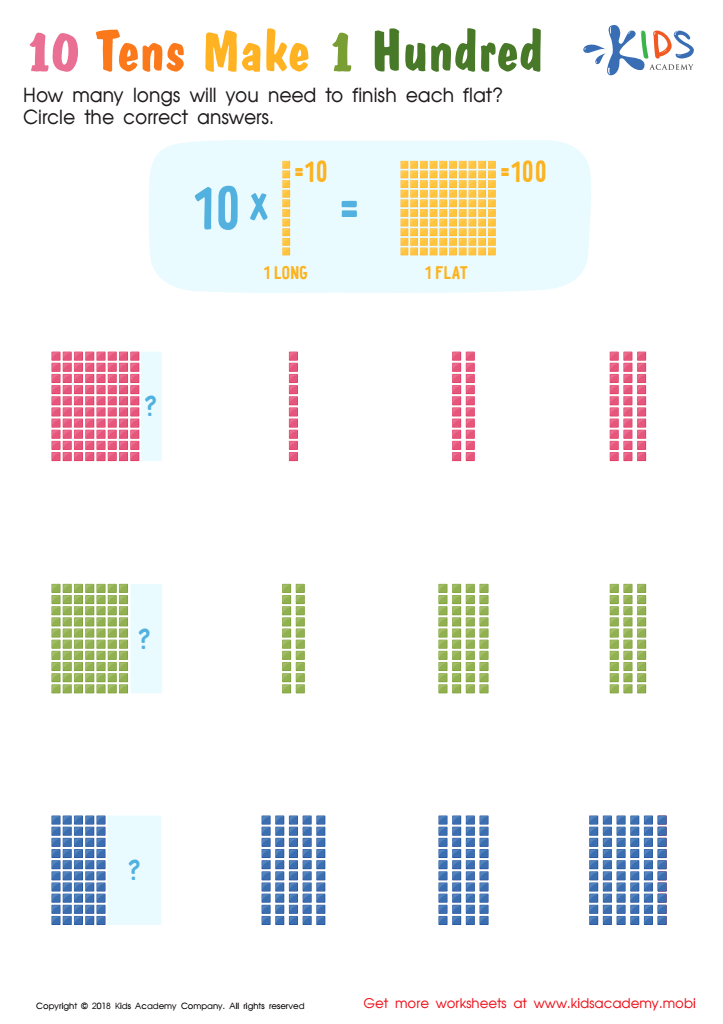
10 Tens Make 1 Hundred Worksheet
 Assign to My Students
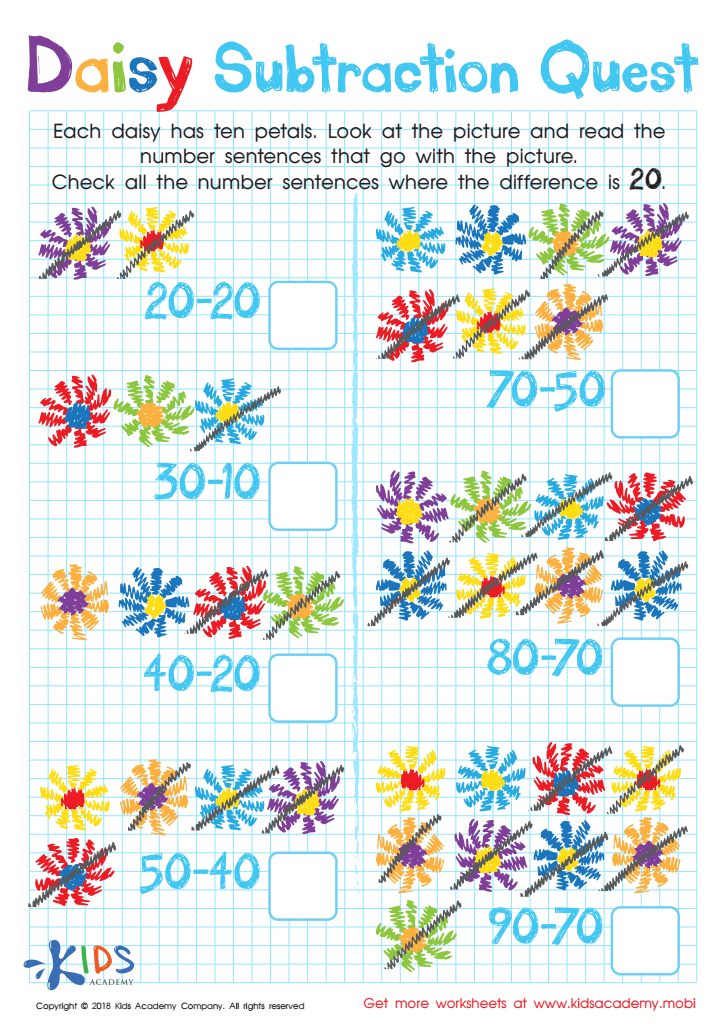
Daisy Subtraction Quest Worksheet
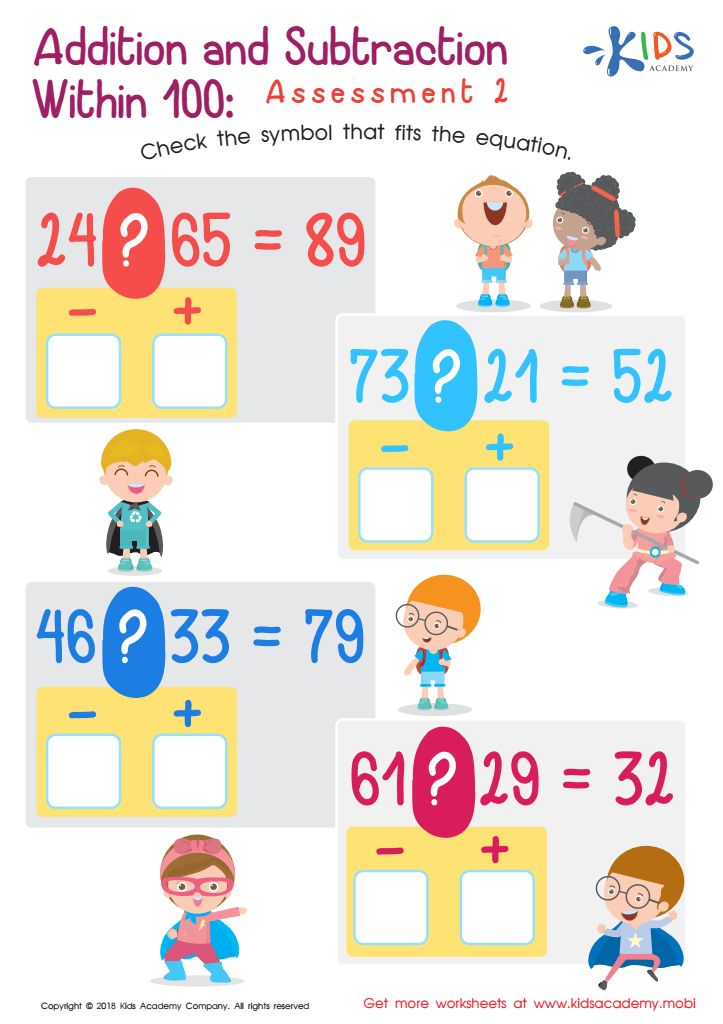
Addition and Subtraction Within 1: Assessment 2 Worksheet
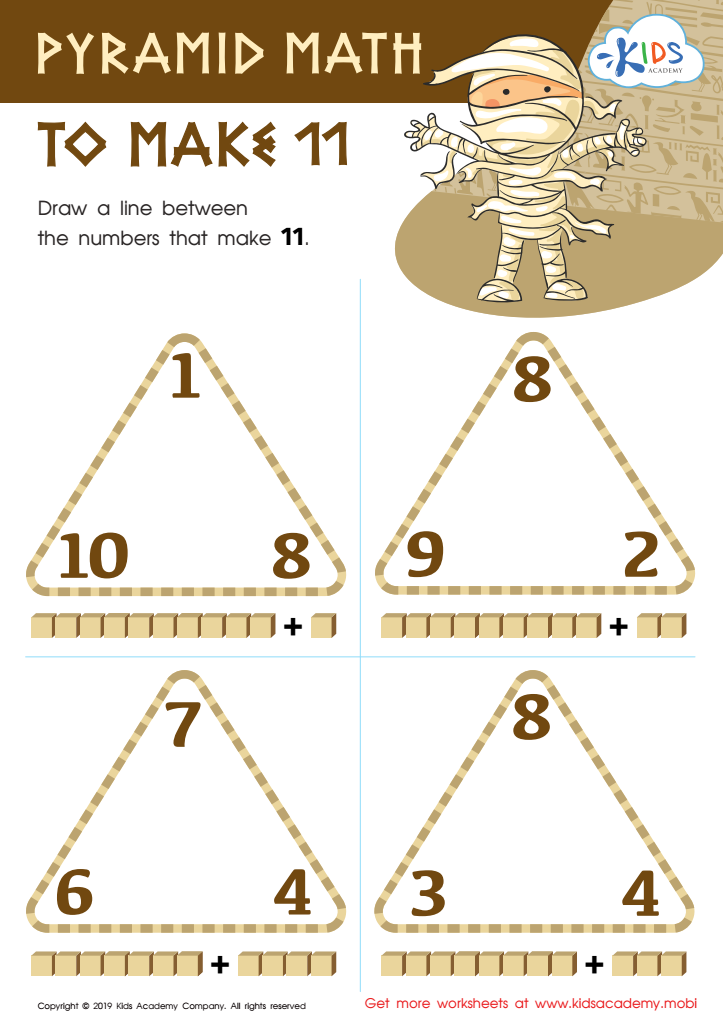
Pyramid Math to Make 11 Worksheet
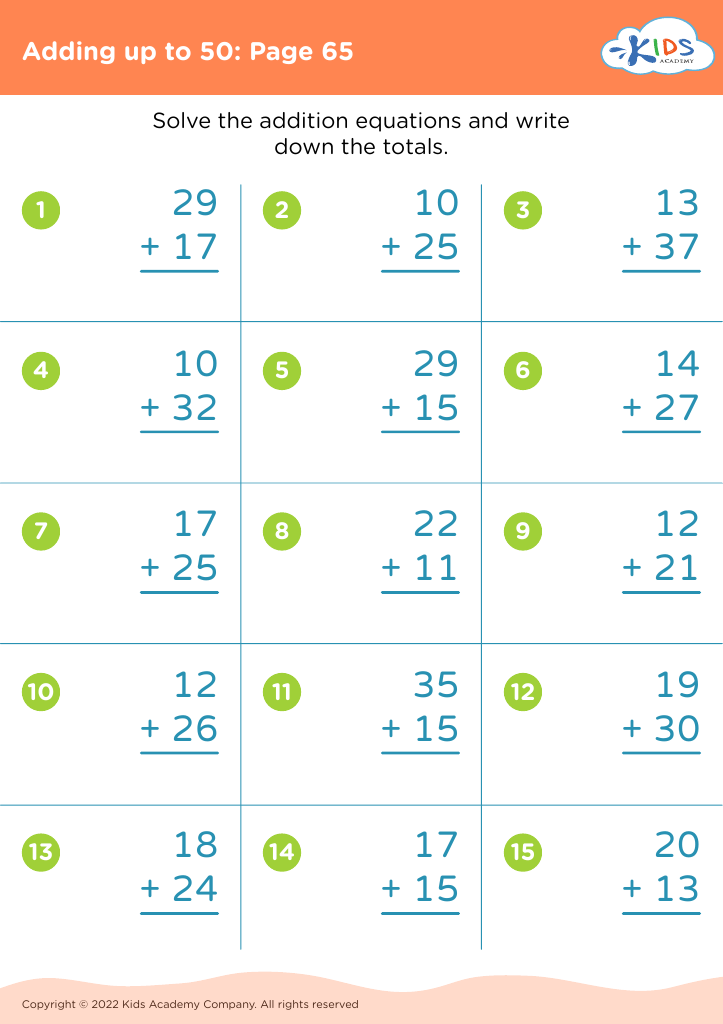








Understanding number relationships at ages 6-7 is fundamental for young learners as it sets the groundwork for future mathematical proficiency. At this age, children are building the essential skills needed to comprehend more complex math concepts. By grasping number relationships, they are not just memorizing facts, but developing a deeper conceptual understanding of how numbers work together.
For instance, when children understand that 7 is made up of 3 and 4, or 5 and 2, they are recognizing patterns and beginning to master addition and subtraction in a meaningful way. This knowledge helps them solve problems more flexibly and confidently. Having a strong foundation in number relationships can also make learning new math concepts less intimidating as they grow older.
Moreover, cultivating these skills at an early age promotes critical thinking and problem-solving abilities that are applicable beyond mathematics. This foundational understanding enhances their logical reasoning abilities and supports cognitive development in other academic areas.
Parents and teachers play a crucial role by providing supportive and engaging environments, using visual aids, games, and everyday scenarios to reinforce these concepts. As such, their involvement and encouragement significantly contribute to the child's long-term academic success and positive attitude towards math.








