Understanding symmetry Worksheets for Ages 6-7 - Page 2
35 filtered results
-
From - To
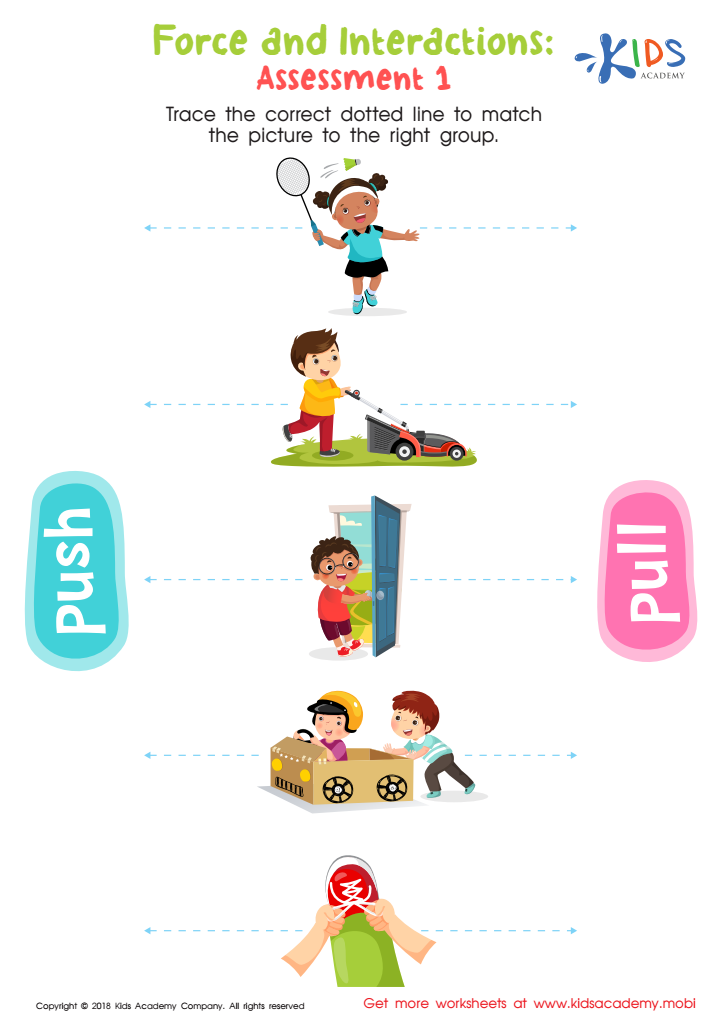
Force and Interactions: Assessment 2 Worksheet
 Assign to My Students






.jpg)

Understanding symmetry is crucial for children aged 6-7 as it lays the foundation for critical cognitive skills and enhances their appreciation of the world around them. At this age, children are naturally curious and are beginning to notice patterns and shapes in their environment. By exploring symmetry, parents and teachers can engage students in observation and analytical thinking. Recognizing symmetrical objects promotes spacial awareness and helps in the development of geometry skills, which are essential for math proficiency.
Furthermore, symmetry is present in art, nature, and architecture, making it an interdisciplinary concept that connects mathematics with other subjects. This exploration not only fosters creativity but also encourages children to express themselves through art projects that involve symmetrical designs.
By understanding symmetry, children enhance their problem-solving skills, as they learn to identify, manipulate, and compare shapes. Encouraging this understanding at such a formative age helps set the stage for advanced mathematical concepts in later years. Ultimately, a grasp of symmetry enriches children's education, builds their confidence, and nurtures their ability to think logically and critically. This makes it an important focus for both parents and educators in early childhood development.








