Uppercase identification Worksheets for Ages 6-7
5 filtered results
-
From - To
Discover our engaging Uppercase Identification Worksheets designed specifically for children aged 6-7! These worksheets provide a fun and interactive way for young learners to recognize and differentiate uppercase letters. With vibrant illustrations and a variety of activities, kids will enhance their letter recognition skills while developing essential literacy foundations. Each worksheet is crafted with age-appropriate challenges to keep learners motivated and excited about reading. Perfect for home or classroom use, these resources help nurture early skills in a playful and educational manner. Explore our collection today and support your child's journey towards mastering uppercase letters!
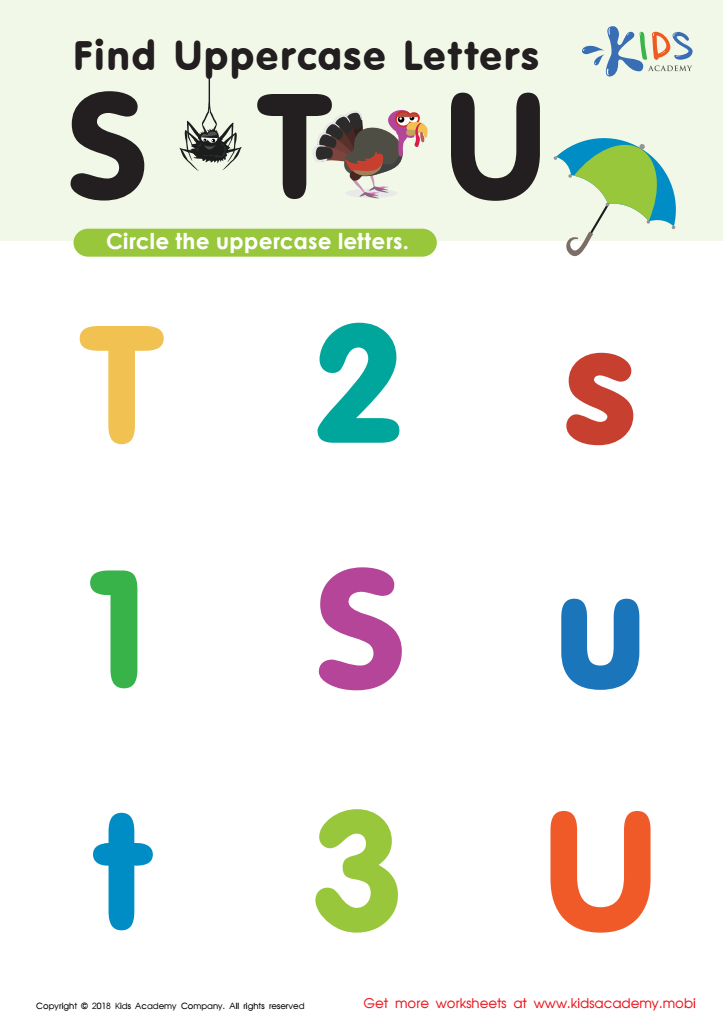
Find Uppercase Letters Worksheet
 Assign to My Students
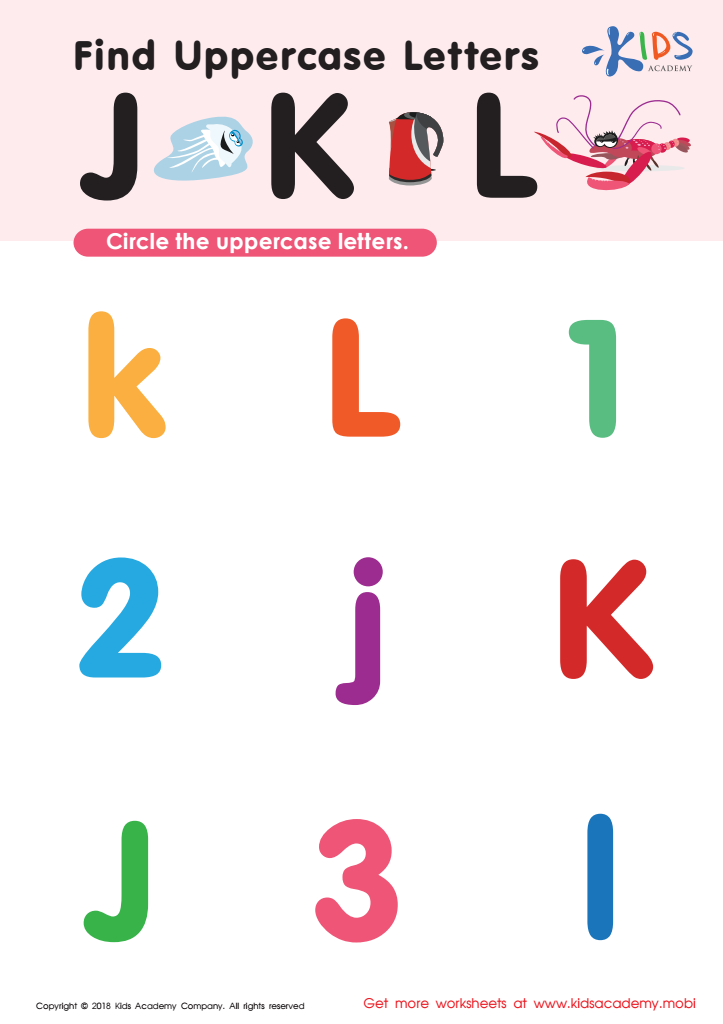
Find Uppercase Letters J, K, and L Worksheet
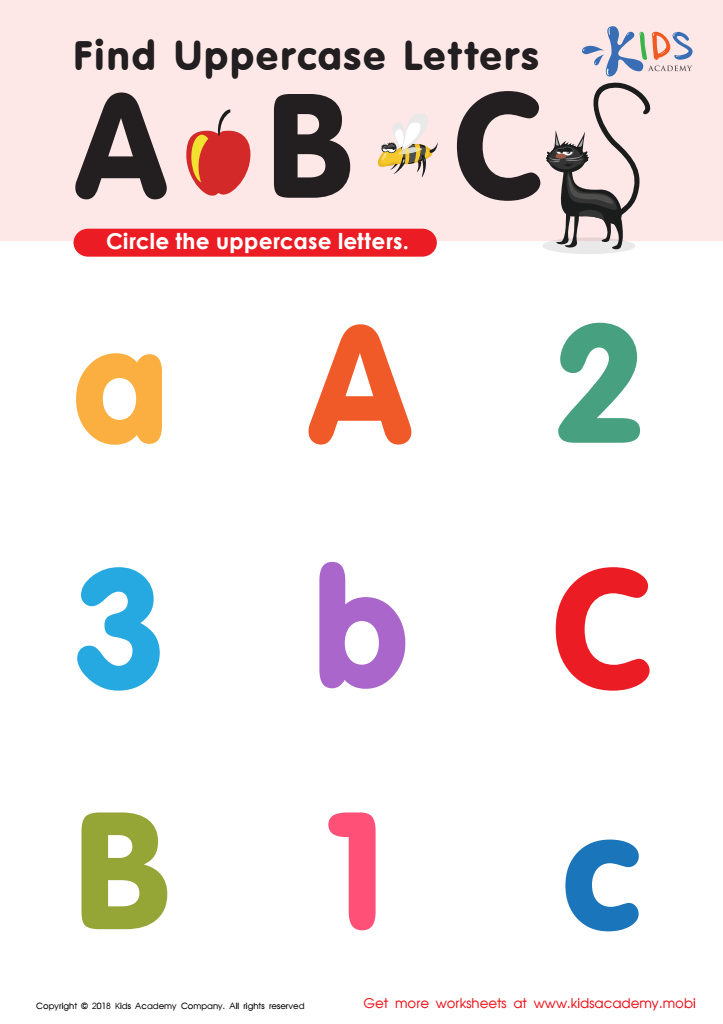
Find Uppercase Letters A, B, and C Worksheet
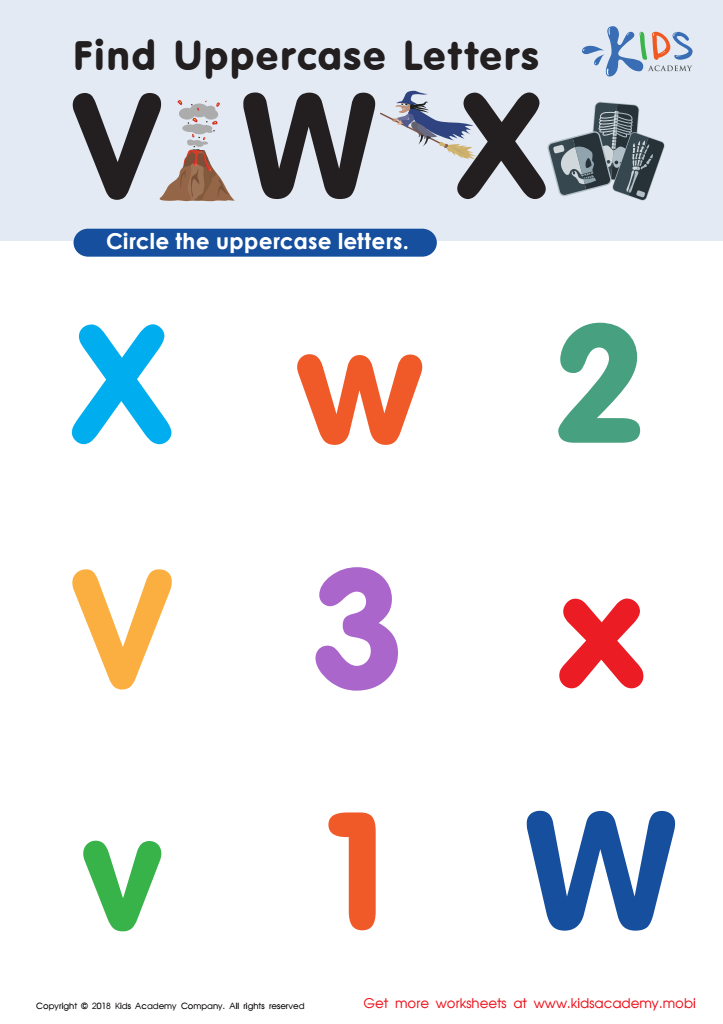
Find Uppercase Letters V, W, X Worksheet
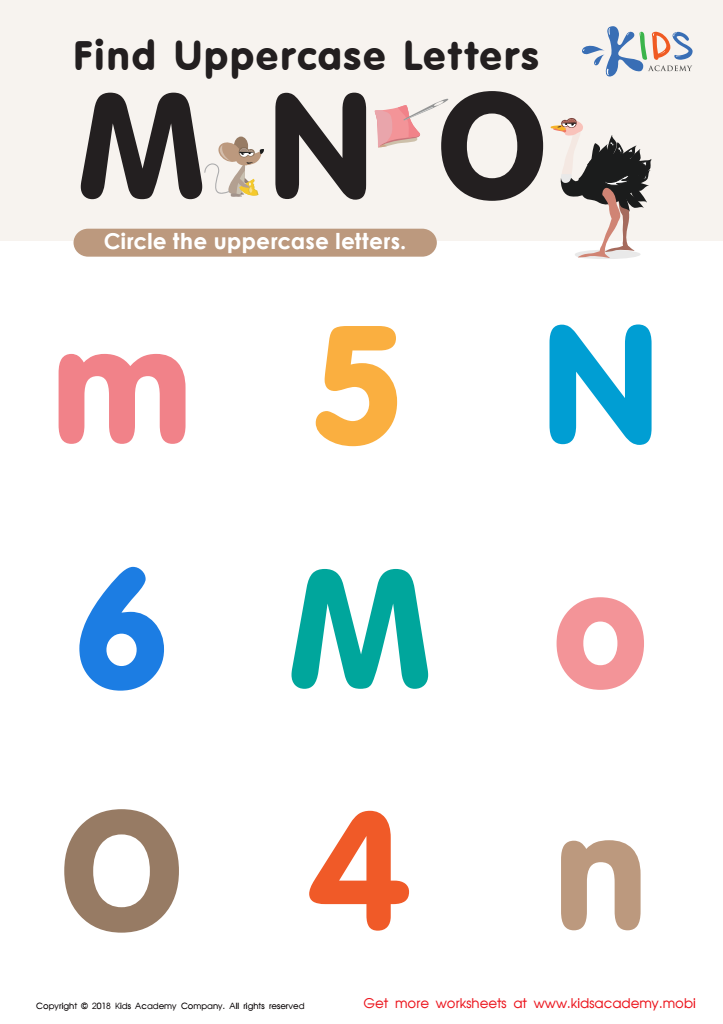
Find Uppercase Letters M, N, and O Worksheet








Uppercase letter identification is a crucial foundational skill for children aged 6-7, as it plays a significant role in their literacy development. This age group is typically transitioning from early reading skills to more complex literacy tasks. Recognizing uppercase letters is essential because these letters are often used to begin sentences, proper nouns, and titles, making their identification vital for comprehension and effective communication.
Moreover, mastering uppercase letters enhances children's confidence in reading and writing. As they encounter a variety of texts, familiarity with these letters helps them make sense of print, encouraging a positive attitude towards reading. This, in turn, lays the groundwork for fluent reading and proficient writing skills.
Parents and teachers should care about uppercase identification because solid literacy skills are directly linked to academic success across subjects. Enhancing letter recognition can also foster critical thinking, creativity, and overall language development. Engaging in activities that promote uppercase identification can create meaningful learning experiences, strengthening the home-school connection. Ultimately, prioritizing this skill supports children's cognitive growth, making it foundational for future learning and opening doors to endless possibilities in their educational journeys.








