Identifying shapes Adding up to 100 Misc Worksheets for Ages 6-7
3 filtered results
-
From - To
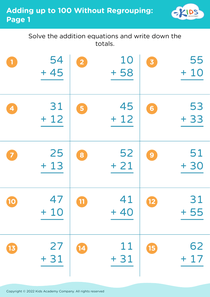
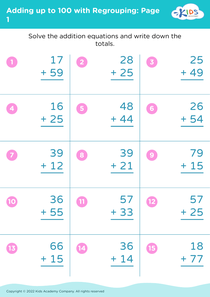
Explore our collection of engaging worksheets designed for children ages 6-7, focusing on identifying shapes and mastering addition up to 100. Our diverse range of activities helps young learners practice essential math skills while having fun. From colorful shape recognition exercises to challenging addition problems, these worksheets cater to different learning styles, ensuring a thorough understanding of fundamental concepts. Boost your child's confidence in math with creative, well-structured tasks that stimulate critical thinking. Perfect for reinforcing classroom learning or extra practice at home, these worksheets provide an excellent foundation for future math success. Download now and watch your child's skills flourish!
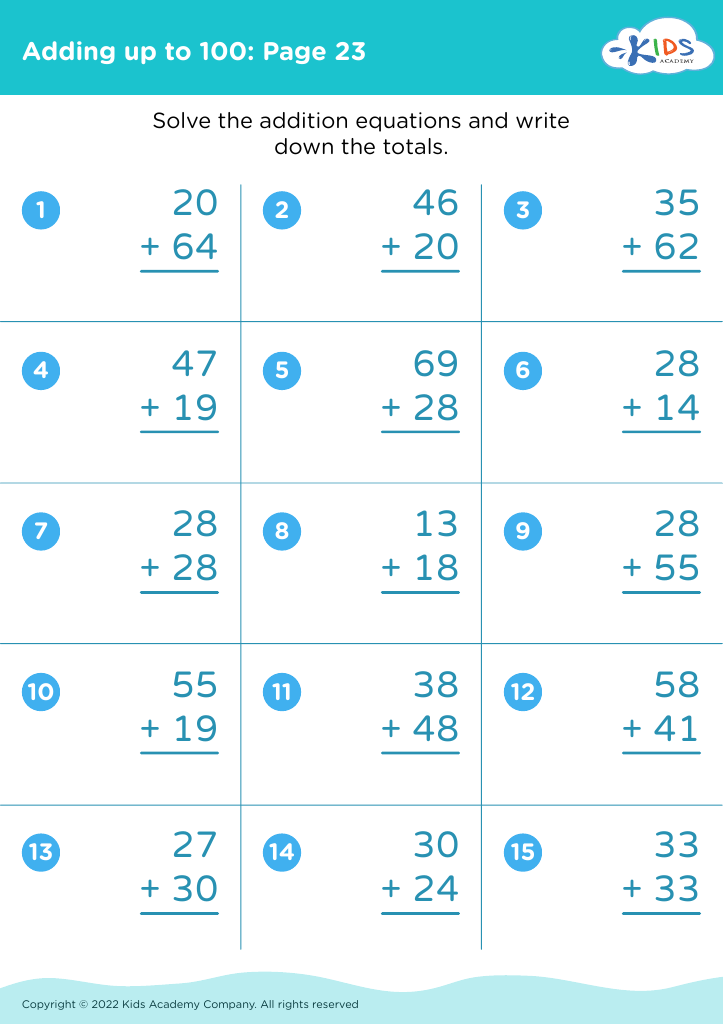
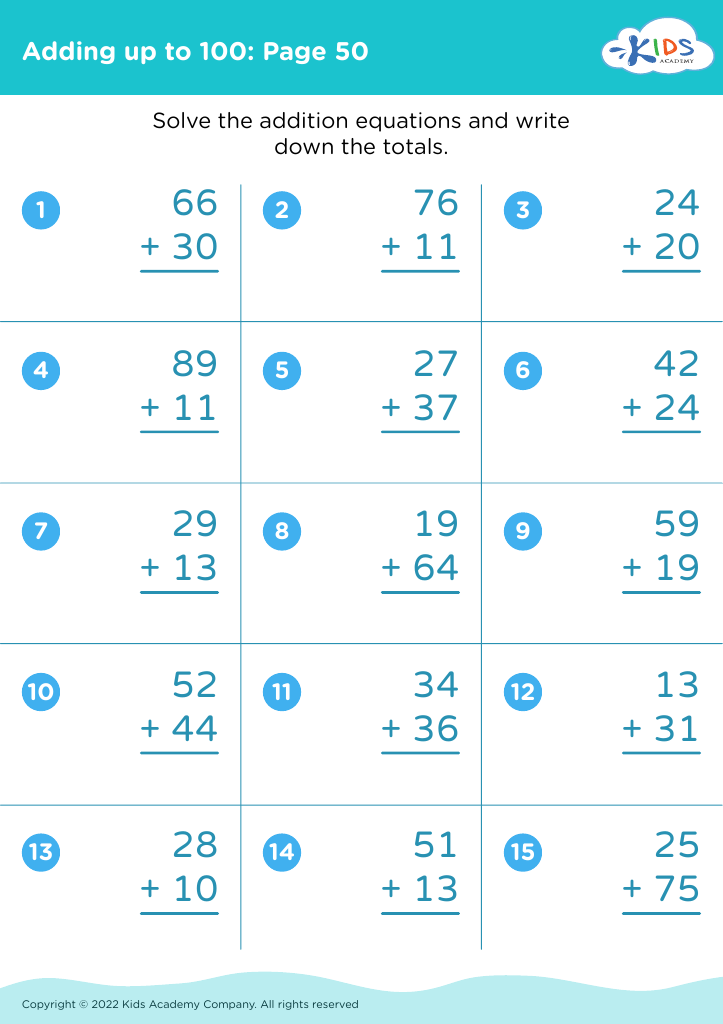
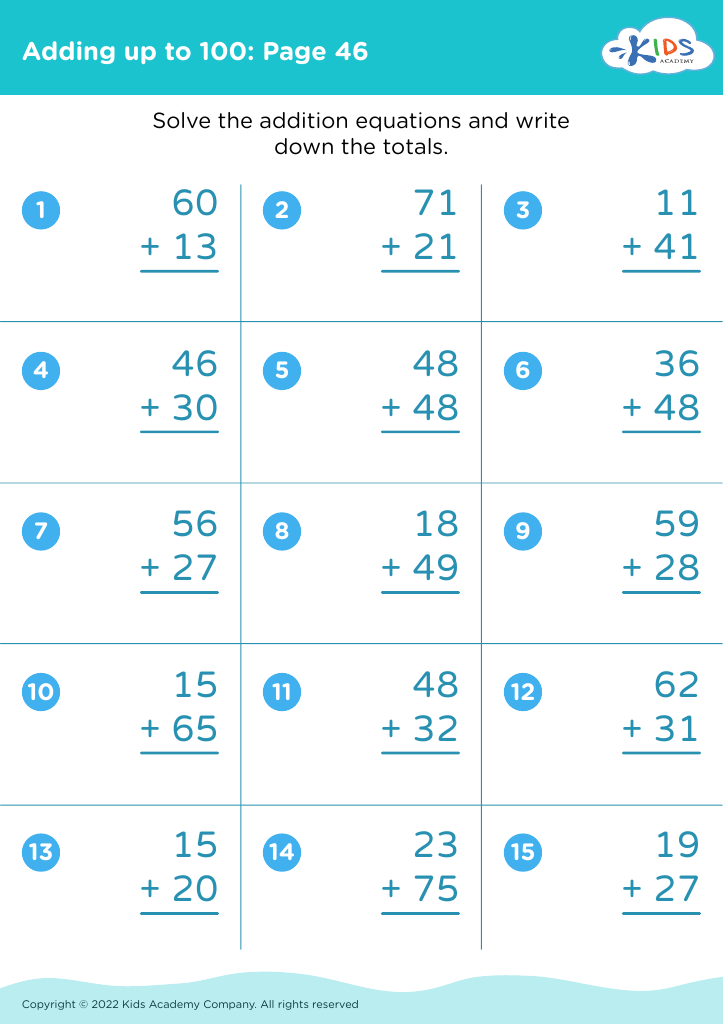


Identifying shapes, adding up to 100, and understanding various basic skills are crucial for children aged 6-7 as they lay the foundation for further learning and cognitive development.
Identifying shapes: At this age, recognizing and naming different shapes enhances spatial awareness and geometric thinking. It aids in everyday tasks, from organizing physical space to problem-solving and understanding more complex mathematical concepts later on.
Adding up to 100: Basic arithmetic is a building block for all mathematics. When children practice adding up to 100, they develop number sense, improve memory, and refine their ability to perform operations quickly and accurately. These skills are fundamental not only for advanced math learning but also for everyday activities like shopping, cooking, and time management.
Miscellaneous skills: Introducing a variety of concepts at an early age, such as basic science, reading comprehension, and social skills, nurtures a well-rounded intellect. It enables children to find connections between different areas of learning and cultivates curiosity and a love for knowledge. These capabilities collectively contribute to a child's overall cognitive, social, and emotional growth, preparing them to navigate future challenges successfully.
In sum, focusing on these fundamental skills fosters a solid educational foundation, critical thinking, and practical life skills, ensuring children have a well-rounded start to their learning journey.