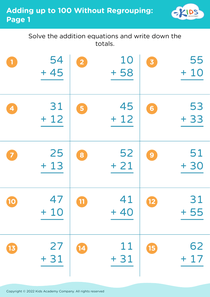
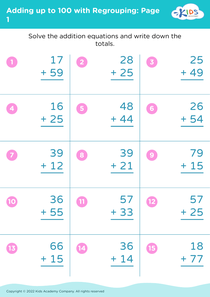
Understand fractions Adding up to 100 Misc Worksheets for Ages 6-7
3 filtered results
-
From - To
Explore our "Understand Fractions Adding Up to 100" worksheets, designed for children ages 6-7. These engaging and age-appropriate resources help young learners grasp the concept of fractions through interactive exercises that simplify and demystify the subject. Each worksheet features a variety of fun activities that encourage kids to practice adding fractions, identifying whole parts, and visualizing numbers as they explore the world of fractions up to 100. Perfect for both classroom and at-home learning, our miscellaneous worksheets support foundational math skills while fostering a love for learning. Start building a strong mathematical base today with our playful and educational materials!
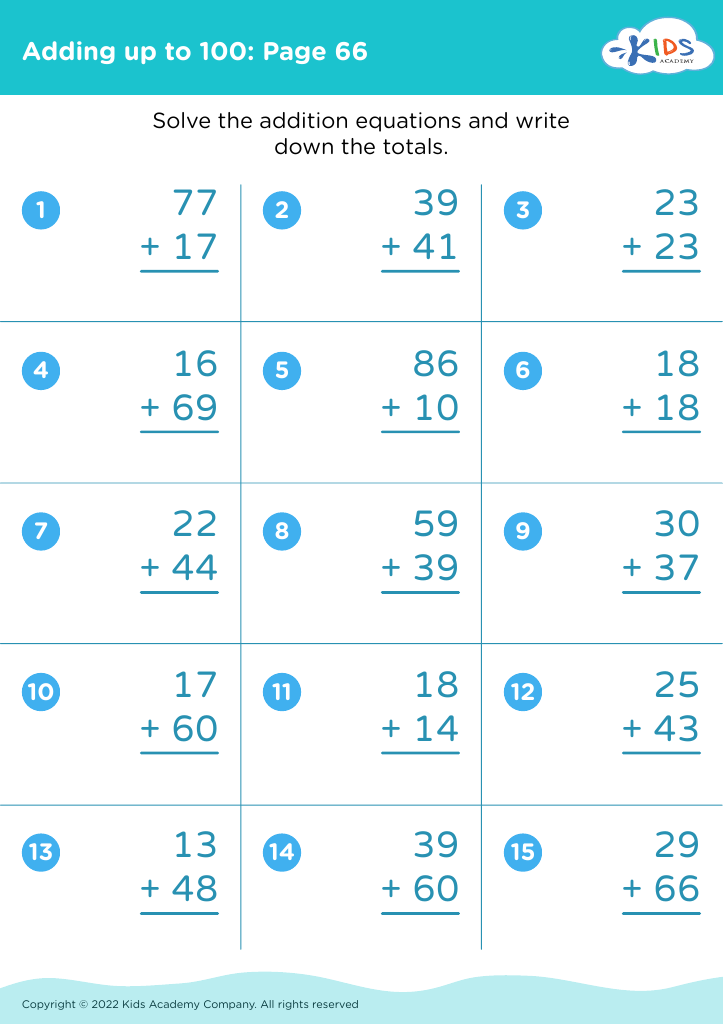
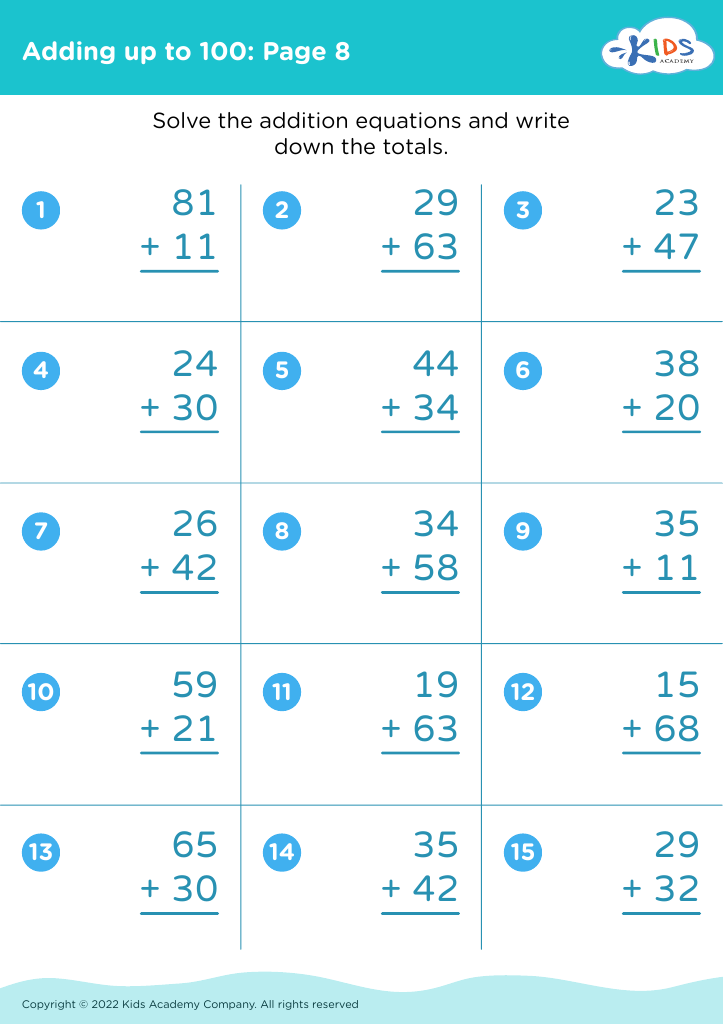
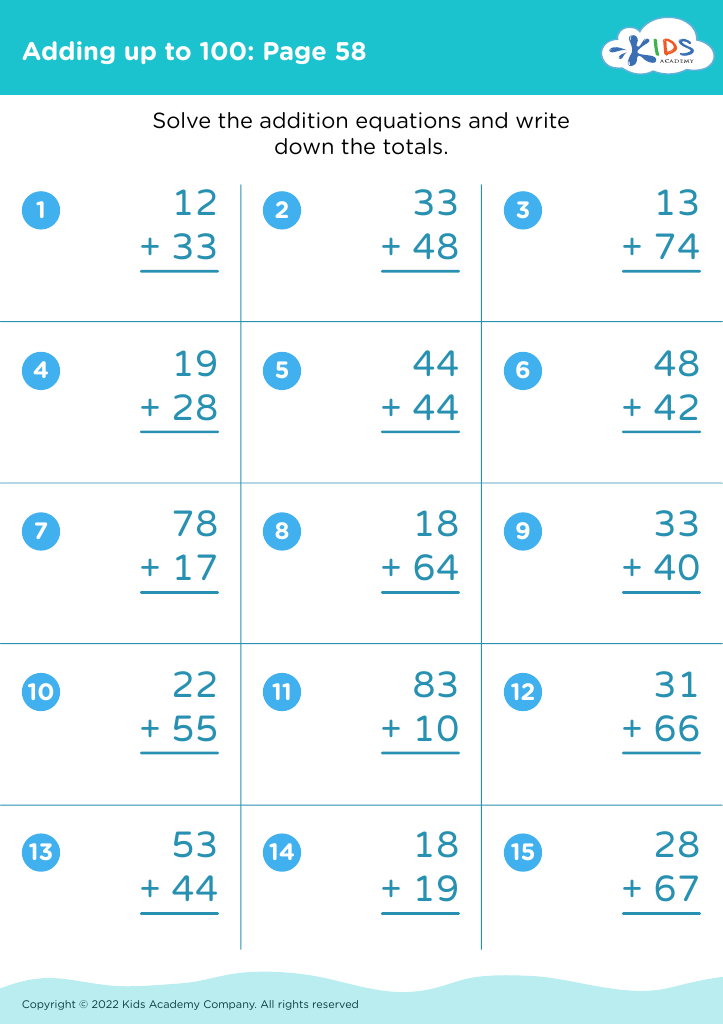


Understanding fractions and their relationship to the concept of adding up to 100 is crucial for children ages 6-7, as it lays the groundwork for future mathematical skills. At this age, children are developing their ability to recognize portions and comprehending how parts make a whole—like understanding basic fractions such as 1/2, 1/4, or even 3/4.
For parents and teachers, focusing on these concepts enhances not just arithmetic prowess but also critical thinking and problem-solving abilities. Experiences with fractions teach kids about division and fair sharing, reinforcing principles of equity and proportion. Furthermore, the skillful manipulation of fractions contributes to a child's confidence as they venture into more advanced math, paving the way for success in education.
Incorporating real-life applications—such as cooking or measuring—makes learning more engaging and relevant. Being able to visualize and interact with fractions can help children develop a stronger number sense, making them more comfortable with the idea that different values can fit together in various ways.
Caring about teaching fractions during these formative years means providing children with tools they need for not just academic achievement, but also for practical life skills.