Counting practice Adding up to 1000 Misc Worksheets for Ages 6-7
8 filtered results
-
From - To
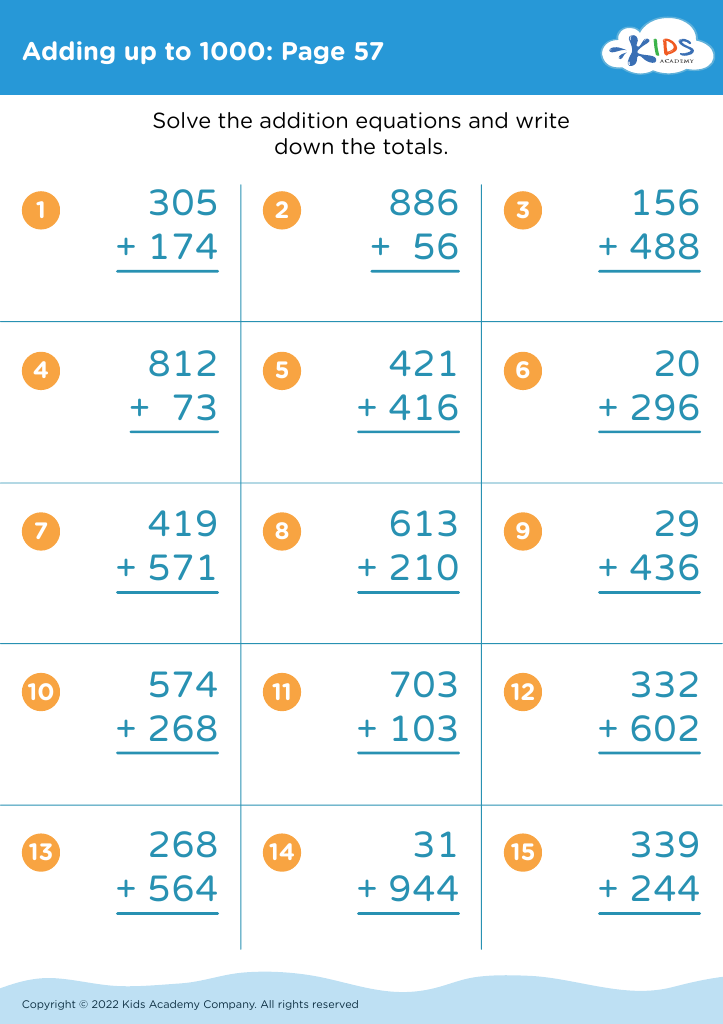
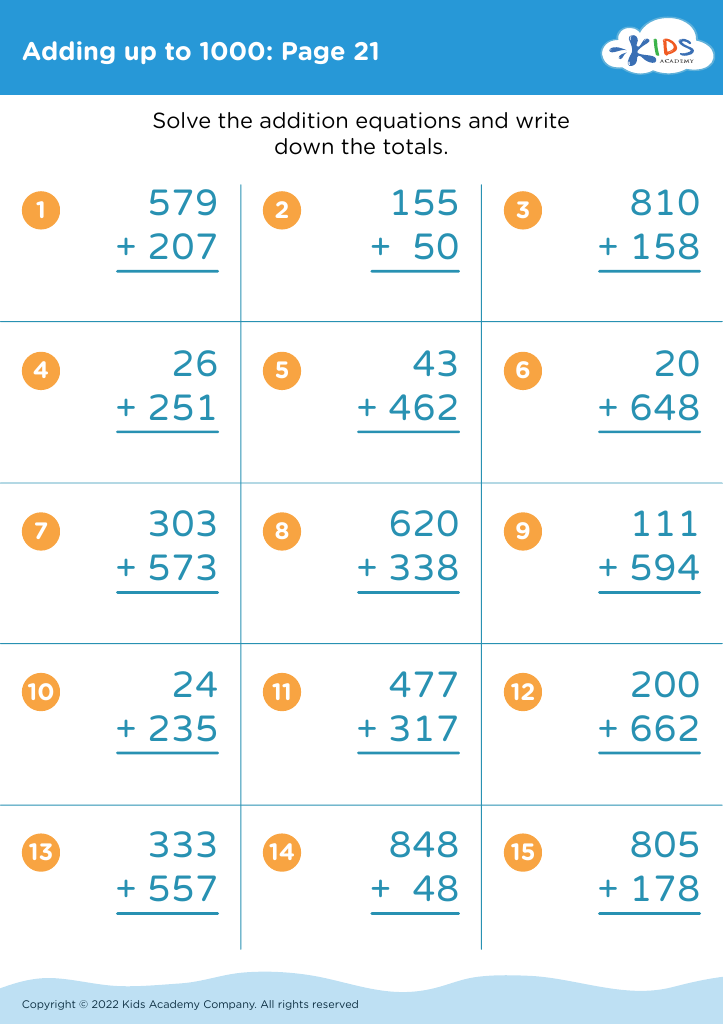
Discover a collection of engaging worksheets designed to make counting and adding up to 1000 fun for 6-7 year-olds! Our colorful and interactive sheets help young learners build essential math skills. Each worksheet is crafted to boost confidence and comprehension, guiding kids through a variety of activities that develop their ability to add large numbers. Perfect for enhancing classroom lessons or as enriching homework practice, these resources ensure children master counting in a joyful, stress-free way. Watch your student's numeracy skills flourish with our expertly designed math practice worksheets for young minds eager to learn.
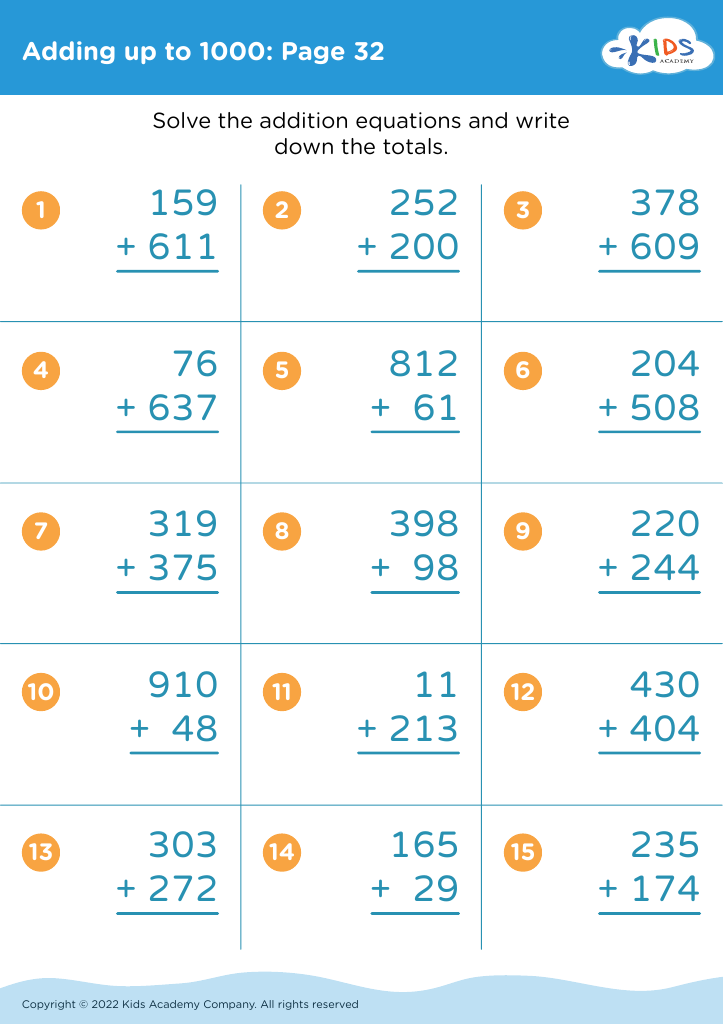
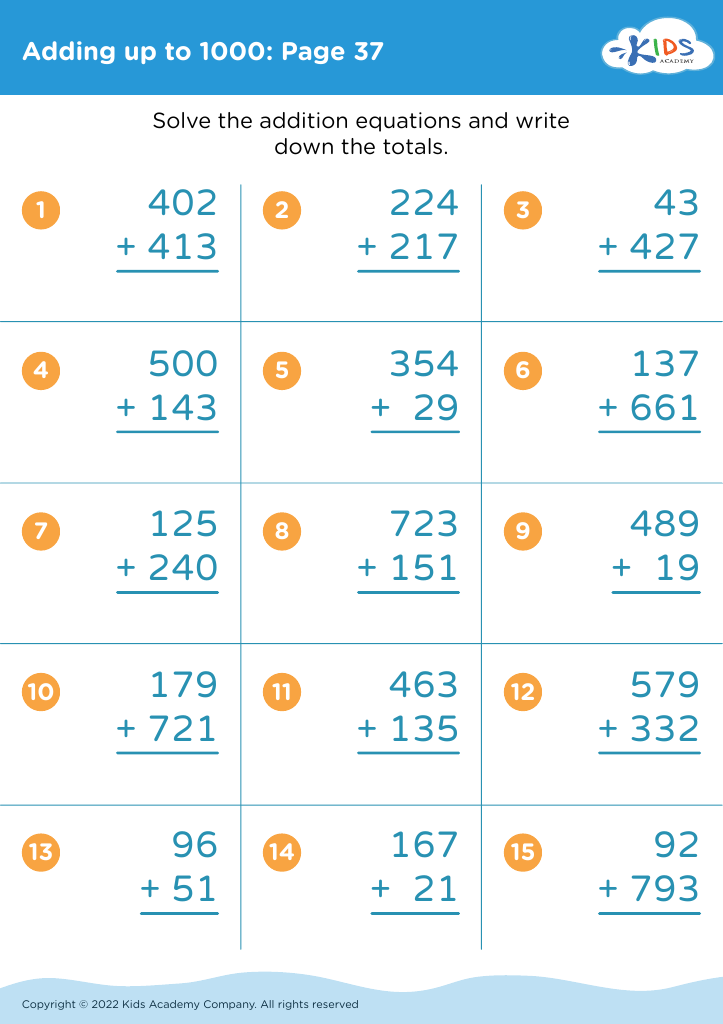
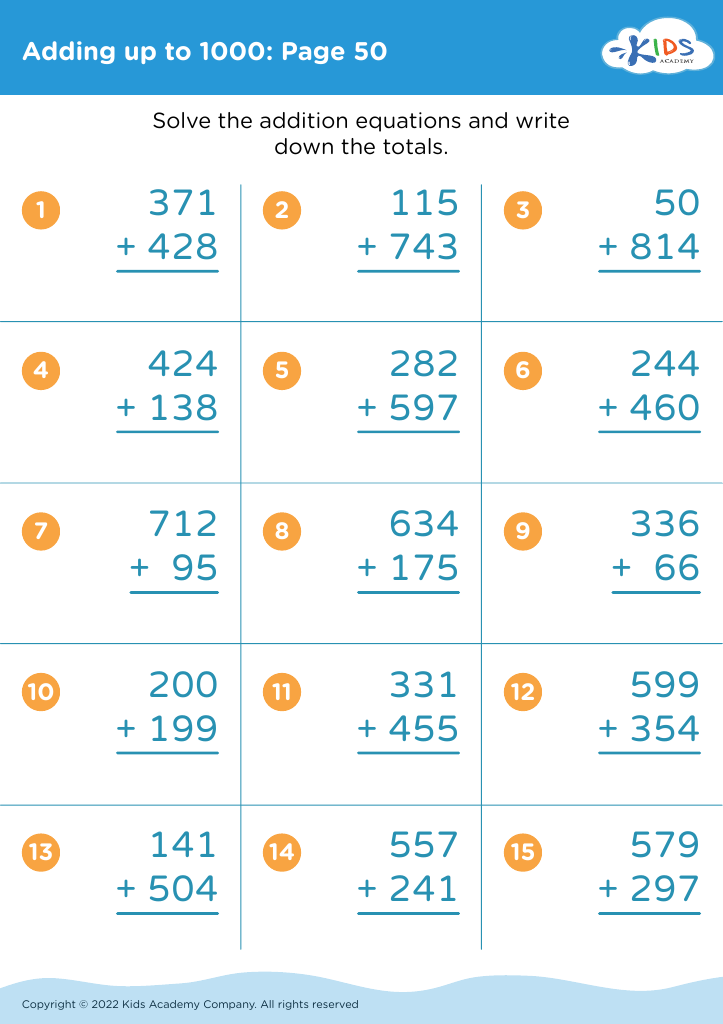
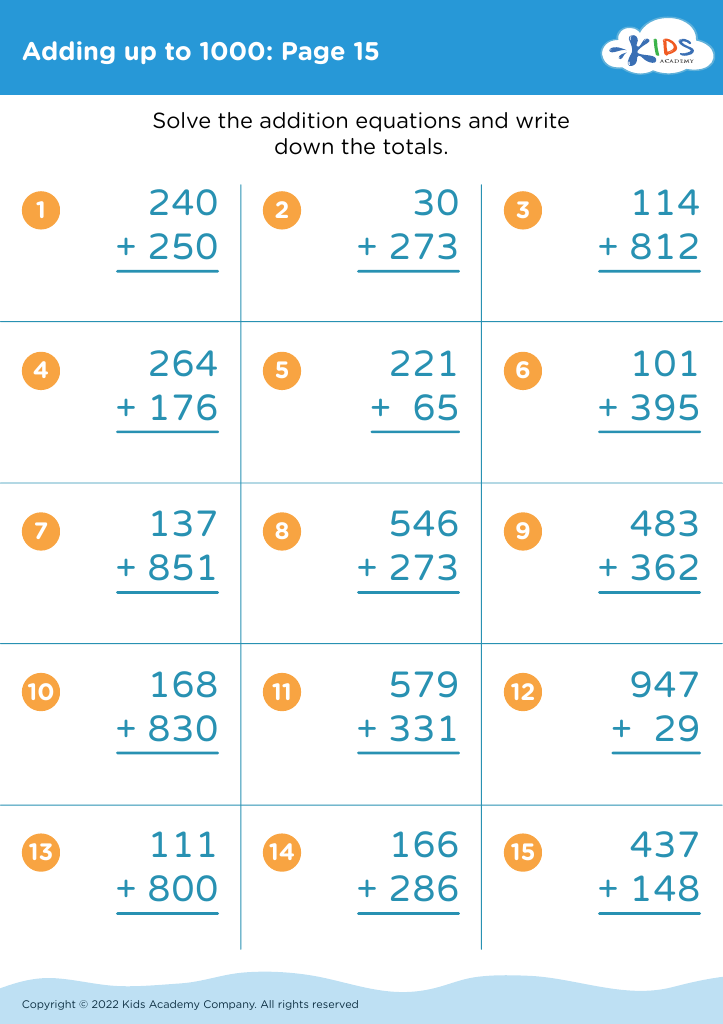
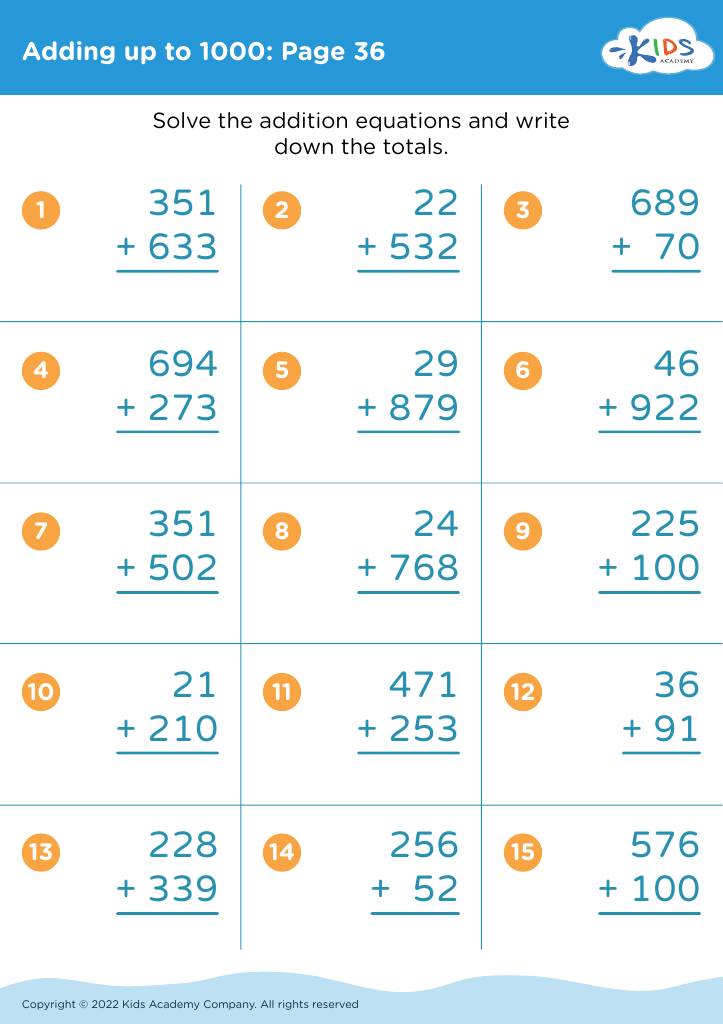
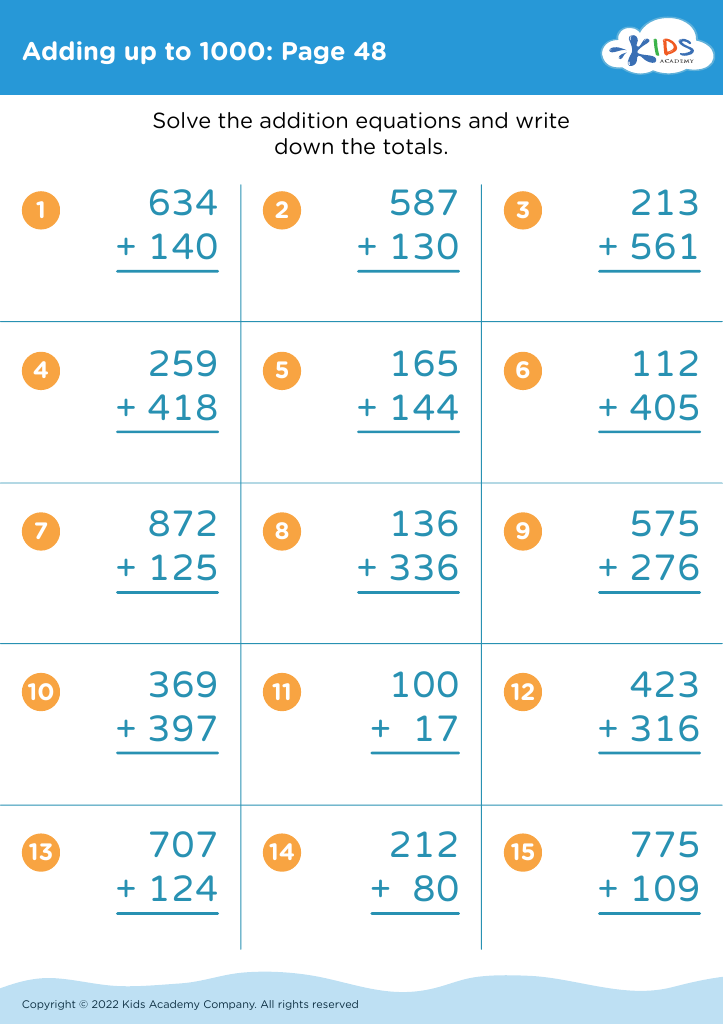


Counting practice and addition up to 1000 for children aged 6-7 are fundamental components of early arithmetic learning that have far-reaching implications for their mathematical and cognitive development. At this crucial age, students are transitioning from basic counting to more complex arithmetic tasks which form the building blocks of higher-level math skills.
Practicing counting and adding up to 1000 fosters number sense, an essential skill enabling children to comprehend the size of numbers, their relationships, and various numerical patterns. This understanding serves as a foundation for more advanced concepts, such as multiplication, division, fractions, and algebra.
Fluency in these skills enhances problem-solving abilities. As children perform addition within this range, they develop strategies for breaking down large problems into more manageable parts, whoch later translates into boosted critical thinking and analytical skills.
Moreover, proficiency in early arithmetic positively impacts overall academic achievement and confidence. Children become more resilient learners, approaching mathematical tasks with less anxiety and more enthusiasm.
From a practical standpoint, these arithmetic abilities underpin everyday tasks and essential life skills, such as handling money, measuring ingredients in recipes, or telling time.
Therefore, parents and teachers should prioritize counting practice and addition up to 1000, to lay a strong mathematical foundation, nurture critical thinking skills, and instill lifelong confidence in young learners.