Fine Motor Skills Adding up to 1000 Misc Worksheets for Ages 6-7
5 filtered results
-
From - To
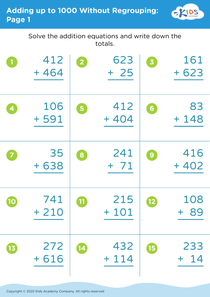
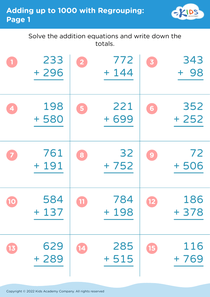
Looking for engaging worksheets to boost your child's fine motor skills while mastering math? Our "Fine Motor Skills Adding up to 1000 Misc Worksheets" for ages 6-7 are designed to combine learning and fun. These meticulously crafted printable activities guide young learners through various addition exercises up to 1000, enhancing their mathematical proficiency and precision. Ideal for classroom use or at-home practice, these worksheets not only reinforce essential math skills but also improve hand-eye coordination and dexterity. Perfect for active minds, these worksheets foster critical thinking and motor development in an enjoyable way. Get started today and watch your child's skills soar!
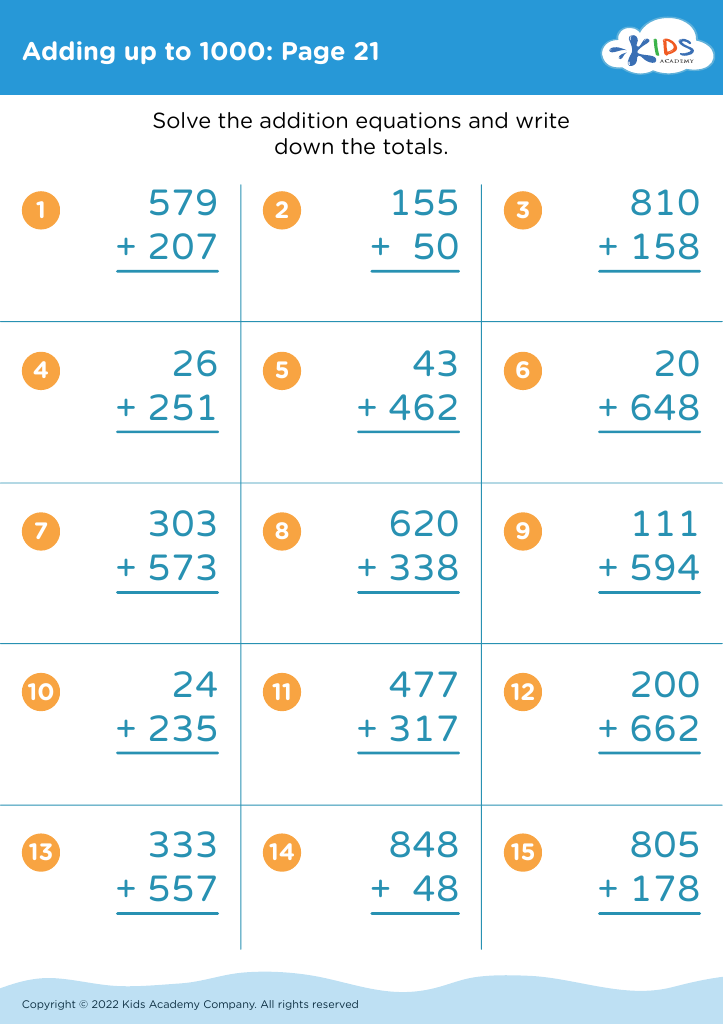
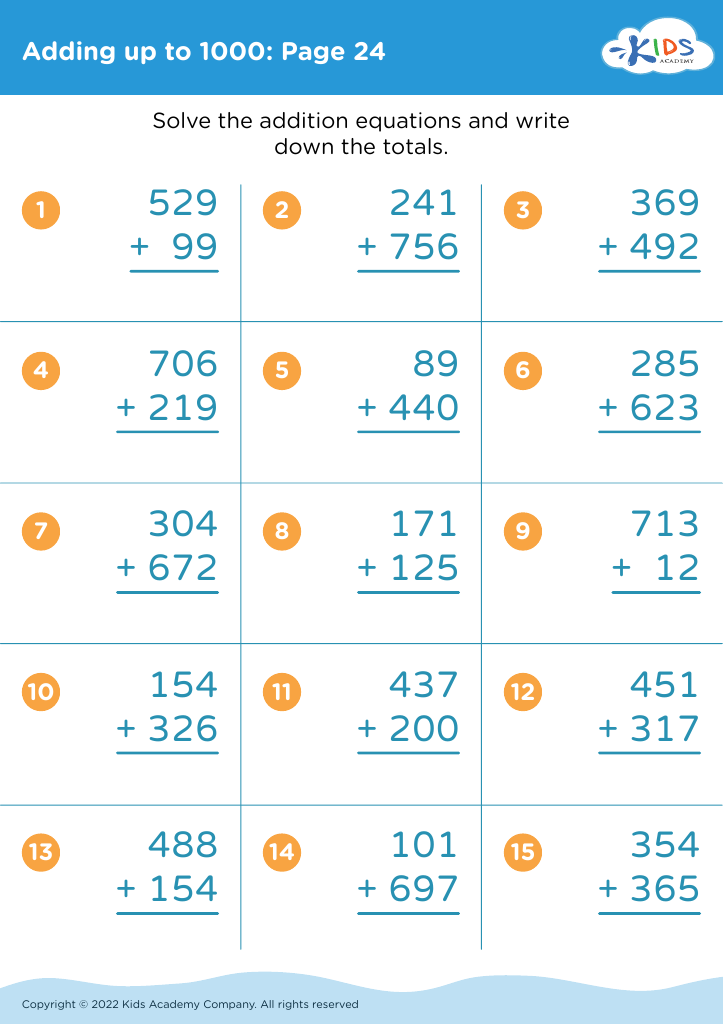
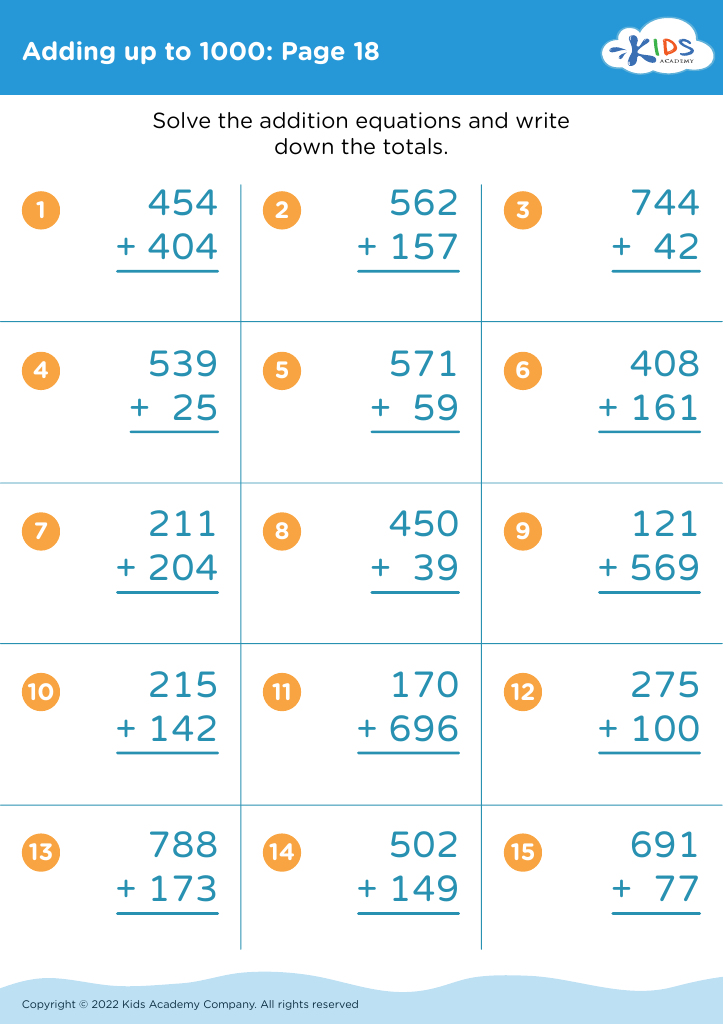
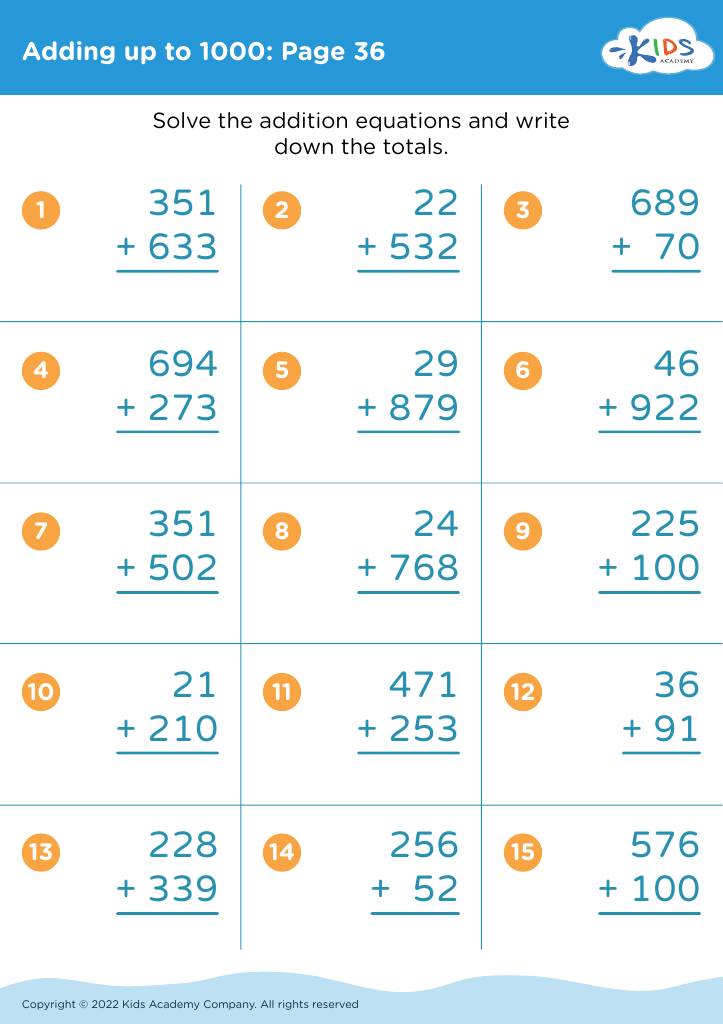
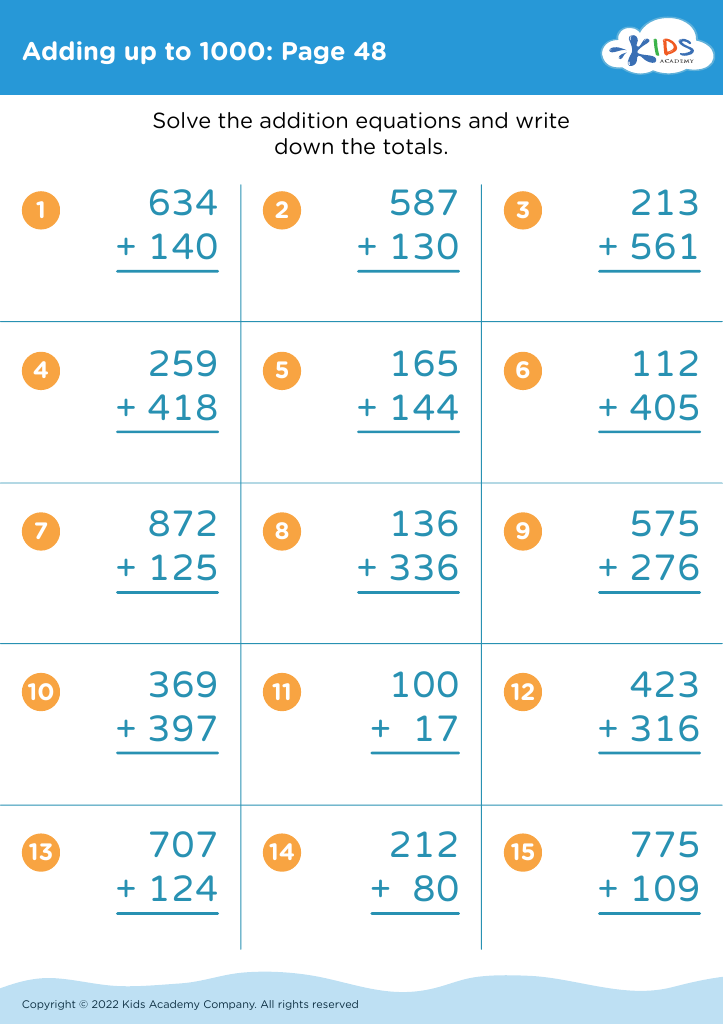


Fine motor skills are essential for young children, particularly when they engage in tasks like adding up to 1000. These skills involve the coordination of small muscles in the hands and fingers with the eyes. At ages 6-7, children are developing these crucial abilities, which lay a foundation for more complex tasks. Fine motor skills affect writing legibility, accuracy, and the ability to perform precise calculations. When children practice adding numbers up to 1000, they not only enhance their math skills but also improve their dexterity, hand-eye coordination, and visual-motor integration.
Here are some reasons why parents and teachers should care about fine motor skills in relation to arithmetic:
-
Academic Performance: Proficient fine motor skills help children write numbers clearly and line them up correctly, reducing errors in calculations. Mastering these skills leads to improved understanding and success in mathematics.
-
Independence: Activities that foster fine motor development promote self-reliance in everyday tasks like buttoning, tying shoelaces, and using utensils, boosting self-esteem and confidence.
-
Life Skills: Early development of fine motor skills is integral for future responsibilities, such as driving, using technology, and playing musical instruments.
-
Cognitive Connection: Performing mathematical tasks involving fine motor coordination strengthens neural connections between different parts of the brain, enhancing overall cognitive skills and problem-solving abilities.
In conclusion, emphasizing fine motor skills in correlation with arithmetic tasks for children ages 6-7 offers comprehensive developmental benefits that extend into academic and everyday life success.