Improve math skills Adding up to 1000 Misc Worksheets for Ages 6-7
3 filtered results
-
From - To
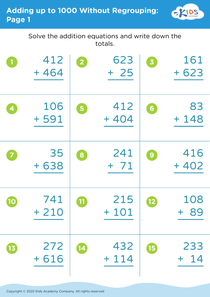
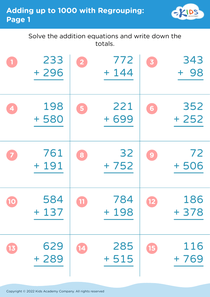
Discover a variety of creative worksheets designed to improve math skills for children aged 6-7 on our "Adding Up to 1000" page. Our diverse selection of misc worksheets is crafted to make learning fun while strengthening addition proficiency. Perfect for practice at home or in the classroom, these engaging activities ensure young learners grasp the important concepts of addition within 1000 through colorful exercises and visuals. Set your child on the path to math success with our specialized worksheets, fostering confidence and a solid mathematical foundation. Ideal for first graders looking for extra practice or a confidence boost in mathematics.
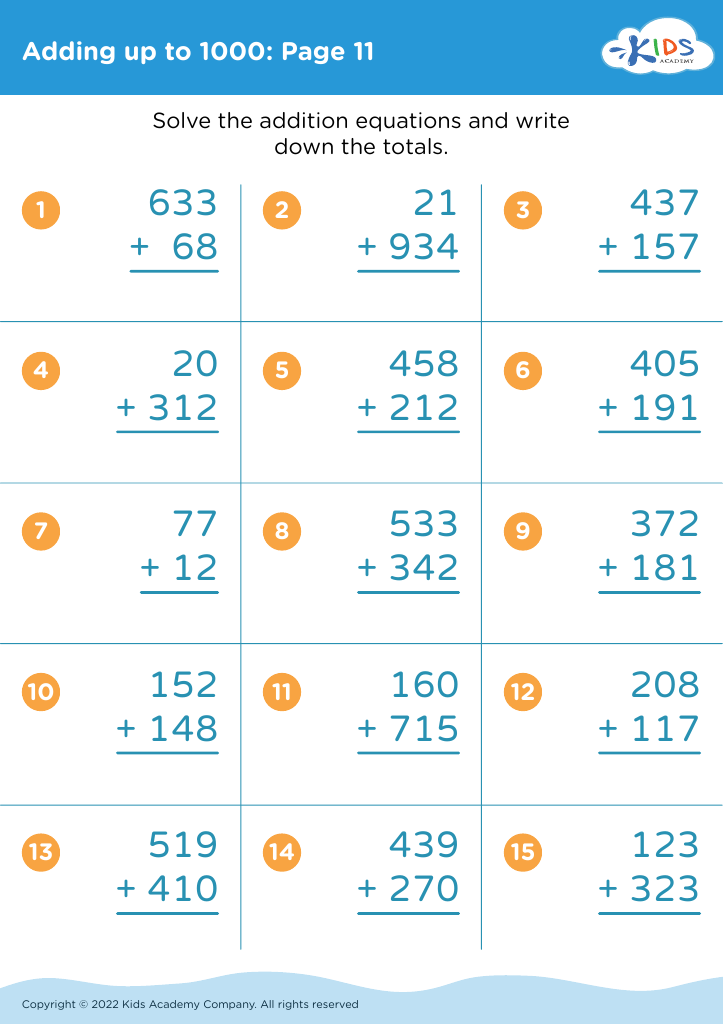
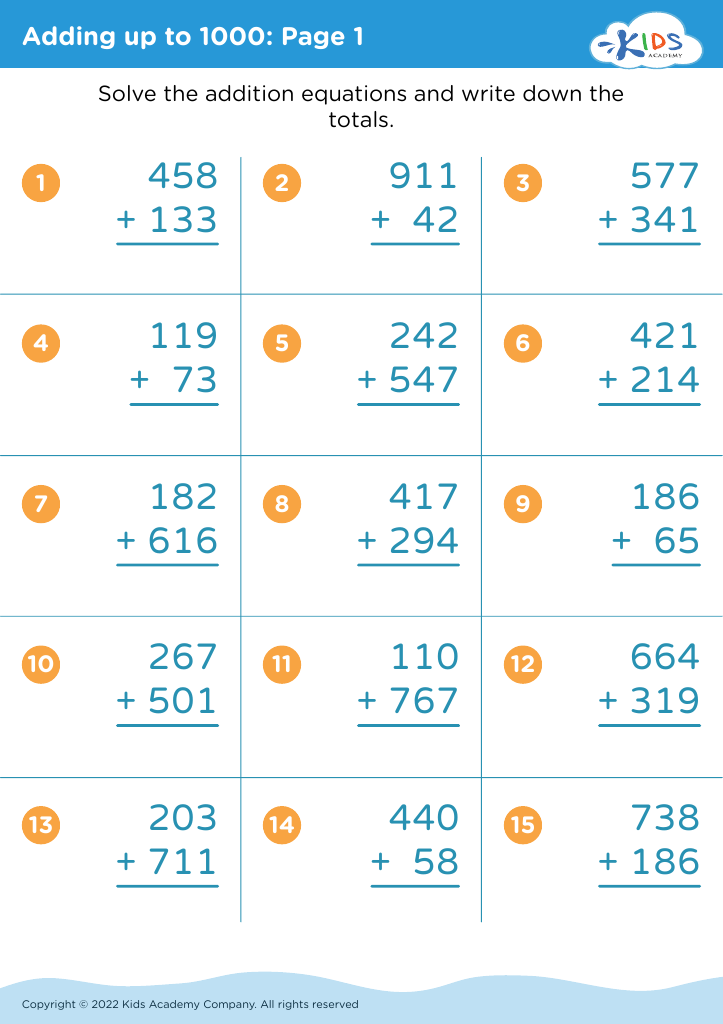
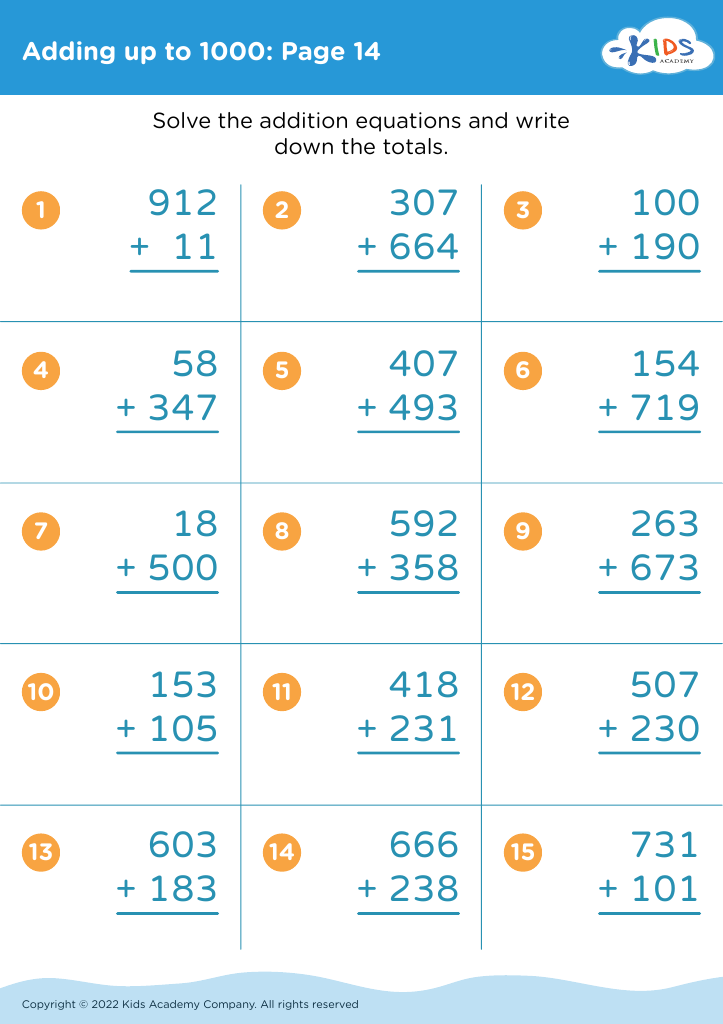


Improving math skills, particularly adding up to 1000, plays a fundamental role in early childhood education for ages 6-7. At this crucial developmental stage, children are building the foundation for all future learning. By developing strong addition skills, they enhance their number sense, which is essential for understanding more complex math concepts in later years.
Learning to add up to 1000 provides practical benefits. It helps young children perform everyday tasks such as counting money, measuring ingredients in recipes, or dividing items into groups. These activities require accurate addition skills, making math tangible and relevant.
Moreover, engaging with math exercises sharpens cognitive abilities. Problem-solving skills, critical thinking, and logical reasoning are all enhanced through regular practice. These skills are transferrable, benefiting other academic subjects and real-life situations.
Additionally, early success in math builds confidence. Children who feel competent in their math abilities approach new challenges with a positive mindset. This confidence often translates to a love for learning and a proactive attitude toward education.
Parents and teachers play crucial roles in nurturing these skills by providing supportive, structured, and fun learning environments. Incorporating games, hands-on activities, and real-world examples makes math more engaging, ensuring that children not only understand the concepts but enjoy them too.