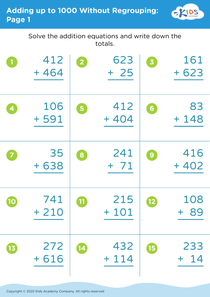
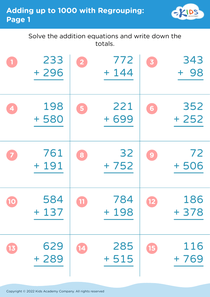
Mathematical reasoning Adding up to 1000 Misc Worksheets for Ages 6-7
5 filtered results
-
From - To
Unlock your child's mathematical potential with our "Mathematical Reasoning: Adding up to 1000 Misc Worksheets" designed specifically for ages 6-7. This engaging set of worksheets fosters essential math skills through fun activities that challenge young learners' ability to add numbers and think critically. Covering a variety of topics, these worksheets help reinforce concepts through hands-on practice, ensuring that kids gain confidence in their mathematical reasoning. Perfect for home or classroom use, these resources provide a solid foundation for a lifetime of success in mathematics. Visit our page to access these invaluable tools and support your child's educational journey today!
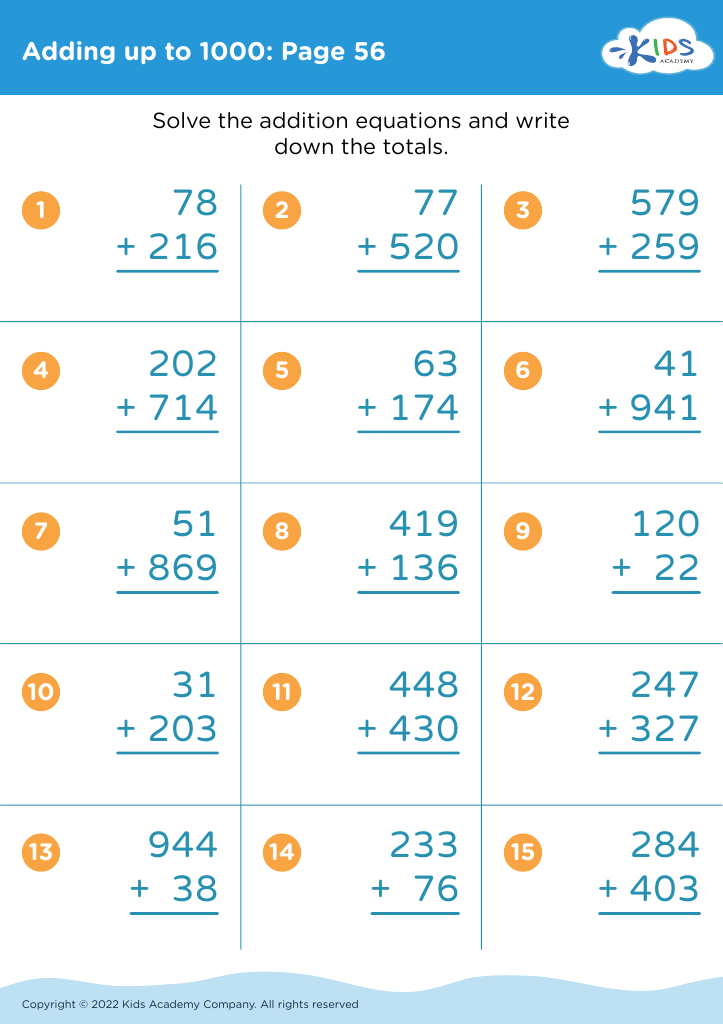
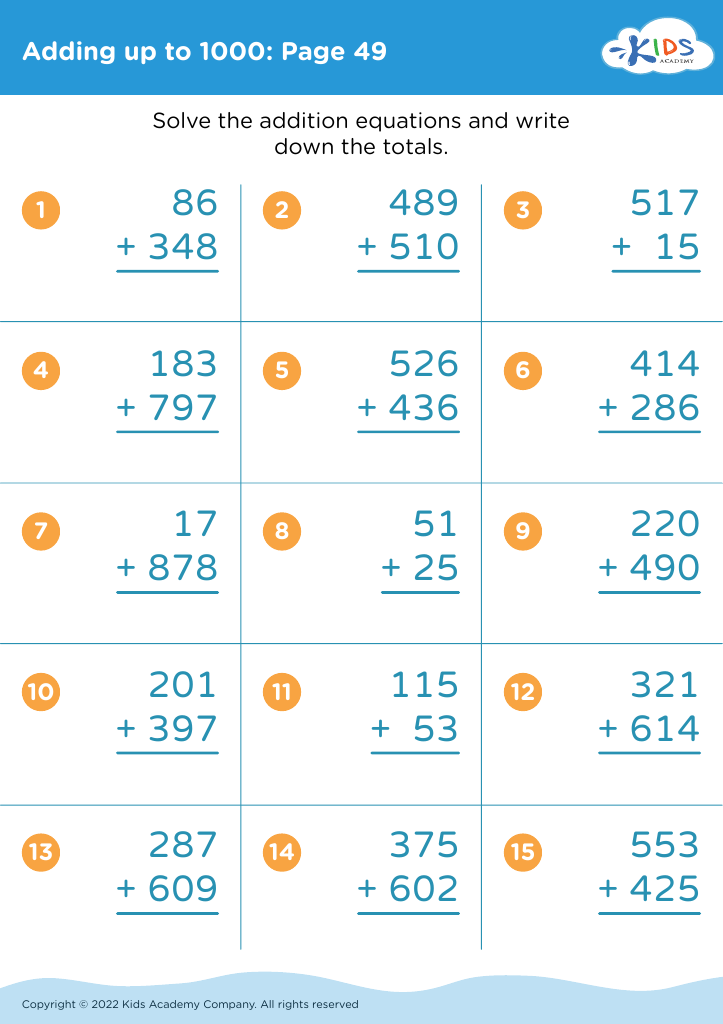
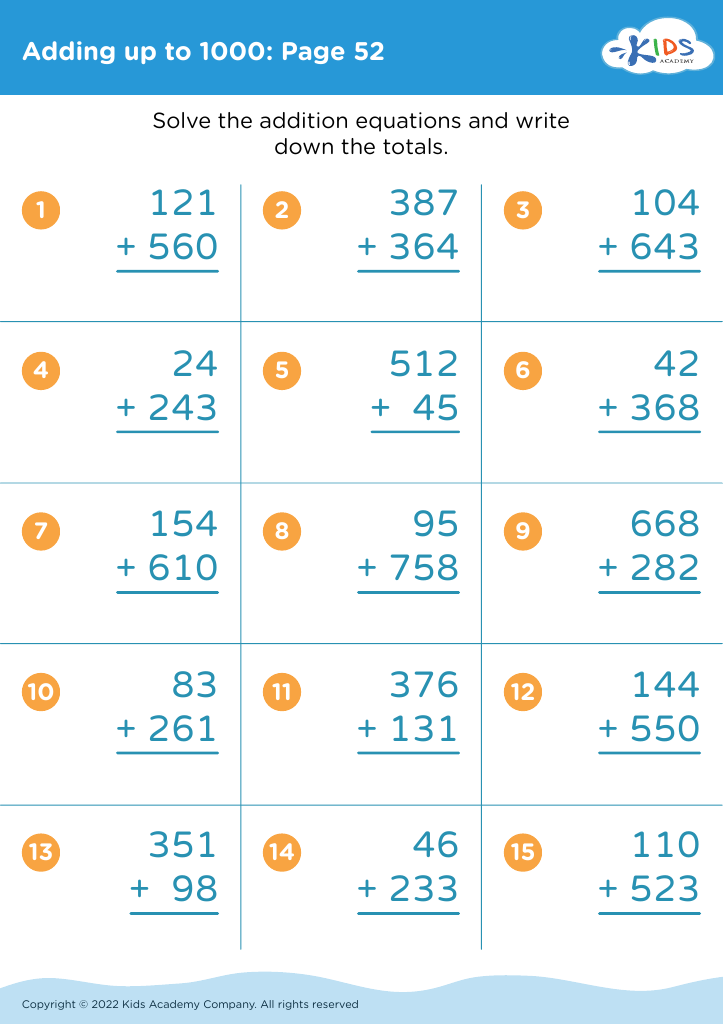
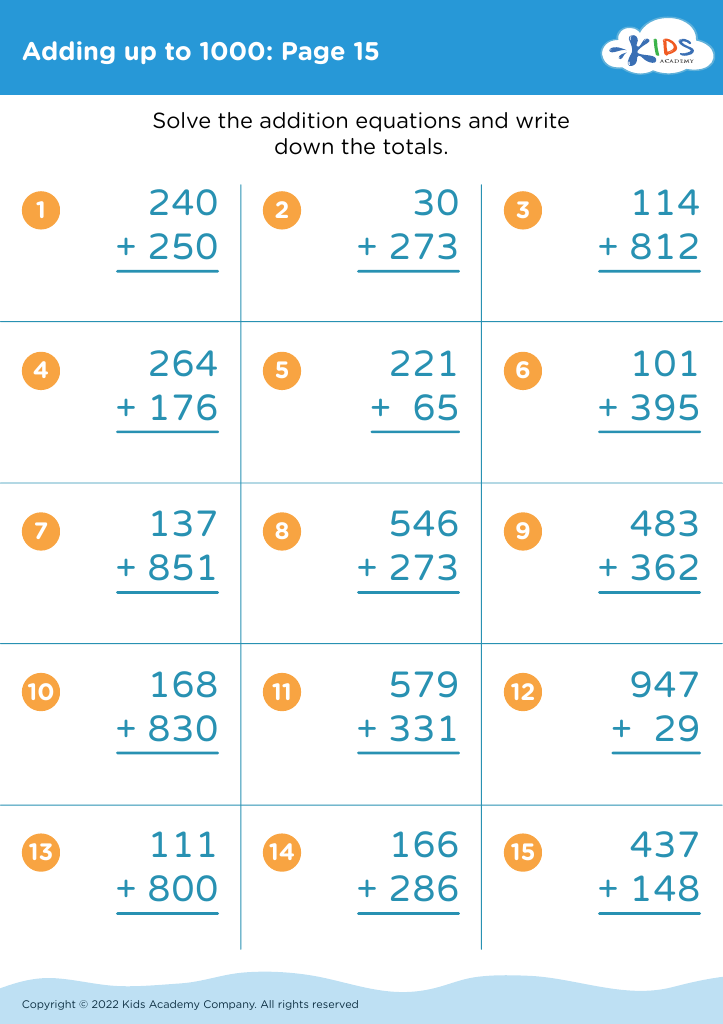
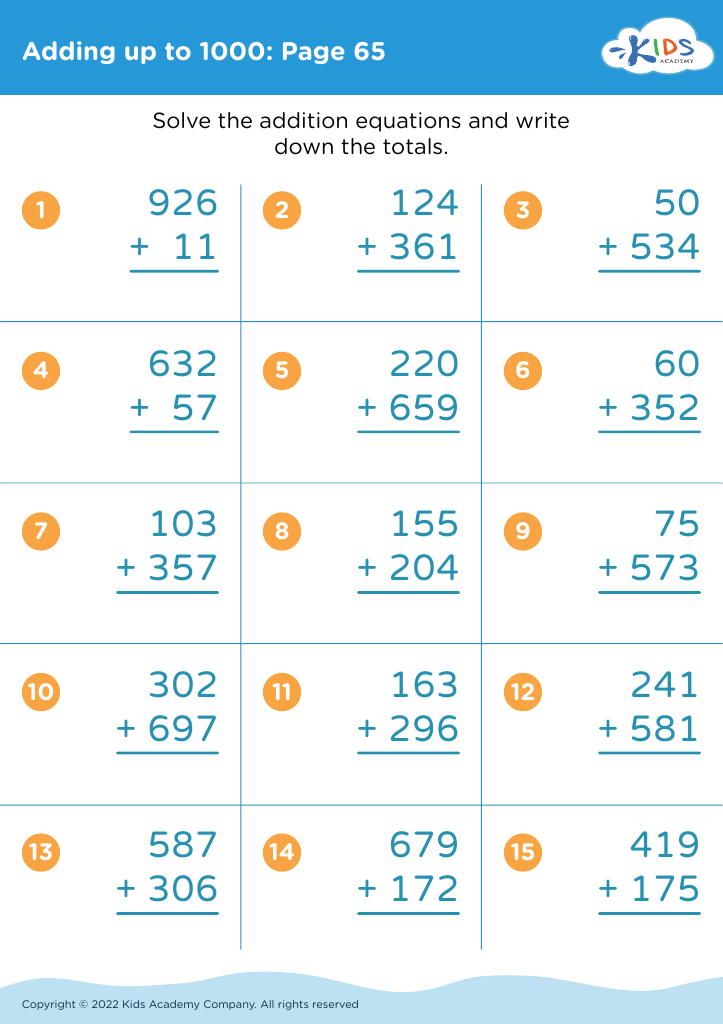


Mathematical reasoning is a foundational skill that significantly impacts young students' cognitive development and problem-solving abilities. For children ages 6-7, learning to add up to 1000 is not just about numbers; it's about understanding concepts that build a solid mathematical foundation.
First, mastering these skills enhances critical thinking. When children work on addition problems within this range, they learn to identify patterns, make connections, and develop strategies, which are essential for tackling complex problems in later grades. This type of reasoning fosters a sense of confidence that encourages them to engage with math rather than shy away from it.
Additionally, promoting mathematical reasoning offers real-world applications. Children begin to see how math is interwoven into daily life, from budgeting their allowance to measuring ingredients for a recipe. This understanding increases their interest in mathematics and demonstrates its practicality.
Parents and teachers should care because early positive experiences with math can influence a child's attitude toward the subject throughout their schooling. By supporting mathematical reasoning, we can help children become not only competent mathematicians but also inquisitive thinkers, well-prepared for future academic challenges. Encouraging this skill supports lifelong learning attitudes that are beneficial both in and out of the classroom.