Understanding fractions Adding up to 1000 Misc Worksheets for Ages 6-7
13 filtered results
-
From - To
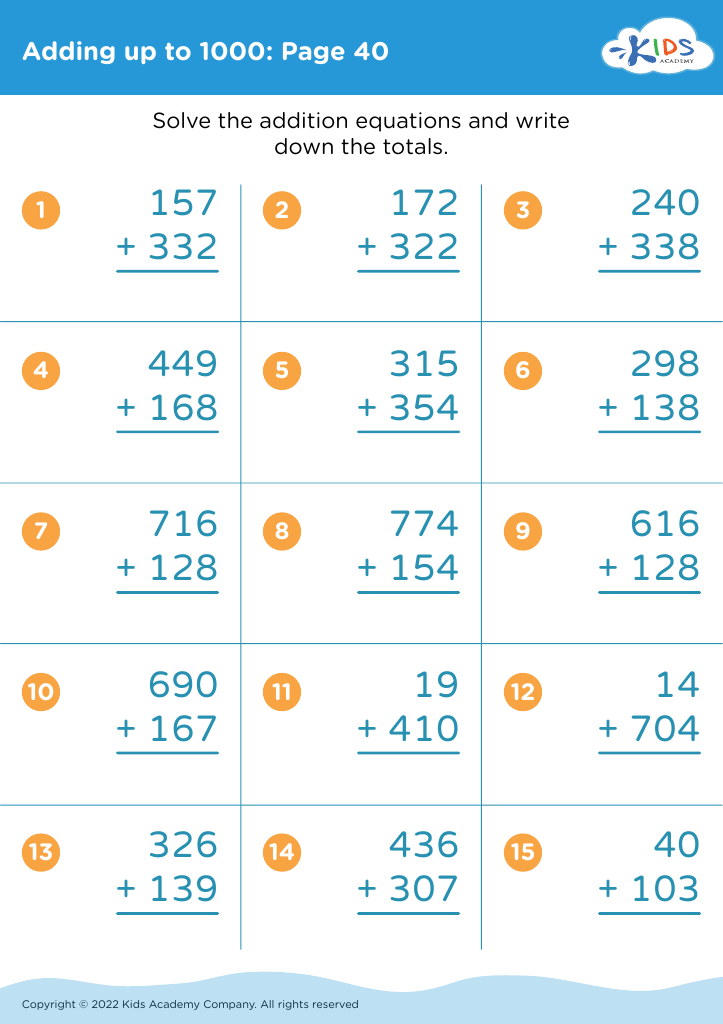
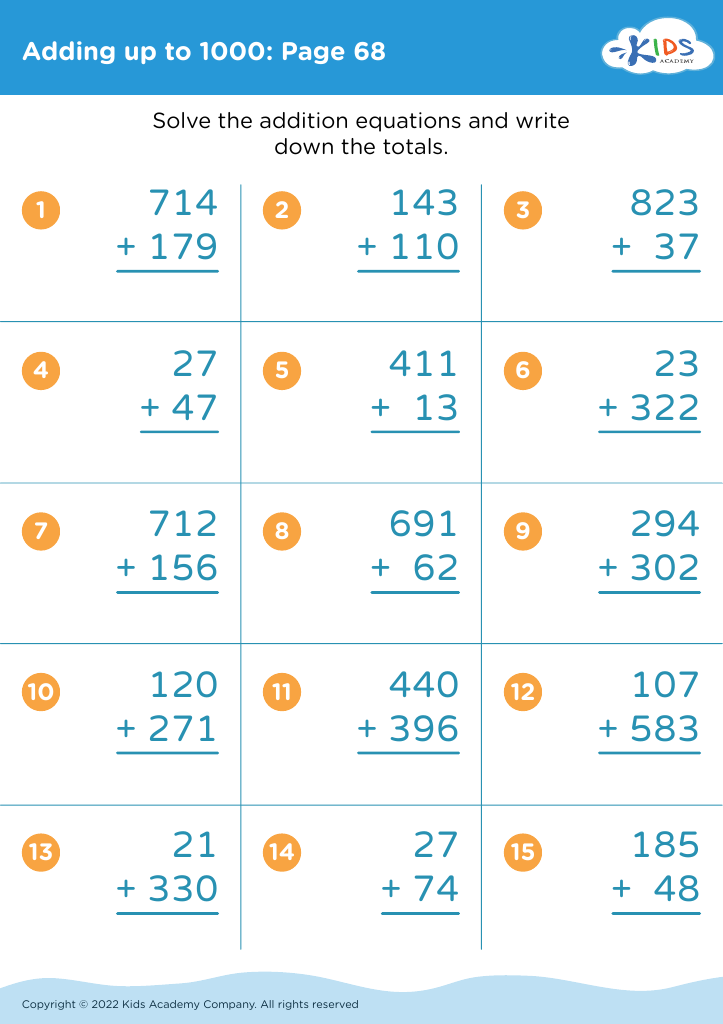
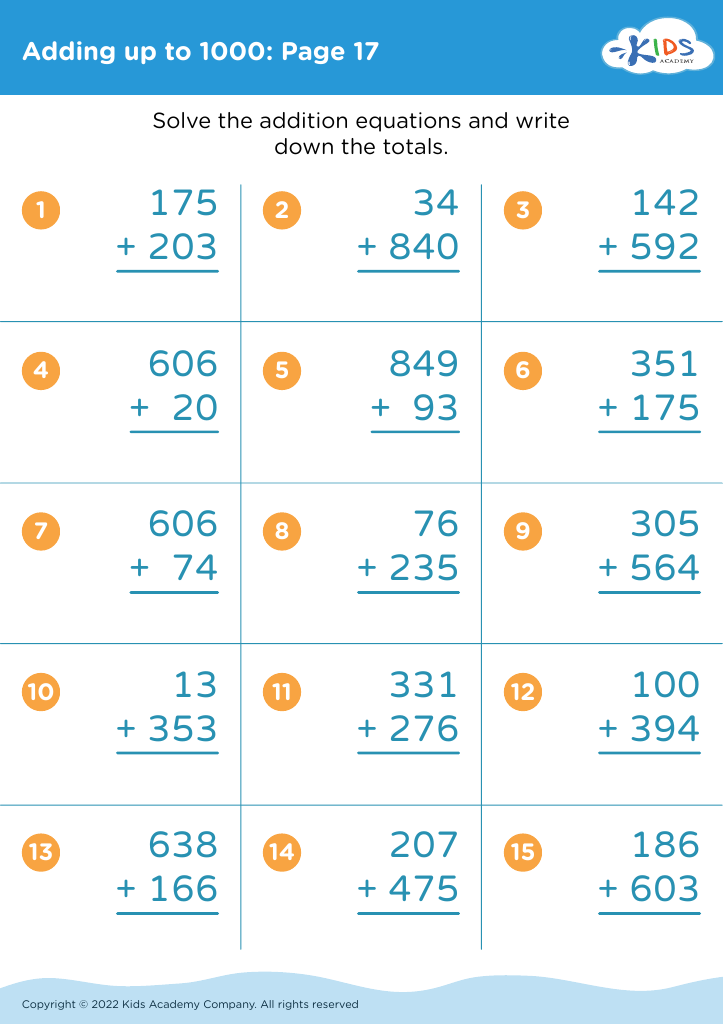
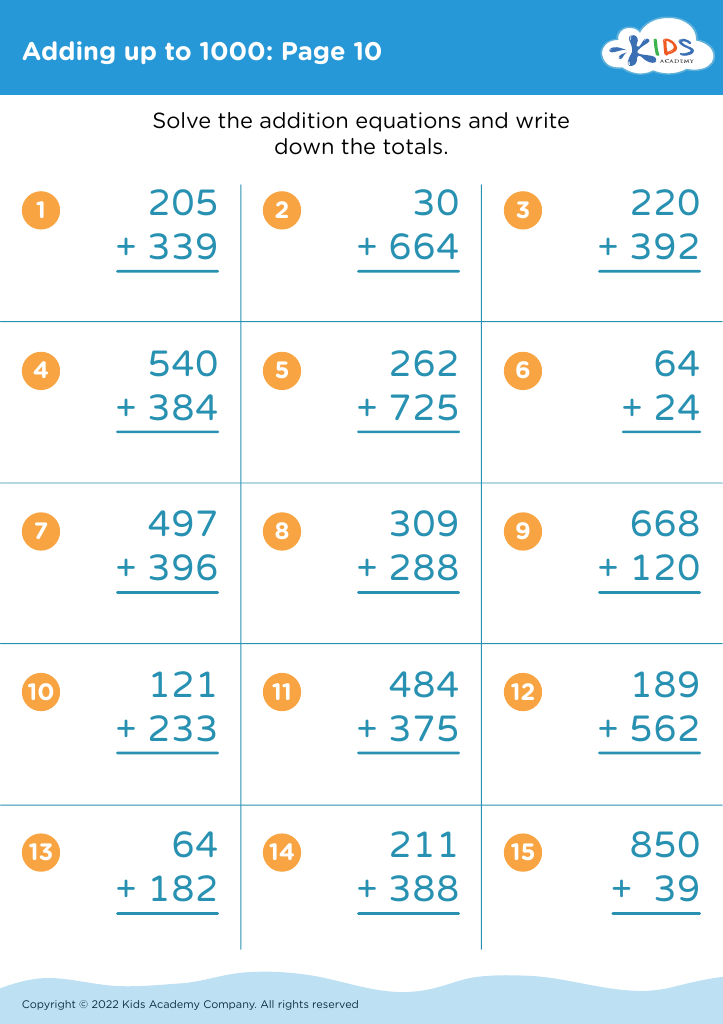
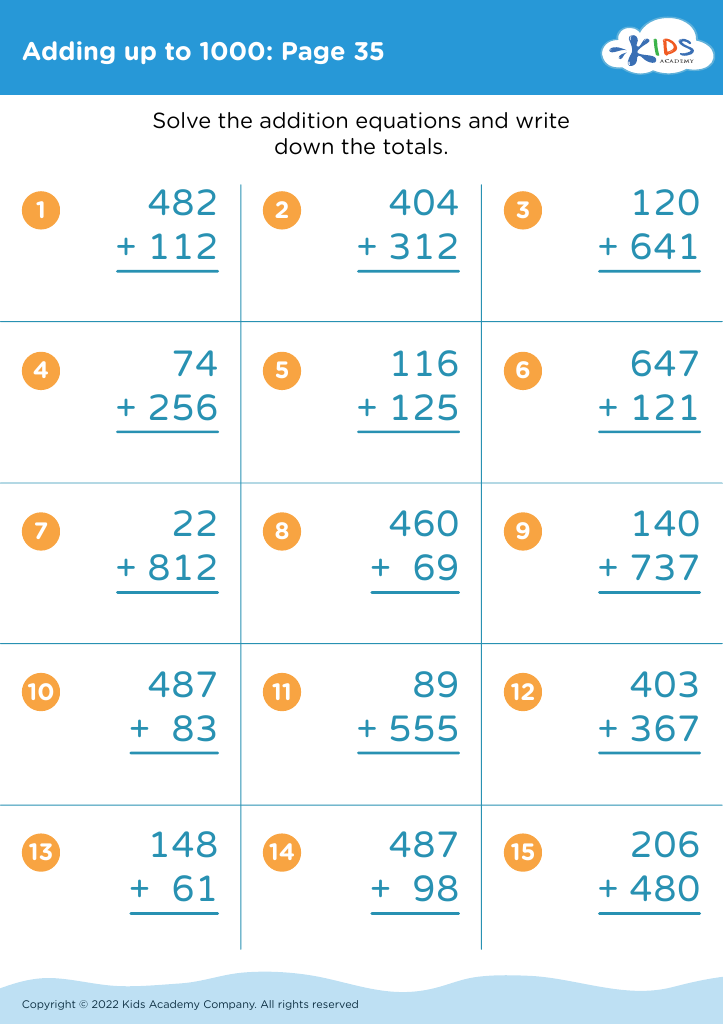
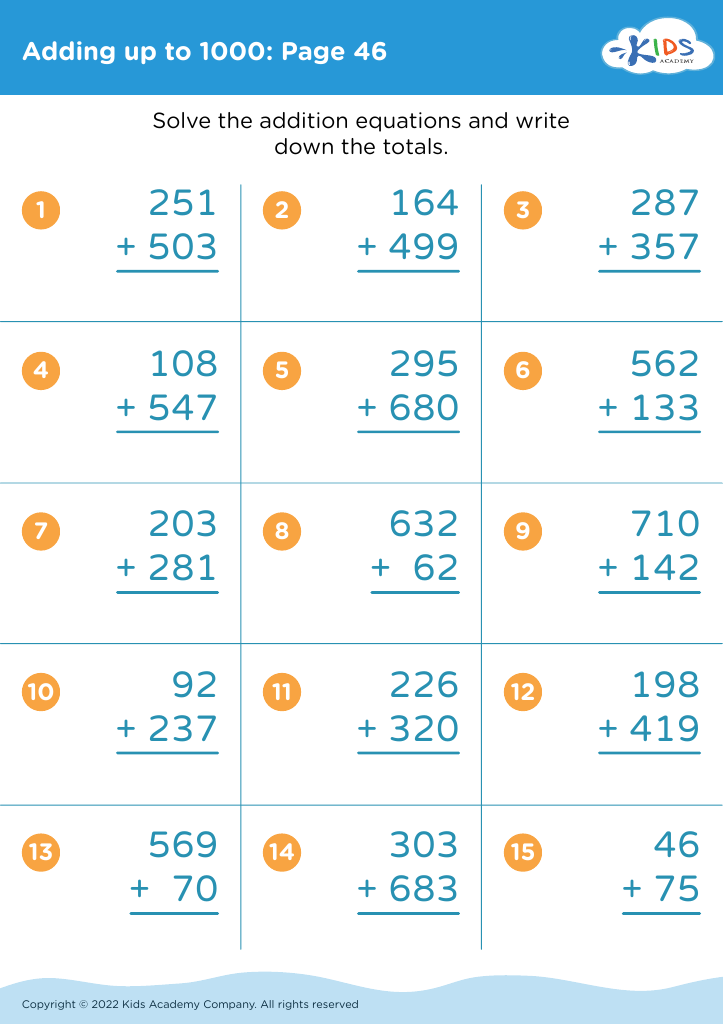
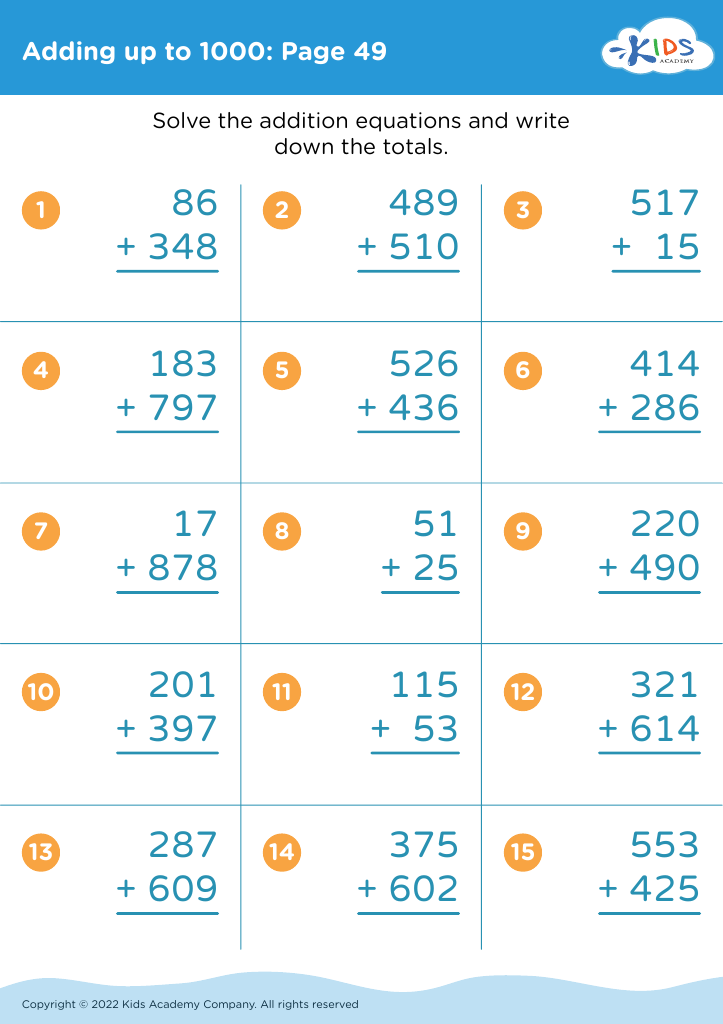
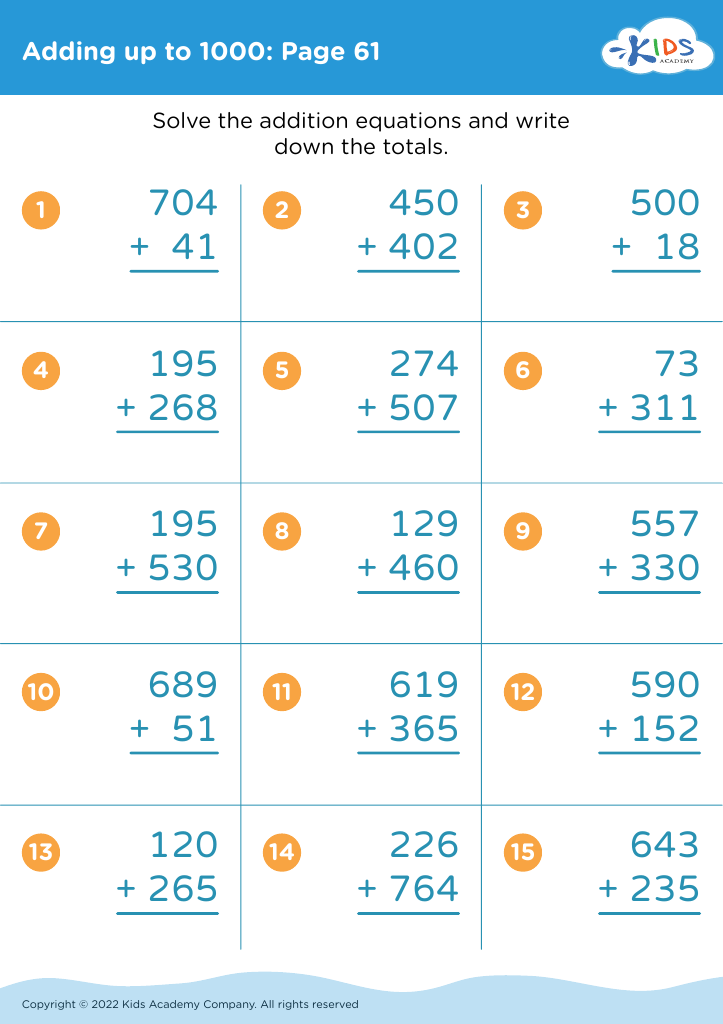
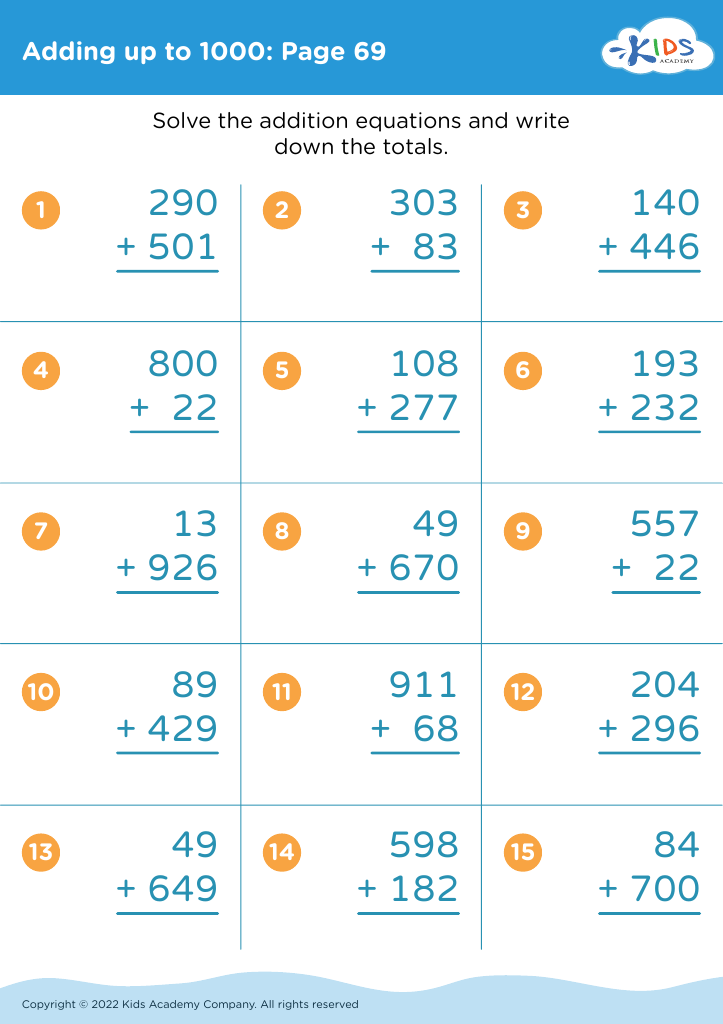
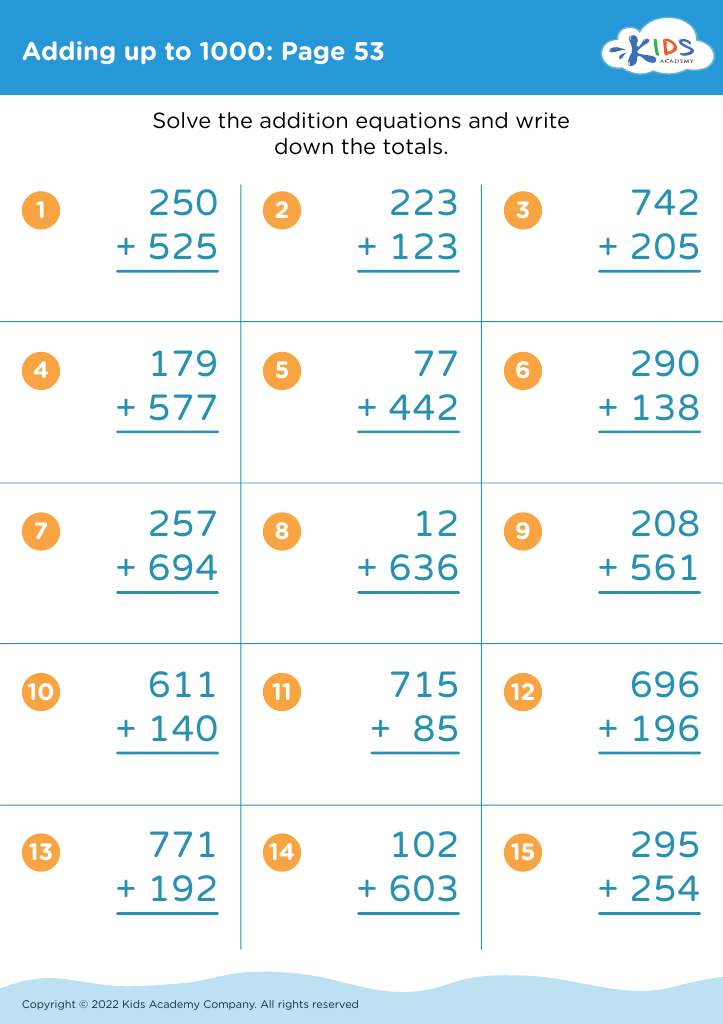
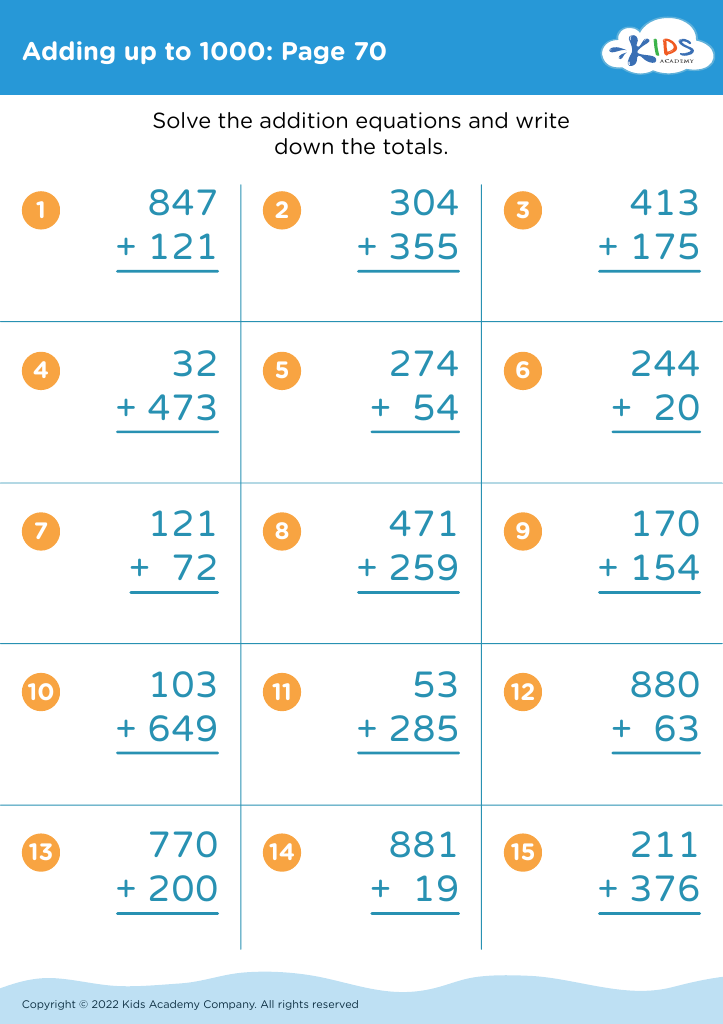
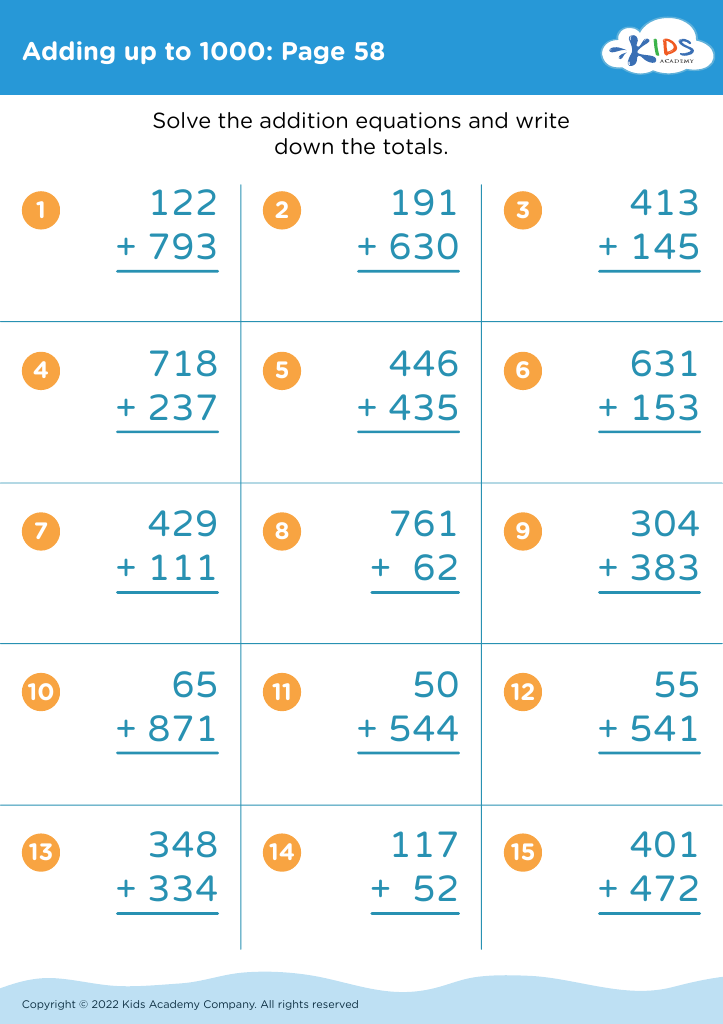
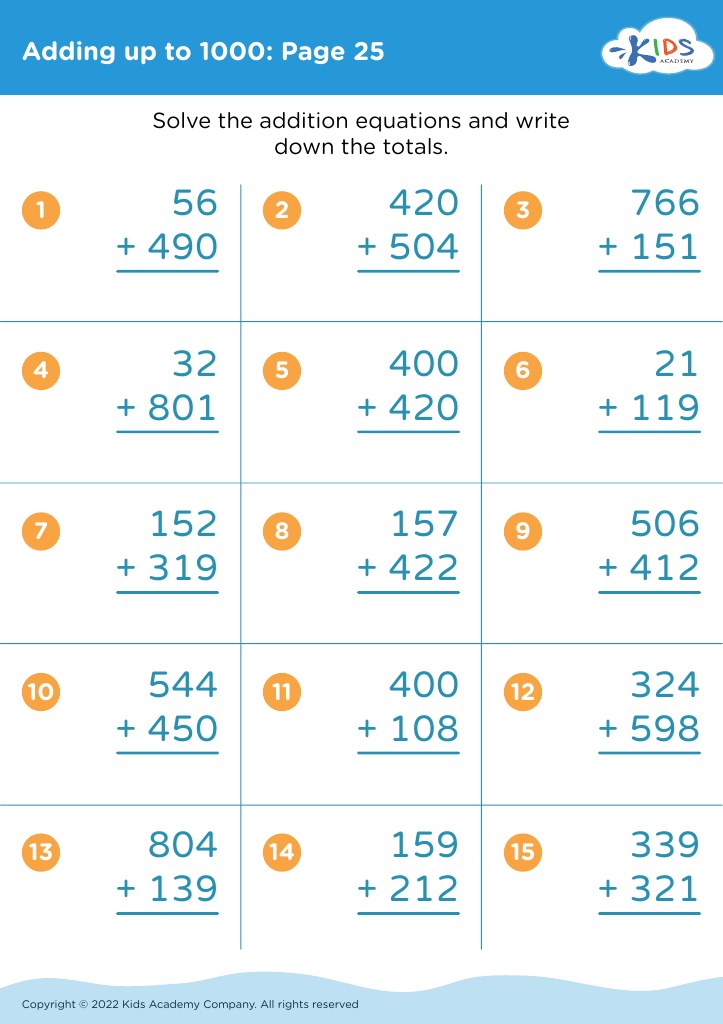
Discover our engaging collection of "Understanding Fractions: Adding Up to 1000 Misc Worksheets" designed specifically for children aged 6-7. These worksheets introduce young learners to the concept of fractions through fun, practical activities that build foundational math skills. Our carefully crafted exercises encourage children to explore partitioning, comparing fractions, and adding them to total values up to 1000. Each worksheet is designed to captivate students’ interest while promoting critical thinking and confidence in their math abilities. Perfect for classroom use or at-home learning, these resources make understanding fractions an enjoyable and rewarding experience for early learners. Explore today and watch their skills flourish!


Understanding fractions is crucial for children aged 6-7 as it lays the foundation for their mathematical skills. At this stage of development, children are not just learning numbers; they are beginning to explore relationships between parts and wholes. Grasping basic fractions, such as halves, quarters, and thirds, encourages a deeper understanding of addition, subtraction, and even multiplication and division later on.
When educators emphasize understanding fractions while incorporating activities that add up to 1000, they help children build confidence in their mathematical abilities. This connection reinforces the importance of numbers beyond simple calculation, allowing children to see how fractions apply in everyday situations.
Furthermore, teaching fractions fosters critical thinking—children learn to compare sizes, determine equivalency, and understand measurement concepts. The skills they acquire position them for success in higher-level mathematics and help develop problem-solving abilities that are valuable across various subjects.
Parental support in this learning process enhances children's educational journey. By engaging with kids in enjoyable fraction-related activities, such as cooking or crafting, parents can make math fun and relatable. Ultimately, understanding fractions is not just about math; it shapes logical thinking that supports lifelong learning and real-world decision-making.