Fine Motor Skills Adding up to 1000 with Regrouping Worksheets for Ages 6-7
4 filtered results
Difficulty Level
Grade
Age
-
From - To
Subject
Activity
Standards
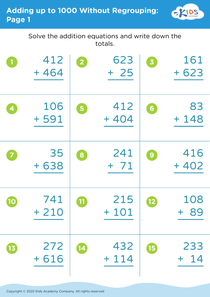
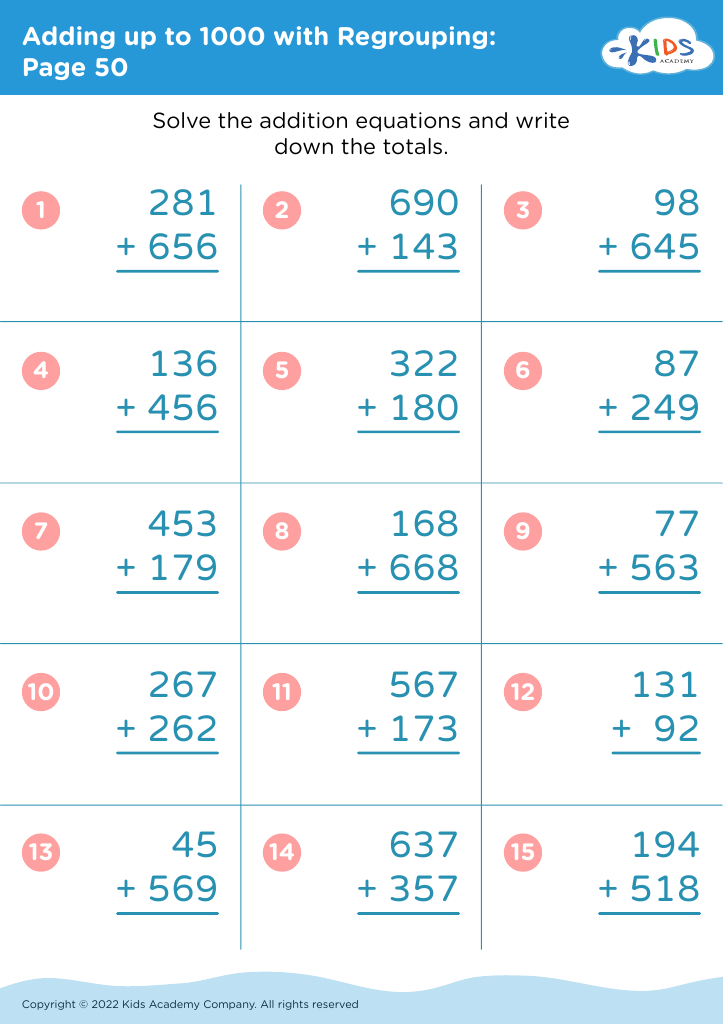
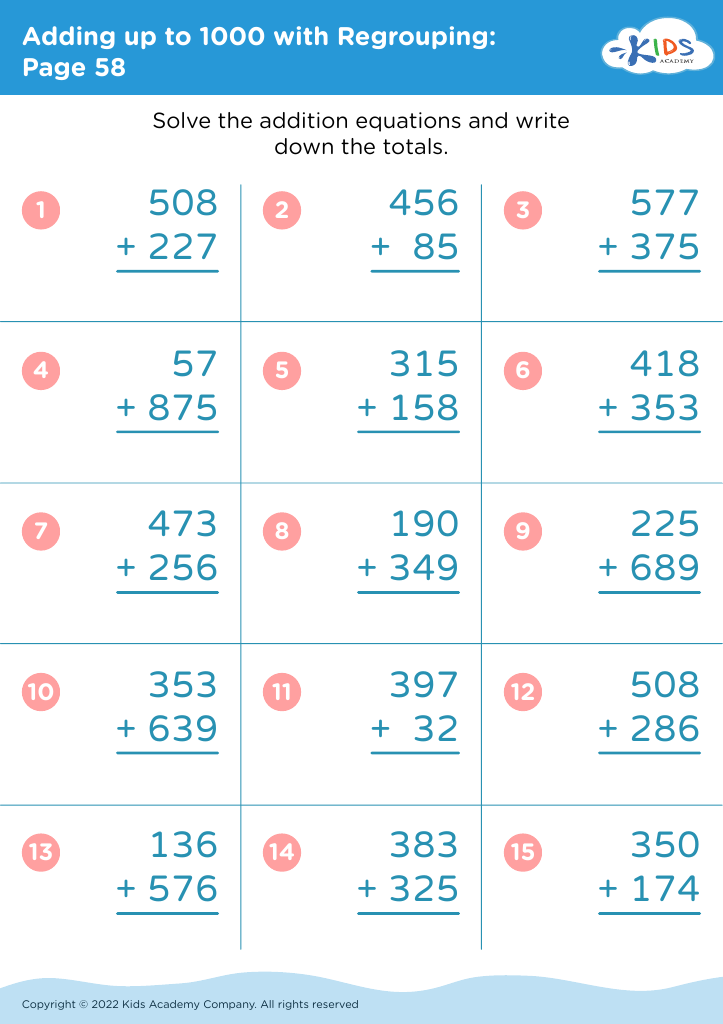
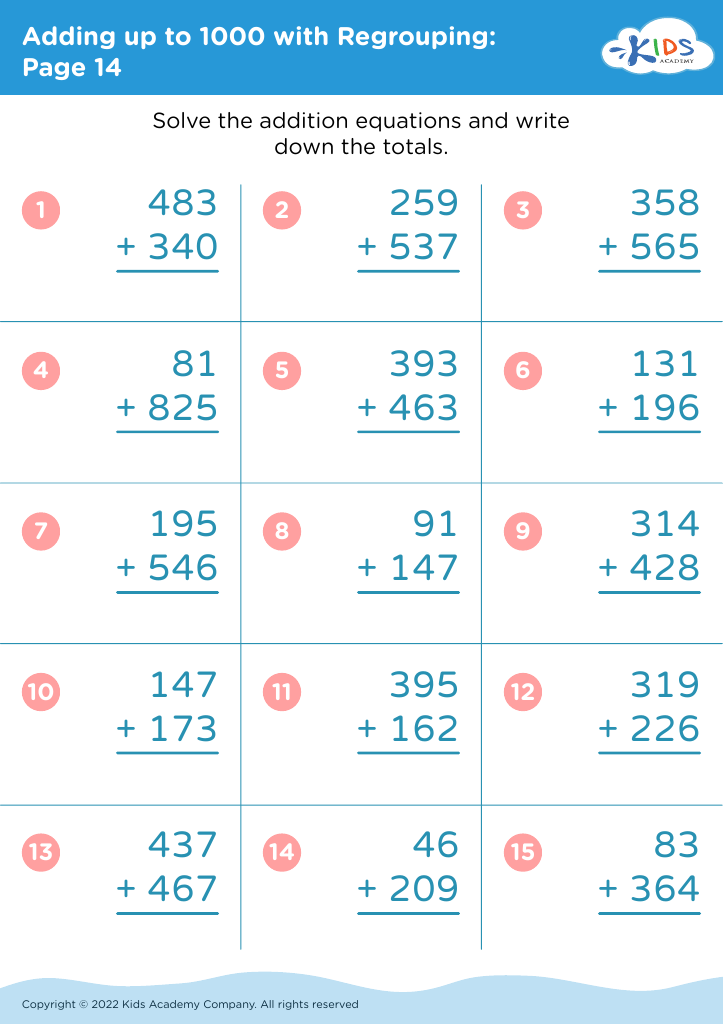
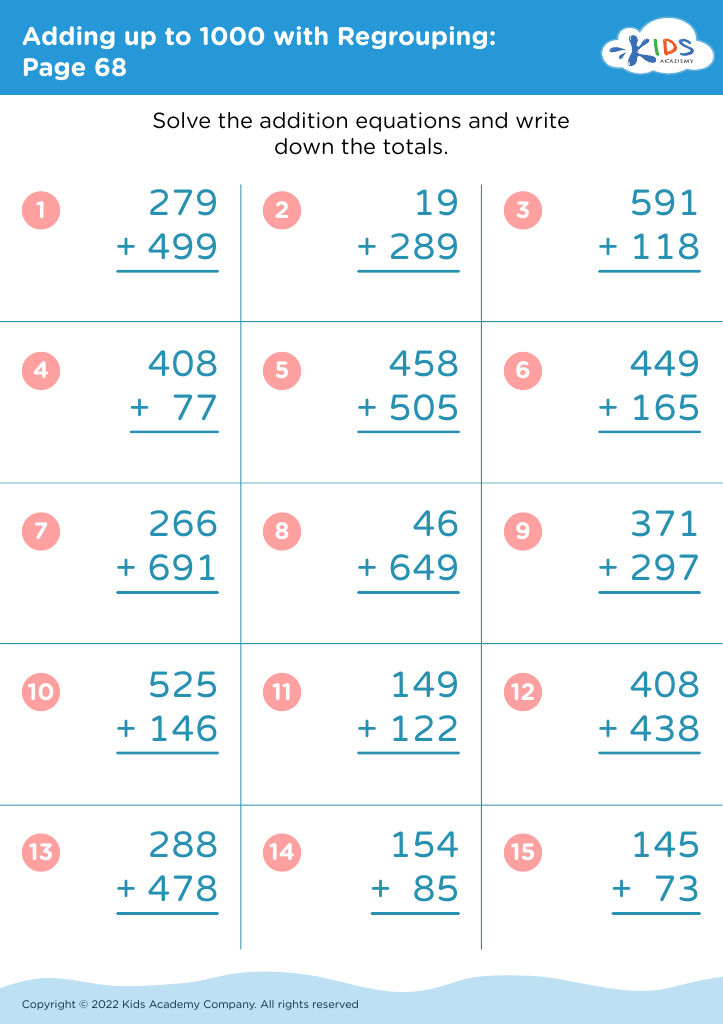
Enhance your child's fine motor skills while mastering addition with our engaging "Fine Motor Skills Adding up to 1000 with Regrouping Worksheets" designed for ages 6-7. These worksheets seamlessly combine mathematical practice with creative activities that promote hand-eye coordination and dexterity. Your child will enjoy solving addition problems that require regrouping, all while using engaging visuals and fun exercises, such as tracing and coloring. Perfect for young learners, these worksheets encourage independent practice and make learning enjoyable. Foster both math proficiency and fine motor development in your child with these comprehensive and interactive resources. Start exploring today!
Favorites
With answer key
Interactive
Join Kids Academy for Free
Who is primarily going to use this learning content?


Fine motor skills are crucial for children ages 6-7 as they lay the foundation for essential academic and everyday tasks. At this age, children are developing their ability to manipulate objects with precision, which directly impacts their effectiveness in activities like writing, drawing, and handling small items. As they engage in math concepts such as adding up to 1000 with regrouping, fine motor skills play a significant role. Students must be able to write numbers neatly, align columns accurately, and physically regroup when calculating.
When parents and teachers invest in enhancing fine motor skills, they bolster a child’s confidence and academic performance. These skills not only support mathematical abilities but also improve hand-eye coordination and concentration—skills vital for overall learning. Effective development of fine motor skills ensures children can execute complex tasks independently, fostering a sense of achievement.
Moreover, grasping the concept of regrouping in addition involves strong spatial awareness and cognitive understanding. Therefore, parents and teachers should focus on integrating fine motor skill activities, such as tracing numbers or using manipulatives, into learning experiences. Developing these skills at this early stage sets children up for success in more advanced academic environments, contributing to their lifelong learning journey.