Shape Recognition Adding up to 1000 with Regrouping Worksheets for Ages 6-7
6 filtered results
-
From - To
Enhance your child's math skills with our engaging Shape Recognition Worksheets designed for ages 6-7. These unique resources combine adding up to 1000 with regrouping techniques, helping young learners develop a strong foundation in both math and geometry. Each worksheet features vibrant shapes to captivate their interest while reinforcing essential addition concepts. By practicing shape recognition alongside mathematical calculations, children will improve their critical thinking and problem-solving abilities. Our worksheets are perfect for classroom use or at-home learning, providing a fun and interactive way for kids to advance their skills. Unlock your child’s potential with these essential educational tools today!
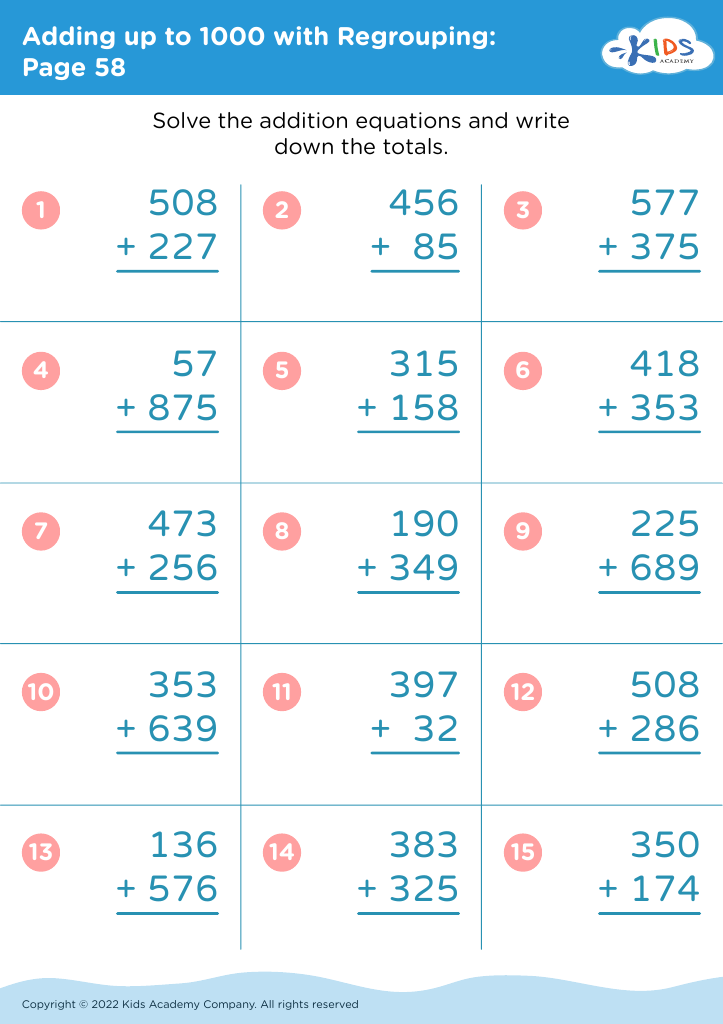
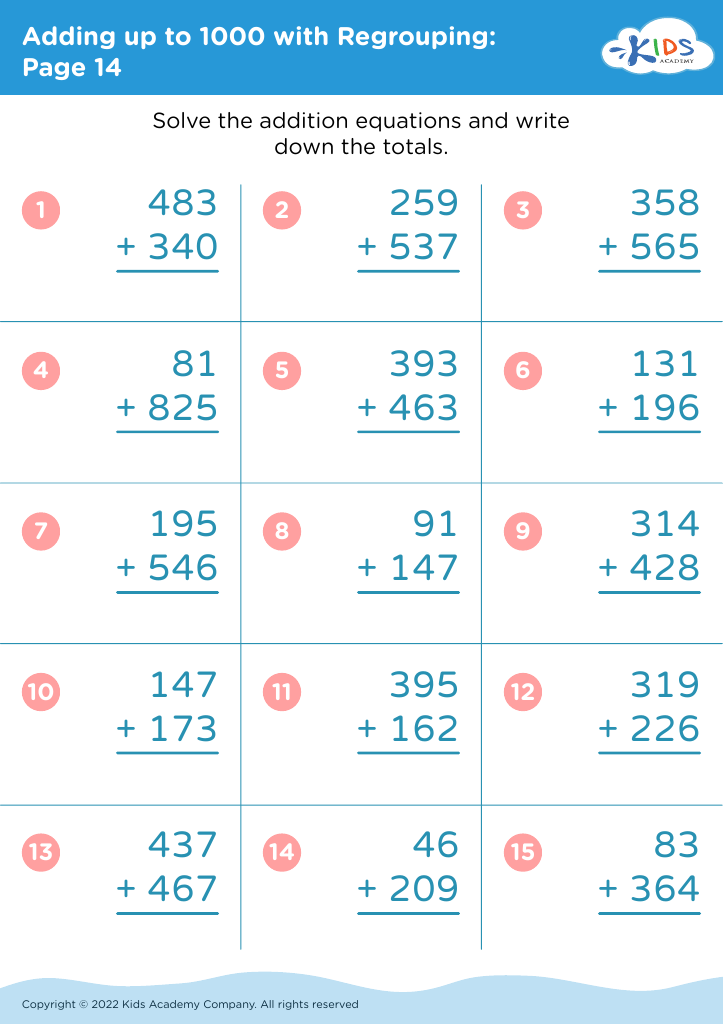
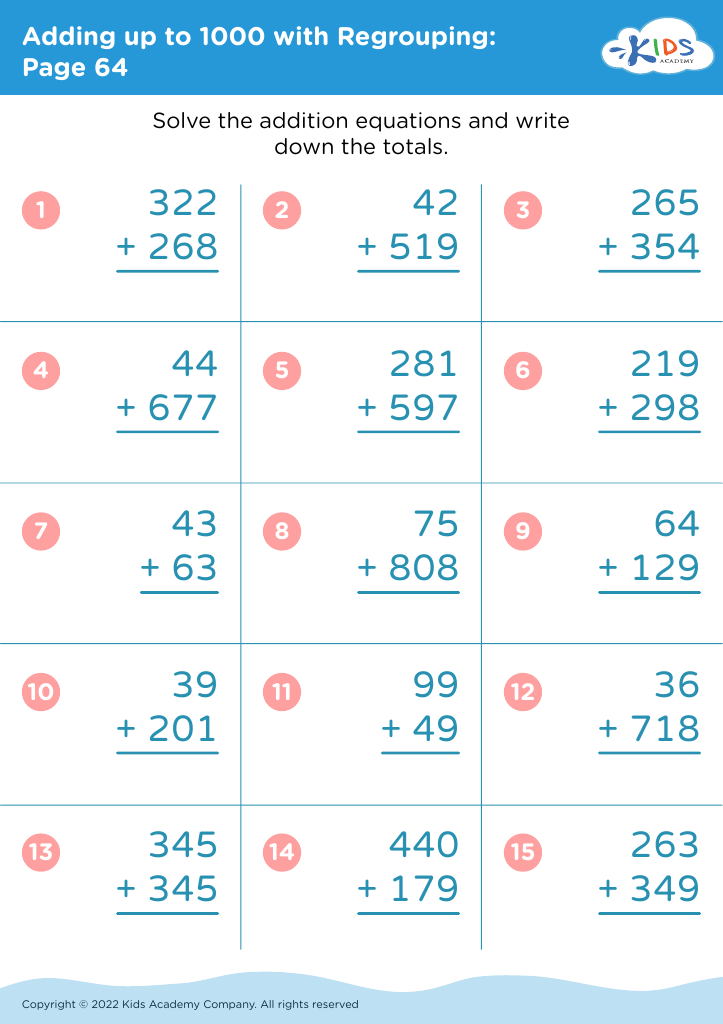


Shape recognition and the ability to perform addition with regrouping are fundamental skills that significantly benefit children aged 6-7 in their early education. First, shape recognition is crucial for cognitive development as it lays the groundwork for geometry and spatial understanding. By learning to identify different shapes, children enhance their analytical skills, which play a vital role in problem-solving across mathematics and science.
Simultaneously, mastering addition with regrouping fosters a deep understanding of numbers and helps develop arithmetic fluency. This skill encourages children to practice mental math and supports their ability to handle more complex mathematical concepts in the future. It teaches them to break down numbers, recognize patterns, and improve their overall communication skills in math.
When parents and teachers emphasize these foundational skills, they promote confidence and a positive attitude towards learning. Children who develop a strong grasp of shape recognition and addition become better equipped to tackle various academic challenges, setting a solid foundation for lifelong learning. In a world increasingly driven by technology and data, these basics are not just academic milestones but essential tools for navigating daily life and ensuring future success in more advanced subjects. Supporting these skills undoubtedly enriches children's educational experiences.