Alphabet Recognition Adding up to 1000 Without Regrouping Worksheets for Ages 6-7
3 filtered results
-
From - To
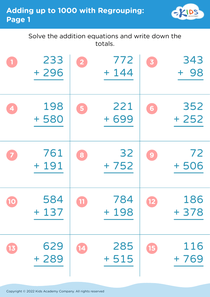
Boost your child’s skills with our engaging "Alphabet Recognition Adding up to 1000 Without Regrouping Worksheets" designed specifically for ages 6-7. These worksheets seamlessly combine mathematical practice with fun activities focused on alphabet recognition. Each worksheet encourages young learners to add numbers without regrouping, enhancing their arithmetic abilities while also promoting letter recognition through playful exercises. Ideal for reinforcing foundational math skills, our resources help children build confidence as they work through numbers up to 1000. Perfect for classroom or at-home learning, these worksheets are a valuable tool for parents and teachers aiming to create a well-rounded educational experience.
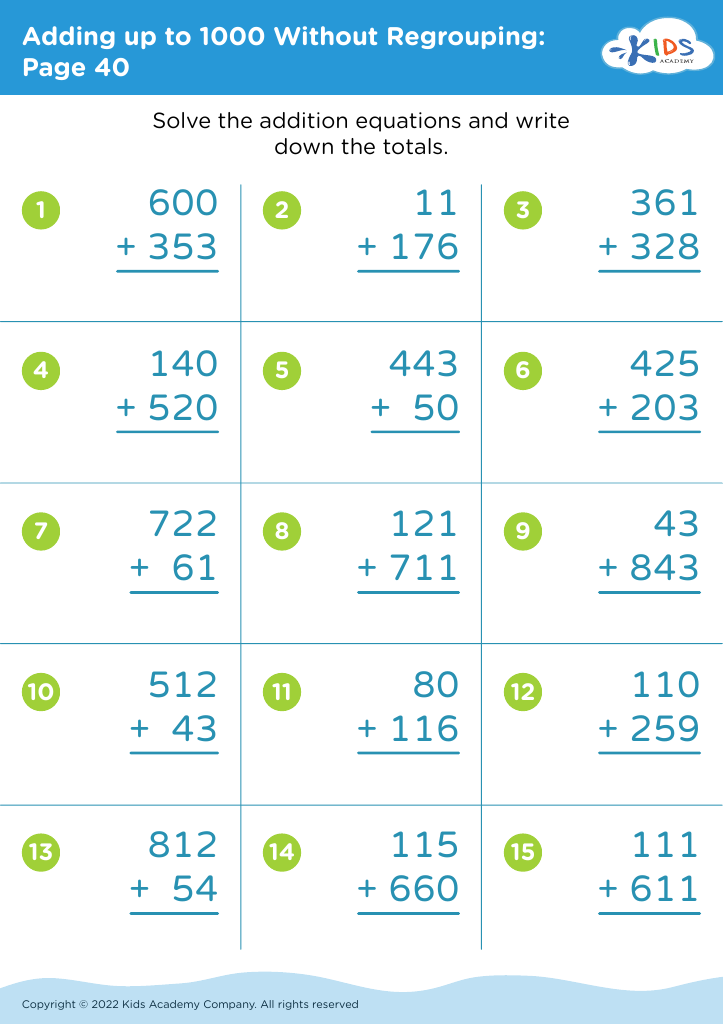
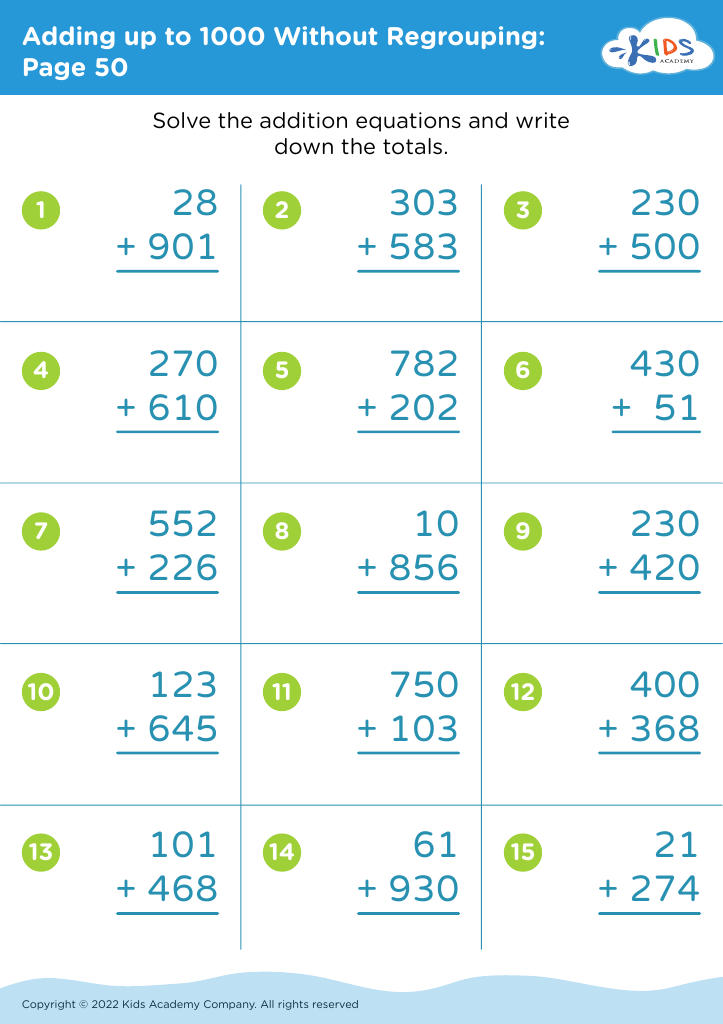
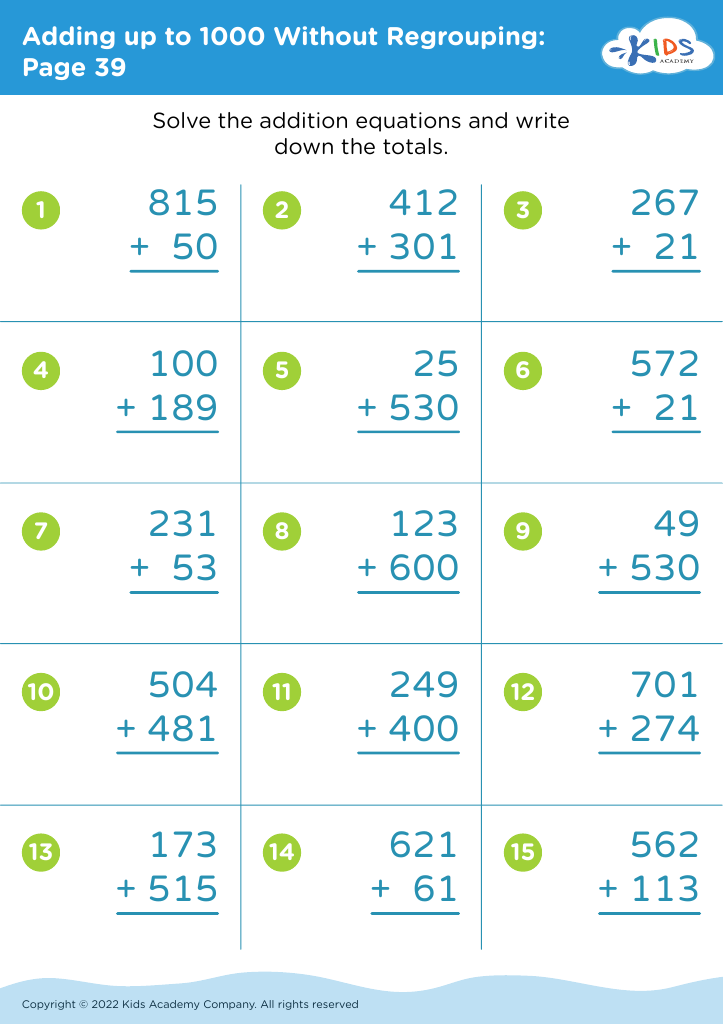


Alphabet recognition and foundational math skills, such as adding up to 1000 without regrouping, are crucial for children aged 6-7, as they serve as building blocks for future learning.
Understanding the alphabet is essential for literacy development. At this age, children are beginning to read and write, and recognizing letters strengthens their phonemic awareness, aiding in decoding words. Parents and teachers play a vital role in fostering these skills through engaging activities that make learning fun, thus instilling a love for reading that can last a lifetime.
Simultaneously, mastering addition without regrouping lays the groundwork for more complex mathematical concepts. Children develop number sense and problem-solving skills that are vital for success in later grades. As they learn to add numbers up to 1000, they build confidence and competence in their mathematical ability, paving the way for exponential growth in their understanding of mathematics.
When parents and teachers emphasize both alphabet recognition and basic addition, they create a comprehensive learning environment that addresses different aspects of cognitive development. By nurturing these skills, we prepare children not only for academic success but also for effective communication and problem-solving in their everyday lives.