Fraction comparison Adding up to 1000 Without Regrouping Worksheets for Ages 6-7
4 filtered results
-
From - To
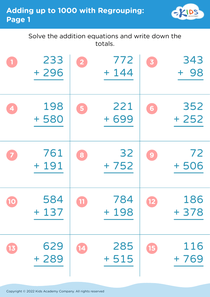
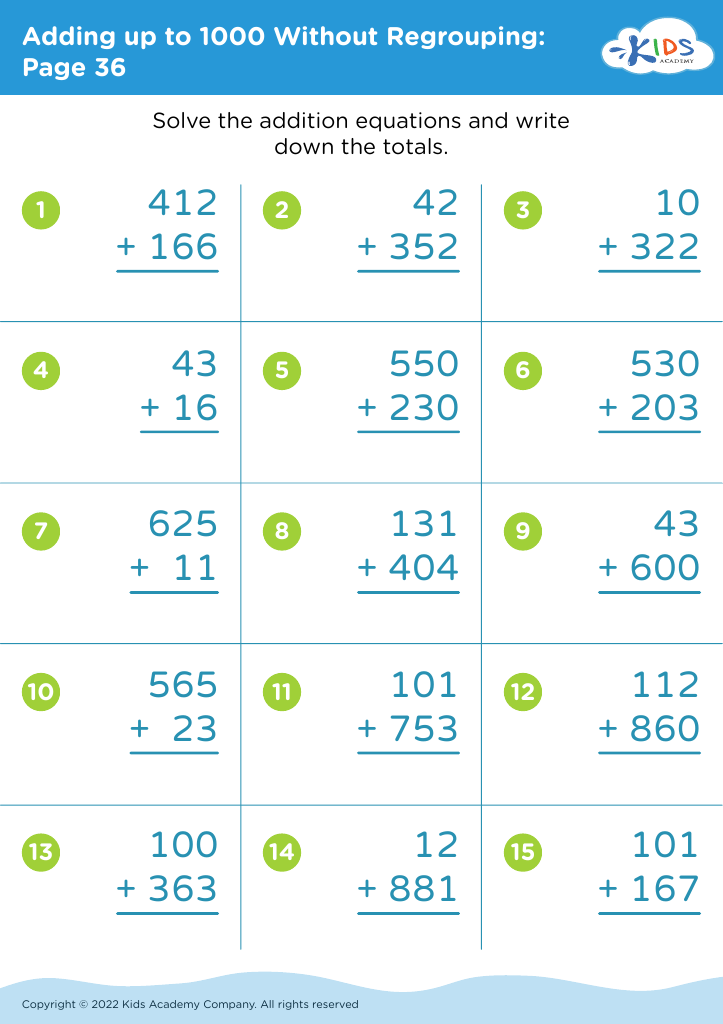
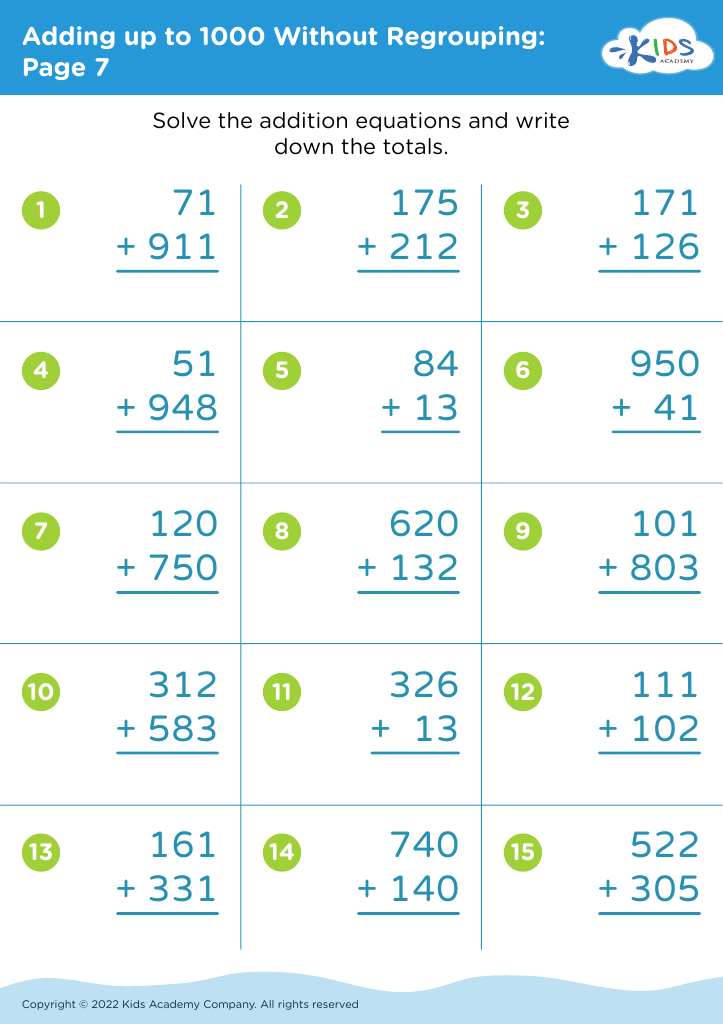
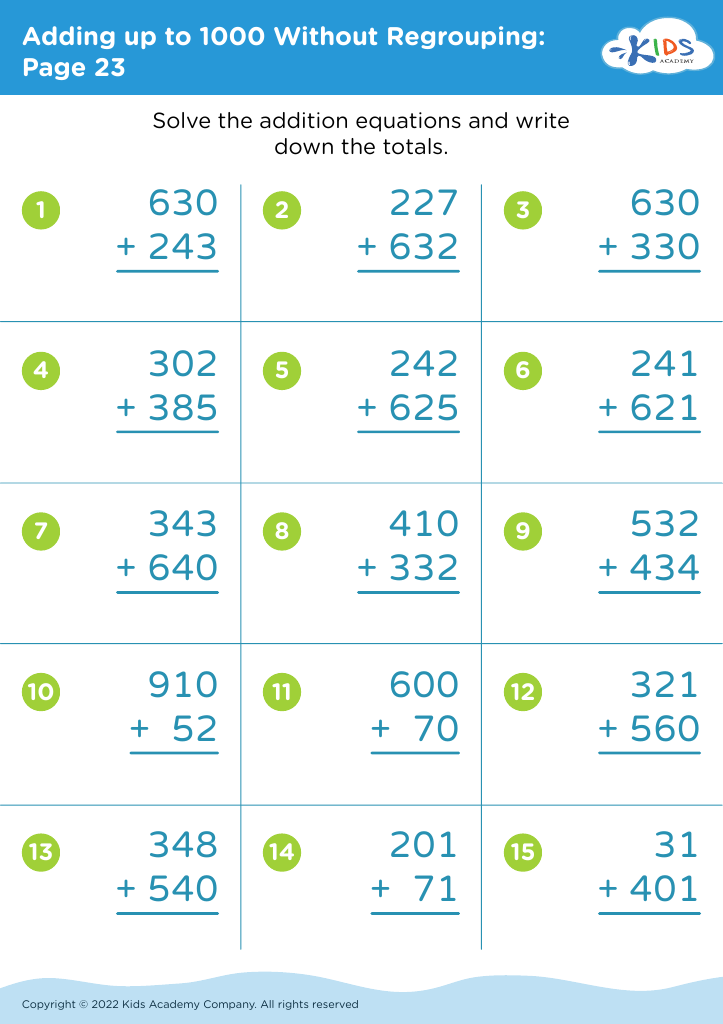
Explore our engaging "Fraction Comparison Adding Up to 1000 Without Regrouping Worksheets" designed for children aged 6-7! These worksheets aim to enhance early math skills by introducing young learners to fraction comparisons while ensuring they practice addition skills up to 1000 without regrouping. Through fun activities and colorful illustrations, kids will build confidence and understanding in both fractional concepts and number addition. Our carefully crafted exercises support a strong mathematical foundation, promoting problem-solving abilities and critical thinking. Perfect for classroom or home use, these worksheets will make learning fractions enjoyable and accessible for your little mathematicians!
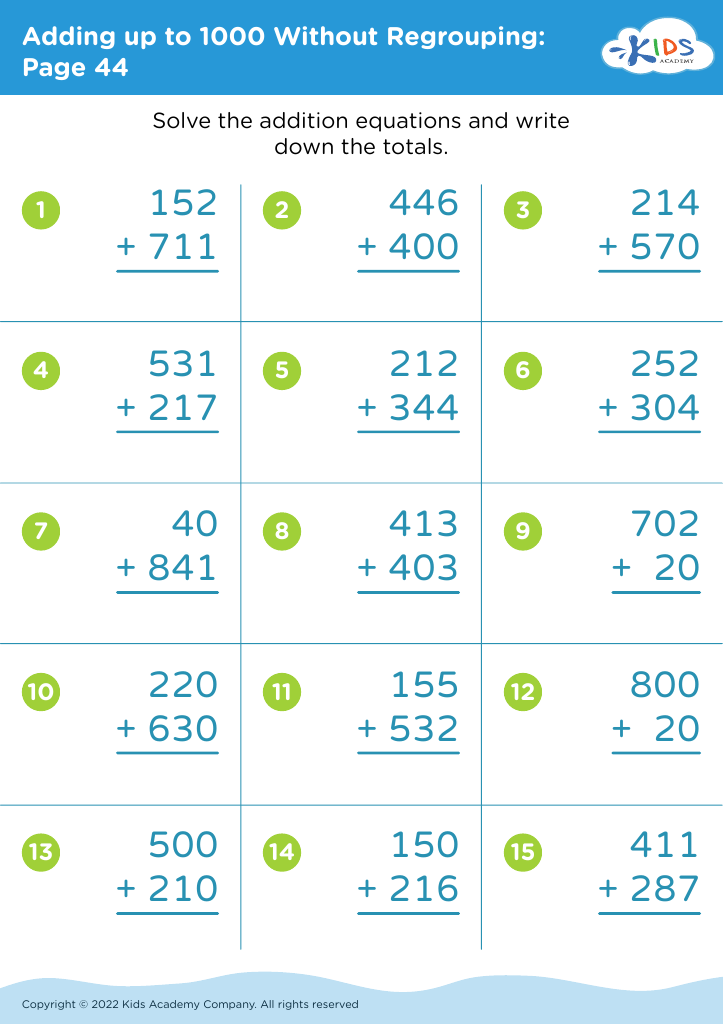


Parents and teachers should care about teaching fraction comparison and adding up to 1000 without regrouping to ages 6-7 for several reasons. Firstly, mastering these concepts lays a strong mathematical foundation. Fraction comparison helps children understand parts of a whole, which fosters critical thinking and helps in grasping more complex math topics in later years.
By learning how to compare fractions, children develop a sense of number sense and relationships between different quantities, skills necessary for everyday decision-making, such as cooking or shopping. Additionally, operating with numbers up to 1000 without regrouping enhances their confidence and competency in basic arithmetic.
Encouraging these skills at a young age promotes financial literacy, essential for navigating real-world scenarios. Engaging in hands-on activities and games can make learning these concepts fun and effective.
Moreover, understanding these mathematical ideas at an early age can boost students' performance in school and reduce math anxiety later on. Overall, focusing on these skills aids in overall cognitive development, boosts learning pace, and sets the groundwork for a positive attitude towards mathematics as students progress in their education. Parents and teachers play a crucial role in nurturing these competencies, positively impacting a child's educational journey.