Improving math skills Adding up to 1000 Without Regrouping Worksheets for Ages 6-7
3 filtered results
-
From - To
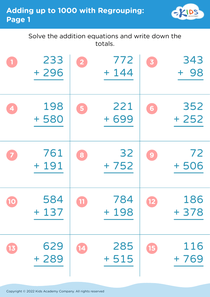
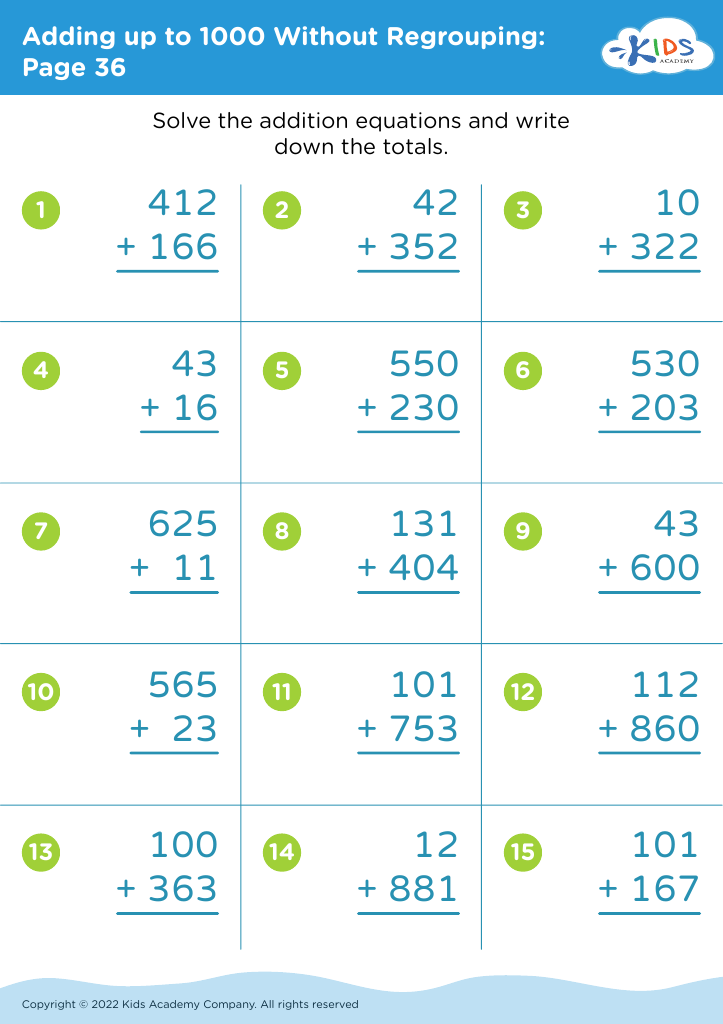
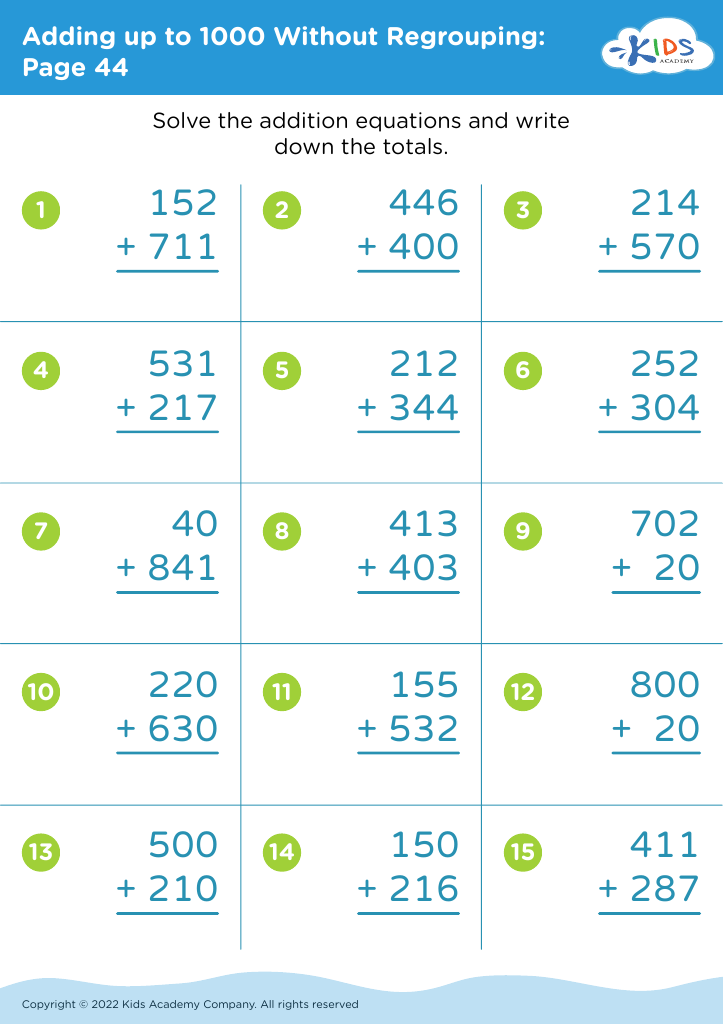
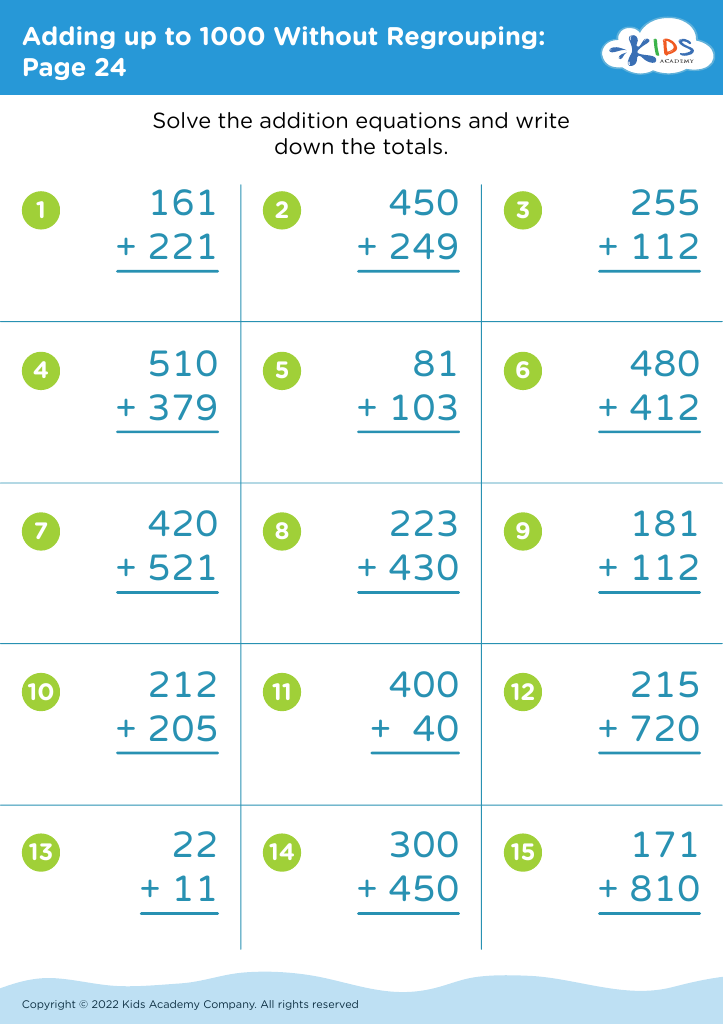
Improve your child’s math skills with our engaging "Adding Up to 1000 Without Regrouping" worksheets designed for ages 6-7. These interactive worksheets allow young learners to practice addition through fun and familiar exercises, enhancing their confidence and proficiency in basic math. Perfect for classroom or home use, our resources feature a variety of attractive formats that cater to different learning styles. Parents and teachers can easily track progress through actionable feedback, ensuring that each child builds a solid foundation in math. Make learning enjoyable and effective—explore our worksheets and watch your student's math abilities thrive as they master addition up to 1000!


Improving math skills such as adding up to 1000 without regrouping is crucial for children ages 6-7, as it lays a strong foundation for their future understanding of math concepts. At this age, students are developing essential numerical skills that not only enhance their arithmetic abilities but also promote logical thinking and problem-solving skills.
Mastering addition up to 1000 without regrouping helps reinforce their understanding of place value and enables them to visualize numbers more effectively. This skill aids in building confidence, as children experience success through manageable tasks. A solid grasp of these basic addition skills fosters a positive attitude toward mathematics, helping them avoid math anxiety later on.
Furthermore, math is not just an academic subject; it is relevant in daily life. When children can confidently perform addition, they better understand finances, measurements, and other practical applications. Teachers and parents play a critical role in supporting this learning by providing engaging activities and real-life scenarios that promote practice and application. By focusing on foundational skills like adding without regrouping, we equip young learners with the tools for future mathematical success and a lifelong appreciation for learning.