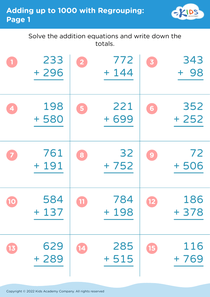
Recognize patterns Adding up to 1000 Without Regrouping Worksheets for Ages 6-7
3 filtered results
-
From - To
Discover our engaging "Recognize Patterns Adding up to 1000 Without Regrouping" worksheets designed for ages 6-7. These resources help young learners identify patterns in addition, boosting their mathematical understanding and confidence. Through entertaining exercises, children will practice adding numbers up to 1000 without regrouping, cultivating essential skills in pattern recognition. Each worksheet encourages critical thinking and problem-solving, enabling students to spot and apply patterns effectively. Perfect for homeschoolers or classroom settings, these worksheets provide a fun and interactive approach to mastering addition. Equip your child with the tools they need for success in math while making learning enjoyable!
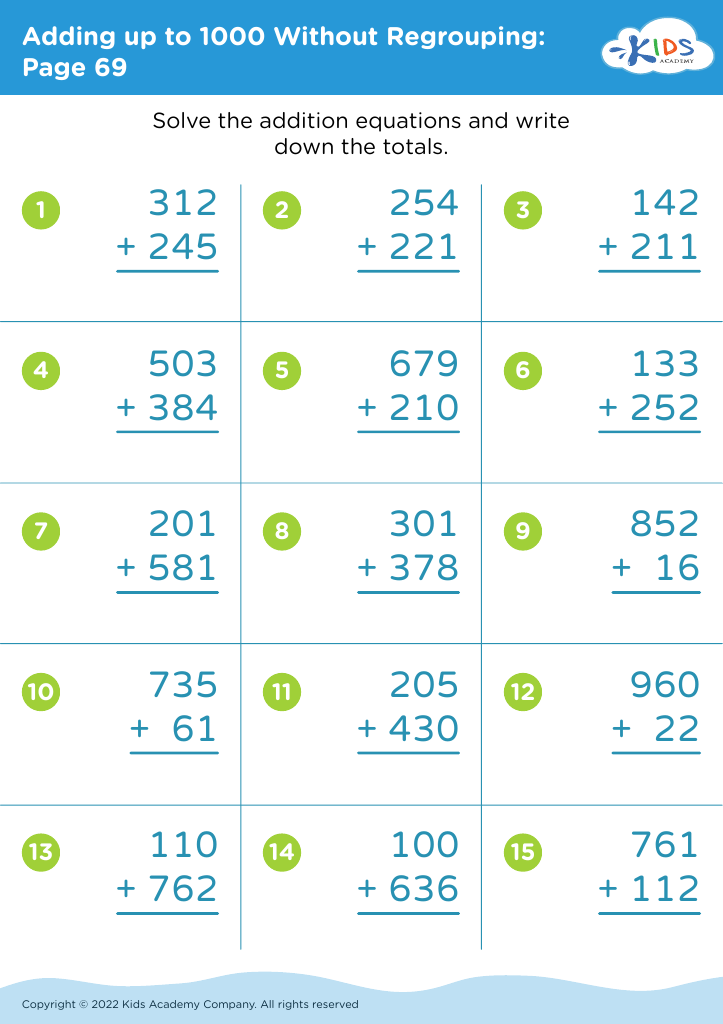
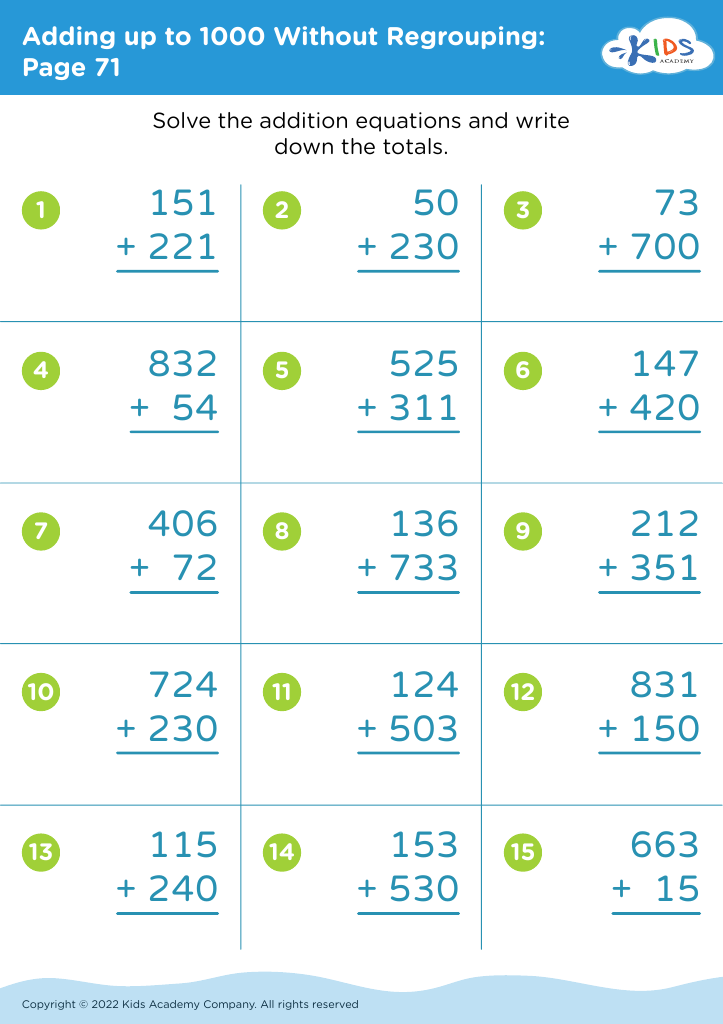
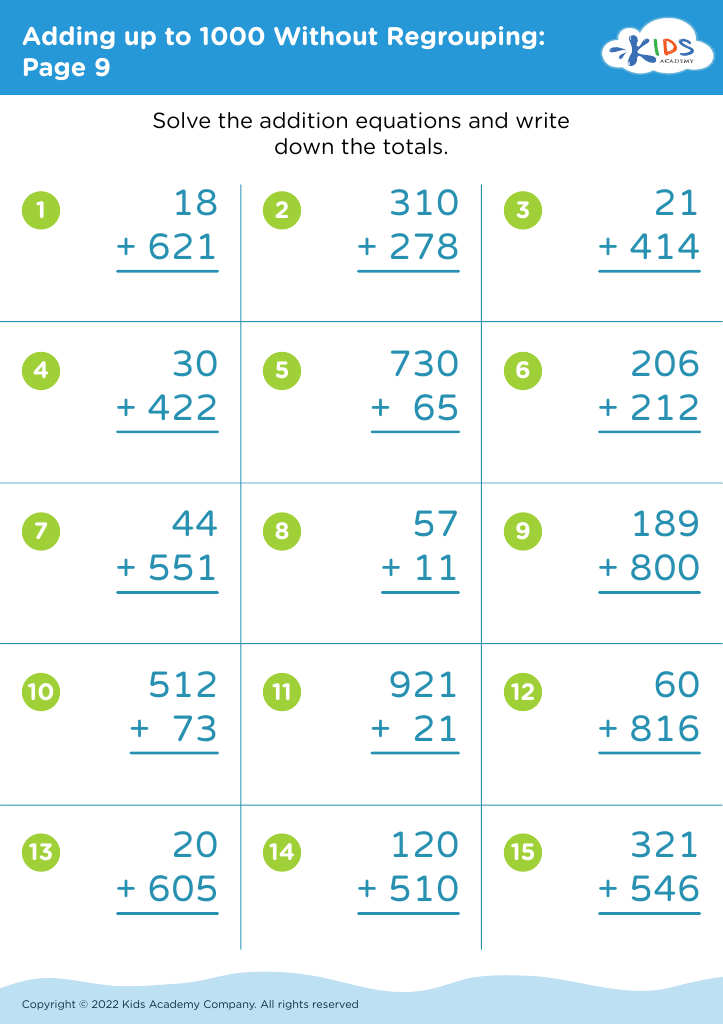


Recognizing patterns in addition is crucial for young learners, especially when adding numbers up to 1000 without regrouping. First, it builds foundational math skills that are essential for future success in mathematics. By noticing sensible relationships between numbers—like pairs that sum to 10 or multiples of 5—students develop a deeper understanding of numerical properties, paving the way for more complex calculations.
Second, understanding patterns promotes mental math strategies. When children can quickly identify combinations or sequences, they gain confidence and can perform calculations efficiently. This not only aids their problem-solving skills but also reduces math anxiety, creating a more positive attitude toward the subject.
Moreover, pattern recognition encourages critical thinking skills, reinforcing a child's ability to analyze and draw conclusions from observed data. This aligns with broader educational goals, such as fostering independent learners who can transfer these skills to other disciplines.
Lastly, as collaborative problem solvers, students can share and discuss pattern strategies with peers and teachers, enhancing communication skills and fostering a supportive learning environment. In summary, teaching students to recognize patterns in adding up to 1000 is not just a math exercise; it’s a vital component of their cognitive and social development in early education.