Shape Recognition Adding up to 1000 Without Regrouping Worksheets for Ages 6-7
3 filtered results
-
From - To
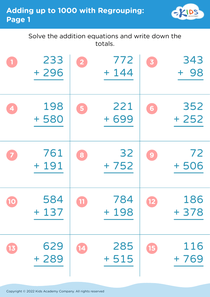
Enhance your child's mathematical skills with our "Shape Recognition Adding Up to 1000 Without Regrouping Worksheets" designed specifically for ages 6-7. These engaging worksheets seamlessly integrate shape recognition and addition, helping young learners develop vital math skills while exploring geometric concepts. With fun illustrations and varied exercises, children will master the art of adding numbers without needing to regroup, making math both enjoyable and effective. Perfect for reinforcing classroom learning or as homework, these worksheets foster a solid foundation in numeracy and shape identification, ensuring your child is set for success in their early math journey. Download today and watch them thrive!
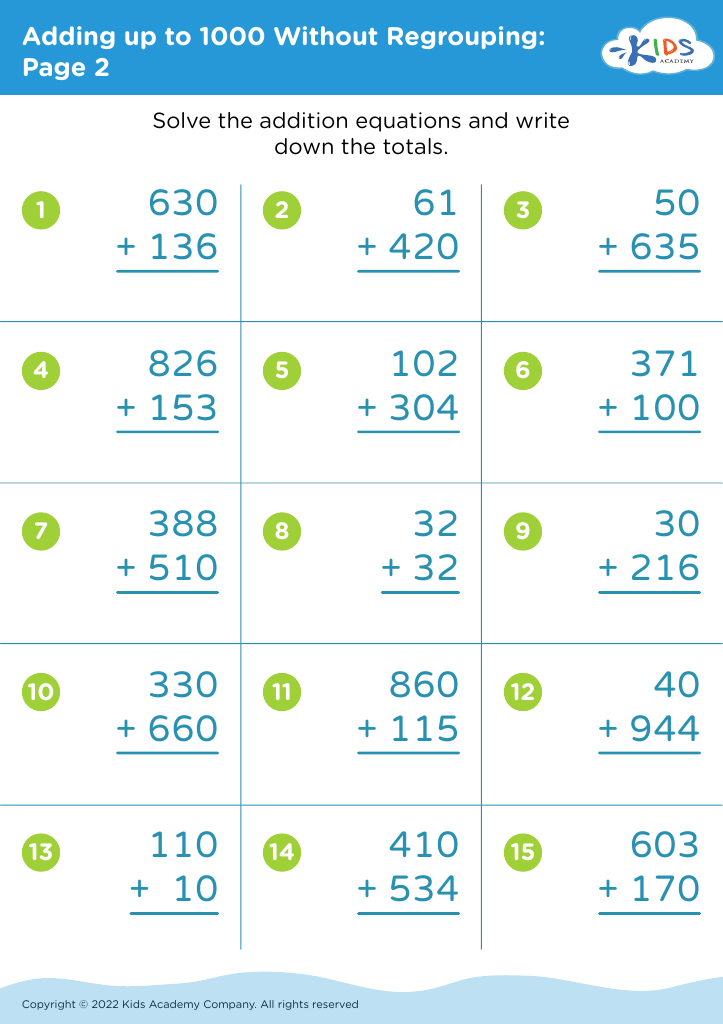
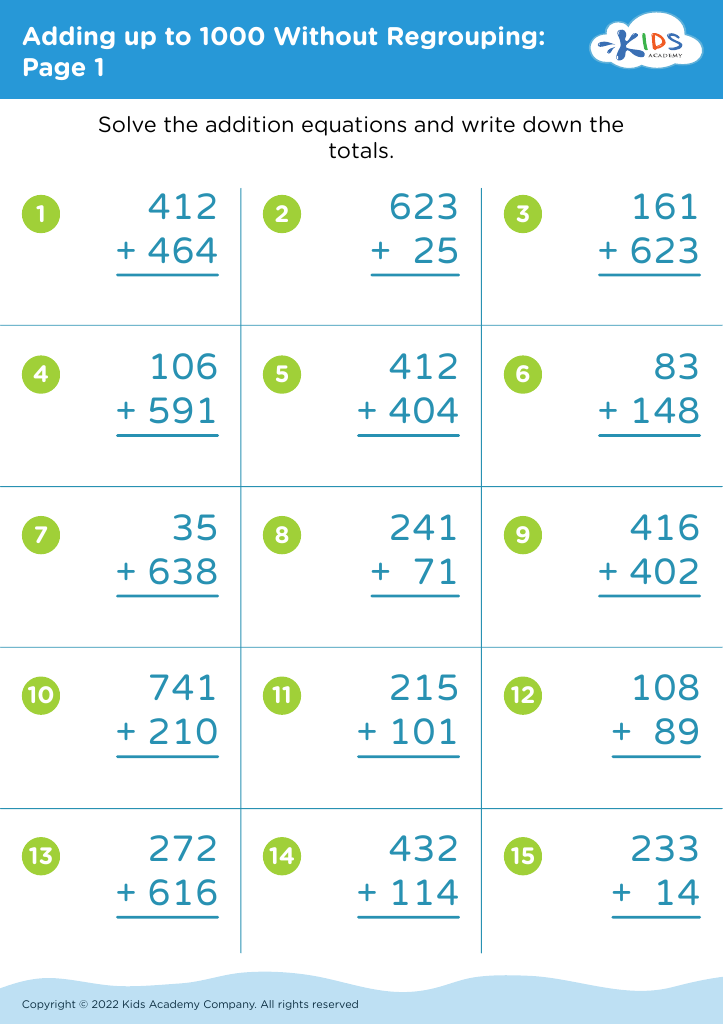
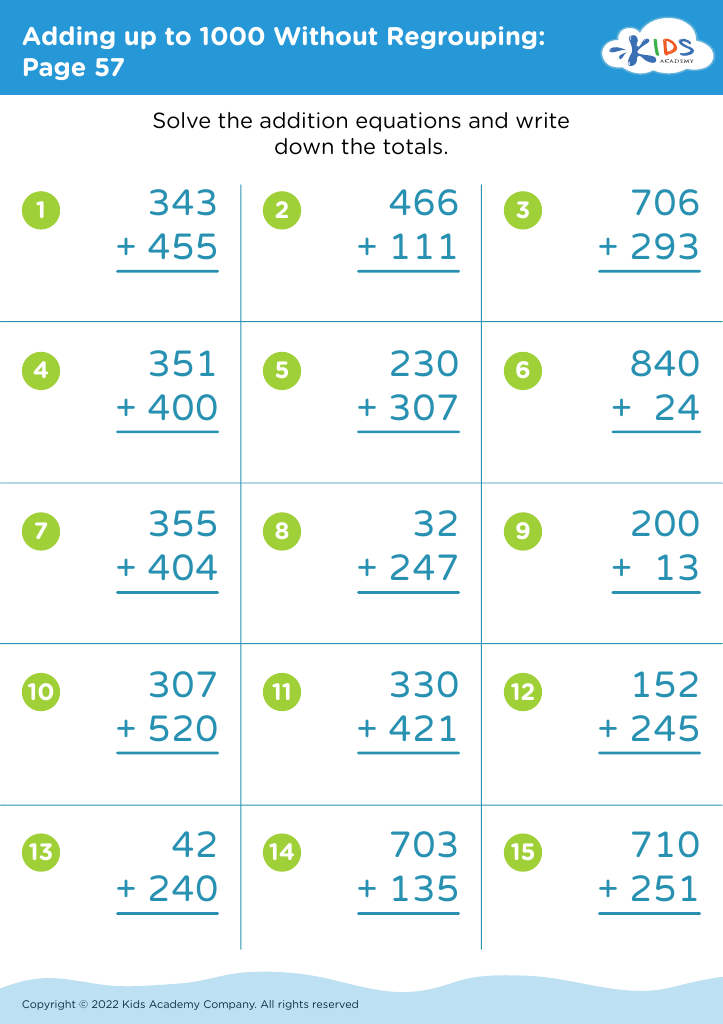


Shape recognition and the ability to add numbers up to 1000 without regrouping are two foundational skills for children aged 6-7 that play a crucial role in their overall cognitive development. Understanding shapes fosters visual-spatial awareness, which is essential for everyday tasks and critical thinking. This skill sharpens observation, promotes geometric thinking, and supports future learning in subjects like science and art, as children begin to see the connections between shapes and their applications in the real world.
On the other hand, mastering addition up to 1000 without regrouping enhances numeric fluency and computational skills. This ability lays the groundwork for more complex arithmetic procedures, ensuring children develop a confident mathematics foundation. Additionally, it helps them establish a strong grasp of place value, which is critical for understanding larger numbers and performing multi-digit operations in later grades.
When parents and teachers prioritize these skills, they equip children with essential tools for academic success and daily living. Engaging children in fun, hands-on activities that combine shape recognition and addition can make learning enjoyable, promote problem-solving, and improve abstract thinking—all crucial skills for their future development. Sharing enthusiasm for these learning milestones fosters a positive attitude towards education overall.