Alphabet Recognition Adding up to 1000 Worksheets for Ages 6-7
4 filtered results
-
From - To
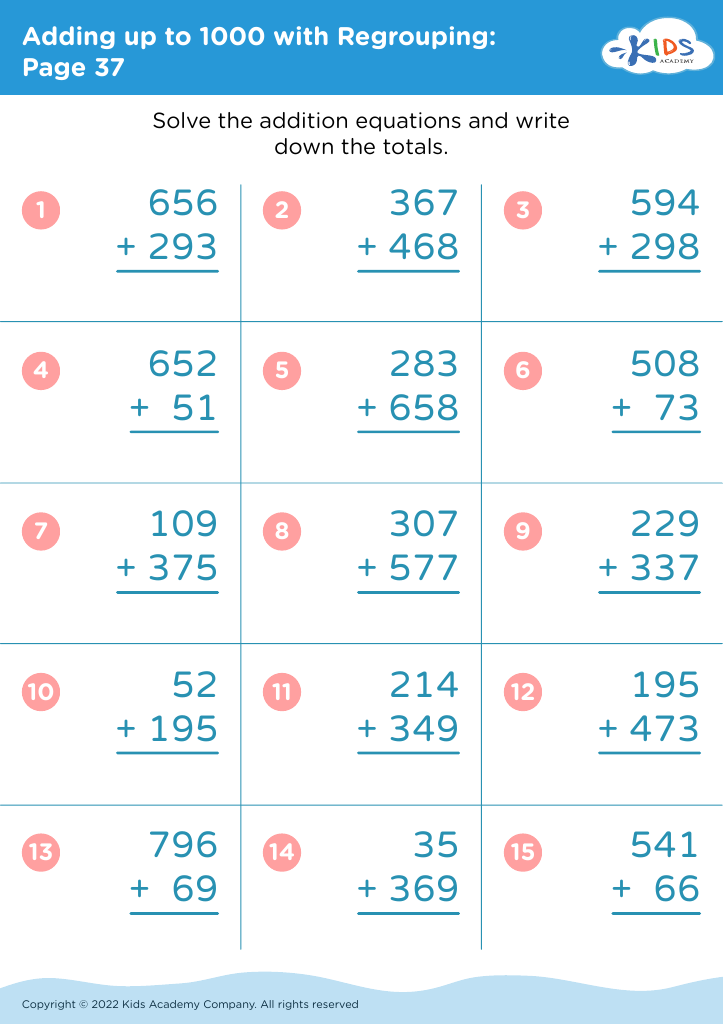
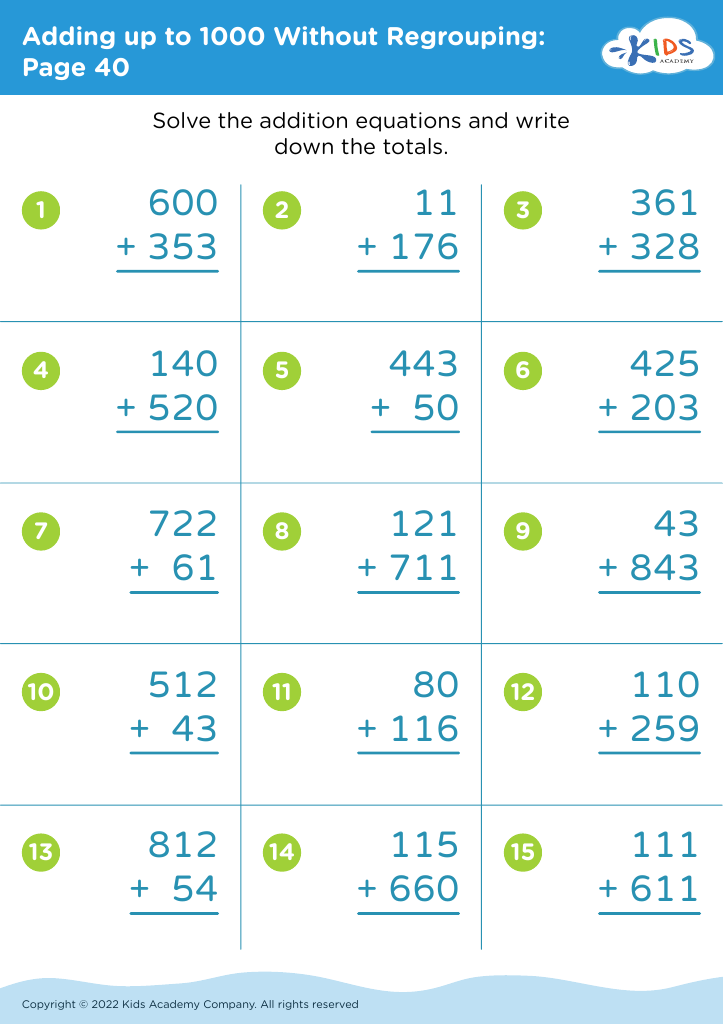
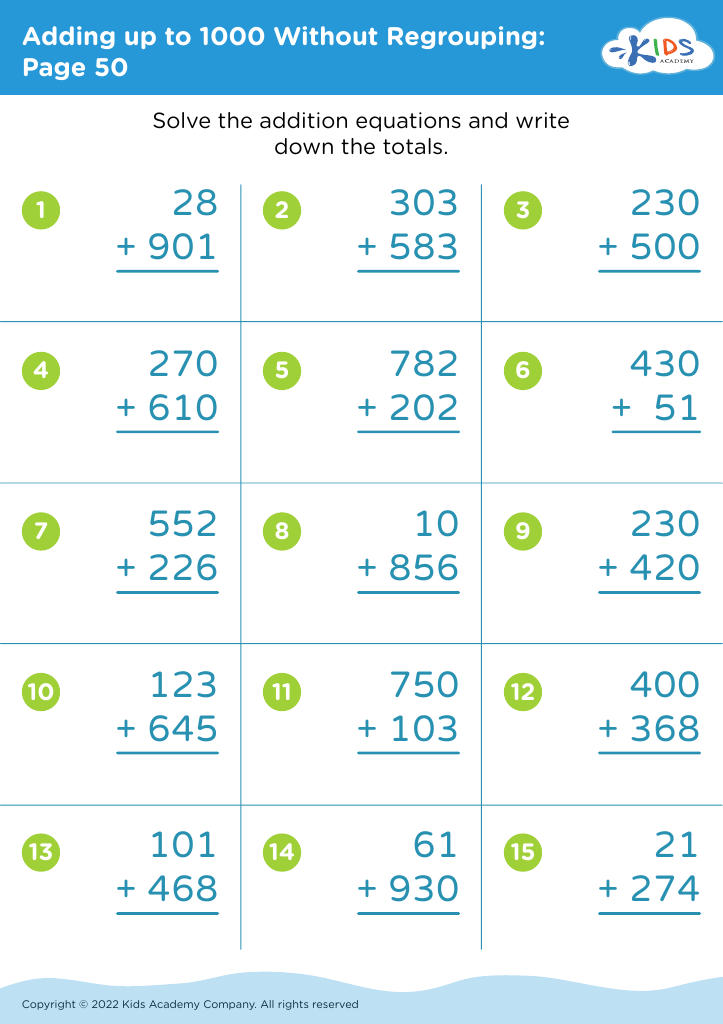
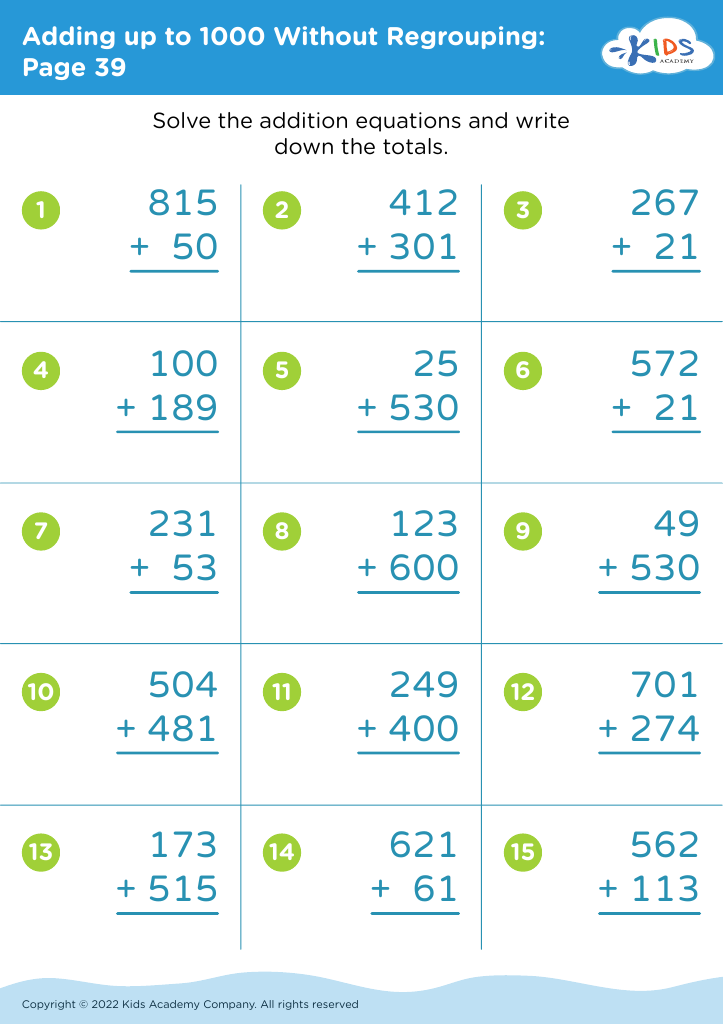
Boost your child's learning with our Alphabet Recognition Adding up to 1000 Worksheets for Ages 6-7. These engaging and educational worksheets enhance both alphabet recognition and math skills simultaneously. Perfect for first graders, each activity combines letter identification with 3-digit addition problems, turning learning into a fun and rewarding experience. Tailored to align with school curriculums, these worksheets promote essential skills, such as problem-solving and logical thinking. Ideal for classroom or home use, our worksheets make learning enjoyable and effective. Download now and support your child’s journey towards academic success!



Alphabet recognition and basic arithmetic are foundational skills for young learners. When children aged 6-7 master the alphabet and numbers up to 1000, they are setting the stage for future academic success. Alphabet recognition aids in reading fluency and comprehension, allowing children to decode unfamiliar words, an essential skill for all subjects including math, science, and even social studies. Additionally, familiarity with large numbers, up to 1000, enhances a child's understanding of place value, which is a cornerstone of arithmetic and advanced mathematical concepts.
For parents and teachers, encouraging proficiency in these areas fosters cognitive development. Alphabet games and number puzzles promote critical thinking, problem-solving abilities, and memory. These activities create a stimulating learning environment, engaging children and making education fun.
Moreover, strong early literacy and numerical skills build confidence. When children recognize letters and numbers and understand how to work with them, they're more likely to participate in class, contributing to a positive learning experience. This foundational knowledge means children can tackle more complex subjects with ease as they progress in school, providing parents and educators with evidence of effective early education and a unified curriculum. Supporting alphabet recognition and numerical familiarity primes children for a lifetime of learning and academic achievement.








