Color Identification Adding up to 1000 Worksheets for Ages 6-7
6 filtered results
-
From - To
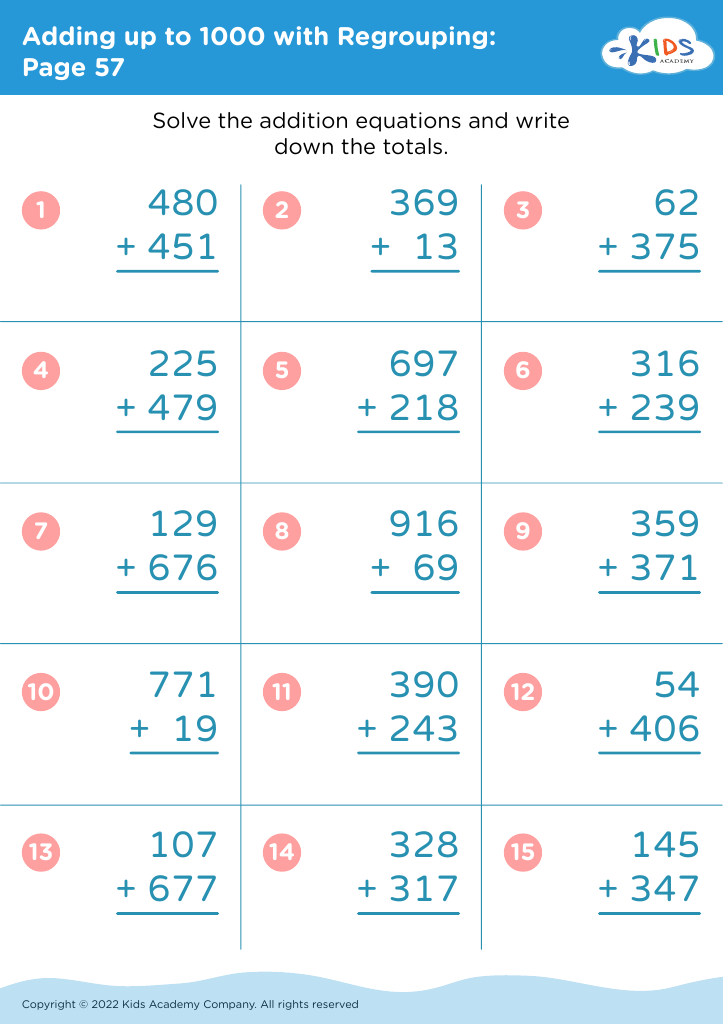
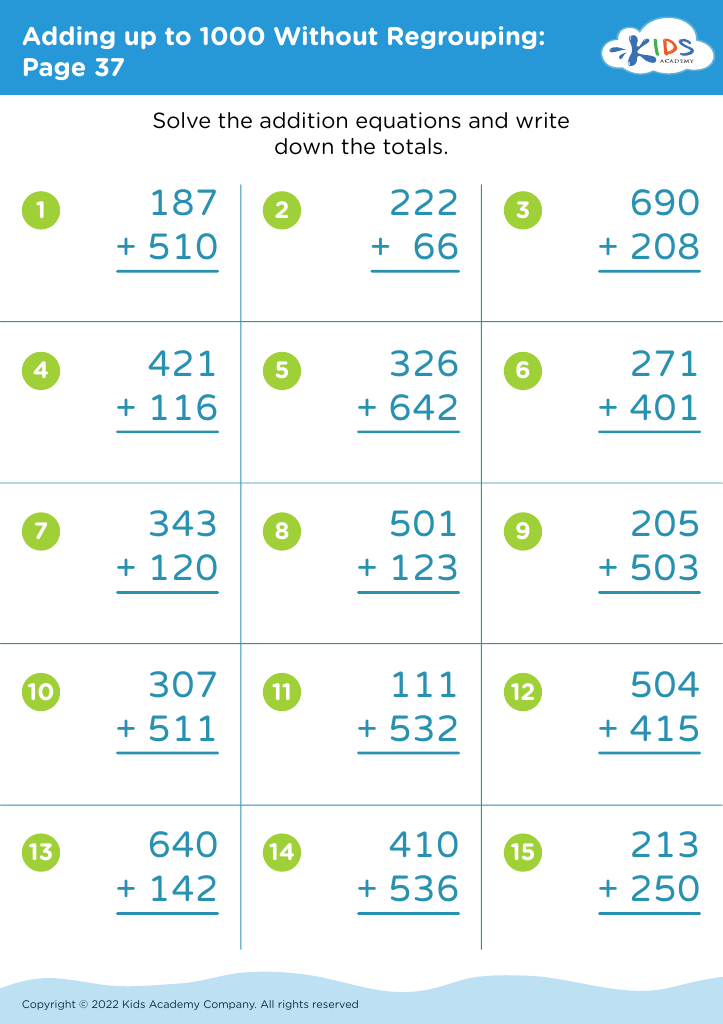
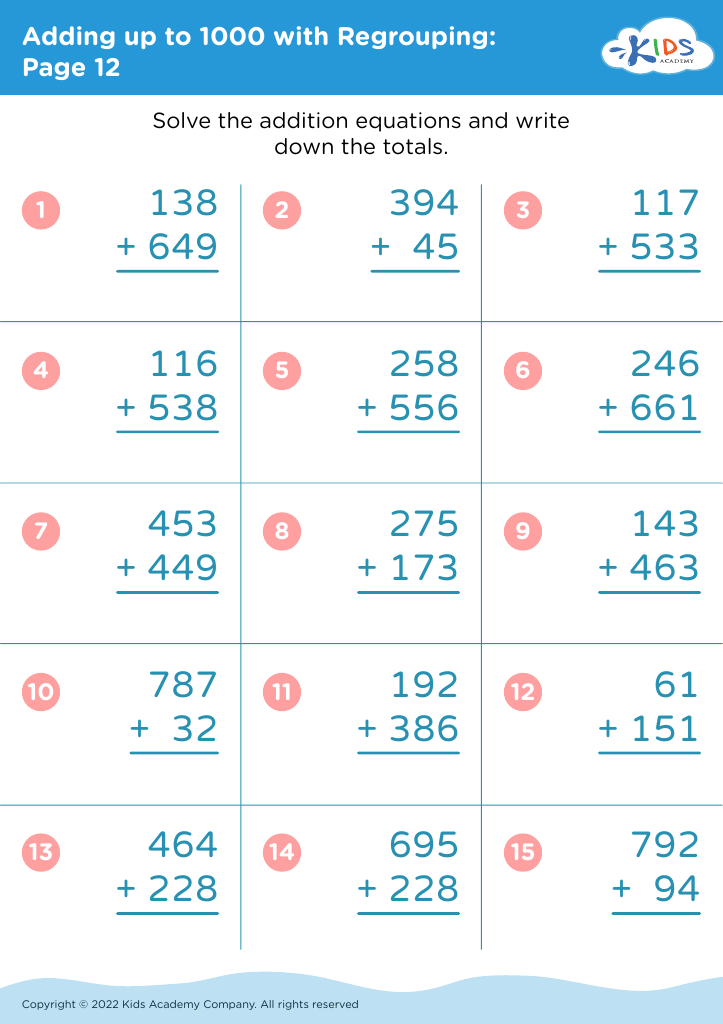
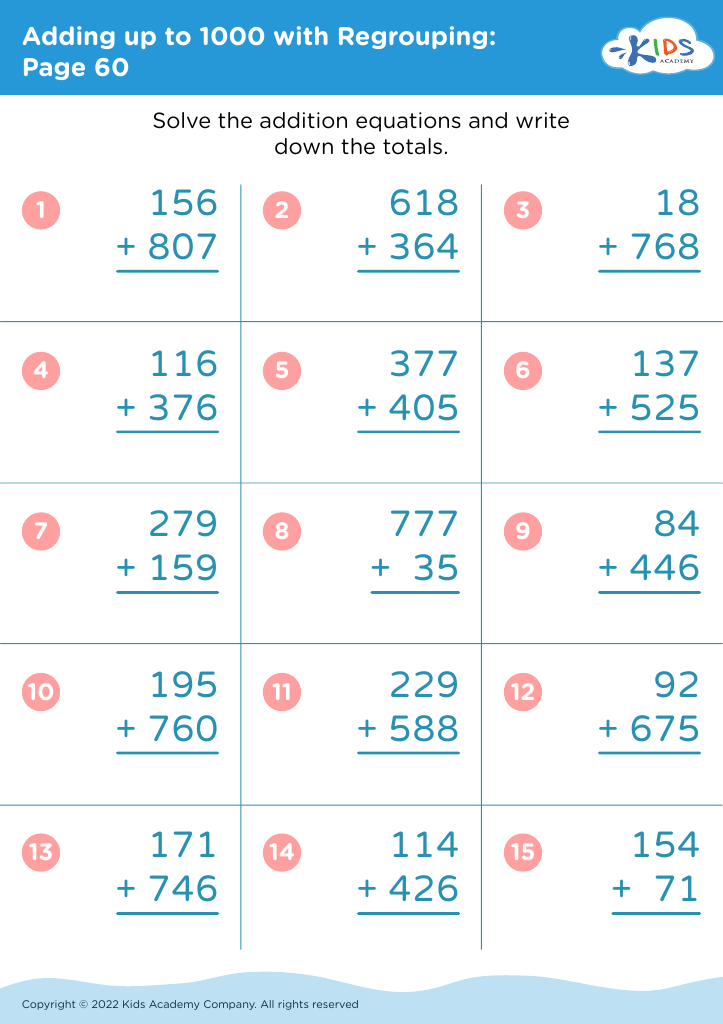
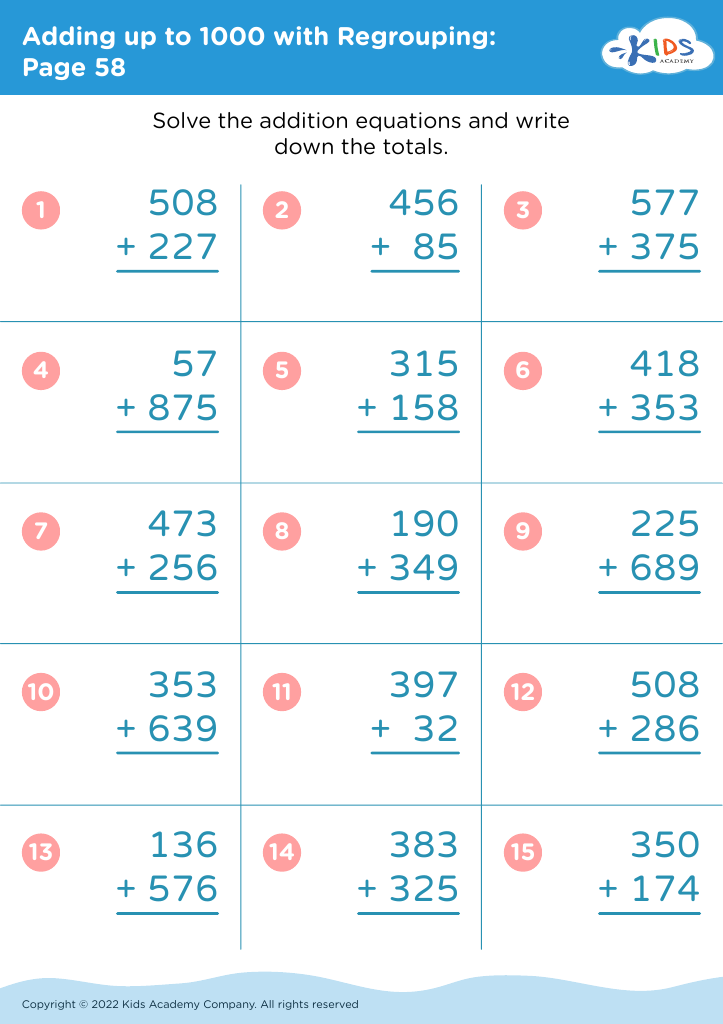
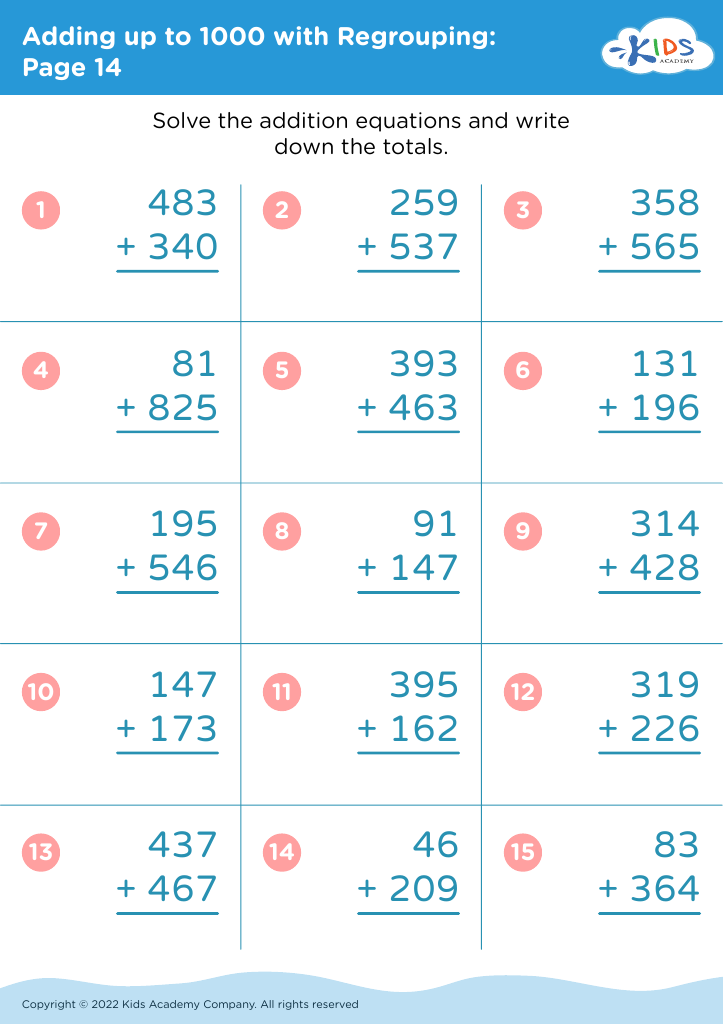
Discover our engaging "Color Identification Adding up to 1000 Worksheets" designed for children aged 6-7! These vibrant worksheets help young learners enhance their color recognition skills while practicing addition and number concepts up to 1000. Each worksheet is filled with colorful illustrations and fun activities that stimulate creativity and encourage interactive learning. As students explore colors alongside mathematical concepts, they develop critical thinking and analytical abilities. Perfect for classroom use or home enrichment, these worksheets provide a fun and effective way to build foundational skills in a playful and colorful environment. Start cultivating your child's cognitive growth today!



Color identification is a fundamental skill that plays a crucial role in a child's early education and overall development, especially for children ages 6-7. Recognizing colors helps children categorize and label their surroundings, fostering language development and cognitive skills. Additionally, strong color identification enhances visual perception and attention, which are essential for learning in other areas.
For teachers and parents, integrating color activities supports engagement and can make learning fun. Children this age have a natural curiosity, and using colors can capture their interest, making lessons more impactful. Identifying and naming colors boosts a child’s confidence, which translates into a positive attitude toward academic challenges.
Moreover, colors are an important part of art and creativity, allowing children to express themselves and explore their feelings. They signify different emotions and can also serve as indicators during storytelling, helping children better understand narratives.
Furthermore, linking color identification to numeracy, such as tasks involving sorting or counting colored items, reinforces mathematical concepts through visualization, making it easier for children to grasp foundational criteria that contribute to problem-solving skills. Hence, color identification goes beyond mere recognition; it becomes an engaging, multifaceted tool in cultivating critical literacy and numeracy skills, which are vital for lifelong learning.








