Filters

16 filtered results

Clear all filters
Favorites
With answer key
Interactive

16 filtered results

Difficulty Level

Grade


Welcome to our engaging "Comparing Fractions Add up to 1000 Worksheets" designed specifically for children aged 6-7! These worksheets provide a fun and interactive way for young learners to grasp the concept of comparing fractions. Through colorful visuals and age-appropriate exercises, children will enhance their math skills while gaining confidence in their abilities. They will practice identifying greater, lesser, and equivalent fractions, all while adding up to 1000. Our carefully crafted activities are perfect for home or classroom use, ensuring that learning fractions is enjoyable and effective. Start your journey to mastering fractions today!
Check out this FREE Trial Lesson on Adding up to 1000 for age 6-7!

H

Favorites
With answer key
Interactive
  • 6-7
  • Comparing Fractions
  • Adding up to 1000
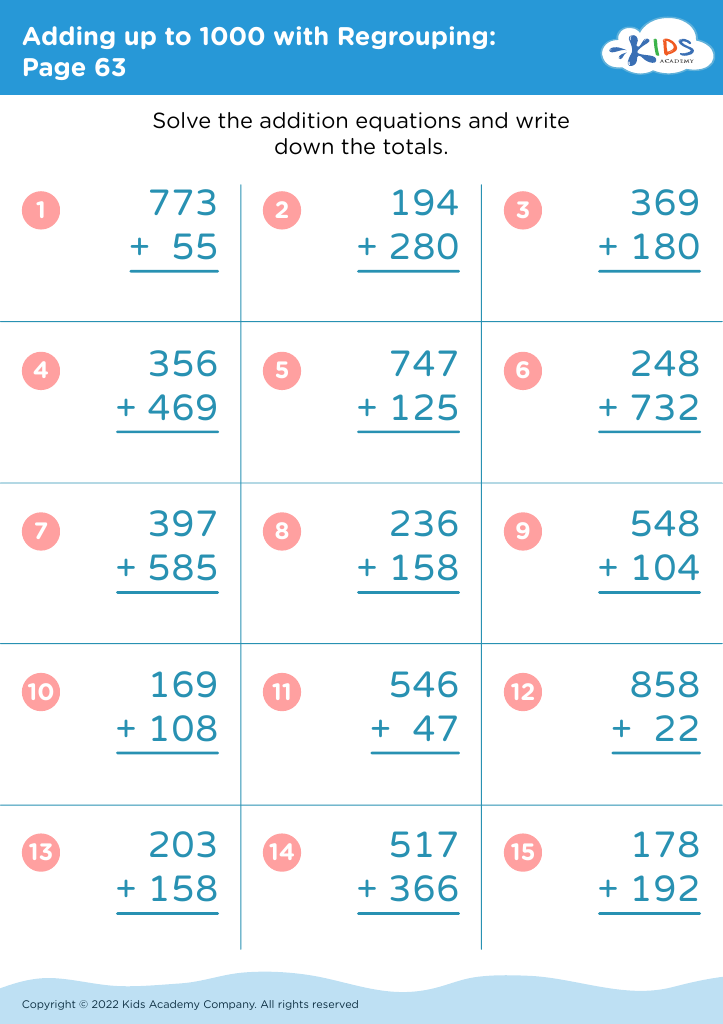
Adding up to 1000 with Regrouping: Page 63
Worksheet
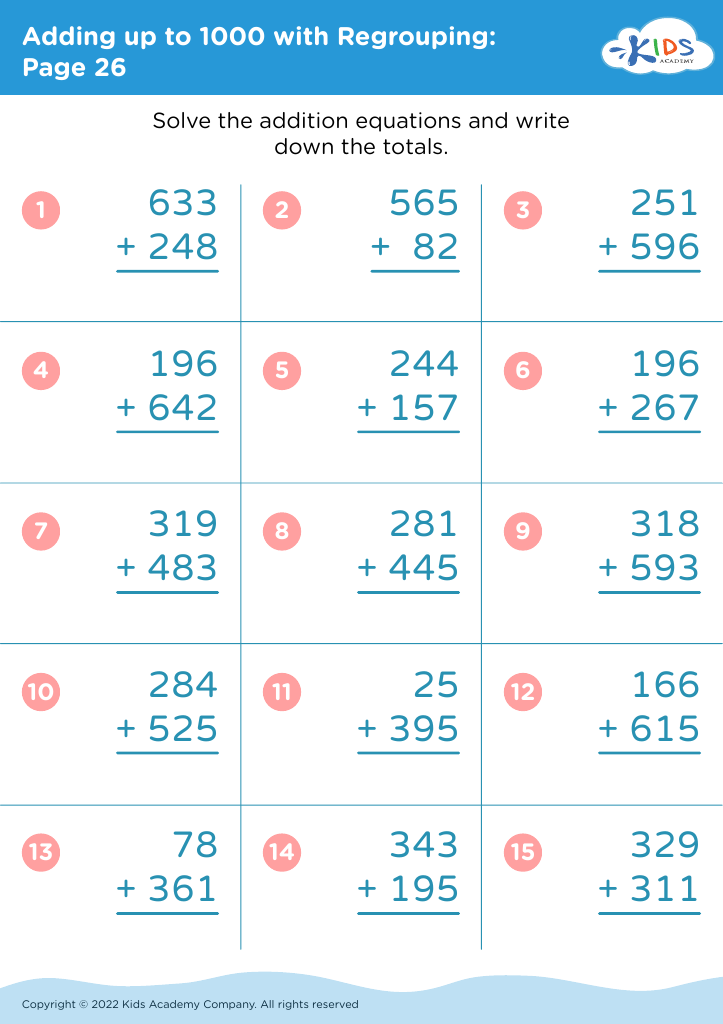
Adding up to 1000 with Regrouping: Page 26
Worksheet
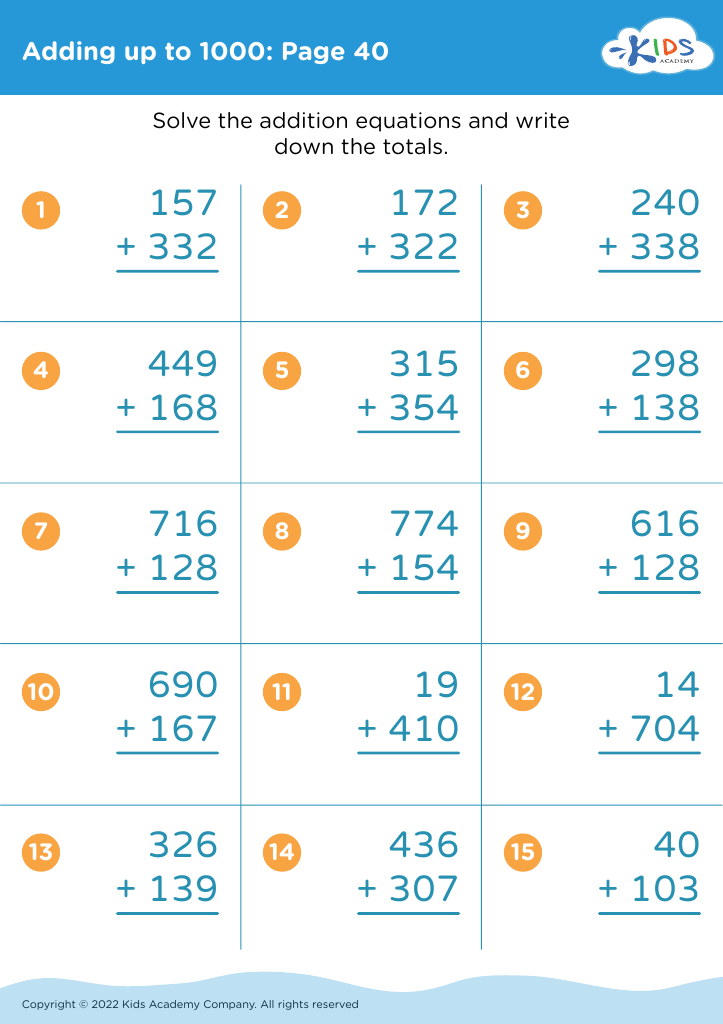
Adding up to 1000: Page 40

Adding up to 1000: Page 40

Adding up to 1000: Page 40
Worksheet
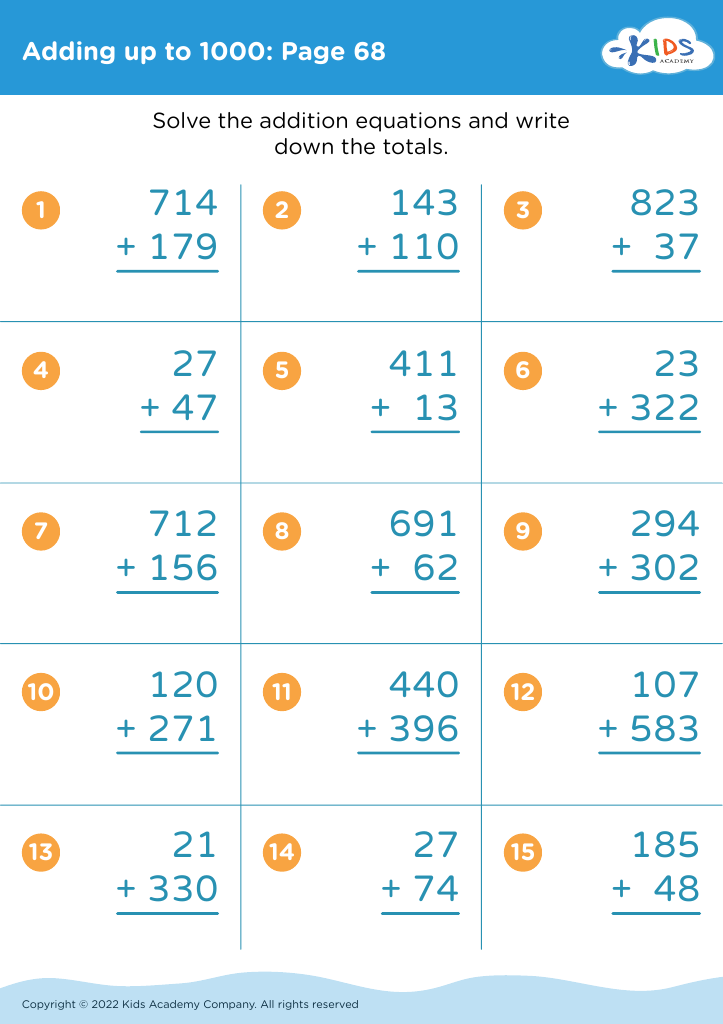
Adding up to 1000: Page 68

Adding up to 1000: Page 68

Adding up to 1000: Page 68
Worksheet
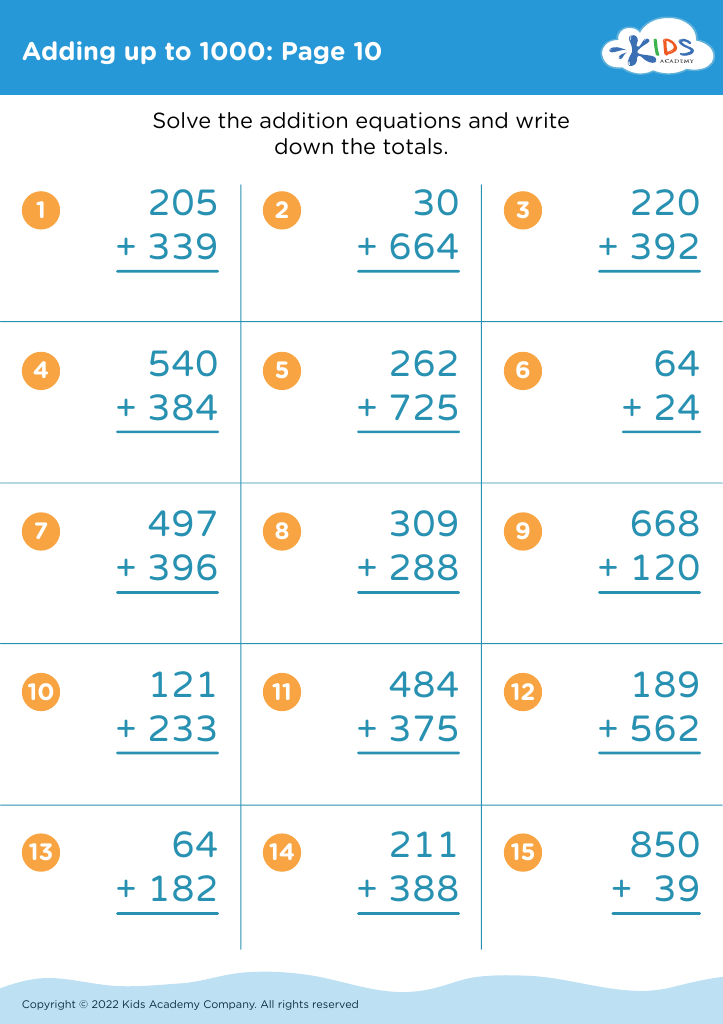
Adding up to 1000: Page 10

Adding up to 1000: Page 10

Adding up to 1000: Page 10
Worksheet
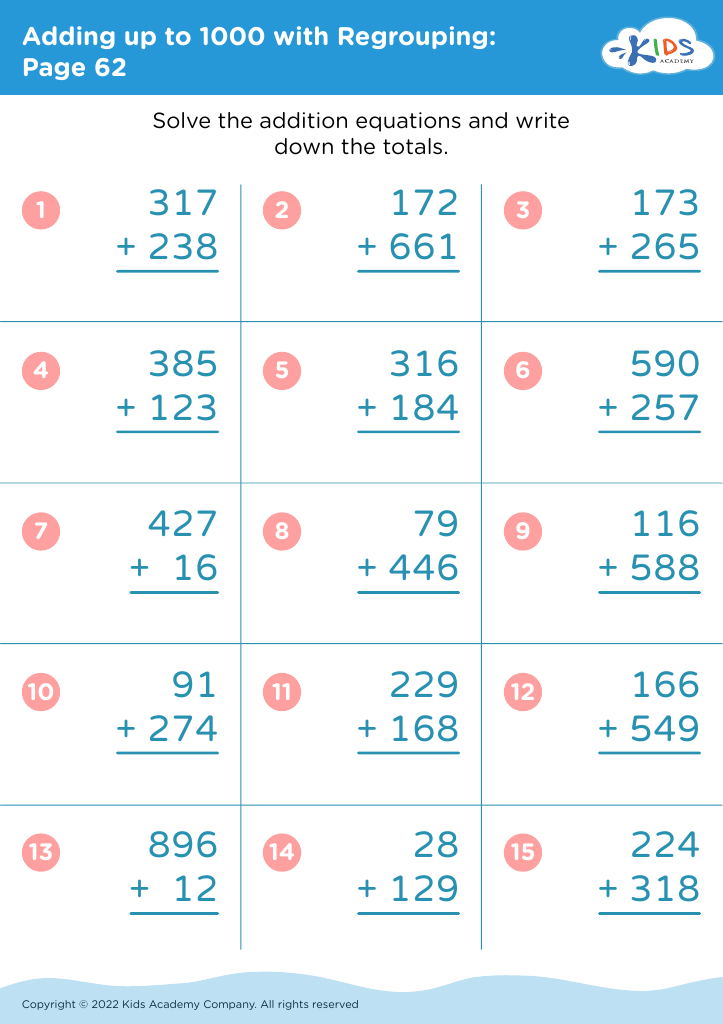
Adding up to 1000 with Regrouping: Page 62
Worksheet
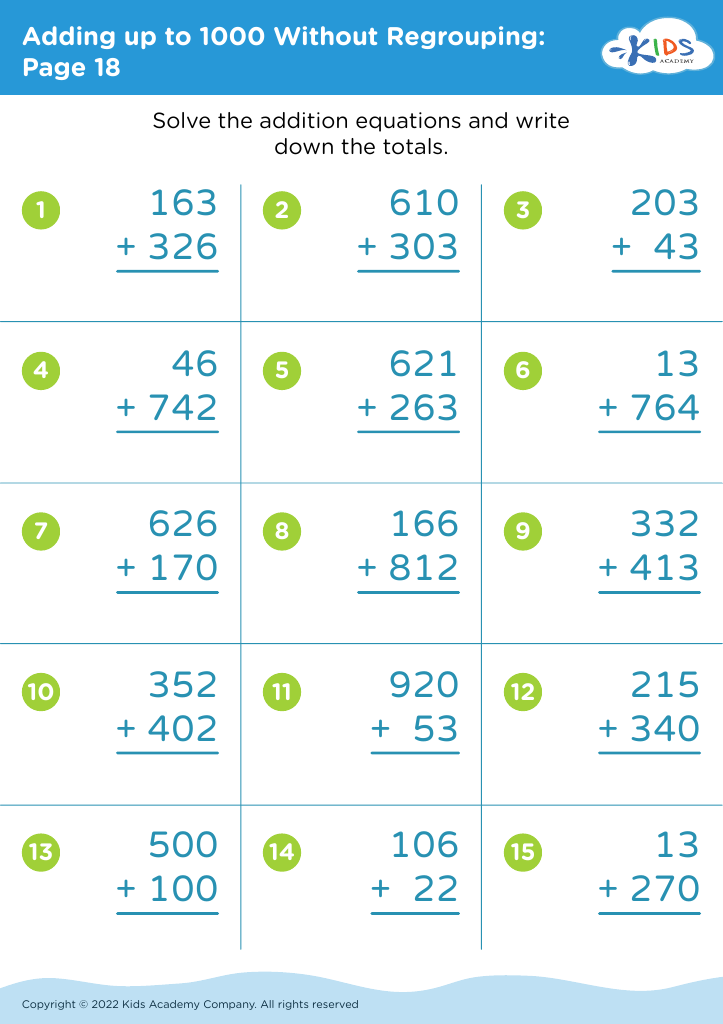
Adding up to 1000 Without Regrouping: Page 18
Worksheet
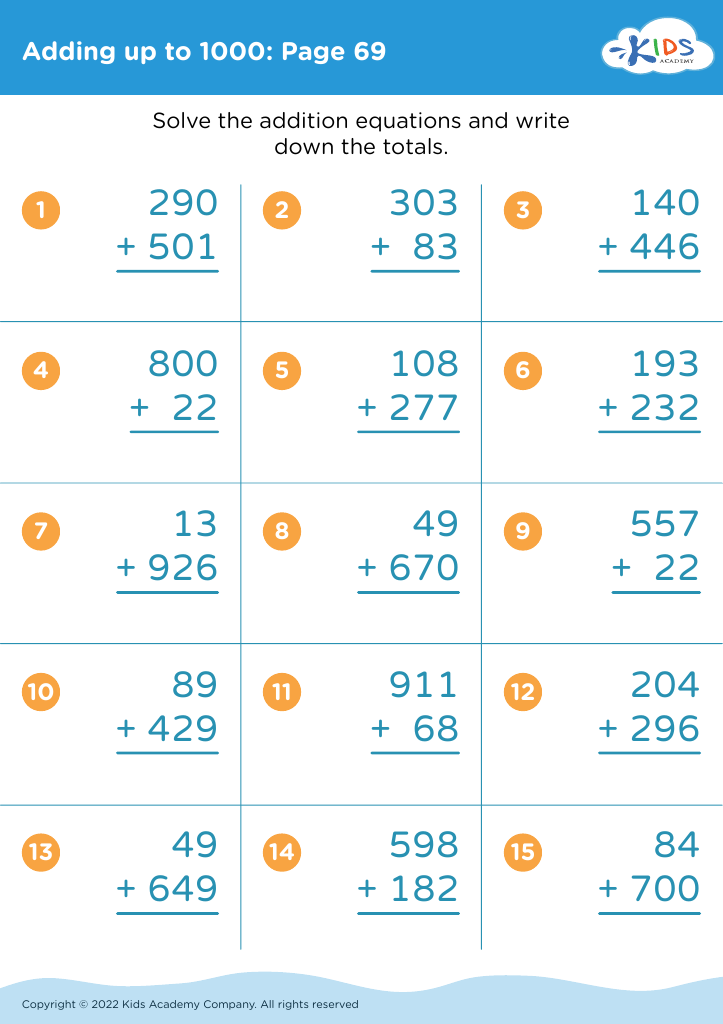
Adding up to 1000: Page 69

Adding up to 1000: Page 69

Adding up to 1000: Page 69
Worksheet
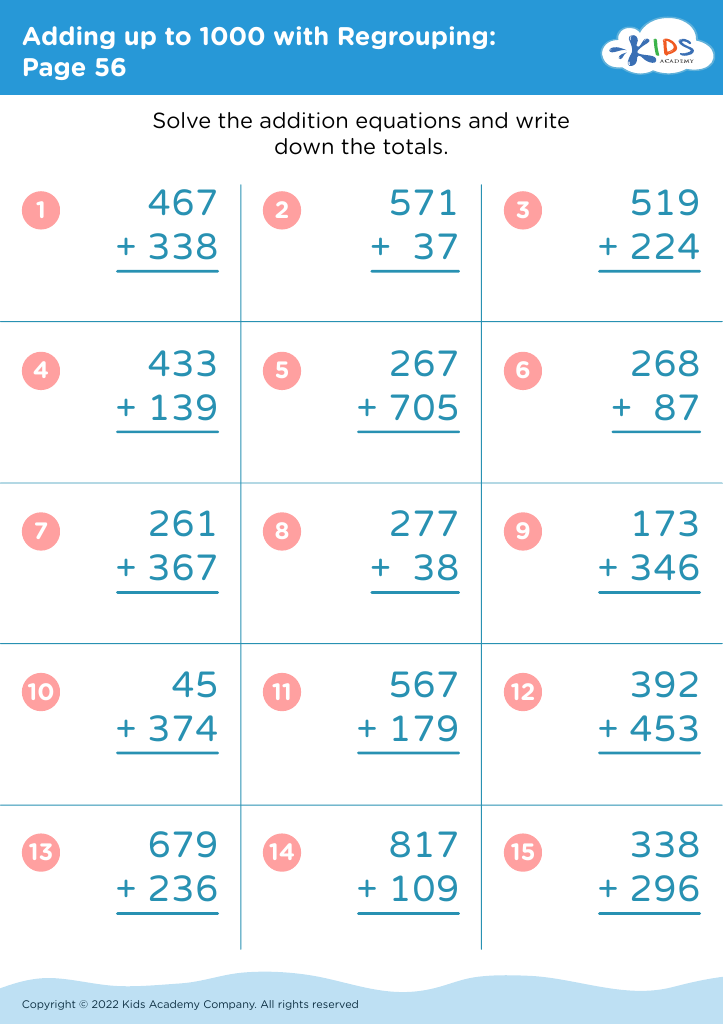
Adding up to 1000 with Regrouping: Page 56
Worksheet
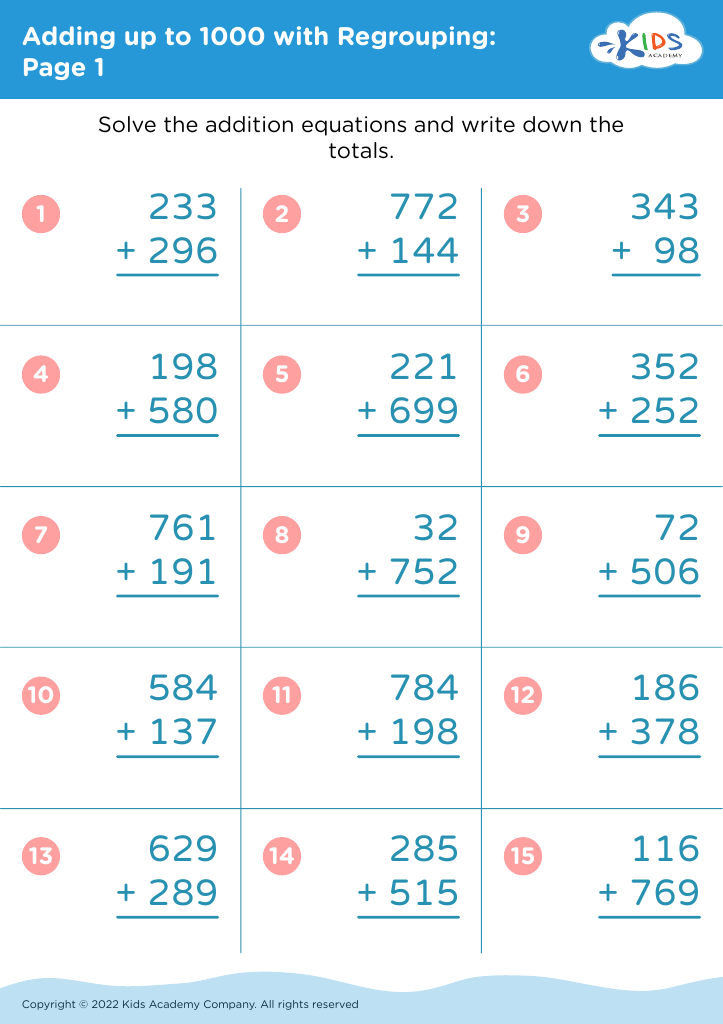
Adding up to 1000 with Regrouping: Page 1
Worksheet
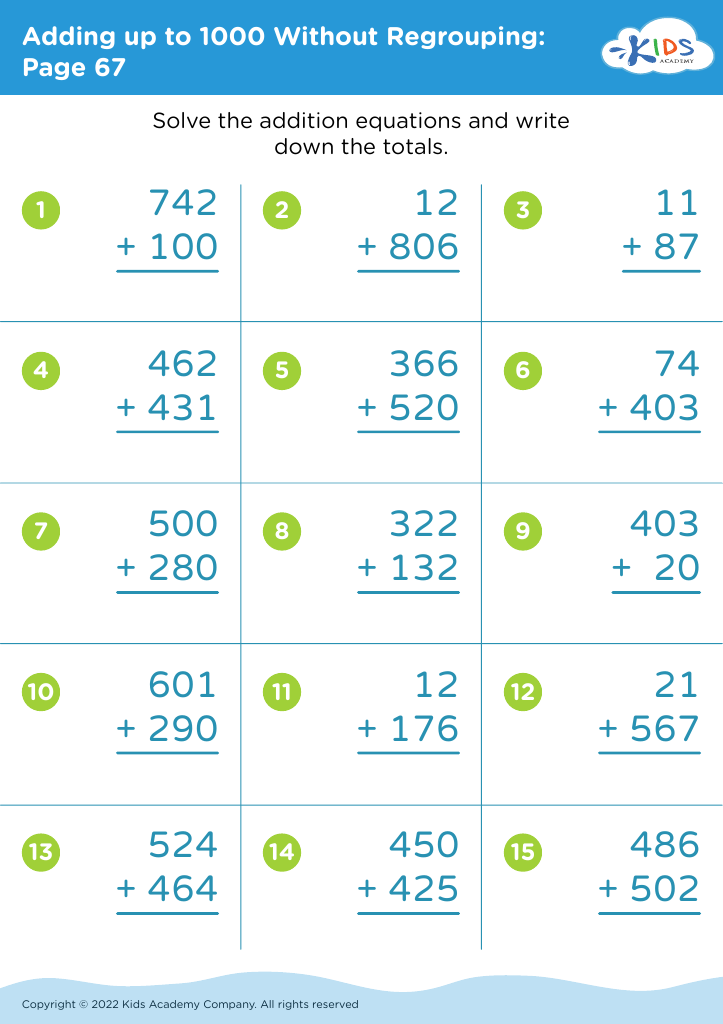
Adding up to 1000 Without Regrouping: Page 67
Worksheet
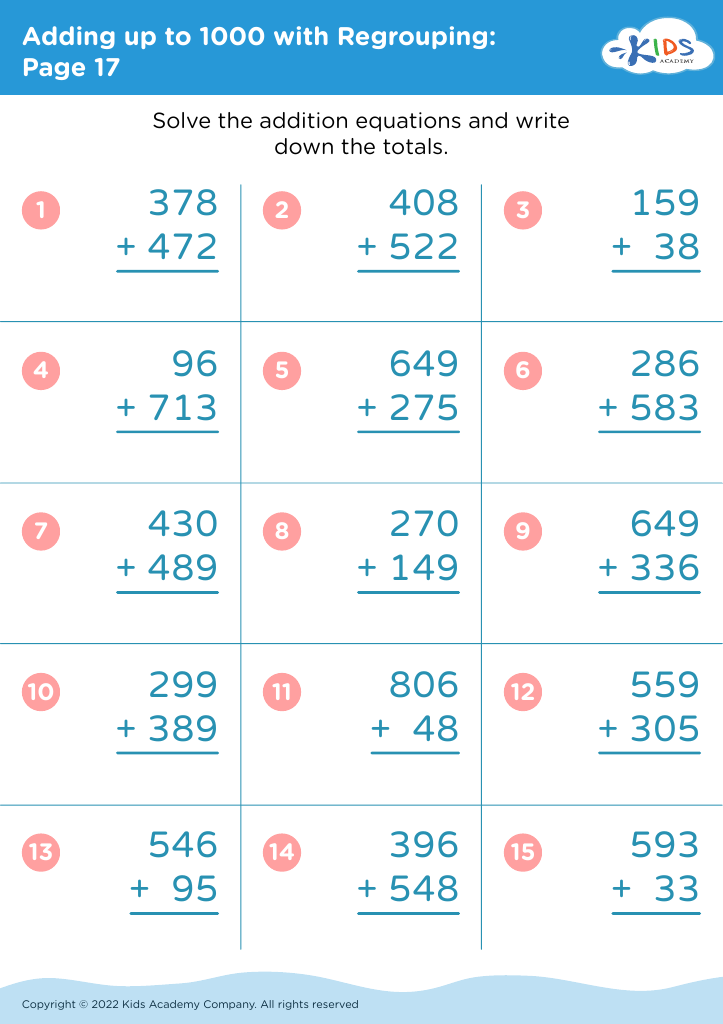
Adding up to 1000 with Regrouping: Page 17
Worksheet
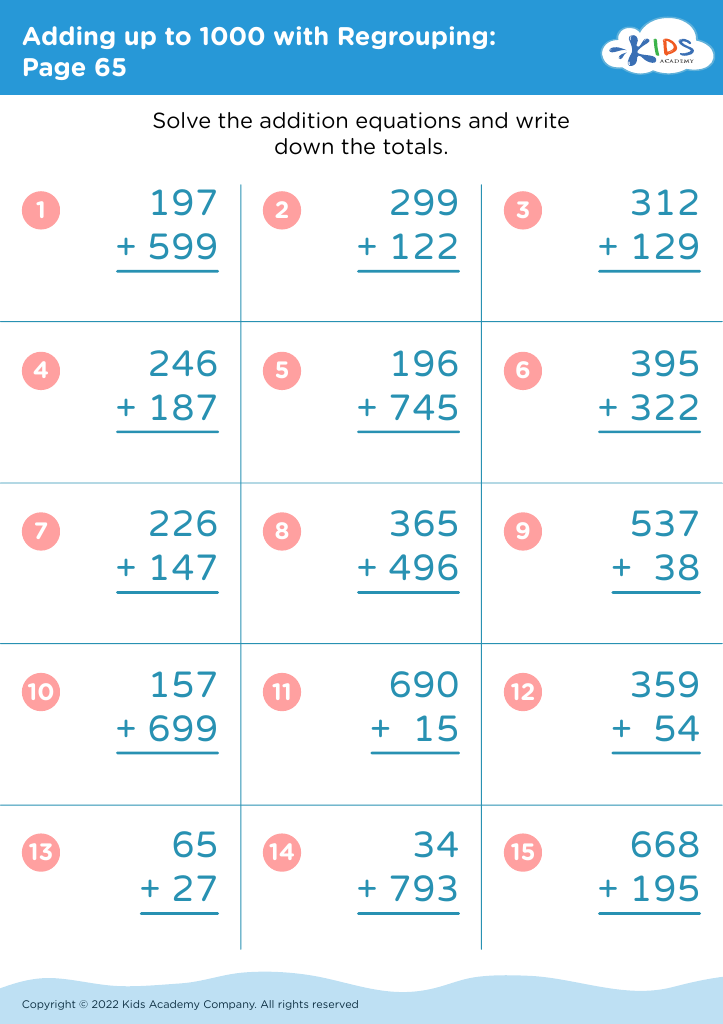
Adding up to 1000 with Regrouping: Page 65
Worksheet
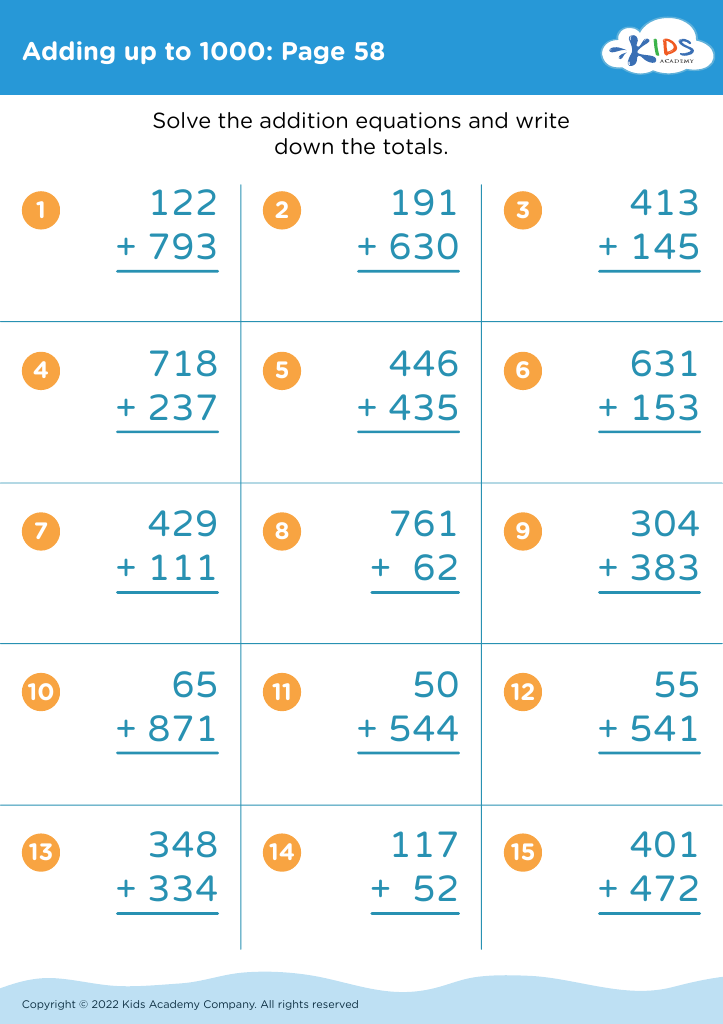
Adding up to 1000: Page 58

Adding up to 1000: Page 58

Adding up to 1000: Page 58
Worksheet
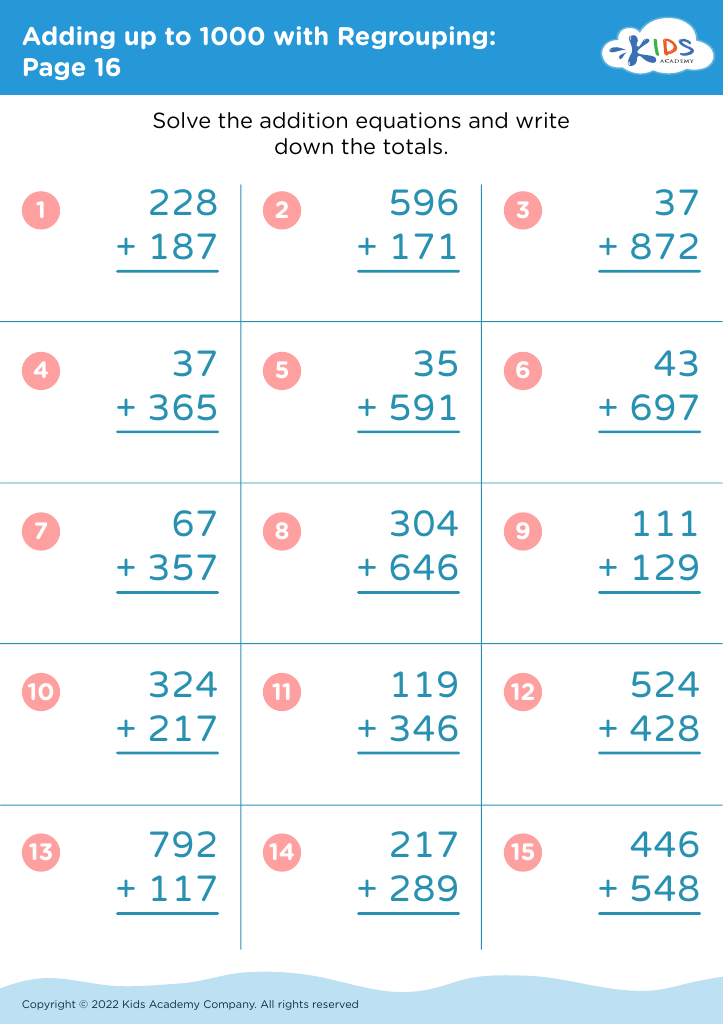
Adding up to 1000 with Regrouping: Page 16
Worksheet
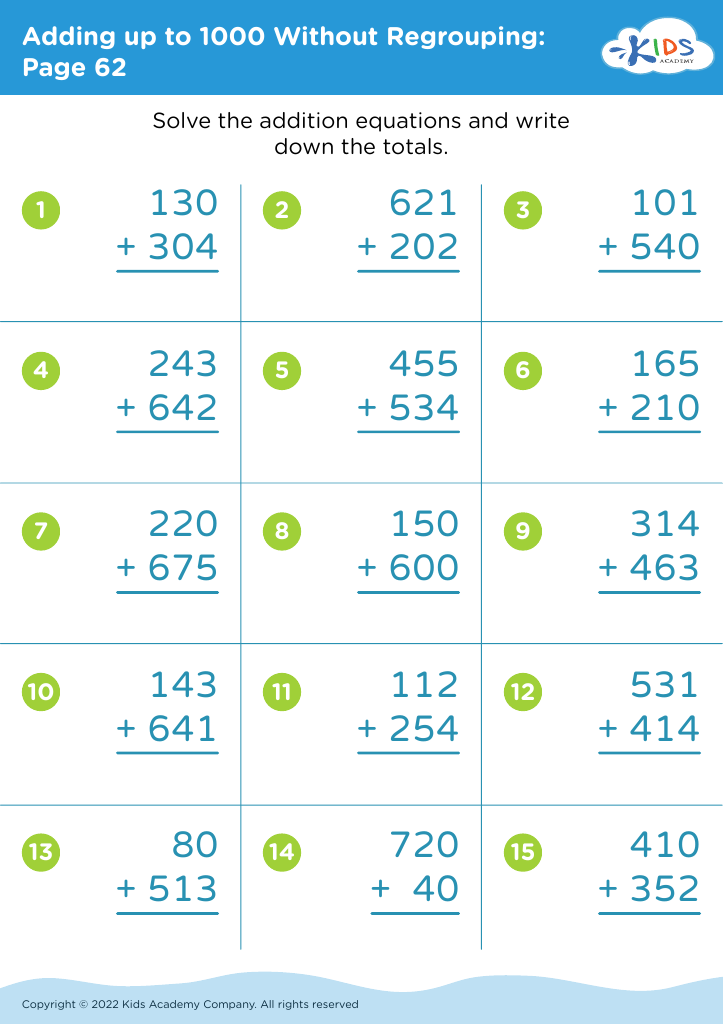
Adding up to 1000 Without Regrouping: Page 62
Worksheet


Understanding how to compare fractions is a crucial skill for children aged 6-7, laying the foundation for their mathematical development. As students begin to encounter more complex math concepts, the ability to compare fractions builds their confidence and encourages analytical thinking. Engaging with fractions teaches children not only how to recognize sizes and values but also promotes problem-solving skills essential for later math topics.

For parents and teachers, fostering an environment where these concepts are explored is vital. It enhances children's comprehension of parts of a whole—a fundamental concept in mathematics that they will encounter in everyday life, from cooking to sharing. By associating mathematical understanding with practical applications, youngsters become confident and competent participants in their learning.

Additionally, lessons on comparing fractions can spark an interest in mathematics that extends beyond the classroom. This engagement can contribute positively to a child's overall academic success. With a goal of having concepts align with the Common Core State Standards, educators and parents are also addressing important curriculum requirements as students prepare for future mathematical challenges. Ultimately, cultivating these skills in young learners empowers them both personally and academically, creating a solid base as they progress through their educational journey.