Filters

19 filtered results

Clear all filters
Favorites
With answer key
Interactive

19 filtered results

Difficulty Level

Grade


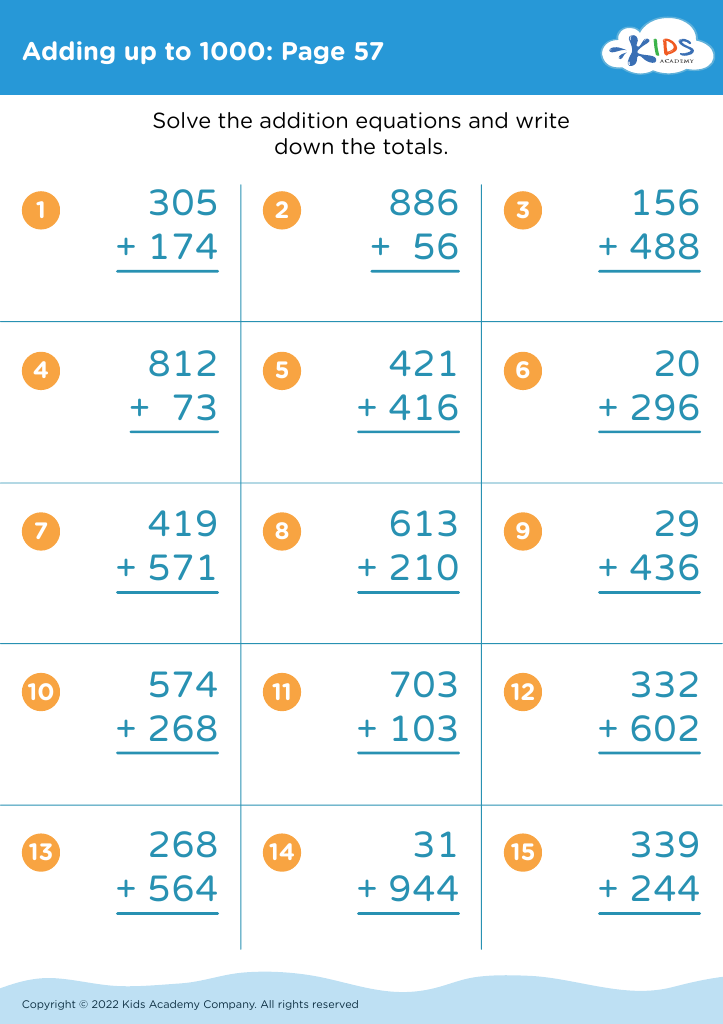
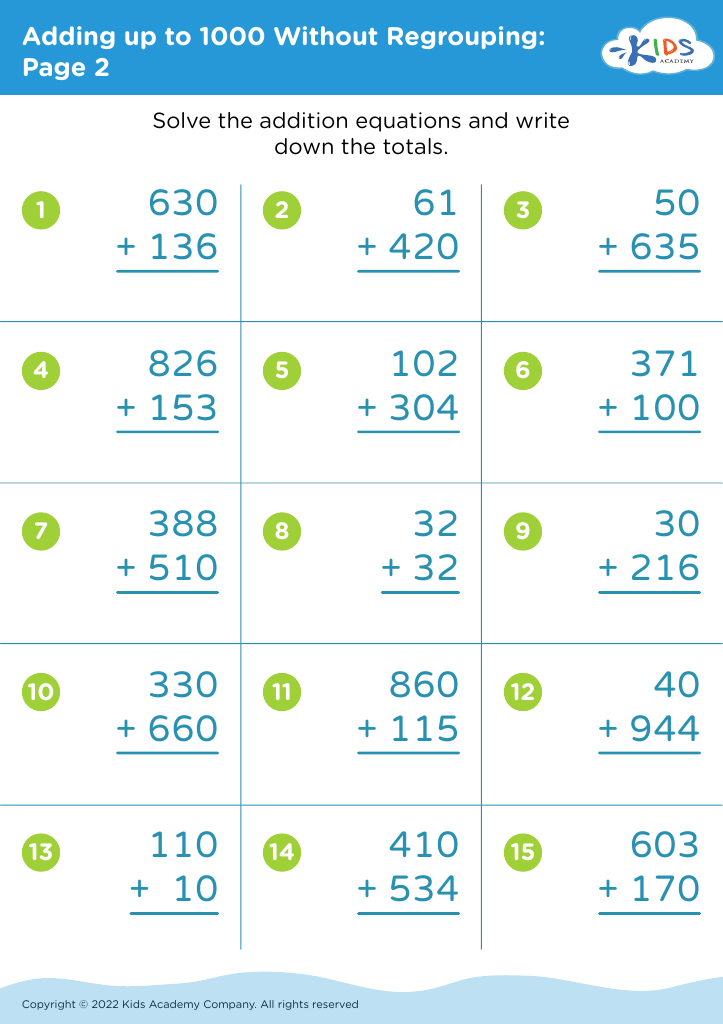
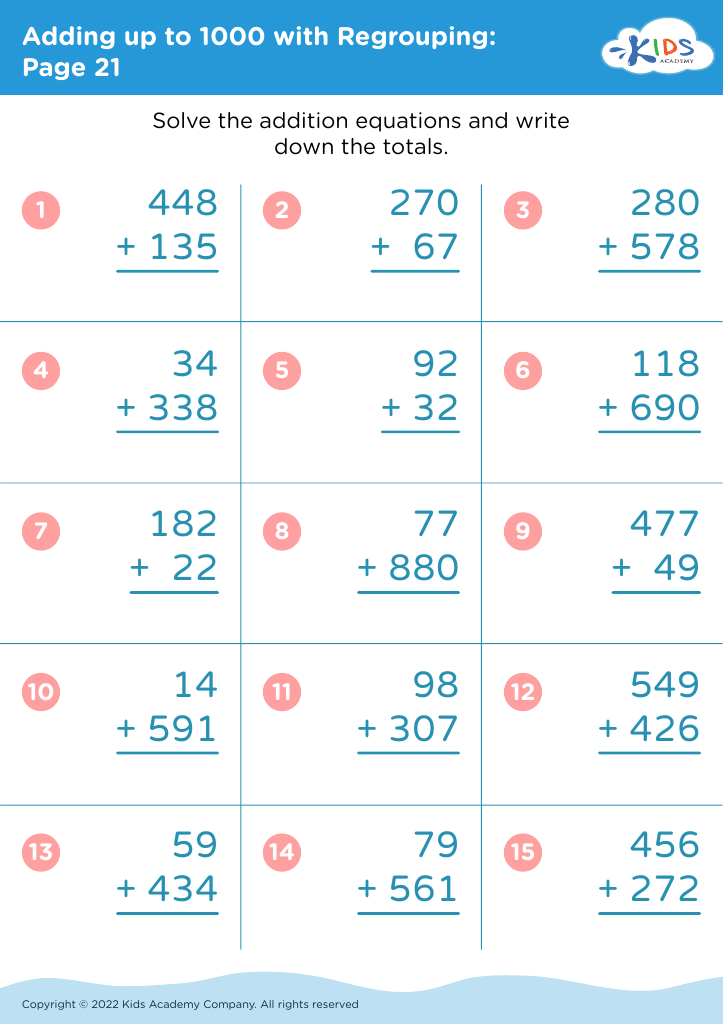
Boost your child's math prowess with our "Counting Practice Adding up to 1000 Worksheets for Ages 6-7." Designed specifically for young learners, these engaging worksheets help students practice essential counting and addition skills. Each sheet is crafted to keep kids motivated while gradually increasing in difficulty. Our worksheets are perfect for reinforcing classroom learning, homeschooling, or supplementary practice. Equip your child with the confidence to tackle larger numbers and master fundamental math concepts in a fun and interactive way. Visit Kids Academy to download and print our worksheets, and watch your child's math abilities soar!
Check out this FREE Trial Lesson on Adding up to 1000 for age 6-7!

My Family

Favorites
With answer key
Interactive
  • 6-7
  • Counting practice
  • Adding up to 1000
Adding up to 1000: Page 57

Adding up to 1000: Page 57

Adding up to 1000: Page 57
Worksheet
Adding up to 1000 Without Regrouping: Page 2
Worksheet
Adding up to 1000 with Regrouping: Page 21
Worksheet
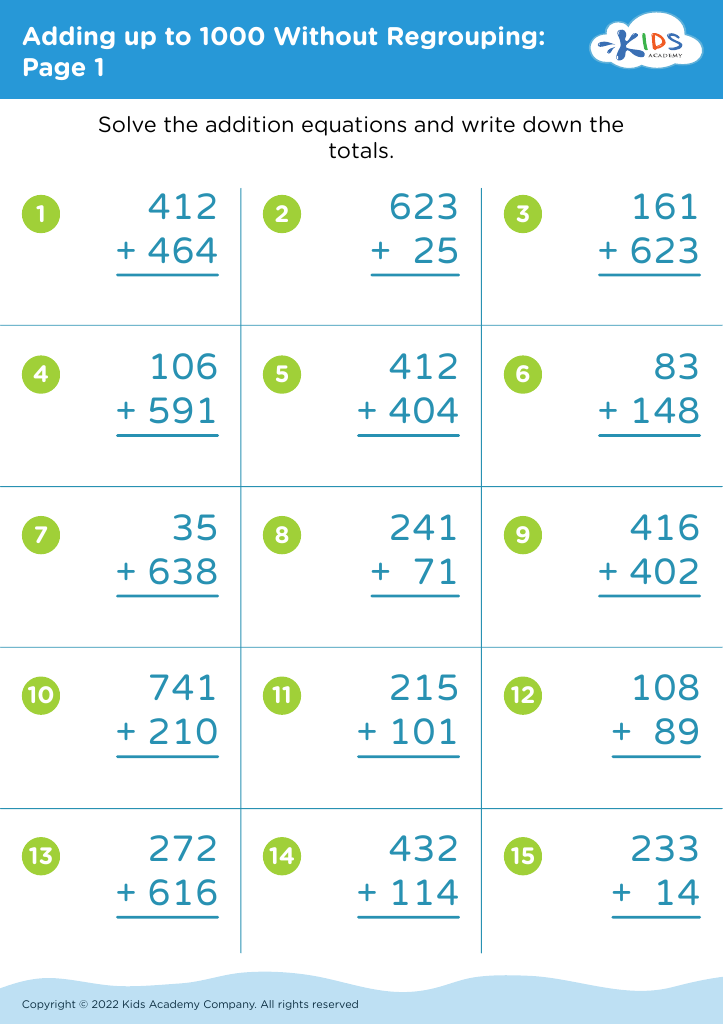
Adding up to 1000 Without Regrouping: Page 1
Worksheet
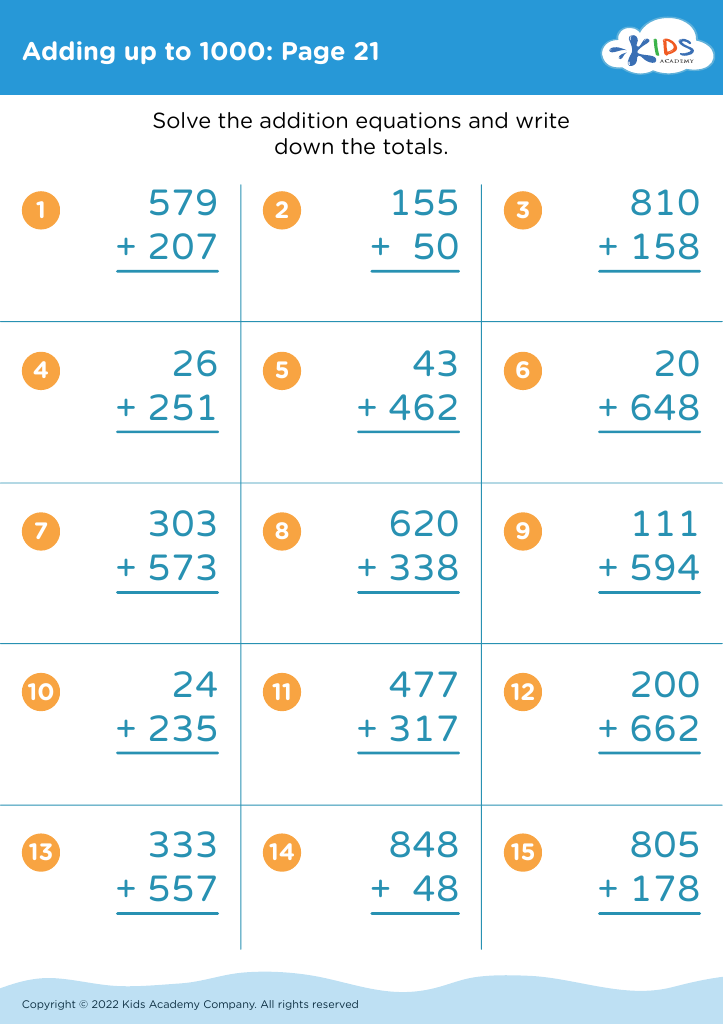
Adding up to 1000: Page 21

Adding up to 1000: Page 21

Adding up to 1000: Page 21
Worksheet
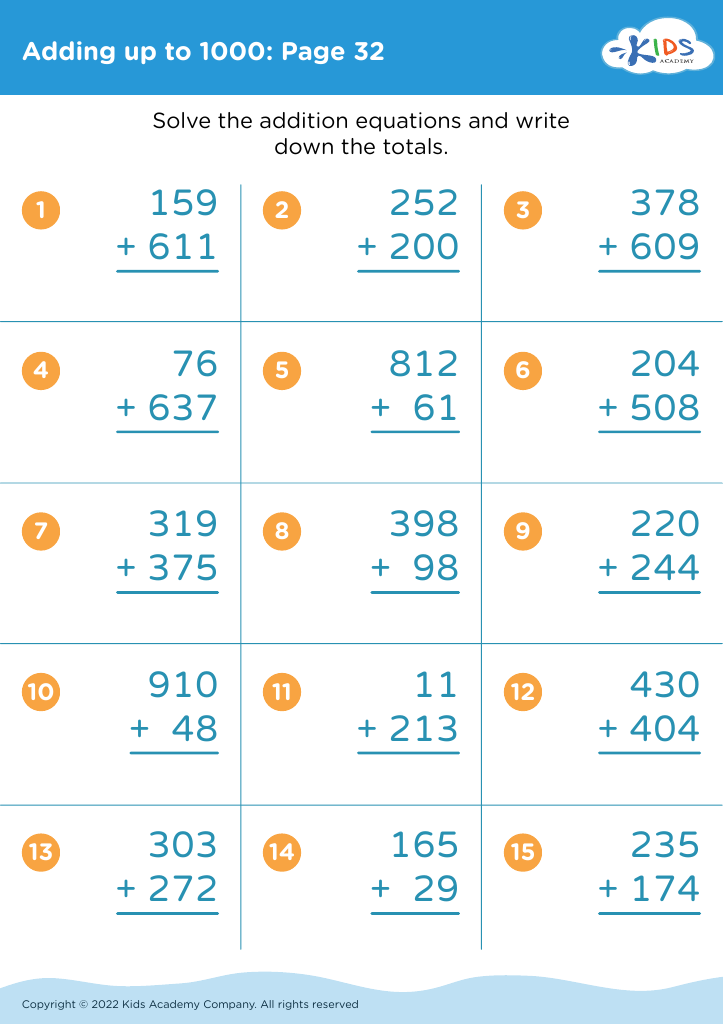
Adding up to 1000: Page 32

Adding up to 1000: Page 32

Adding up to 1000: Page 32
Worksheet
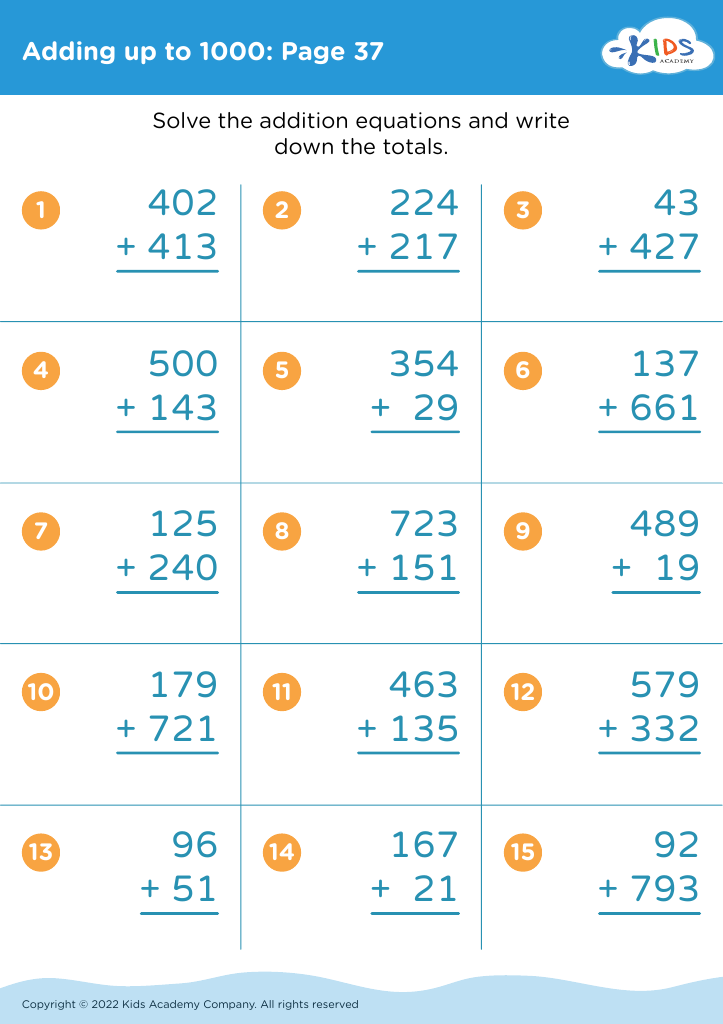
Adding up to 1000: Page 37

Adding up to 1000: Page 37

Adding up to 1000: Page 37
Worksheet
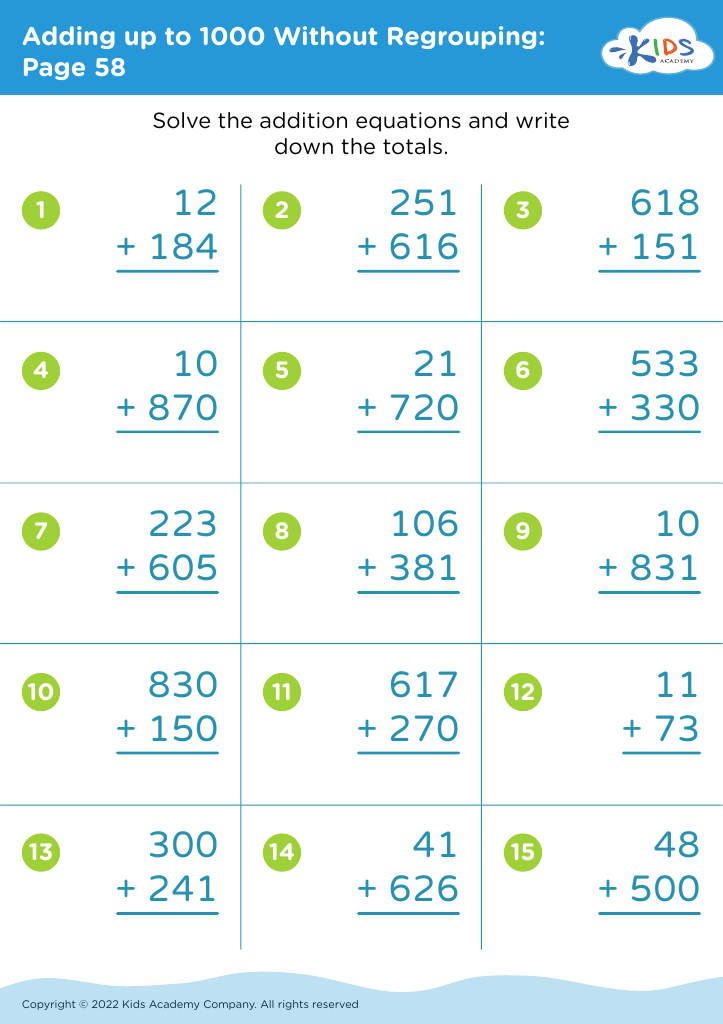
Adding up to 1000 Without Regrouping: Page 58
Worksheet
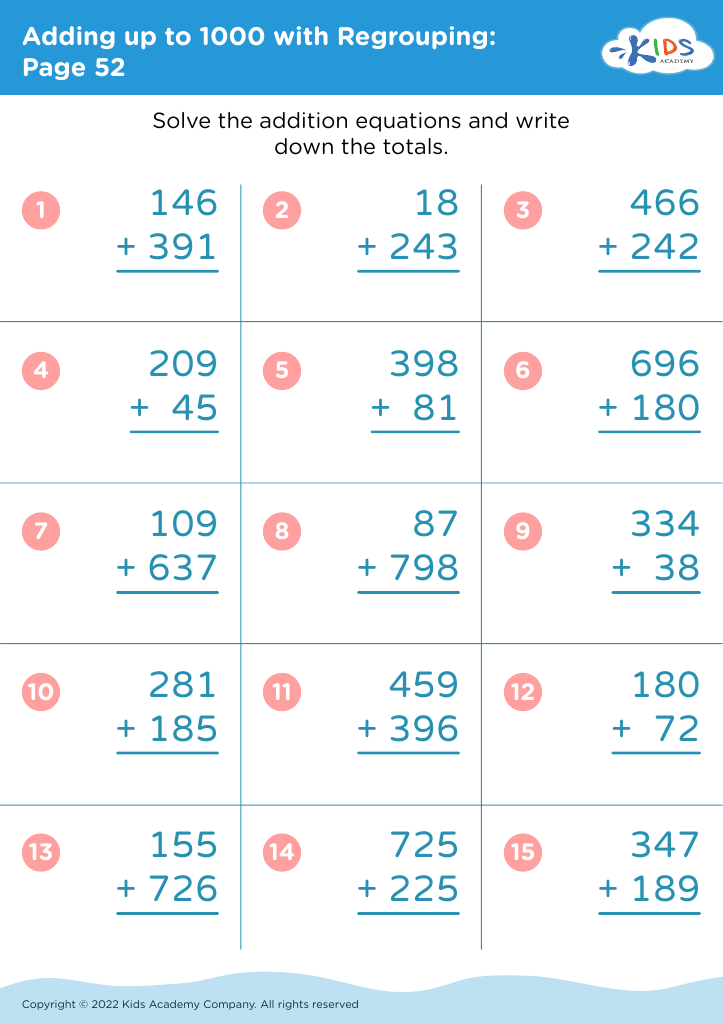
Adding up to 1000 with Regrouping: Page 52
Worksheet
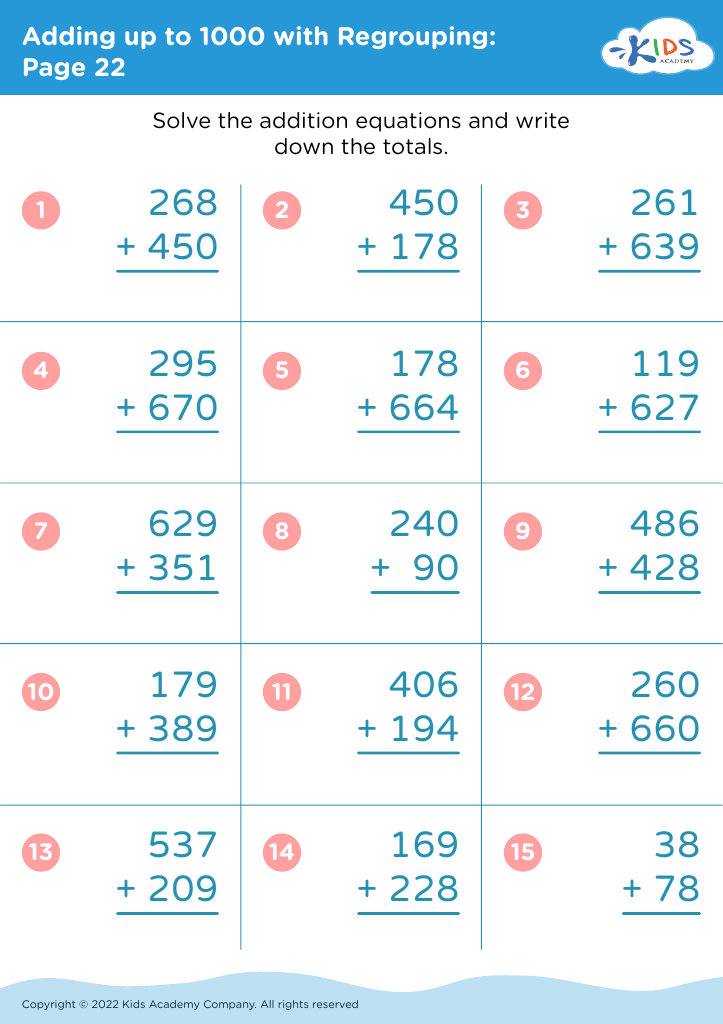
Adding up to 1000 with Regrouping: Page 22
Worksheet
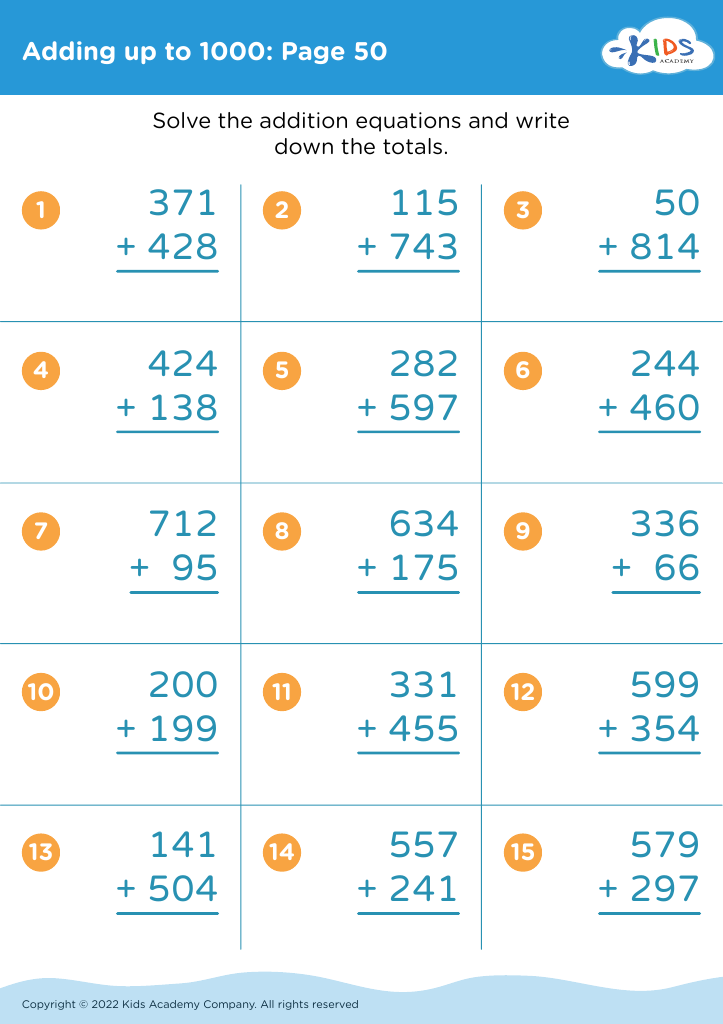
Adding up to 1000: Page 50

Adding up to 1000: Page 50

Adding up to 1000: Page 50
Worksheet
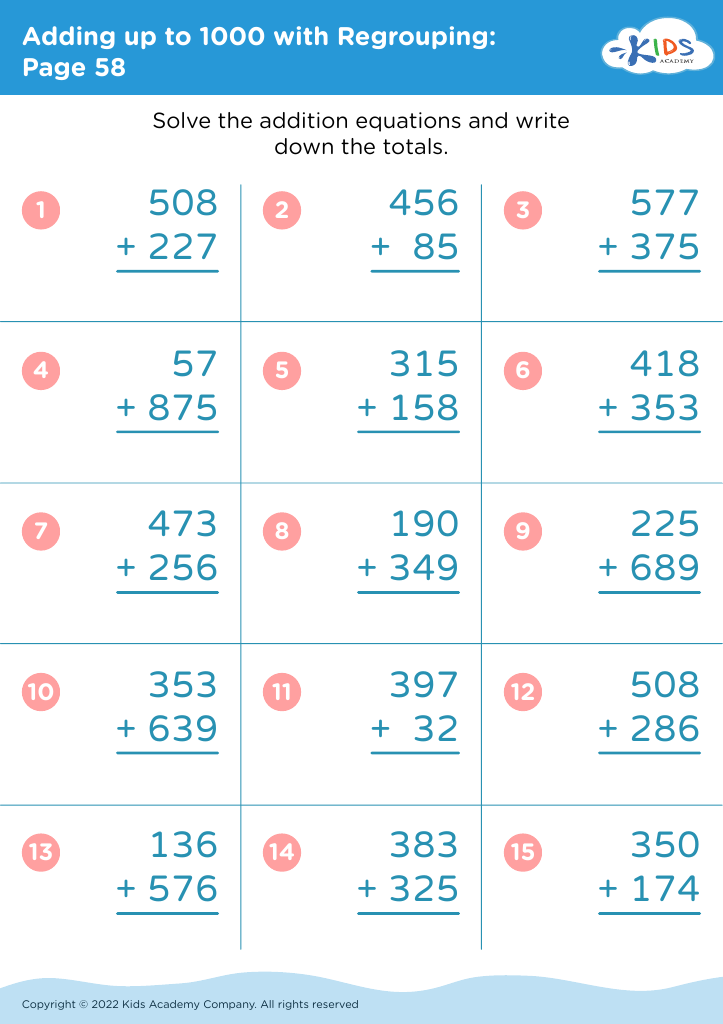
Adding up to 1000 with Regrouping: Page 58
Worksheet
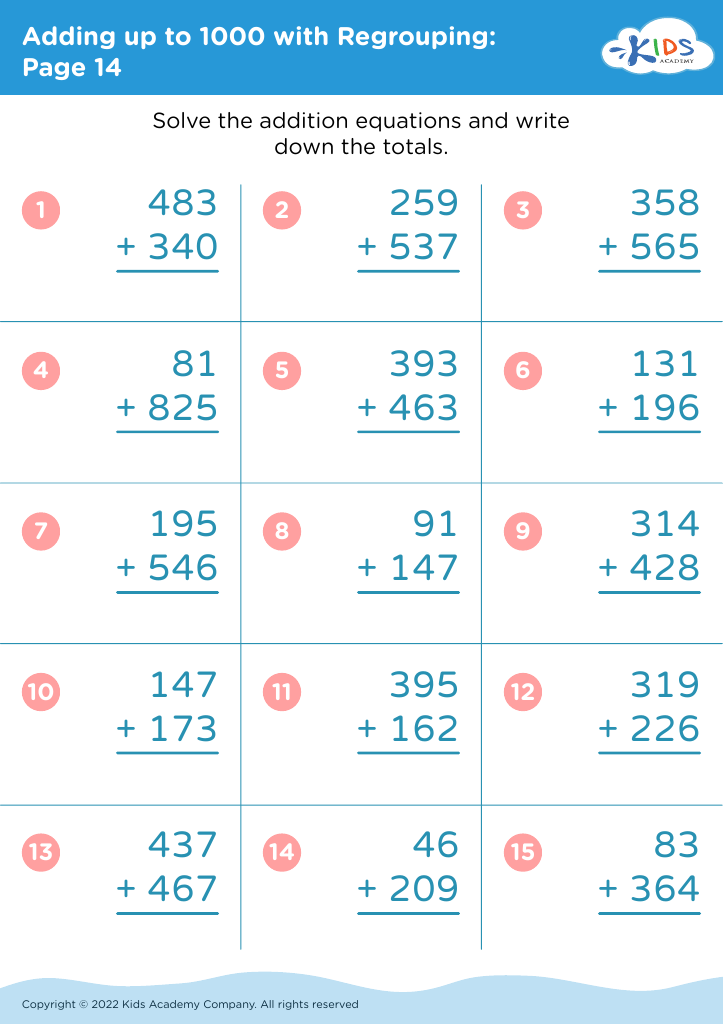
Adding up to 1000 with Regrouping: Page 14
Worksheet
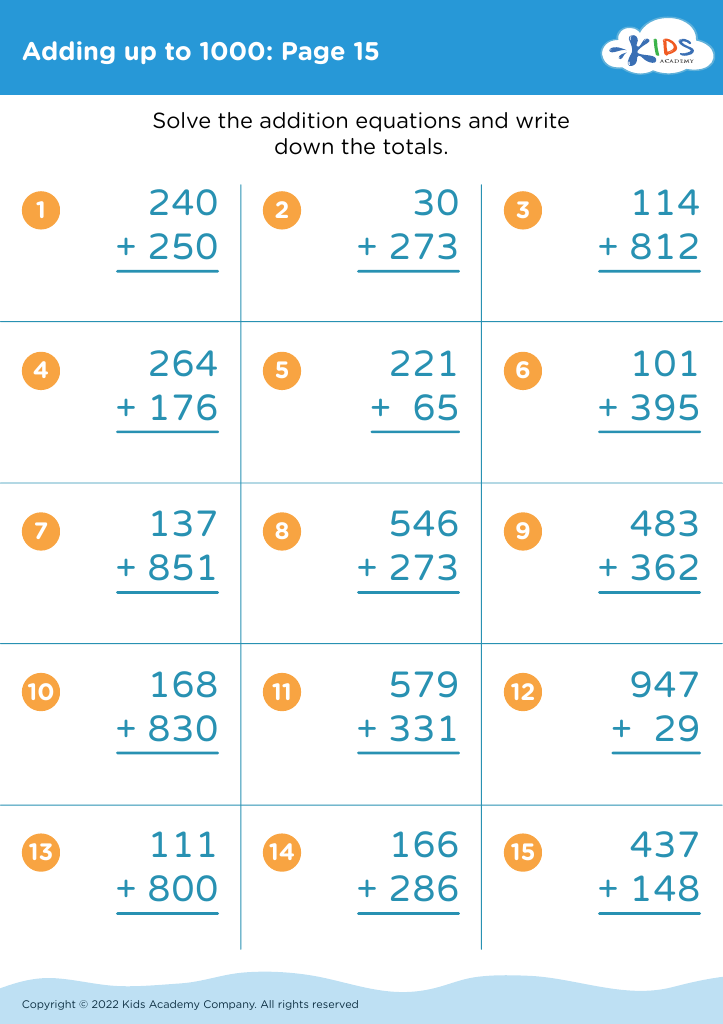
Adding up to 1000: Page 15

Adding up to 1000: Page 15

Adding up to 1000: Page 15
Worksheet
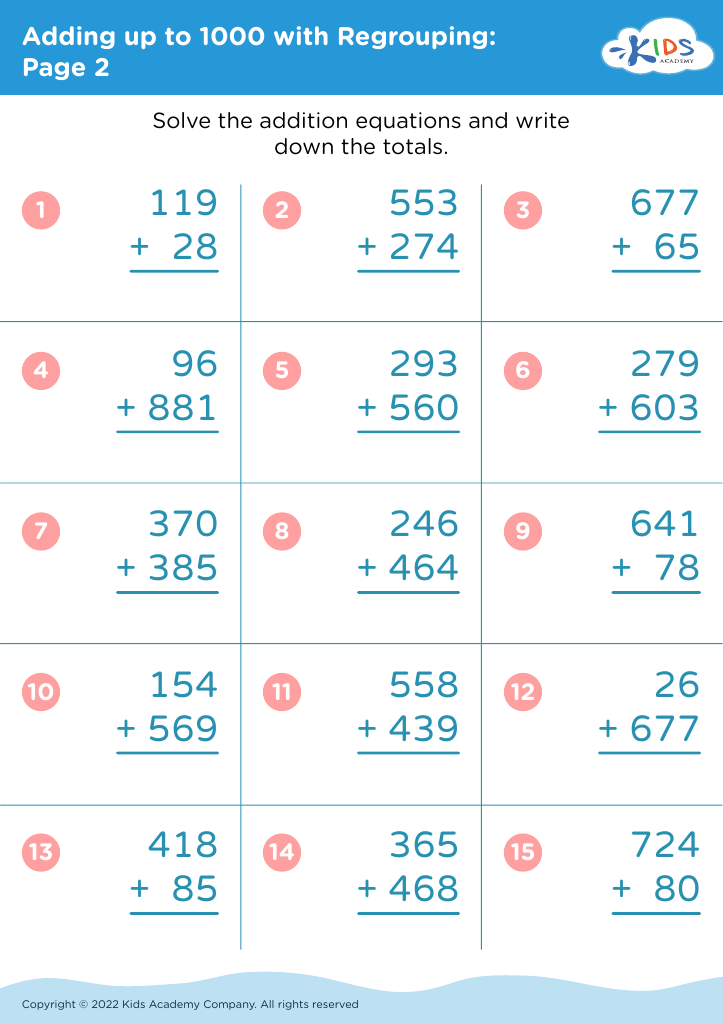
Adding up to 1000 with Regrouping: Page 2
Worksheet
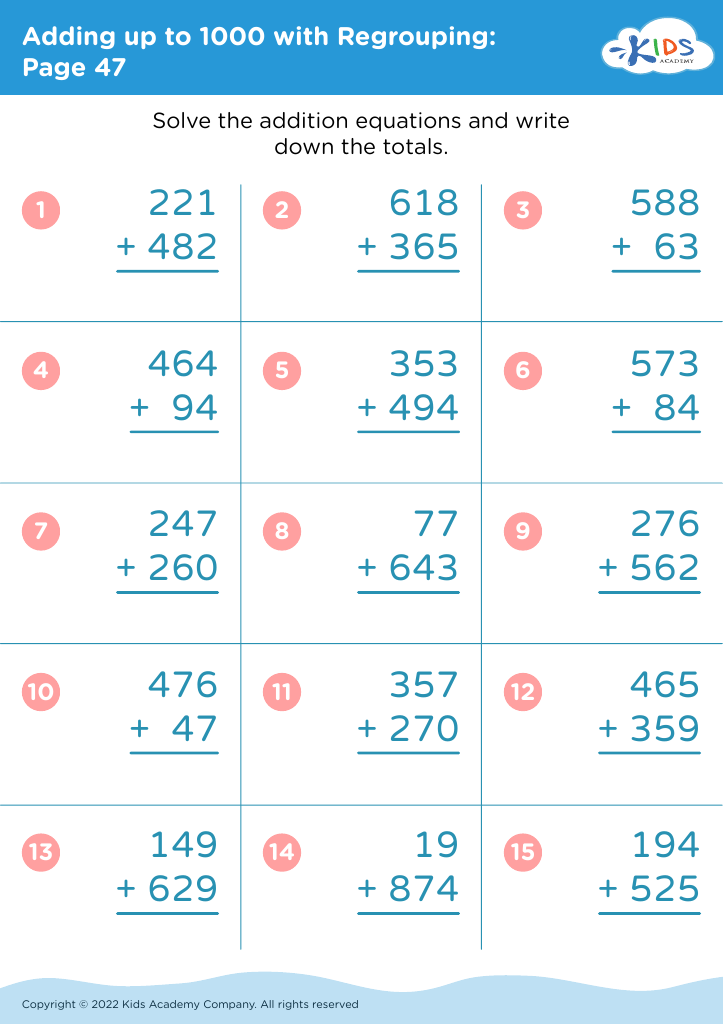
Adding up to 1000 with Regrouping: Page 47
Worksheet
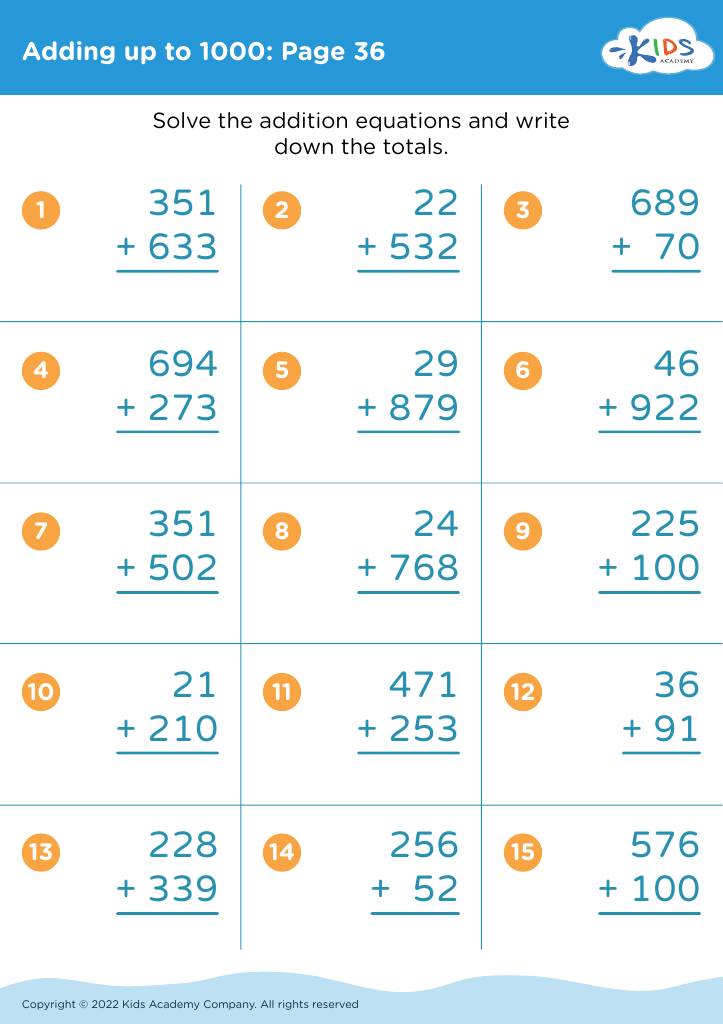
Adding up to 1000: Page 36

Adding up to 1000: Page 36

Adding up to 1000: Page 36
Worksheet
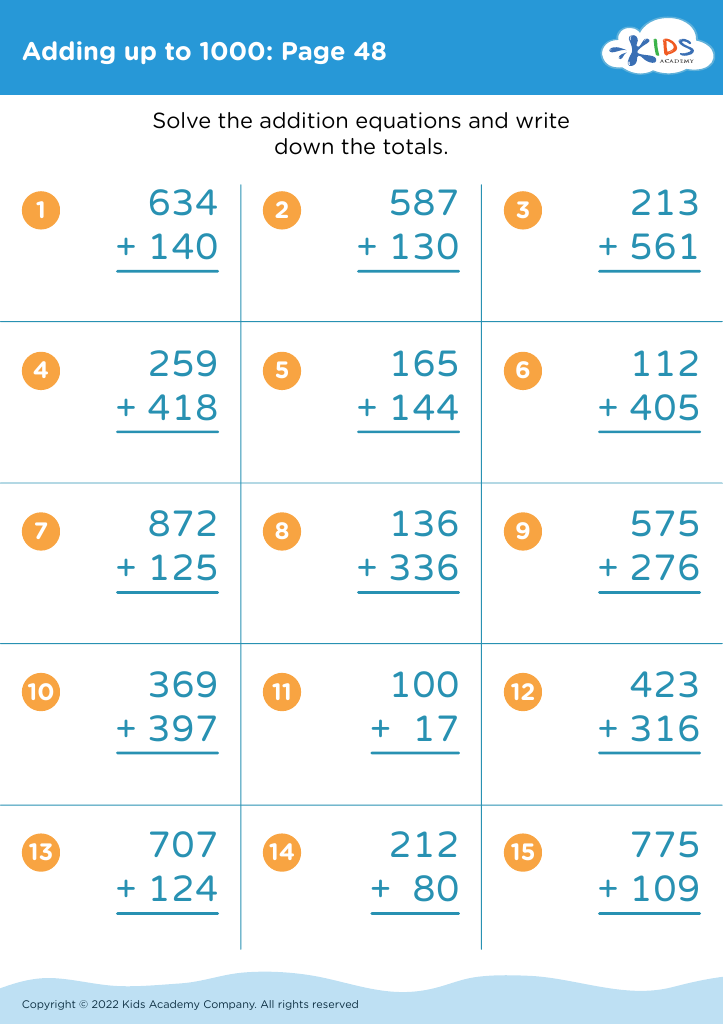
Adding up to 1000: Page 48

Adding up to 1000: Page 48

Adding up to 1000: Page 48
Worksheet
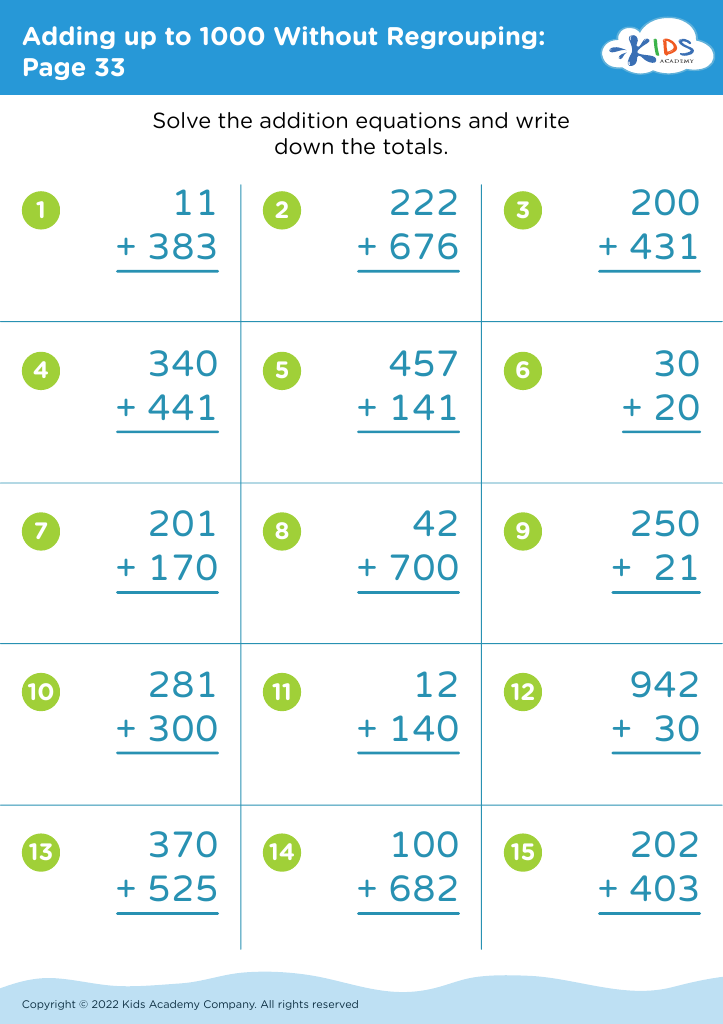
Adding up to 1000 Without Regrouping: Page 33
Worksheet


Helping children practice counting and adding up to 1,000 by ages 6-7 lays a solid foundation for their mathematical development and overall academic success. During these formative years, students' brains are highly receptive to building foundational skills. Regular practice aids in developing number sense, which is crucial for more advanced mathematical concepts they will encounter later.

Counting and adding help children understand the value and sequencing of numbers, fostering critical thinking and problem-solving abilities. These exercises also build persistence and fine motor skills through writing numbers. For children at this age, experiencing math through engaging activities can make learning fun, thereby increasing their confidence in math skills.

For teachers, integrating counting and adding into classroom activities supports curriculum goals and ensures students are meeting educational benchmarks. For parents, practicing these skills at home reinforces classroom learning and provides an opportunity to bond with their children through educational play. Additionally, early competency in these areas reduces future math anxiety and sets children on a path to excel in other subjects, as numerical literacy often correlates with overall academic performance. Investing time in these fundamental skills at a young age opens doors to future success in education and everyday life.