
Critical Thinking Adding up to 1000 Worksheets for Ages 6-7
5 filtered results
Difficulty Level
Grade
Age
-
From - To
Subject
Activity
Standards
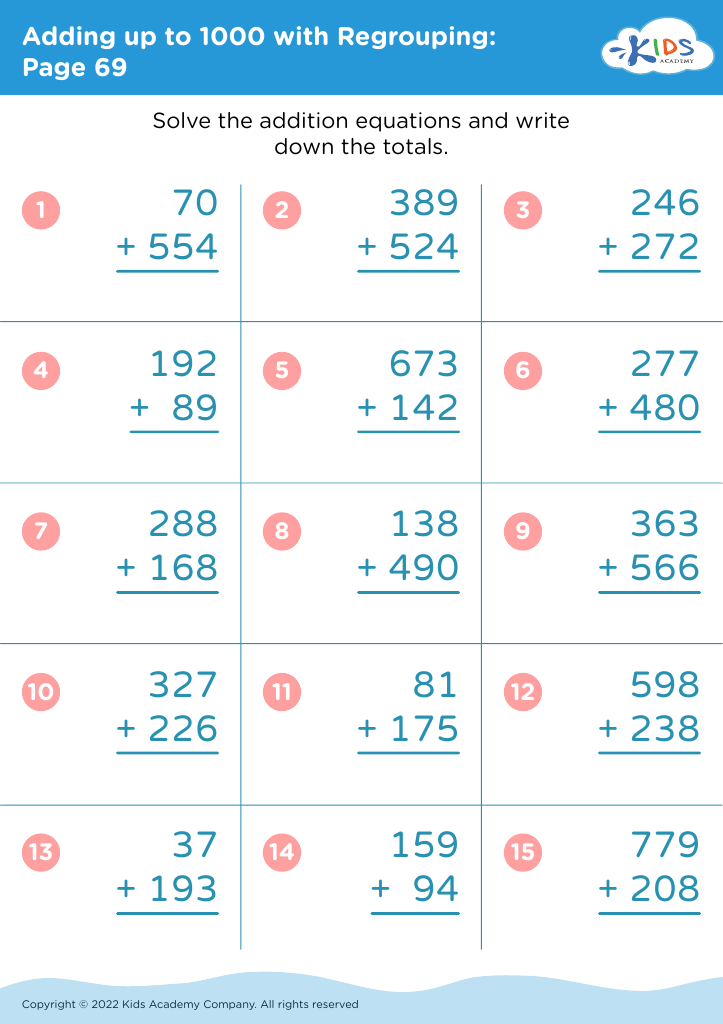
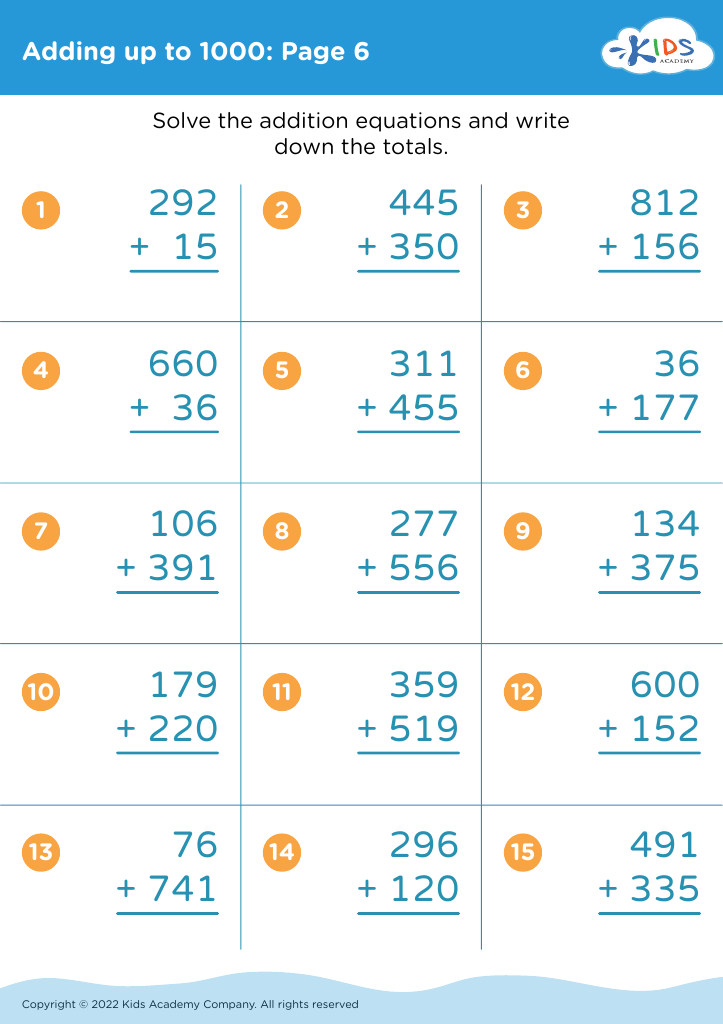
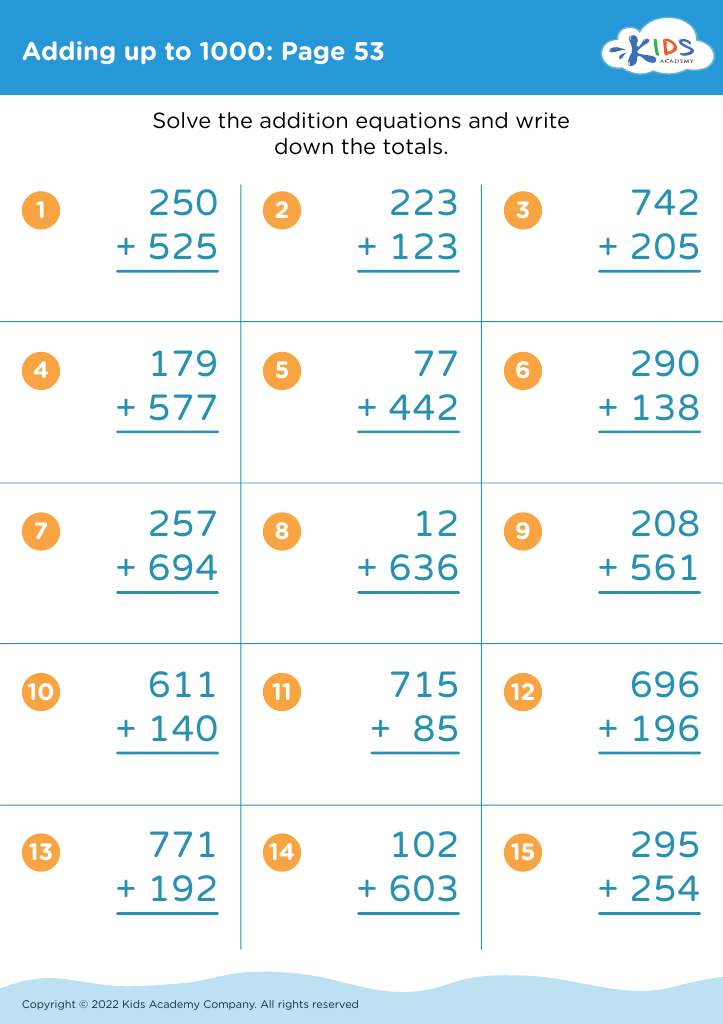
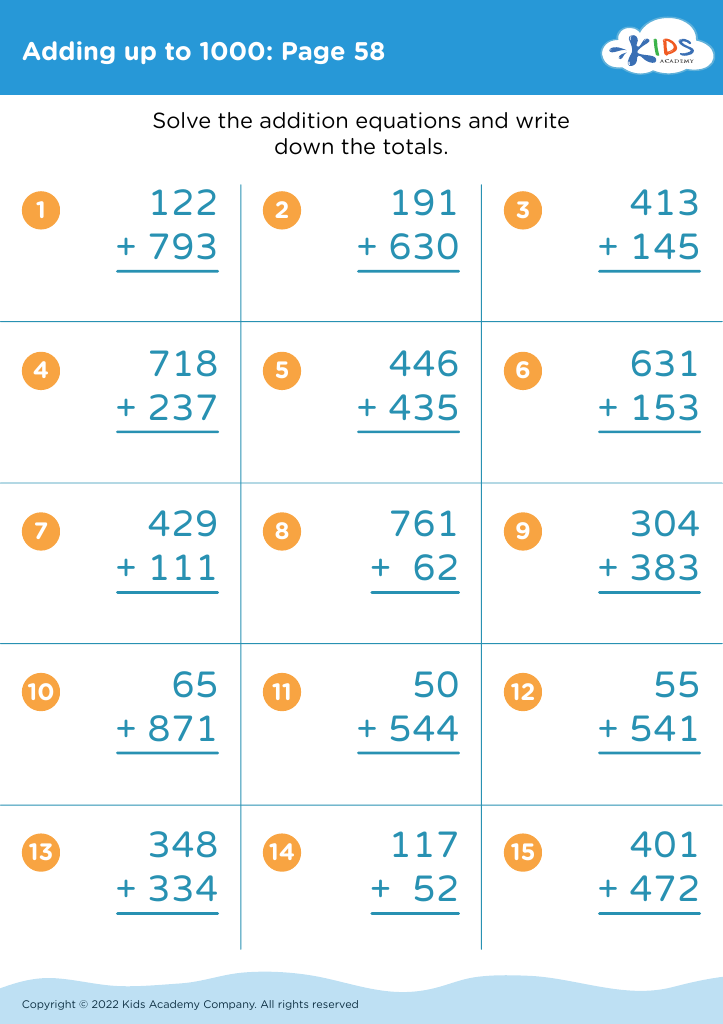
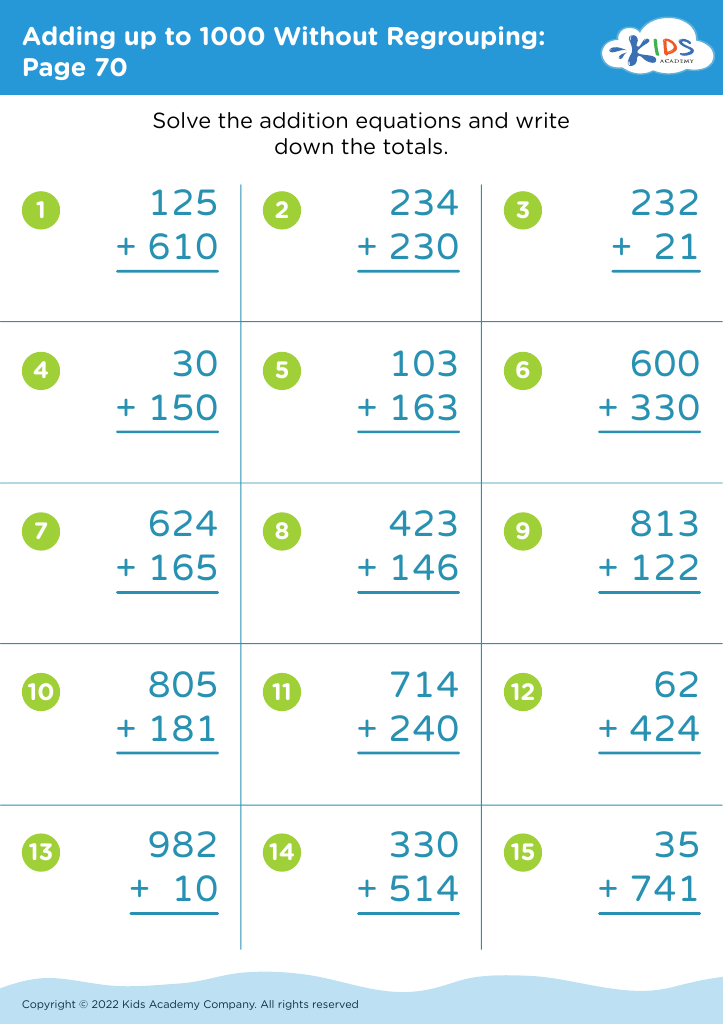
Enhance your child's math skills with our Critical Thinking Adding up to 1000 Worksheets for Ages 6-7. Specifically designed to stimulate young thinkers, these worksheets go beyond simple addition, fostering essential problem-solving and critical thinking abilities. Your child will enjoy engaging, age-appropriate exercises that challenge their understanding of larger numbers and complex calculations. Each worksheet is expertly crafted to blend fun and learning, ensuring that mathematics becomes an exciting adventure. Boost your child's confidence and competence in math with these valuable educational tools. Perfect for both classroom use and extra practice at home.
Favorites
With answer key
Interactive
Join Kids Academy for Free
Who is primarily going to use this learning content?



Critical thinking is an essential skill that aids in children’s cognitive development and problem-solving abilities. Introducing young learners, specifically ages 6-7, to exercises like "Adding Up to 1000" nurtures their analytical minds. At this crucial age, children's brains are highly receptive and adaptable, making it the perfect time to introduce these foundational concepts.
By engaging with advanced addition problems that cumulatively result in 1000, children develop a deeper understanding of numbers and their relationships. This exercise enhances their mental arithmetic capabilities and fosters a strong number sense, crucial for more complex mathematical concepts they'll encounter later. Moreover, tackling higher-sum problems helps children cultivate patience, perseverance, and systematic thinking.
Parents and teachers should care about these activities because they go beyond simple addition. They introduce children to structured thinking, logic, and strategy—skills that are beneficial across all areas of learning and everyday life. Children learn to break down problems into manageable parts, approach tasks methodically, and build confidence in their own abilities through practice and mastery.
Fostering critical thinking in early education sets children up for future academic success and equips them with essential life skills. Such early interventions can have lasting positive impacts, encouraging a lifelong love for learning and an adeptness in logical reasoning.








