Improve math skills Adding up to 1000 Worksheets for Ages 6-7
6 filtered results
-
From - To
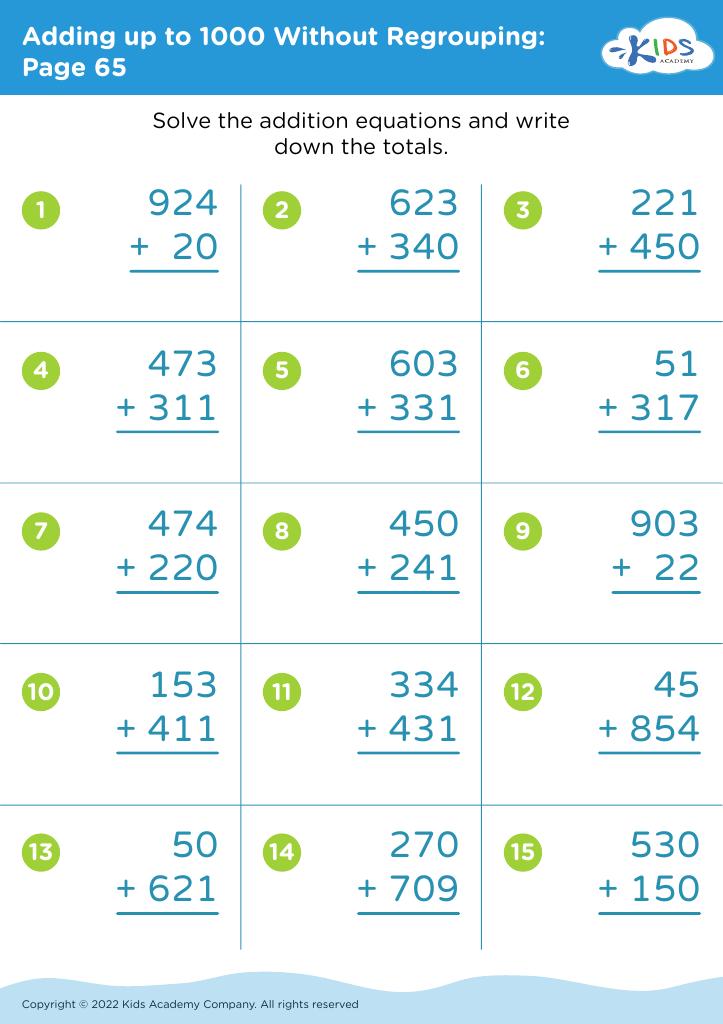
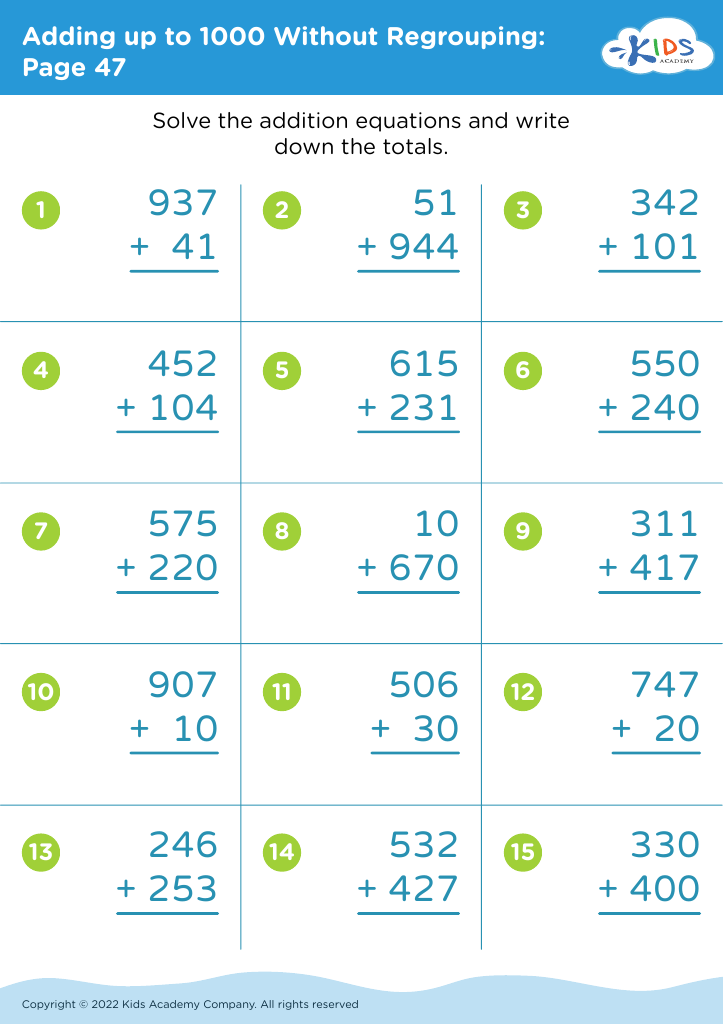
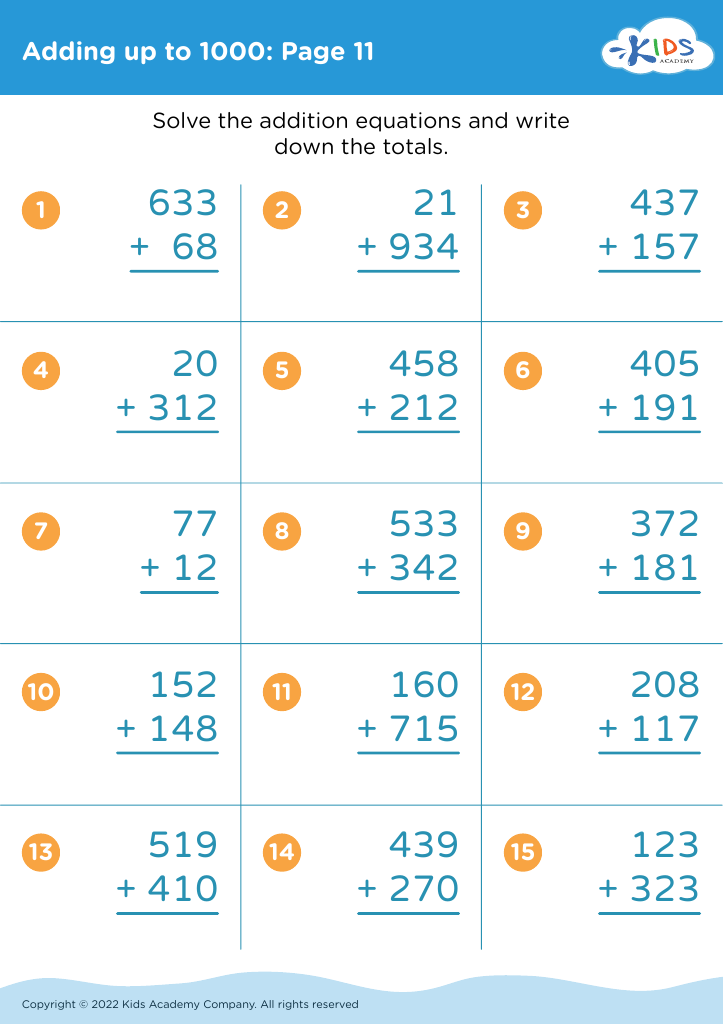
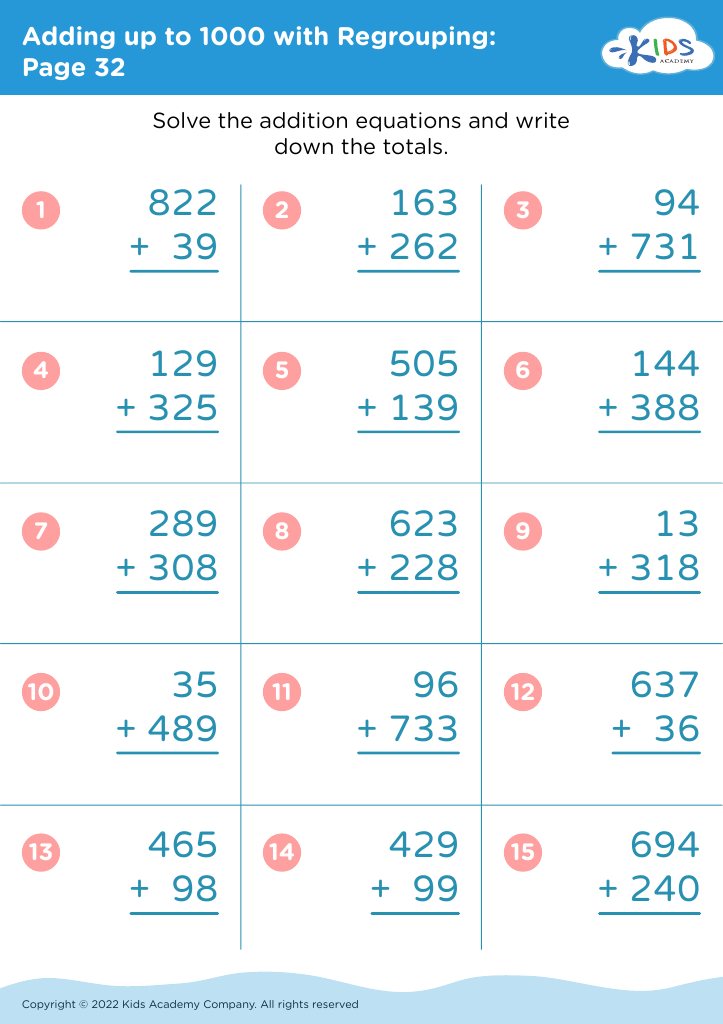
Unlock your child's potential with our "Improve Math Skills: Adding up to 1000 Worksheets for Ages 6-7". These engaging and educational worksheets focus on enhancing addition skills, tailored for young learners. Your kids will develop confidence and accuracy in math through fun exercises and interactive challenges. Perfectly crafted by experienced educators to support the curriculum, these worksheets provide ample practice for kids to master adding numbers up to 1000. Whether at home or in the classroom, our worksheets make learning math a delightful experience, fostering a love for numbers and problem-solving. Start their math journey today with Kids Academy!
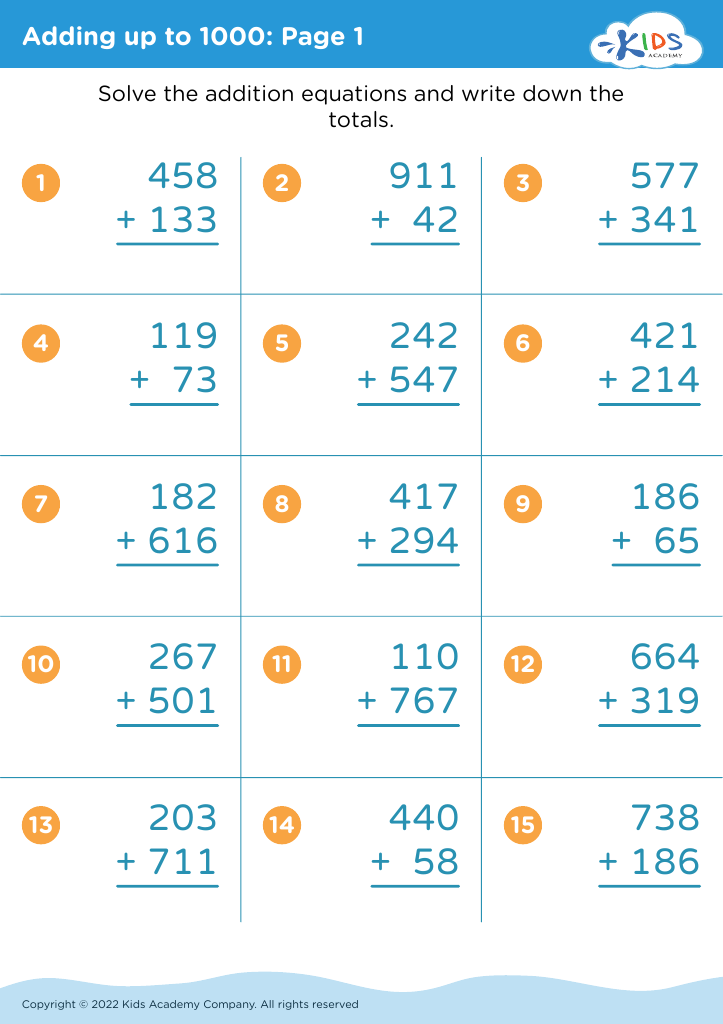
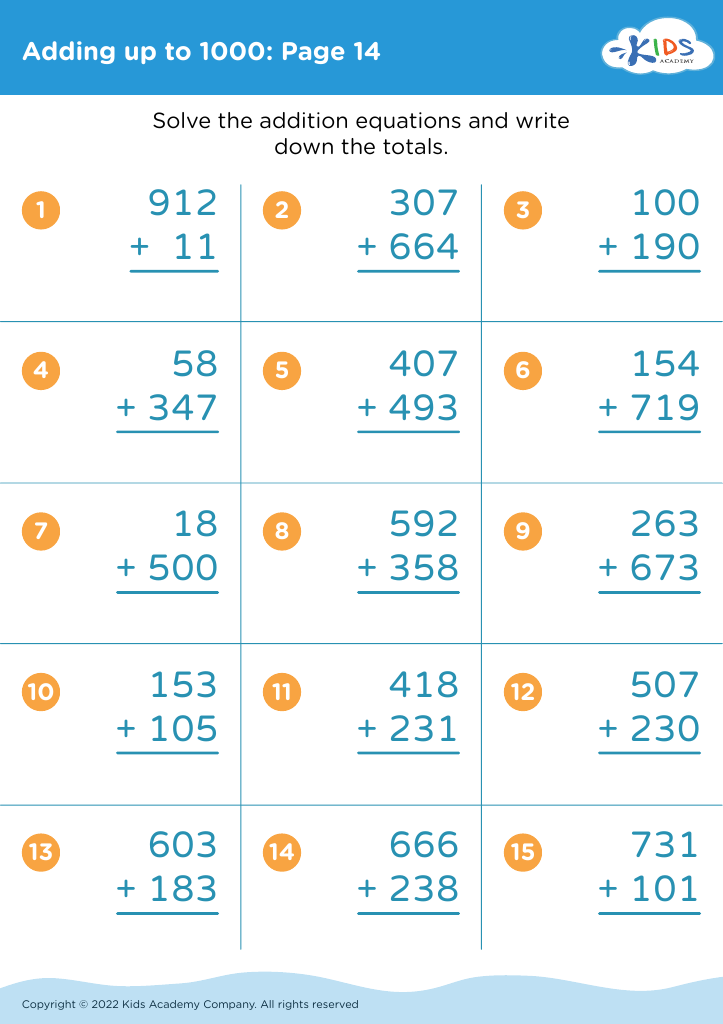



Parents and teachers should place significant importance on improving math skills, particularly adding up to 1000, for children aged 6-7. At this age, foundational math skills are critical as they establish the basis for future academic success. Strengthening their ability to add numbers up to 1000 not only boosts arithmetic skills but also enhances problem-solving abilities, logical thinking, and mental calculation.
Early numeracy skills are predictors of later academic achievement. Competence in math during early childhood is linked to proficiency in more complex mathematical concepts and operations encountered in higher grades. Additionally, math skills are integral beyond the classroom; they are essential for daily activities such as budgeting, cooking, and understanding measurements.
For parents, supporting their child's mathematical development can lead to a greater understanding of their child's academic strengths and areas needing improvement. For teachers, fostering strong math skills at a young age ensures that students are well-prepared for the curriculum that builds sequentially higher-level math concepts. Creating productive learning environments where young children can experiment with and master basic arithmetic boosts their self-confidence and enjoyment in learning, translating to a positive attitude toward math overall. Therefore, prioritizing the development of robust addition skills up to 1000 during this impressionable age fosters long-term educational benefits and practical life skills.








