Math problem-solving Adding up to 1000 Worksheets for Ages 6-7
4 filtered results
-
From - To
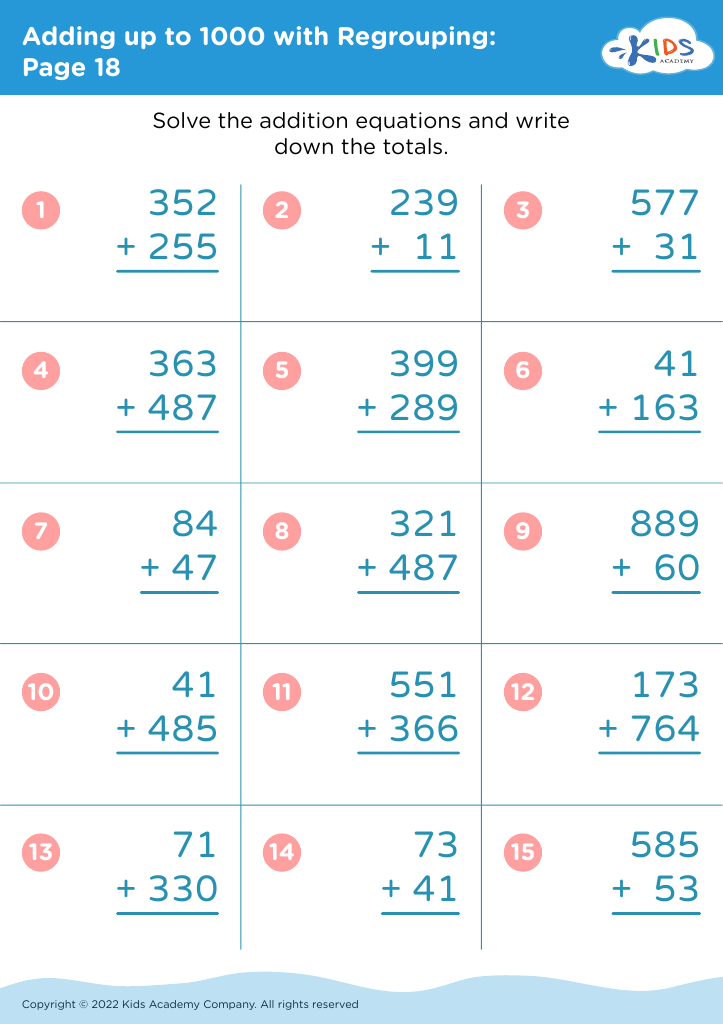
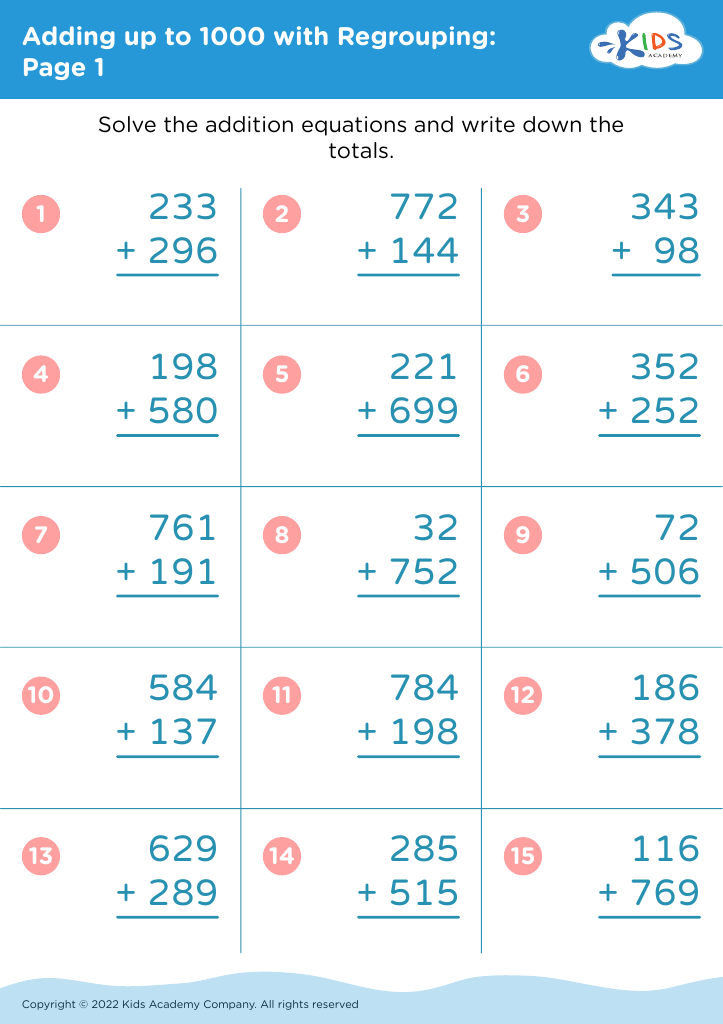
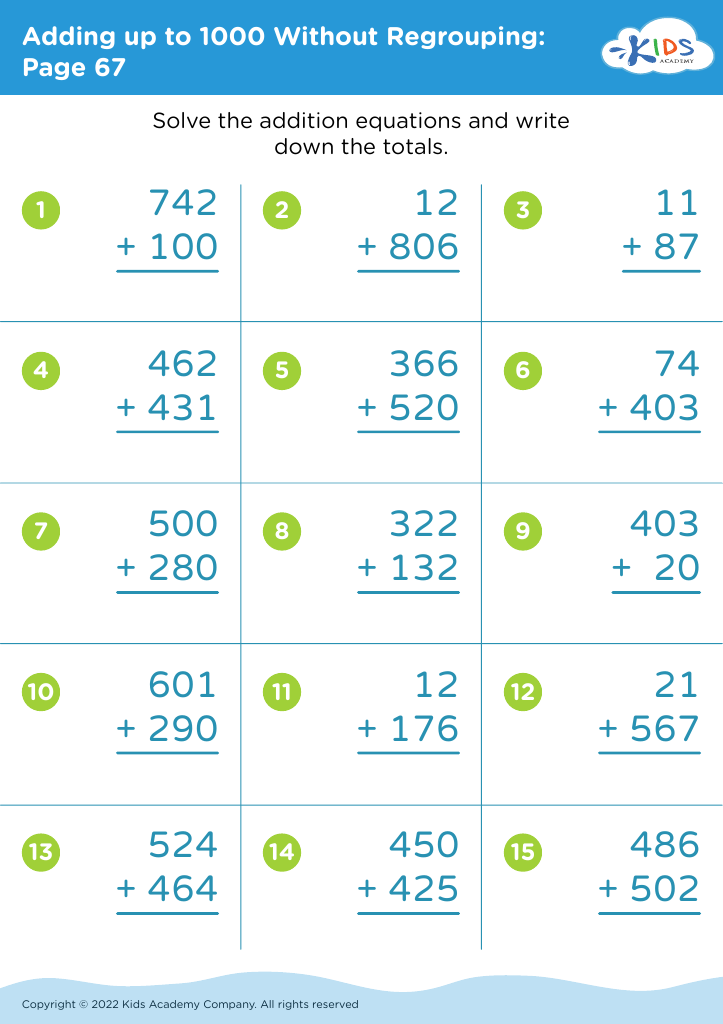
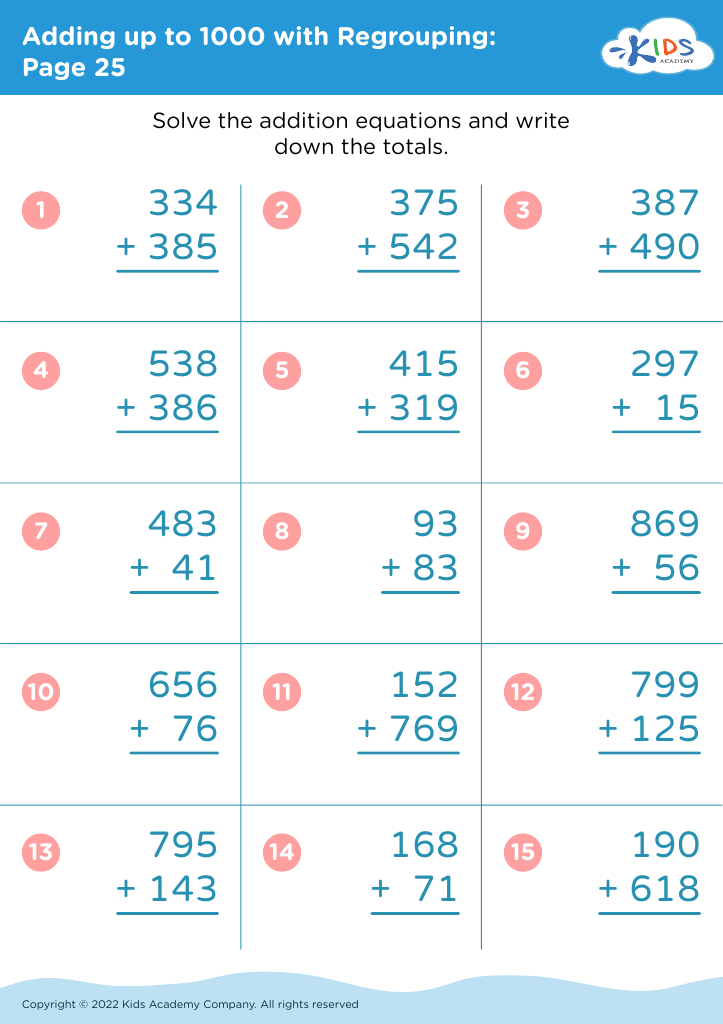
Boost your child's math skills with our engaging "Adding Up to 1000 Worksheets" designed for ages 6-7. These worksheets offer fun, interactive exercises that make learning to solve math problems enjoyable. Your young learners will practice addition, develop critical thinking, and enhance their problem-solving abilities, all while working towards mastering numbers up to 1000. Each worksheet includes colorful visuals and diverse questions that cater to different learning styles. These resources are perfect for in-class activities or at-home learning, helping to reinforce essential math concepts. Foster a strong mathematical foundation and watch your child gain confidence as they tackle new challenges!



Math problem-solving, especially around concepts like adding up to 1000, is crucial for children aged 6 to 7. At this developmental stage, children are still honing their basic arithmetic skills, and learning to add numbers allows them to build a solid foundation for future math concepts. Understanding how to manipulate numbers promotes cognitive development and enhances critical thinking as students learn to approach problems from various angles.
Engaging in math problem-solving helps children enhance their reasoning and analytical skills. It encourages perseverance as they learn to explore different strategies to reach an answer. This skill transfers beyond the classroom, as children face challenges in everyday situations where they need to quantify, compare, or calculate.
Moreover, problem-solving fosters a positive attitude toward math. When parents and teachers emphasize practical applications, such as adding up to 1000 through games or real-life situations, they motivate children to see math not just as a subject but as a valuable life skill. This encouragement builds their confidence and enthusiasm for learning. Ultimately, supporting children in mastering mathematical problem-solving empowers them to succeed academically and grow into lifelong learners.








