Number identification Adding up to 1000 Worksheets for Ages 6-7
3 filtered results
-
From - To
Introduce your child to essential math skills with our "Number Identification Adding Up to 1000 Worksheets" for ages 6-7. These engaging worksheets are designed to help young learners recognize, write, and manipulate numbers up to 1000. With typically fun themes and colorful visuals, children will enjoy exploring number patterns while developing their arithmetic fluency. Each worksheet focuses on honing critical thinking and problem-solving skills, all while encouraging confidence in handling numbers. Ideal for home education, classrooms, or tutoring, these worksheets provide a comprehensive approach to foundational math concepts. Download now and watch your child's number skills soar!
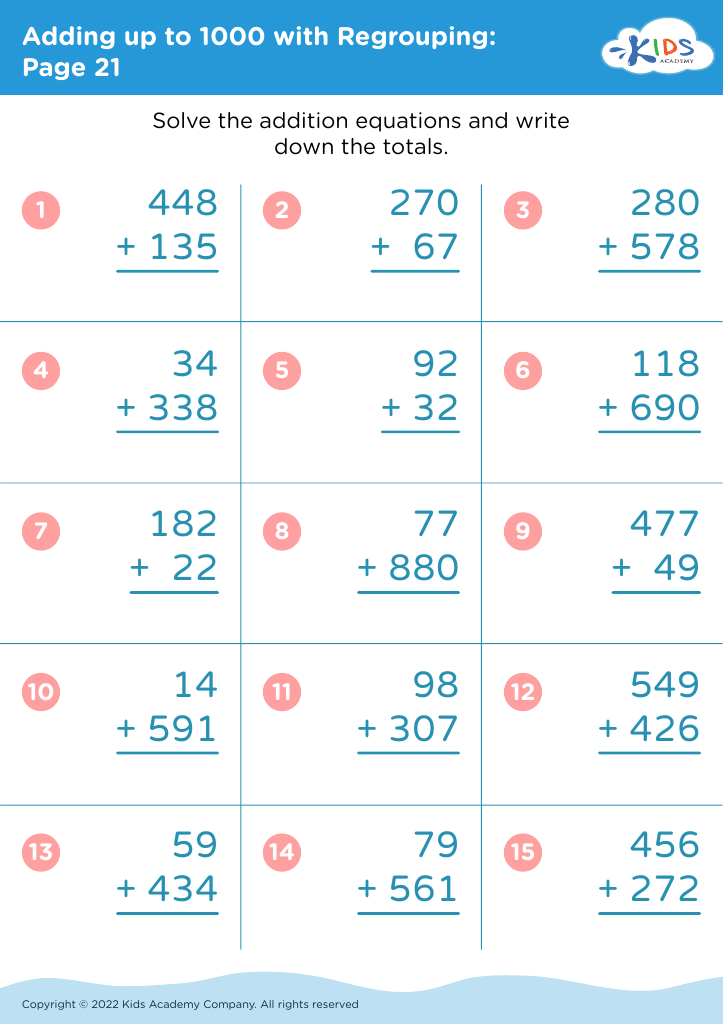
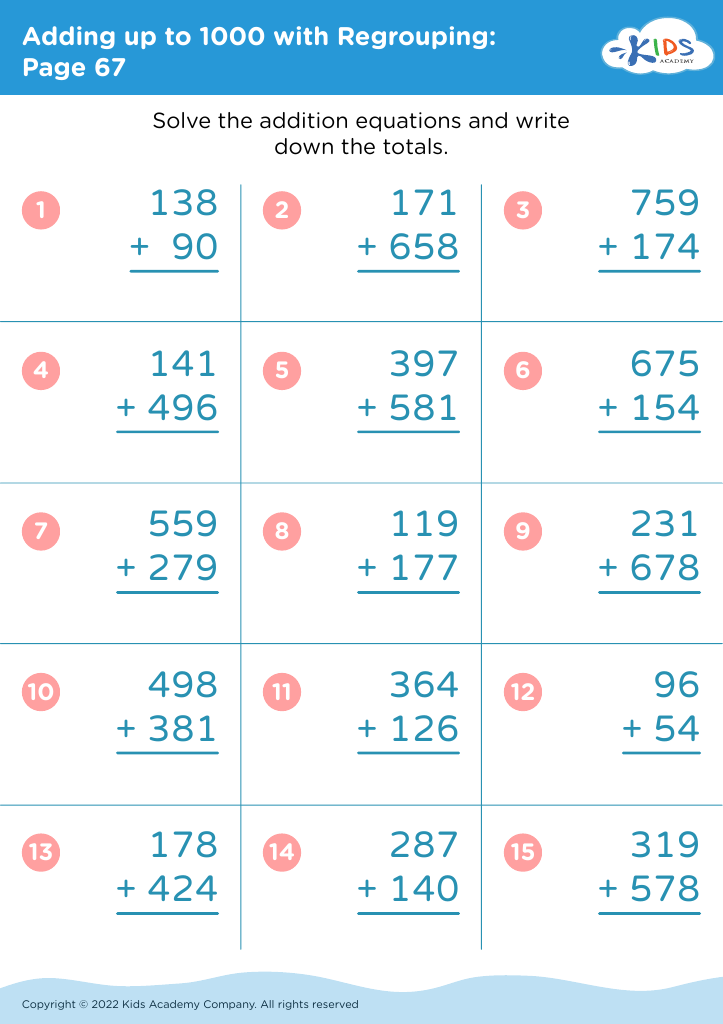
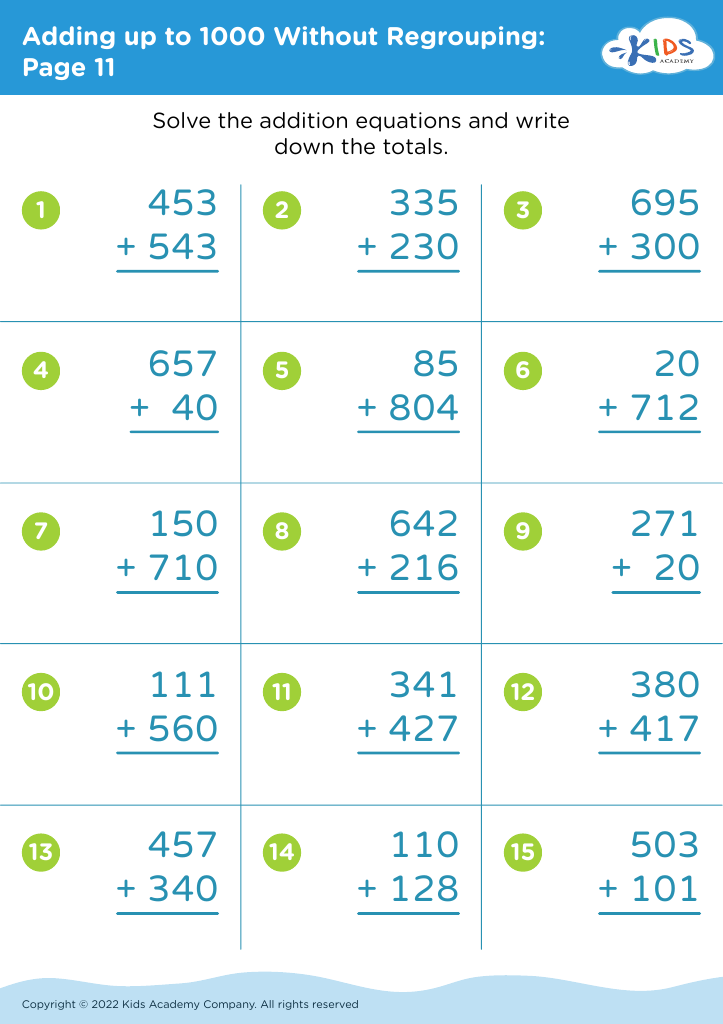



Number identification, particularly adding up to 1000, is a crucial skill for children aged 6-7, and it's essential for parents and teachers to pay close attention to it. At this age, children develop foundational mathematical skills that will pave the way for more complex concepts later on. Number identification enhances a child’s ability to understand quantity, as well as the relationships between numbers.
Being able to identify and work with numbers up to 1000 helps children grasp the basic principles of addition, subtraction, and even early multiplication. It strengthens their numerical fluency, making them more comfortable with mathematics in everyday situations, such as shopping or sharing items.
Furthermore, numeracy confidence gained from mastering these skills positively impacts a child’s overall academic performance. Recognizing numbers and their values also supports critical thinking and problem-solving capabilities, which are vital in all areas of learning.
Finally, fostering a strong foundation in number identification bolsters a child's self-esteem and enthusiasm for math, laying the groundwork for a successful journey in education and lifelong learning. Parents and teachers should collaborate to ensure that children are supported in achieving these early mathematical milestones.








