Number Recognition Adding up to 1000 Worksheets for Ages 6-7 - Page 2
31 filtered results
-
From - To
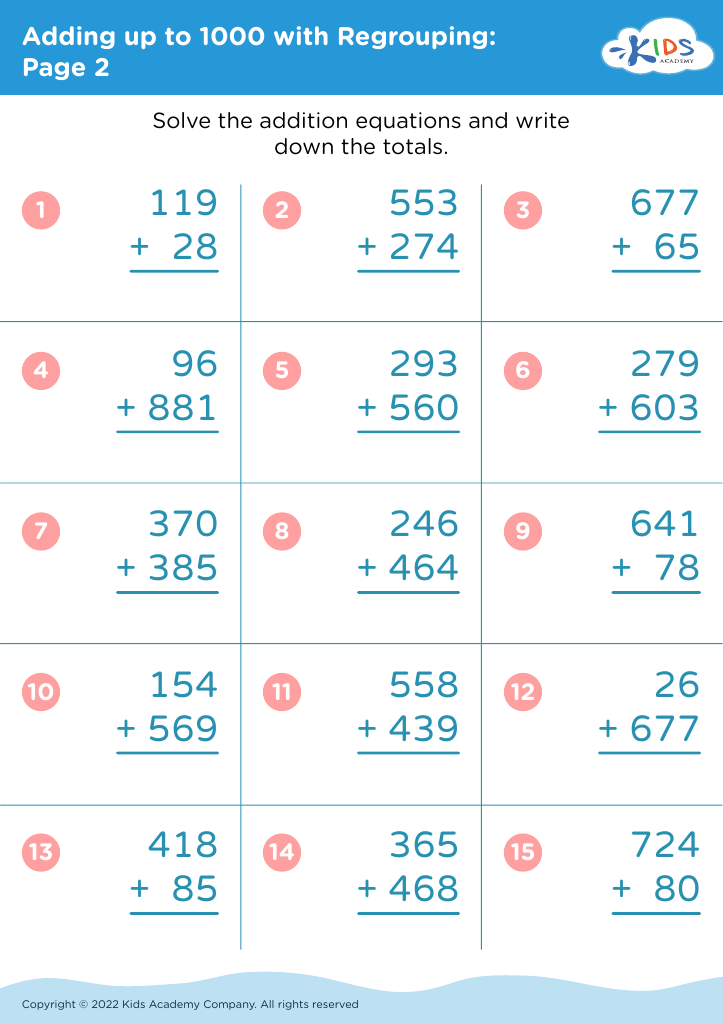
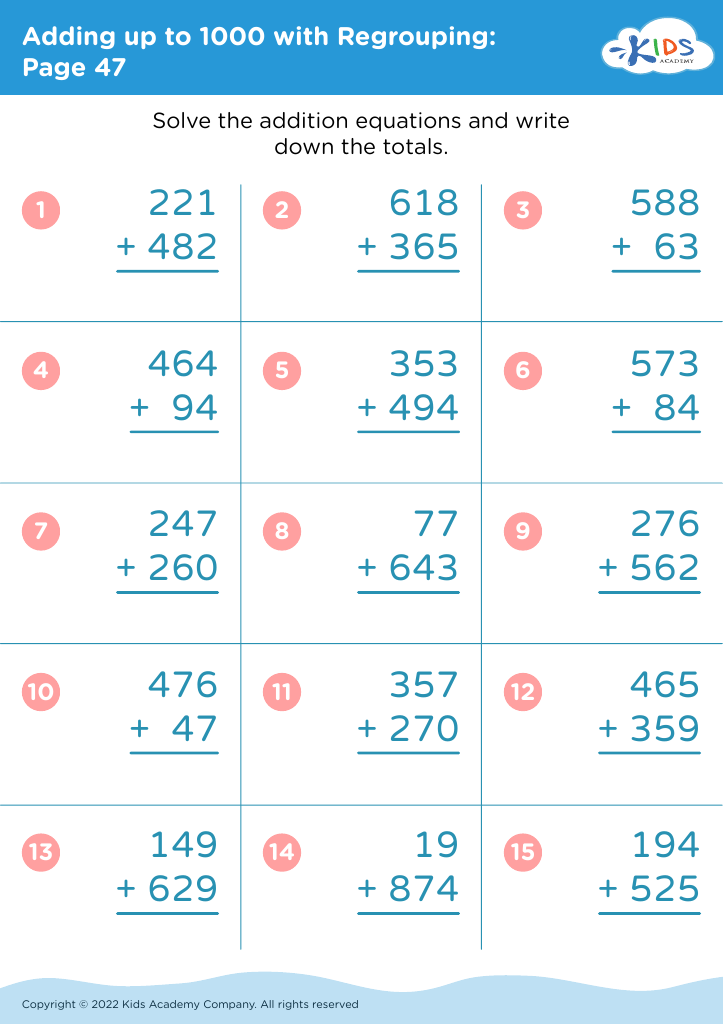
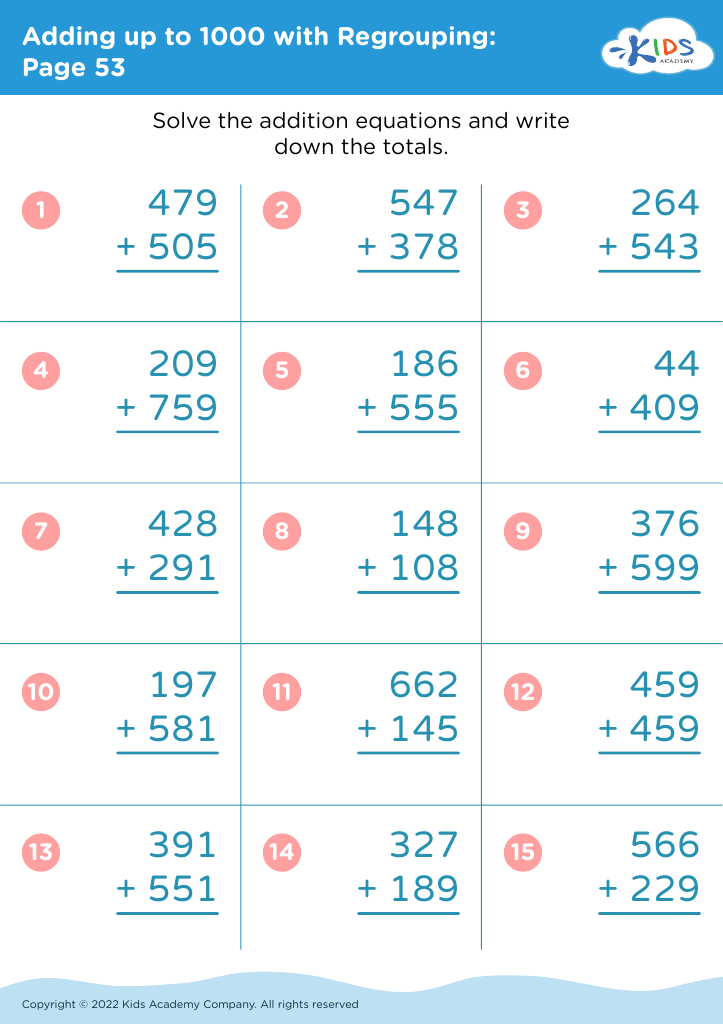
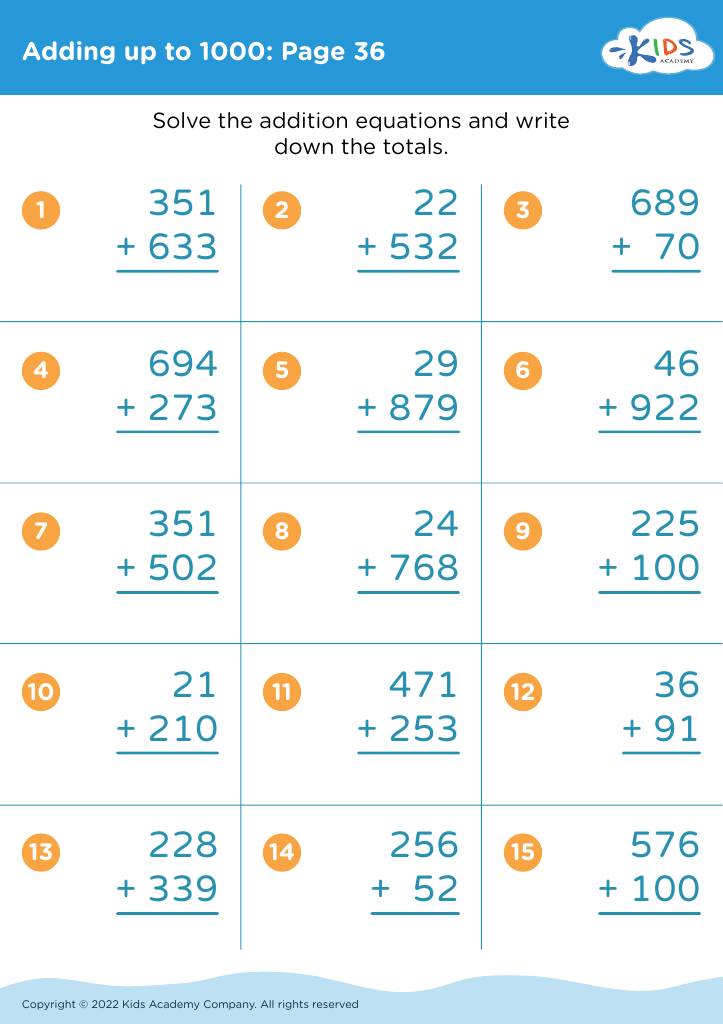
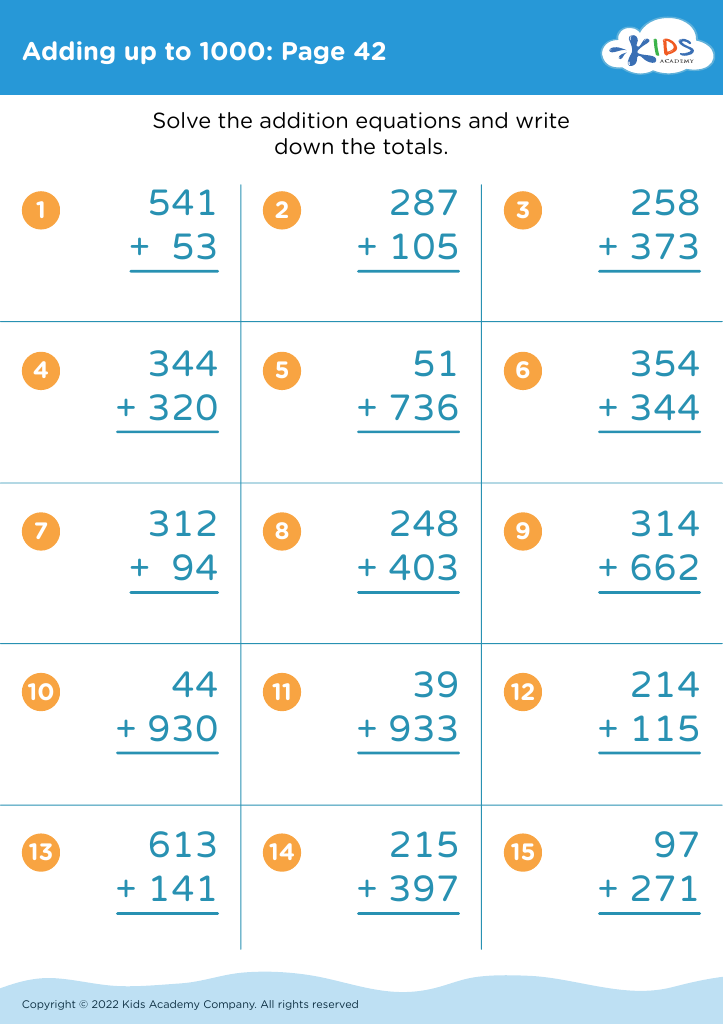
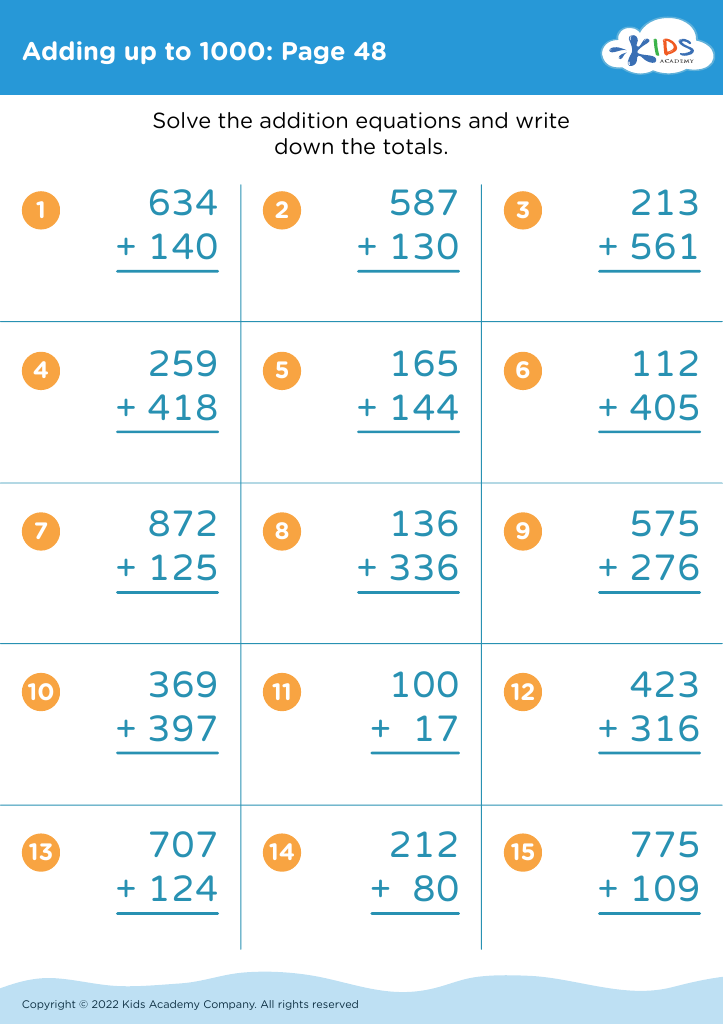
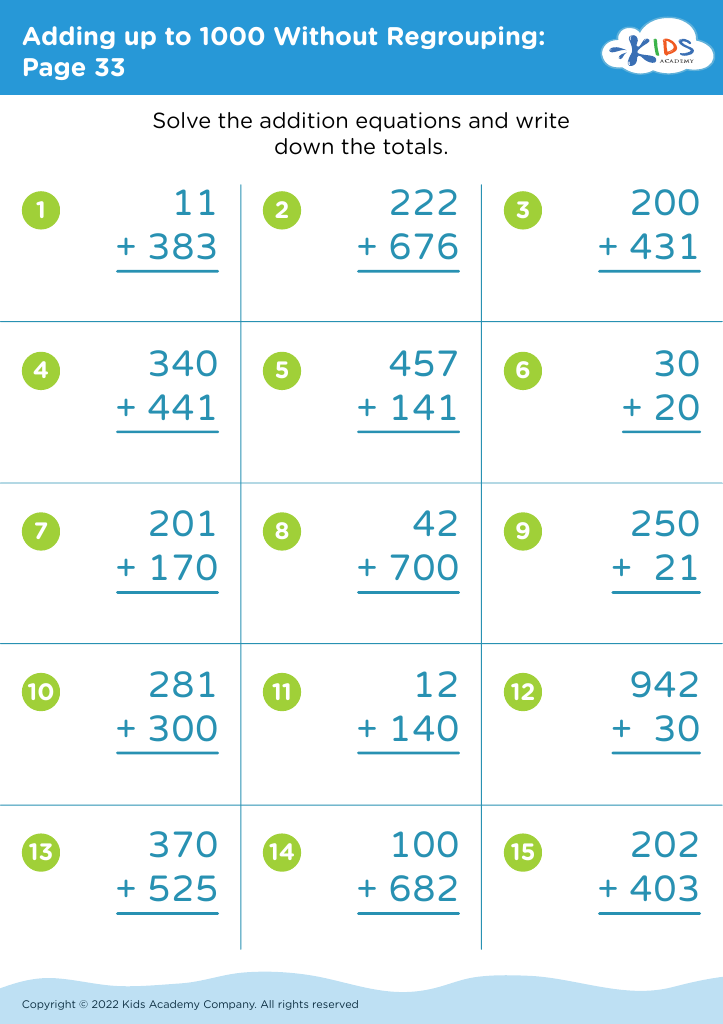




Number recognition is a fundamental skill for children aged 6-7 that lays the groundwork for their overall math proficiency. Understanding numbers up to 1000 enhances cognitive development and builds a solid foundation for future mathematical concepts, such as addition, subtraction, and early problem-solving skills. When children recognize and understand numbers, they become more confident in their abilities to tackle challenging math problems.
For parents and teachers, number recognition facilitates a more engaging and interactive learning environment. It encourages the use of games and activities that make learning fun, fostering a positive attitude toward mathematics. Moreover, strong number recognition can lead to improved scores in standardized testing, which can boost a child's self-esteem and motivation.
Additionally, mastering numbers up to 1000 enables children to engage in everyday life, from understanding prices to measuring ingredients. This practical application of number skills reinforces learning and demonstrates the relevance of math outside the classroom. Ultimately, fostering number recognition equips children with essential skills not only for academic success but also for navigating daily tasks, building a strong foundation for lifelong learning and problem-solving.








