Practice subtraction Adding up to 1000 Worksheets for Ages 6-7
3 filtered results
-
From - To
Enhance your child's mathematical skills with our "Practice Subtraction Worksheets for Ages 6-7," specifically designed to help young learners tackle subtraction while adding up to 1000. These engaging worksheets provide a variety of subtraction exercises that foster problem-solving abilities and boost confidence in math. Each printable activity promotes independent learning and is tailored to the developmental needs of 6-7-year-olds, ensuring a fun yet educational experience. By using these worksheets, children will build a solid foundation in subtraction, preparing them for more complex math concepts. Download your free worksheets today and watch your child's math skills flourish!
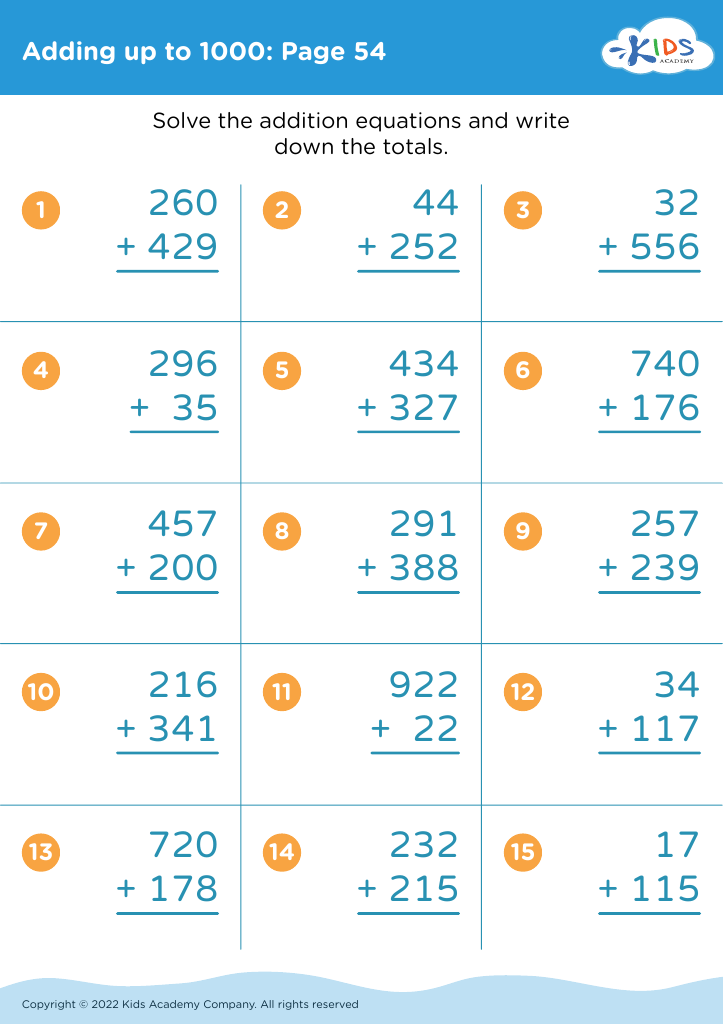
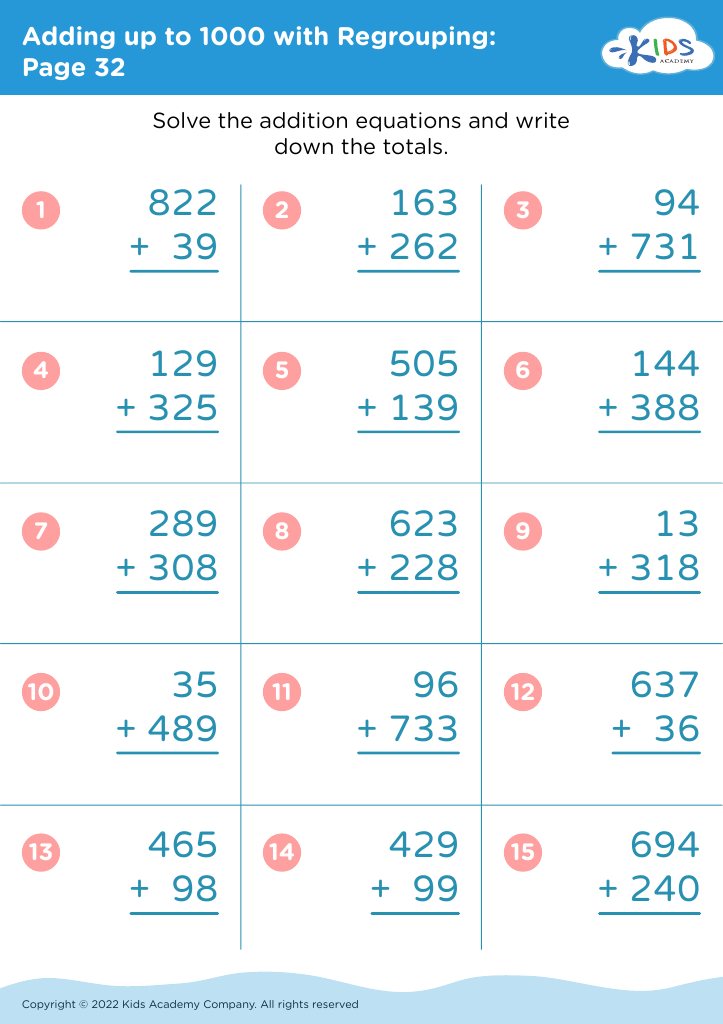
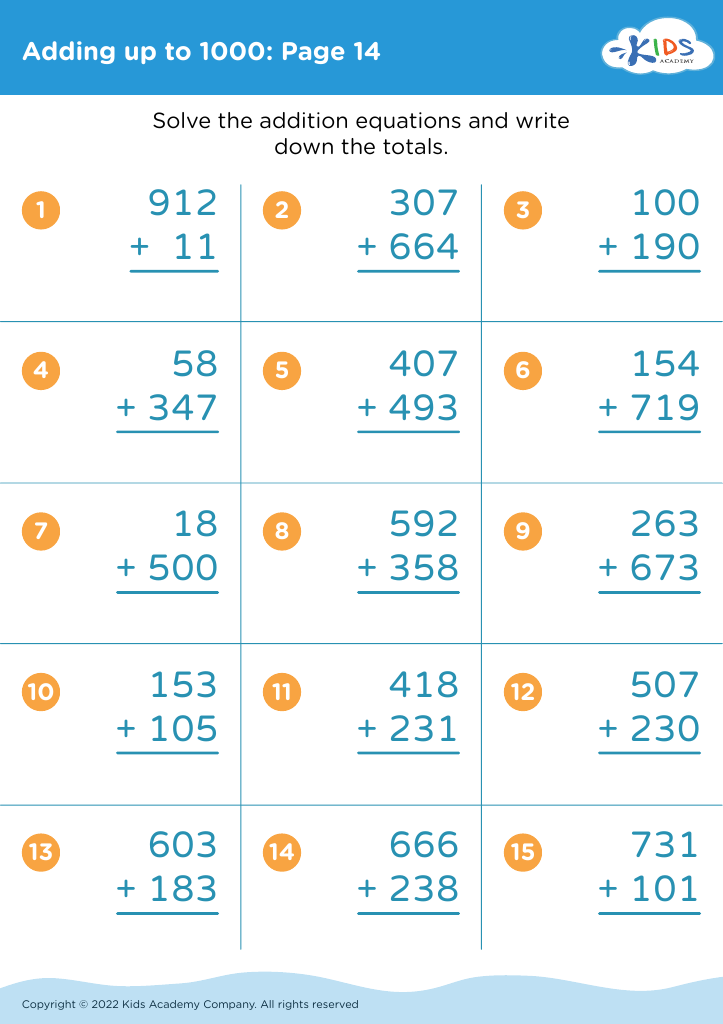



Teaching subtraction and addition up to 1000 to children aged 6-7 is crucial for their mathematical development and foundational skills. At this age, children are at a pivotal point where they begin to understand numerical relationships and develop critical thinking skills. Mastery of subtraction introduces them to problem-solving and logical reasoning, promoting cognitive growth that extends beyond math.
Firstly, achieving fluency in subtraction helps build confidence in young learners, enabling them to tackle more complex math concepts in the future. It prepares them for real-life scenarios, such as budgeting their allowances or sharing equally among peers. Additionally, understanding larger numbers enhances their number sense, allowing them to recognize patterns and relationships in math.
Moreover, subtraction creates a sense of accomplishment as children see their progress. Engaging with numbers this way can make math feel less intimidating and more accessible. Parents and teachers play a pivotal role in fostering a supportive environment, using games and practical exercises to motivate children. By emphasizing the importance of subtraction skills, they help children develop perseverance and resilience, essential attributes for lifelong learning. Ultimately, focusing on subtraction up to 1000 sets a strong foundation for future academic success and everyday life skills.








