Problem Solving Adding up to 1000 Worksheets for Ages 6-7
3 filtered results
-
From - To
Welcome to our "Problem Solving Adding up to 1000 Worksheets" designed specifically for children ages 6-7! These engaging worksheets will help young learners develop their math skills through practical problem-solving exercises that involve addition up to 1000. Our resources foster critical thinking, enhance number sense, and encourage the application of math in real-world scenarios. Each worksheet features colorful illustrations and age-appropriate challenges, making learning fun and interactive. Ideal for classroom use or homework assignments, these worksheets support your child's growth in math confidence and proficiency. Start exploring and watch your child's problem-solving abilities soar!
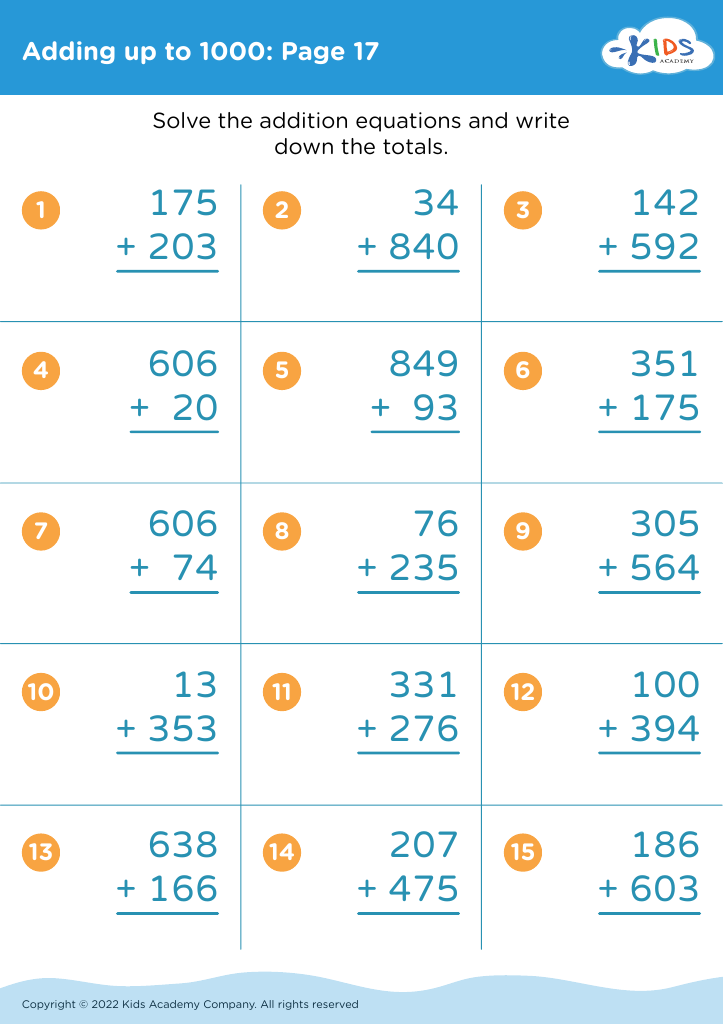
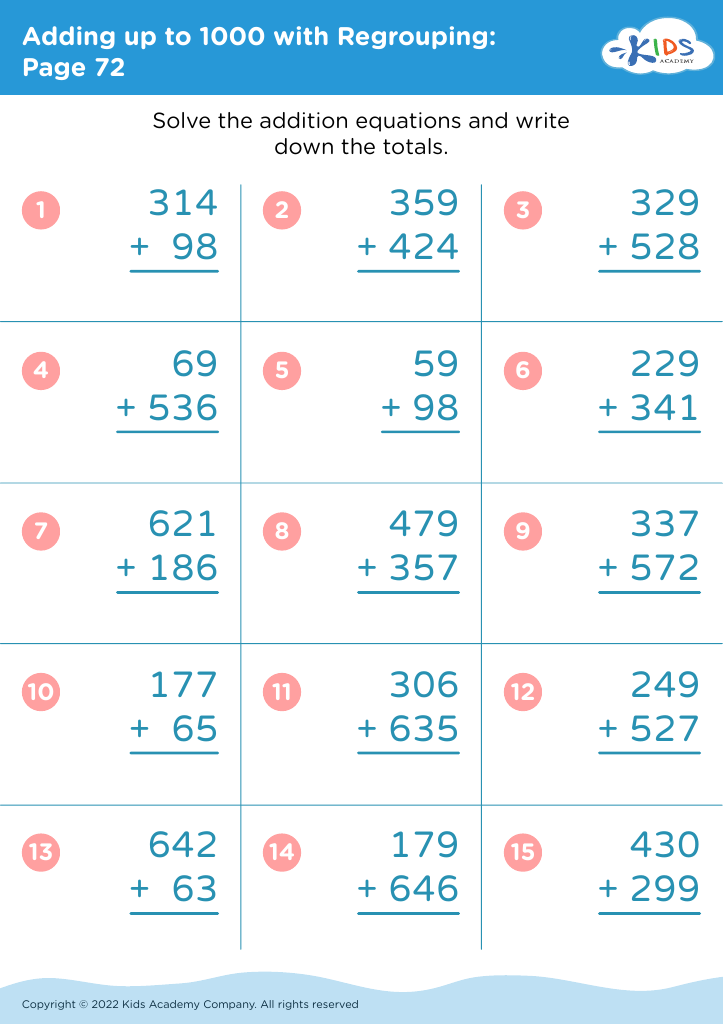
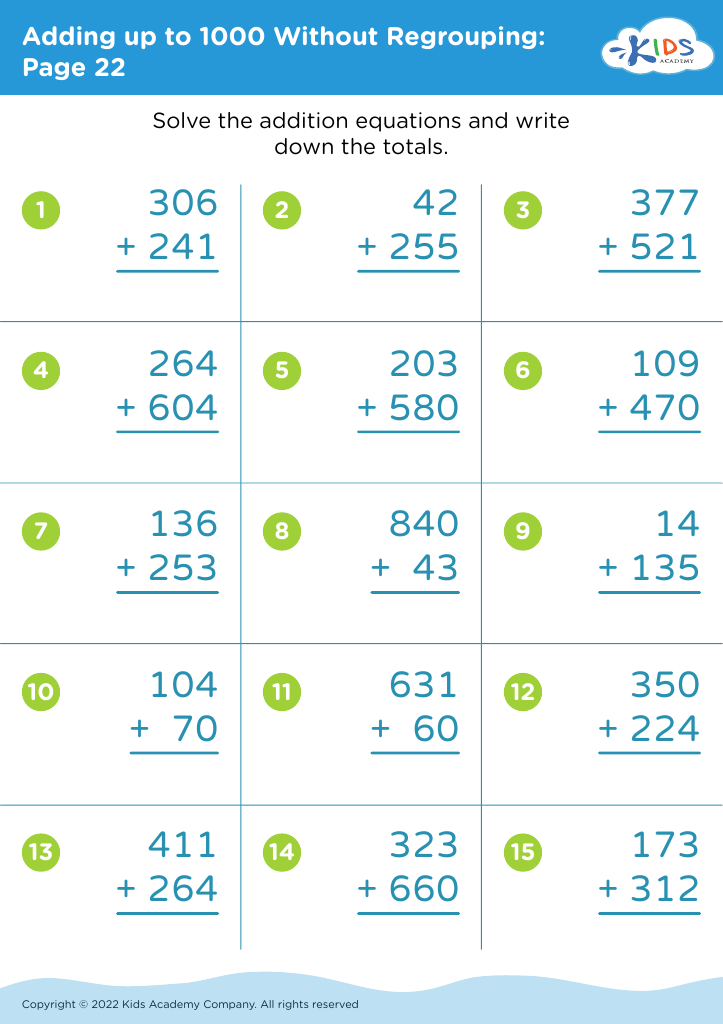



Problem Solving Adding up to 1000 is a crucial skill for children aged 6-7 as it lays the foundation for their mathematical understanding and cognitive development. At this age, children begin to grasp the concepts of addition and number sense. Introducing them to larger numbers and the idea of reaching a total of 1000 not only expands their arithmetic skills but also enhances their logical reasoning and critical thinking capabilities.
Parents and teachers should care about this process because it fosters confidence and independence in young learners. Solving problems involving larger sums encourages children to explore different strategies and approaches, promoting a growth mindset. This approach also develops resilience as they learn to tackle challenges, understanding that mistakes are a natural part of the learning journey.
Moreover, problem-solving skills are applicable beyond mathematics; they equip children with the tools to navigate everyday life challenges, building essential life skills. As children apply these concepts, they strengthen their ability to communicate their reasoning and collaborate with peers, setting the stage for future academic success. Engaging in these educational practices helps create a well-rounded learner, ready to face more complex challenges as they progress in their education.








