Recognize patterns Adding up to 1000 Worksheets for Ages 6-7
6 filtered results
-
From - To
Discover our engaging "Recognize Patterns Adding up to 1000 Worksheets for Ages 6-7"! Perfect for young learners, these worksheets help children understand numerical patterns while practicing addition up to 1000. Designed for kids aged 6-7, the activities offer a fun and educational way to enhance math skills. By identifying sequences, recognizing number patterns, and solving addition problems, children will build a solid foundation for future math success. Great for both classroom and home use, our worksheets are designed to make learning enjoyable and interactive. Unlock your child’s potential and boost their confidence in math today!
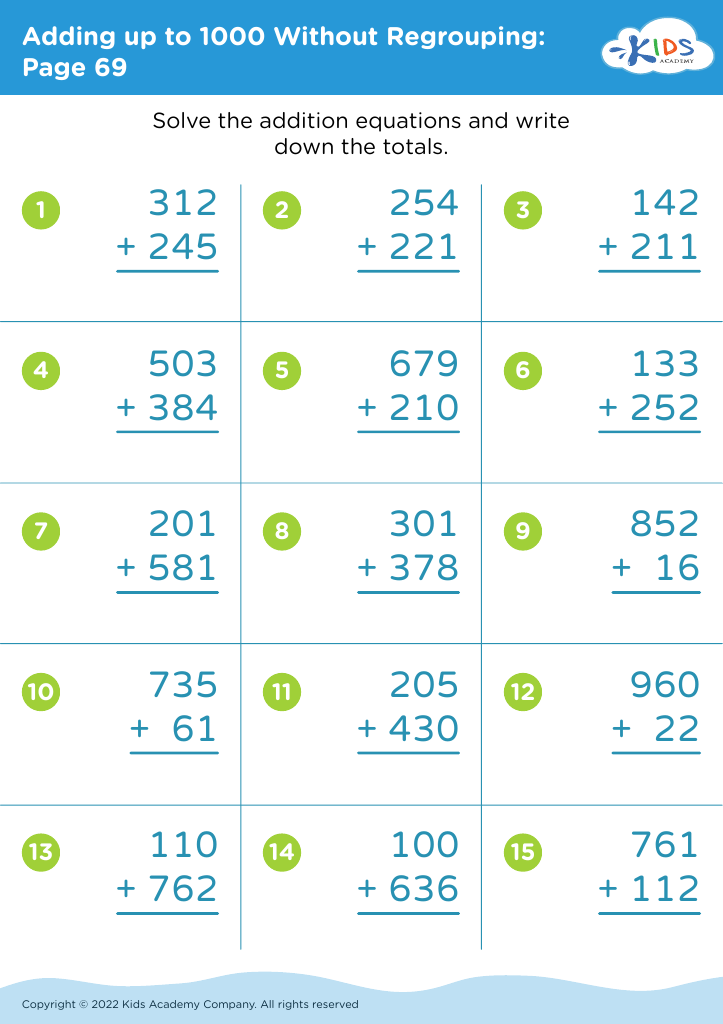
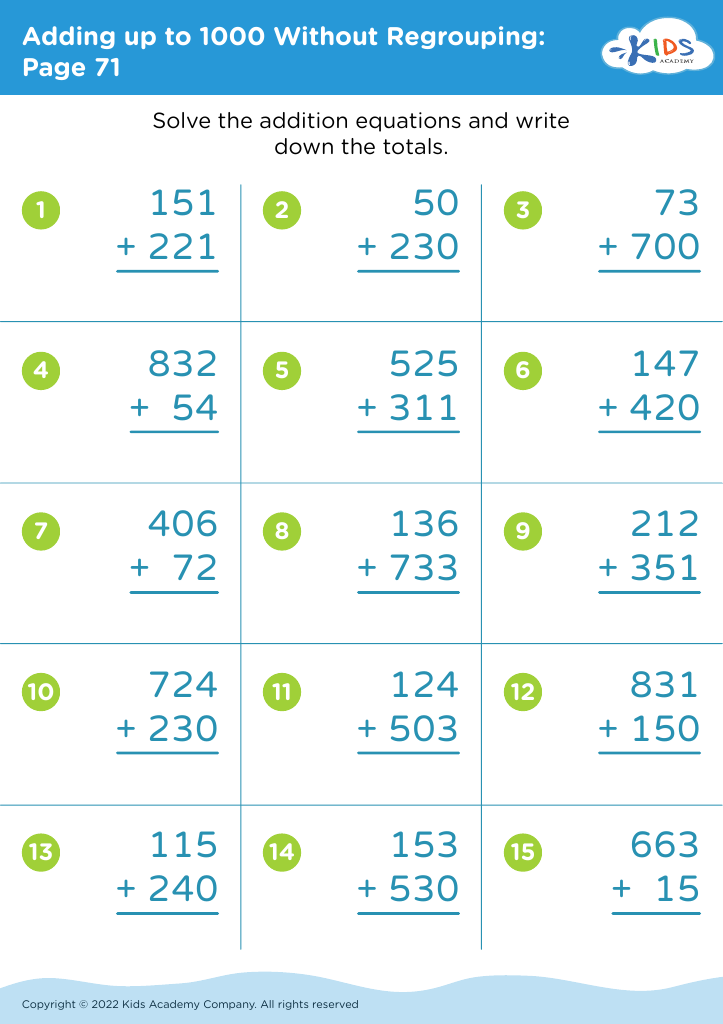
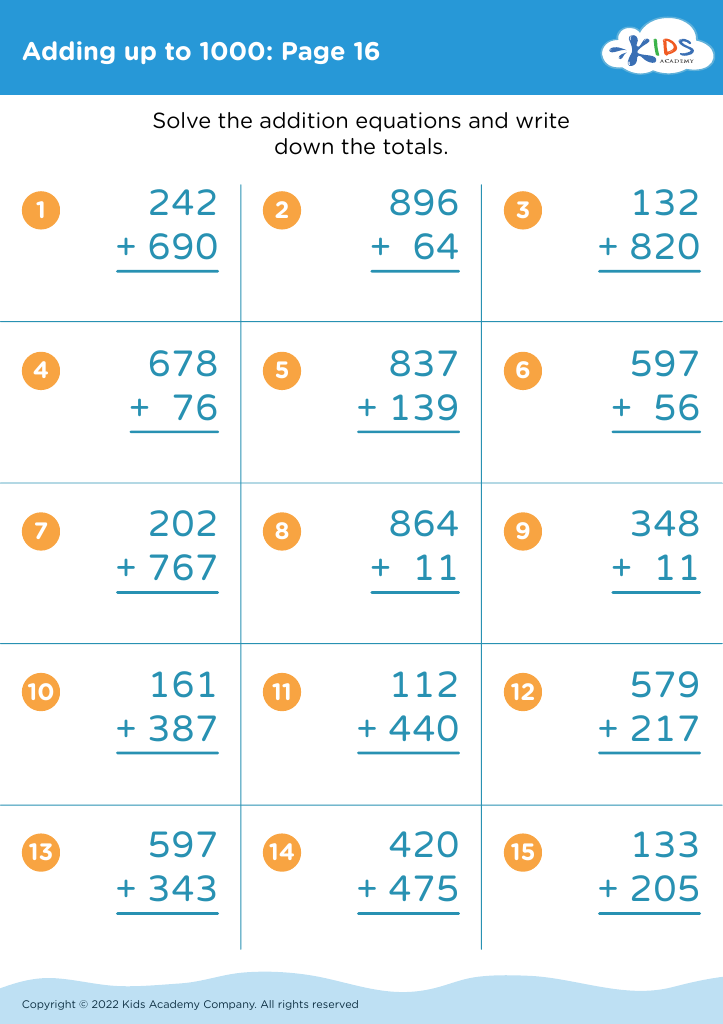
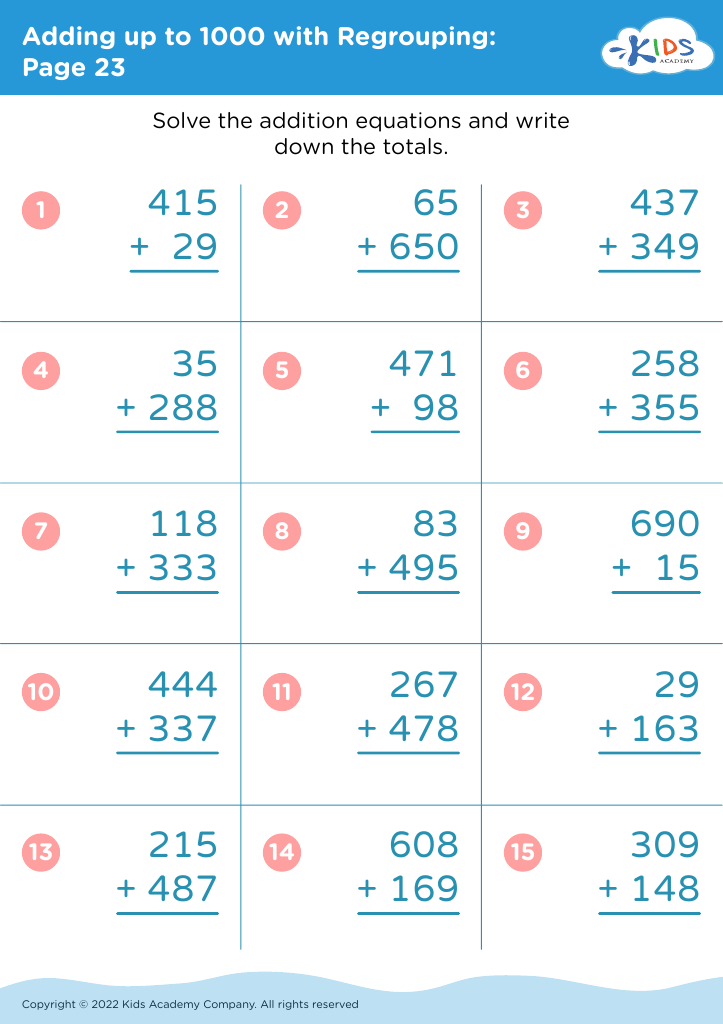
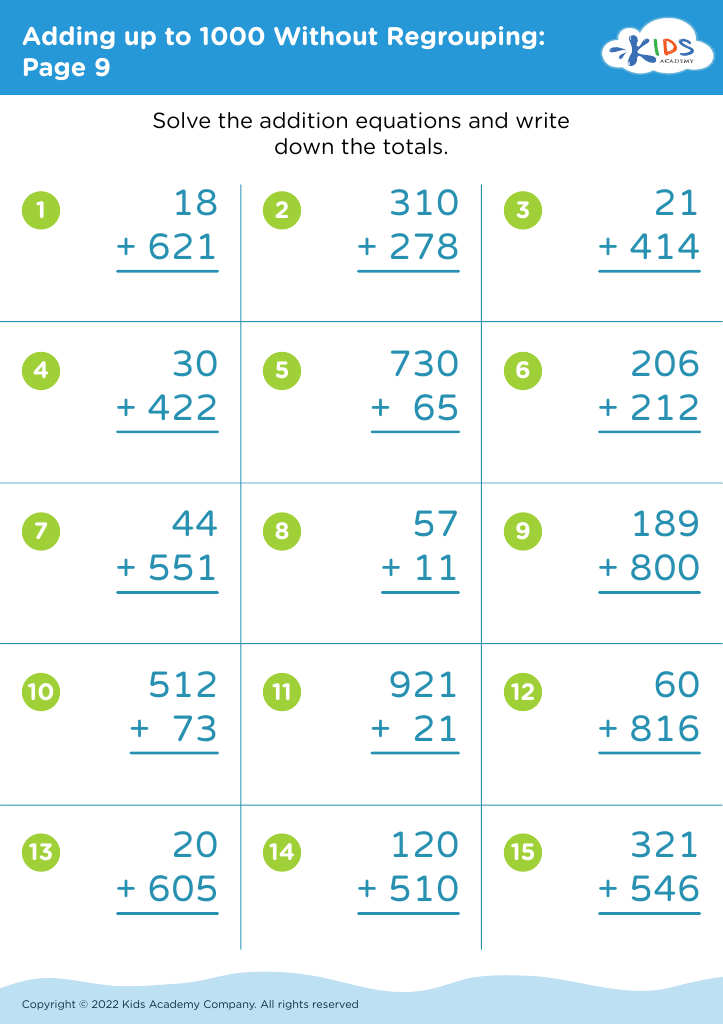
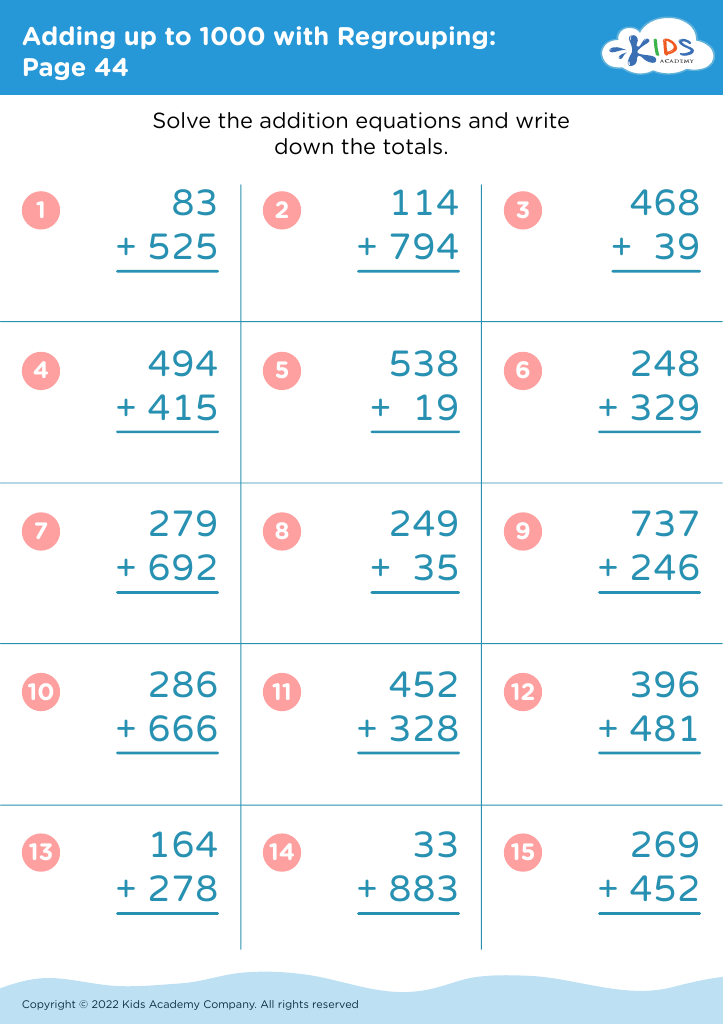



Recognizing patterns and early math skills, such as adding up to 1000, are foundational for young children (ages 6-7) because they serve as the building blocks for higher-order mathematical concepts and critical thinking skills. At this age, children are at a stage of cognitive development where they begin to understand numerical relationships and sequences, which is essential for their academic growth.
When children learn to recognize patterns, they develop logical thinking and problem-solving abilities. This early exposure is crucial for understanding more advanced mathematical operations in later years. For example, recognizing numerical patterns helps in mastering multiplication tables, understanding algebraic expressions, and even grasping scientific concepts.
Adding up to 1000 ensures that children become comfortable with larger numbers and mathematical operations, fostering confidence and reducing math-related anxiety as they progress in school. Parents and teachers who emphasize and support these skills will help children develop a positive attitude towards mathematics, solidify their understanding, and enhance their ability to think analytically.
Moreover, early competence in math has been linked to better performance in various academic subjects and everyday life scenarios, such as problem-solving and logical reasoning, which are invaluable skills. Therefore, nurturing these abilities from a young age sets a strong foundation for lifelong learning and success.








