Recognize shapes Adding up to 1000 Worksheets for Ages 6-7
4 filtered results
-
From - To
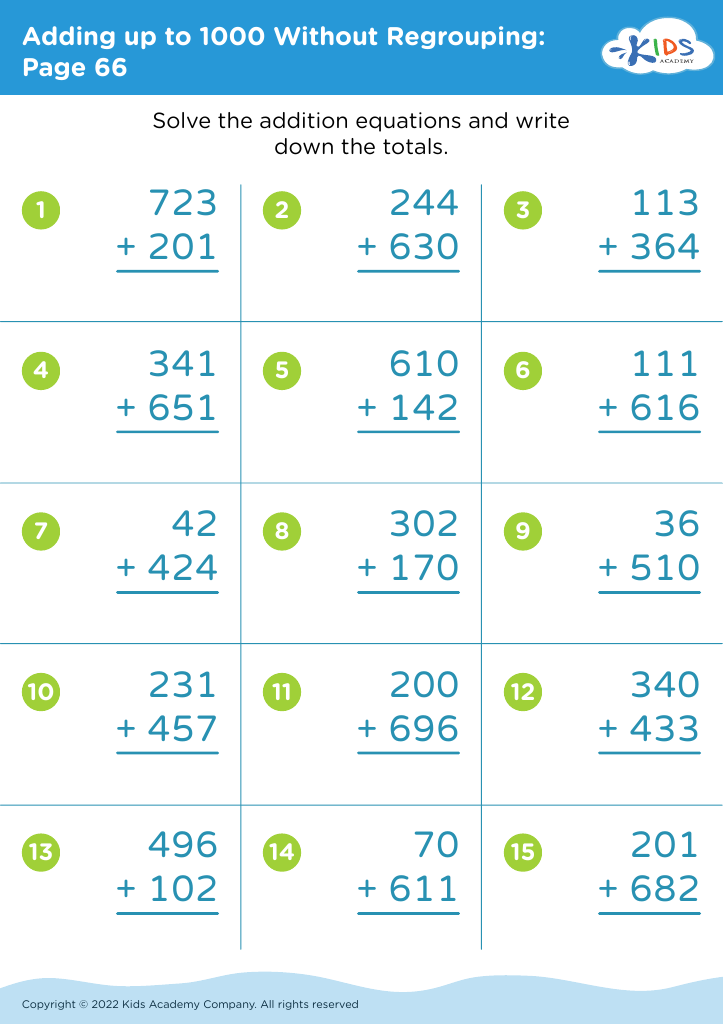
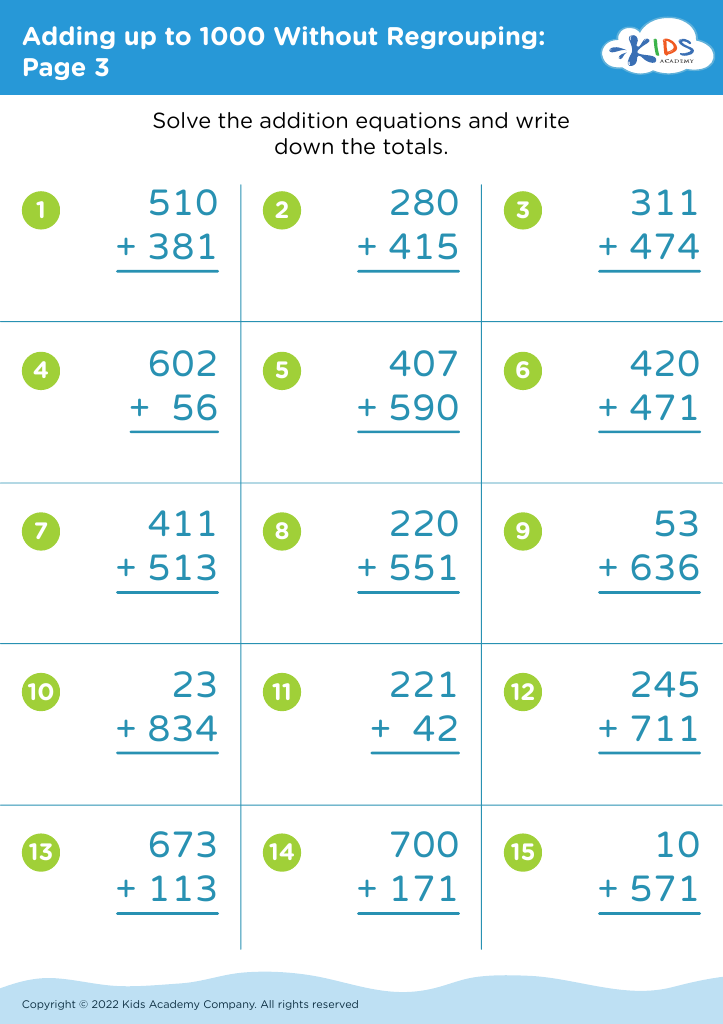
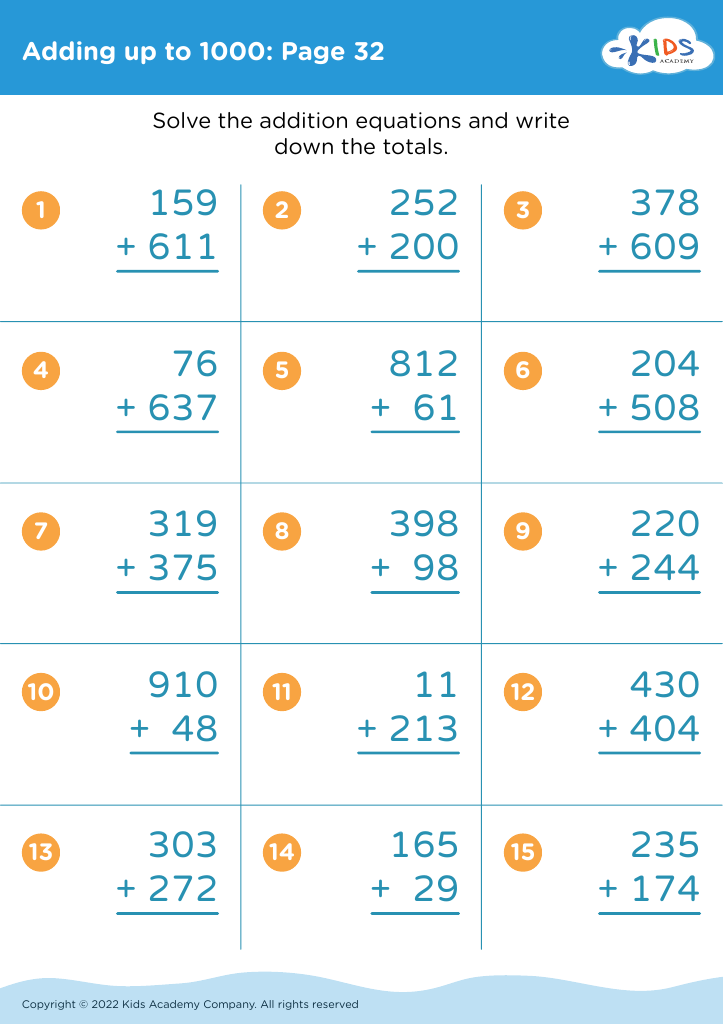
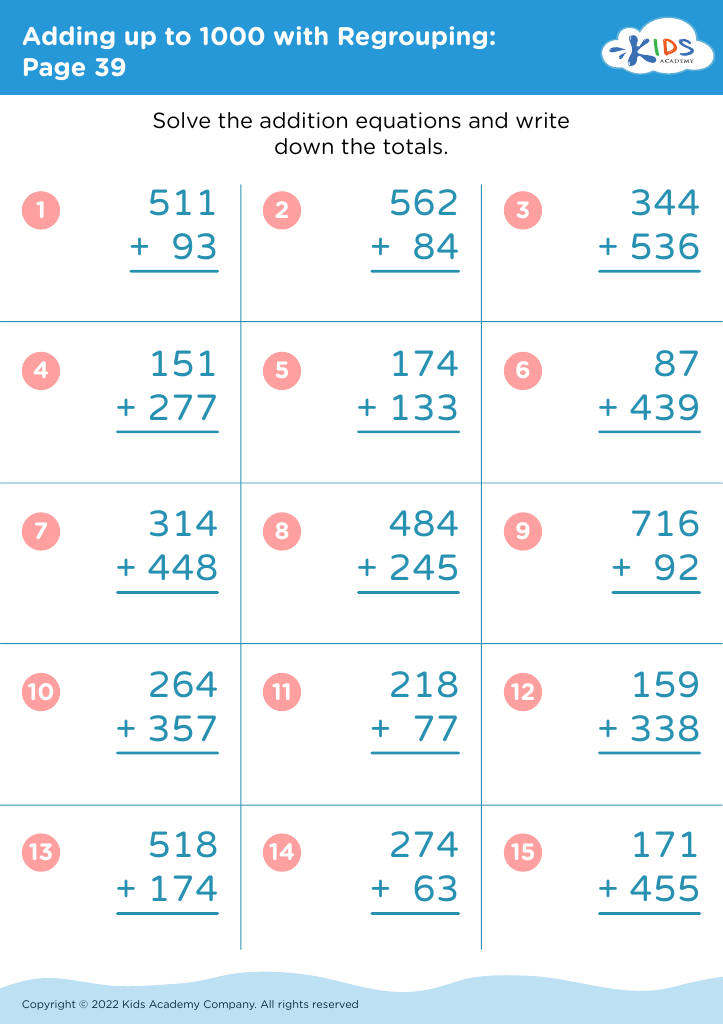
Our "Recognize Shapes Adding up to 1000 Worksheets" for ages 6-7 bring a fun and educational blend of math and geometry. Designed by experts, these worksheets help kids master addition up to 1000 while reinforcing their ability to recognize and identify various shapes. Engaging visuals and interactive activities make learning enjoyable, fostering critical thinking and problem-solving skills. Ideal for classroom and home learning, these worksheets support a solid math foundation, enhancing both numerical fluency and shape recognition. Help your child excel in math with our specially crafted worksheets, paving the way for success in future educational ventures.



Recognizing shapes and adding up to 1000 are foundational skills crucial for children aged 6-7 as they form the building blocks for more advanced mathematical concepts. Here's why parents and teachers should prioritize these skills:
Cognitive Development: Recognizing shapes enhances a child's spatial awareness and visual processing skills, which are vital for understanding geometry, art, and even navigating everyday tasks. Identifying shapes reinforces pattern recognition, aiding in the problem-solving abilities essential for all areas of learning.
Numeracy Skills: Learning to add up to 1000 at this age not only strengthens basic arithmetic skills but also builds a strong number sense. This encourages logical thinking and the ability to understand and manipulate numbers. As children transition to more advanced math, a firm grasp on addition up to 1000 ensures they can tackle multidigit problems with confidence.
Real-world Applications: Both skills have practical applications. Shape recognition is fundamental in tasks such as reading maps, organizing objects, and interpreting data visualizations. Proficiency in addition aids everyday activities, from planning expenses to understanding time.
Long-term Academic Success: Early mastery of these concepts sets the stage for success in later academic pursuits. Without these skills, students may struggle as math becomes more complex. Ensuring children are confident in these areas supports their academic journey, fostering a lifelong appreciation and competence in mathematics.
Overall, these skills are crucial for children's academic development and real-world functioning, making them essential components of early education.








